(7% discount is applied at checkout)
Cart is empty
Your go-to destination for cutting-edge server products
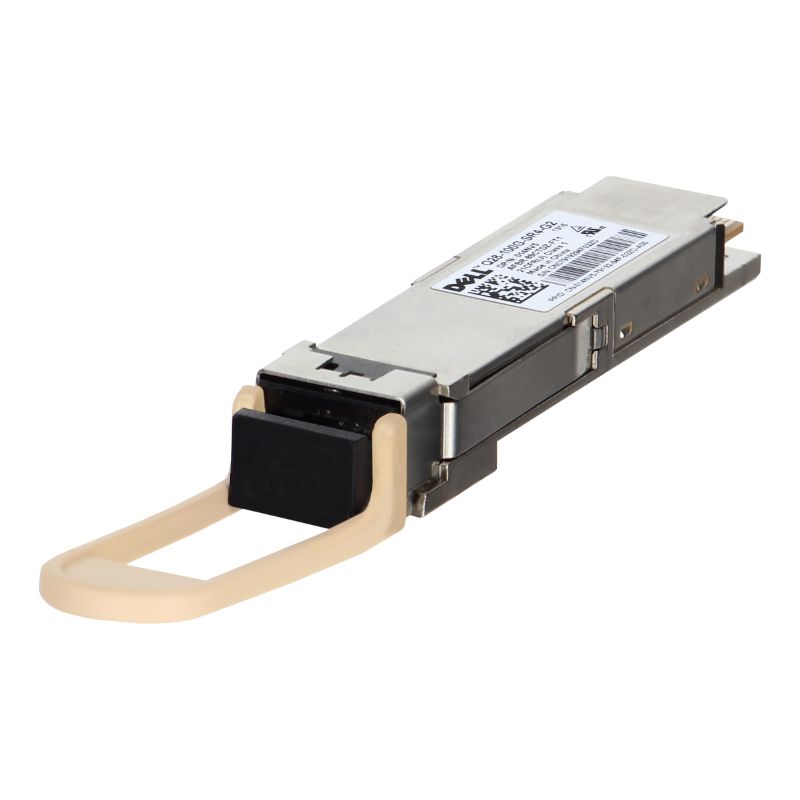


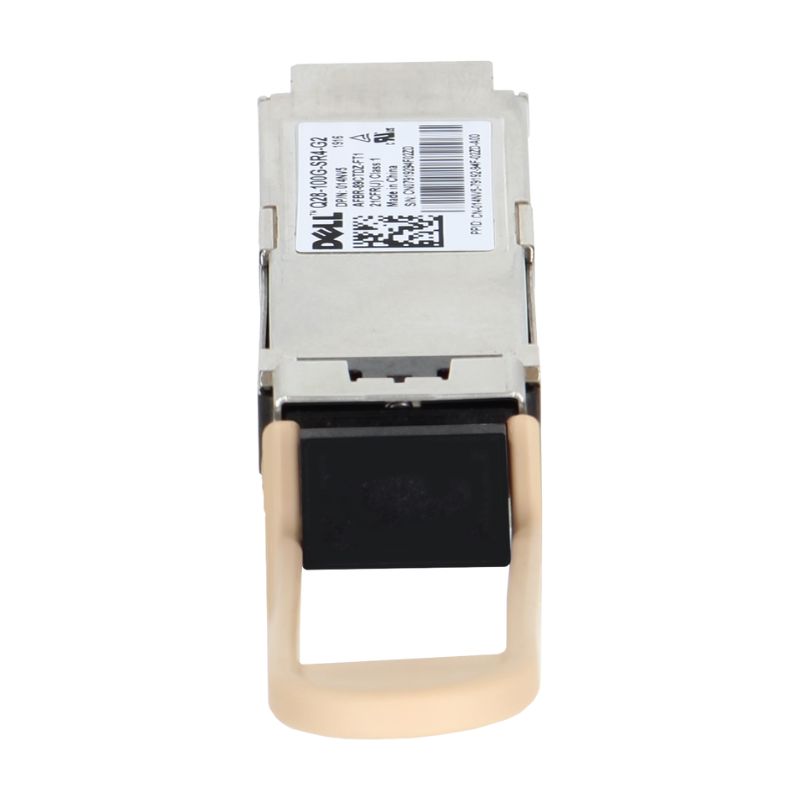
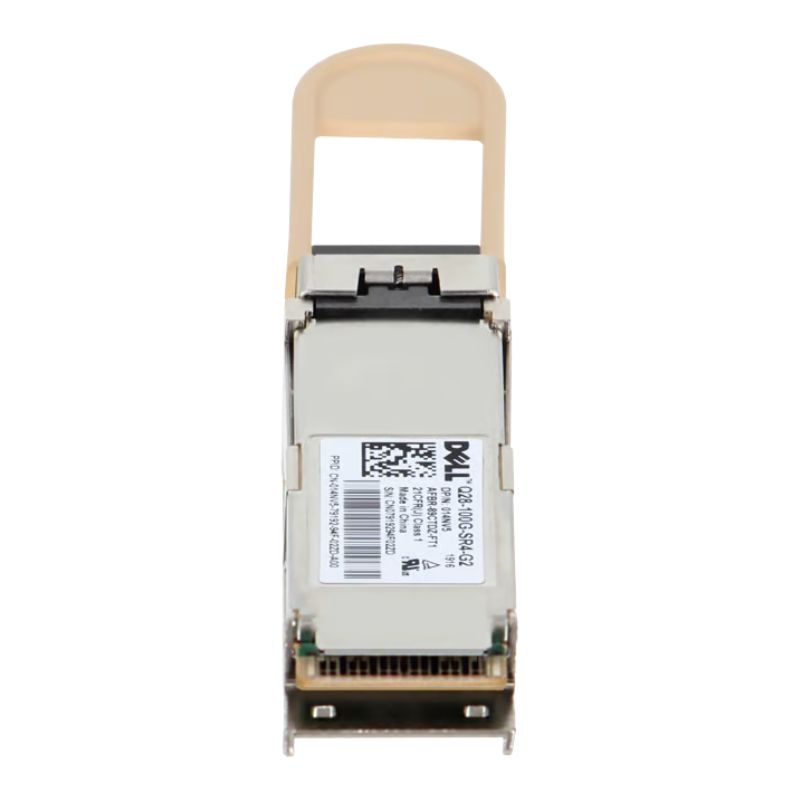
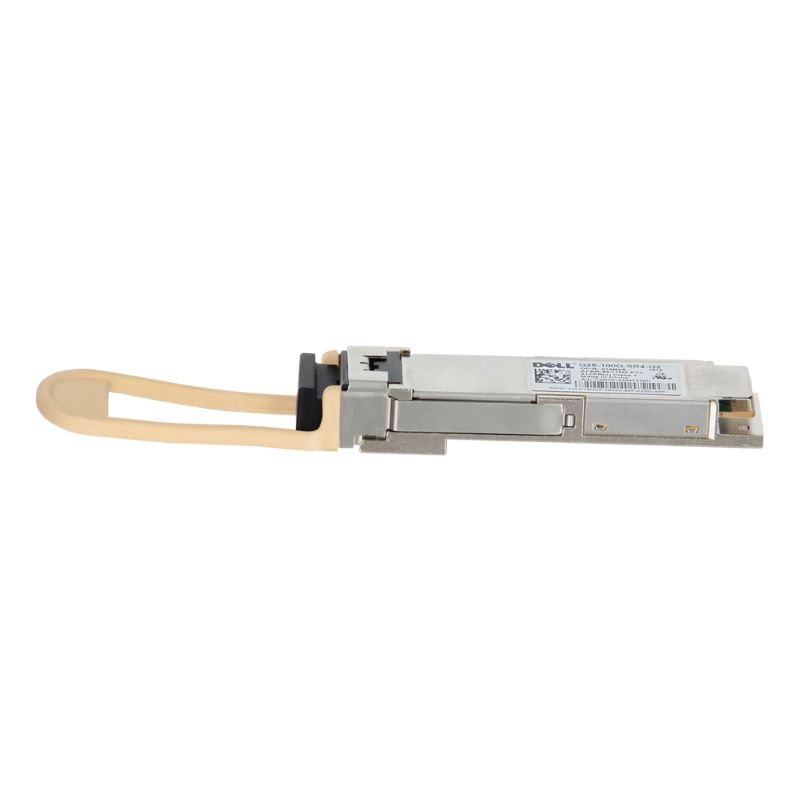
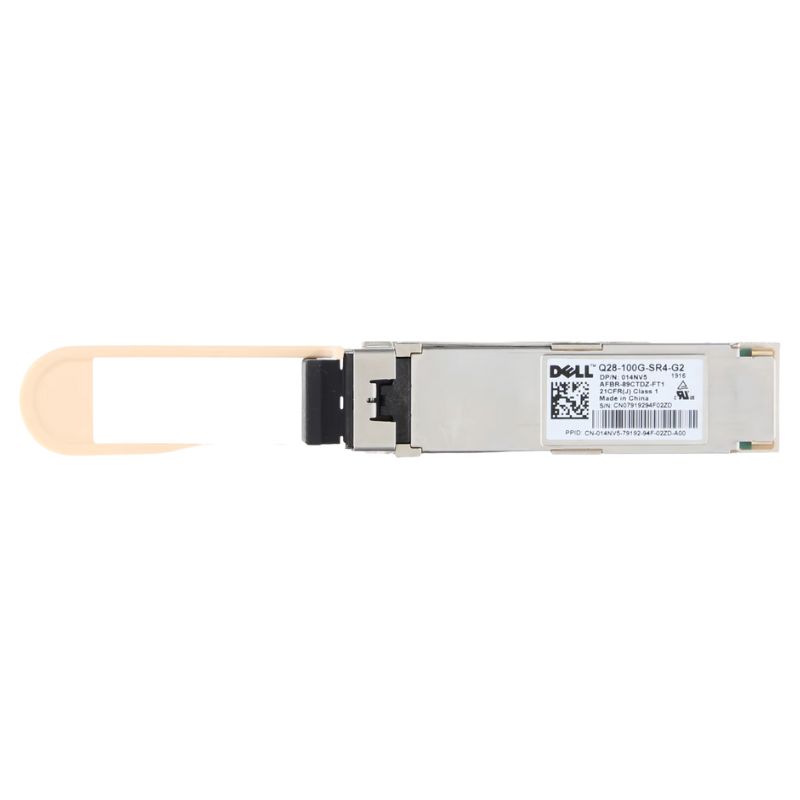
Dell 0X9CT 100GBE QSFP28 BIDI 850/900nm LC Duplex MMF Networking Transceiver. Excellent Refurbished with 1-Year Replacement Warranty
The Dell 0X9CT QSFP28 optical transceiver is engineered for ultra-fast data transmission in modern enterprise and data center networks. Designed to support 100 Gigabit Ethernet over multimode fiber, this module enables stable, low-latency connectivity for high-density switching environments while maintaining operational efficiency.
To fully appreciate the capabilities of the Dell 0X9CT, it is essential to understand the two key technologies it embodies: the QSFP28 form factor and Bidirectional (BIDI) optics. The Dell 0X9CT QSFP28 optical module is engineered for ultra-fast data transmission in modern enterprise and data center networks. Designed to support 100 Gigabit Ethernet, this transceiver delivers reliable, low-latency connectivity for bandwidth-intensive workloads while maintaining efficient power usage.
The Quad Small Form-factor Pluggable 28 (QSFP28) is the industry-standard module form factor for 100 Gigabit Ethernet applications. It supports data rates from 100Gbps by utilizing four electrical lanes, each operating at 25 Gbps. This compact, hot-swappable design allows for high port density on switch line cards, enabling network architects to build incredibly powerful and scalable spine-leaf architectures without consuming excessive rack space or power. The QSFP28's versatility also allows it to support various optical interfaces, including SR4, LR4, CWDM4, and the BIDI variant found in the 0X9CT.
Bidirectional optics is a method of transmitting and receiving optical data signals in both directions over a single strand of fiber (or, more commonly, a duplex pair) using two different wavelengths. The Dell 0X9CT specifically uses 850nm for transmission in one direction and 900nm for reception from the opposite end, and vice-versa. This is achieved through integrated WDM couplers within the transceiver that separate the two wavelengths.
In a standard 100G-SR4 link, a total of eight MMF fibers are used: four dedicated for transmitting (Tx) and four dedicated for receiving (Rx). The 0X9CT BIDI transceiver reduces this requirement to just two fibers for a full-duplex 100G link. This 75% reduction in fiber count is its most significant advantage. It allows organizations to:
The module complies with the IEEE 802.3bm 100GBASE-SR10 and 100G以太网 Consortium's requirements for BIDI applications over multimode fiber. The achievable link distance is directly dependent on the grade of multimode fiber used. The 0X9CT is optimized for performance on modern OM3 and OM4 cabling. These distances are ideal for intra-data center applications such as connecting top-of-rack (ToR) switches to end-of-row (EoR) or spine switches, as well as interconnecting servers in high-performance computing (HPC) clusters.
The Dell 0X9CT 100G BIDI transceiver is deployed in scenarios where high bandwidth, fiber efficiency, and cost management are paramount. Its design caters specifically to modern data center and enterprise network architectures. In two-tier spine-leaf architectures, the volume of east-west traffic is immense. The connections between leaf and spine switches require high-bandwidth, low-latency links. Using 0X9CT transceivers for these interconnects allows network operators to:
Many enterprises have existing MMF backbones installed for 10GBASE-SR or 40GBASE-SR4. The 0X9CT is a strategic tool for migrating to 100G. Because it uses the same duplex LC connector and OM3/OM4 fiber, the upgrade path is straightforward—often requiring only a swap of transceivers and switch line cards, without the need to re-pull fiber. This protects prior cabling investments and minimizes upgrade downtime and cost.
The 0X9CT is engineered for use with laser-optimized 50/125µm multimode fiber, specifically OM3 or OM4 grades. Older OM1 or OM2 fiber is not suitable for 100G applications at these distances due to higher modal dispersion. The link budget must account for connector and splice losses. It is recommended to keep end-face contamination to a minimum and ensure all patch cords and trunks are properly certified for the intended data rate.
BIDI links require specific attention to polarity to ensure the transmit wavelength on one end connects to the receive wavelength on the other. BIDI transceivers are typically deployed in matched pairs. For a link using the 0X9CT, one end must be configured for "Channel 0" (e.g., 850nm Tx / 900nm Rx) and the other for "Channel 1" (e.g., 900nm Tx / 850nm Rx). Duplex patch cables with a key-up to key-down flip (a crossed-over pair) are standard for establishing correct polarity in a BIDI link. Most modern duplex MMF patch cords are designed with this in mind.
After installation, network engineers should immediately verify link performance using the DDM data available through the switch CLI or management software. Key parameters to check include received optical power (Rx Power), which should be within the transceiver's specified sensitivity and overload thresholds, and transmitter bias current. Monitoring these values provides early warning of potential fiber degradation or marginal connections.
The combined savings in fiber infrastructure, reduced conduit usage, simpler cable management, and lower per-module cost (compared to SMF solutions) contribute to a significantly lower TCO for deploying 100G links within the data center using the Dell 0X9CT BIDI transceiver. This makes it a financially and operationally superior choice for greenfield deployments within its distance range and for brownfield upgrades of existing MMF plants.
Ensuring proper compatibility and understanding deployment nuances is crucial for a successful implementation of the Dell 0X9CT transceiver. As a genuine Dell Networking transceiver, the 0X9CT is fully tested and supported on a wide range of Dell Power Switch (formerly Force10 and Power Connect) series, including but not limited to the S-series (e.g., S5248F-ON, S5296F-ON, S4148F-ON), Z-series, and C-series platforms. It is critical to verify the specific switch model and OS version compatibility via the official Dell Qualified Transceiver List to ensure full functionality and support entitlement. Using genuine Dell optics guarantees that Digital Diagnostics Monitoring (DDM) features for real-time temperature, voltage, TX bias current, and optical power will be accessible and accurate within the switch's operating system.


 Contact Us
 Information
 Catalog
 Solid State Drives (SSD)
 Network Switches
 Hard Disk Drives
 HBA & Controllers
 PC & Servers
 PC & Server Memory
 CPU & Processors
 Network Routers
 Power Supplies
 Tape Drives & Libraries
 Network Devices
 Computer & Network Cables