(7% discount is applied at checkout)
Cart is empty
Your go-to destination for cutting-edge server products
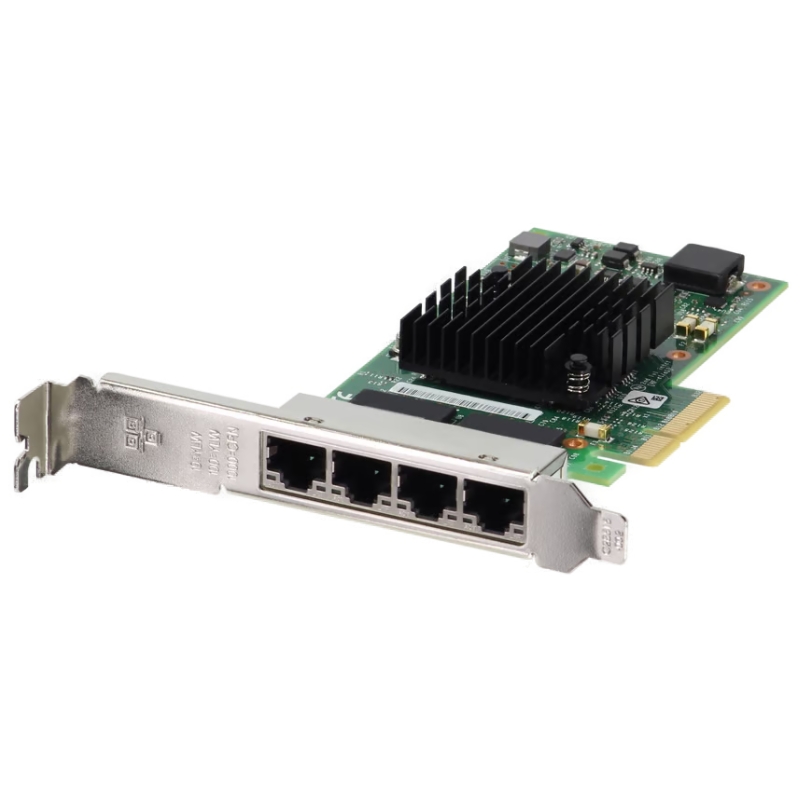


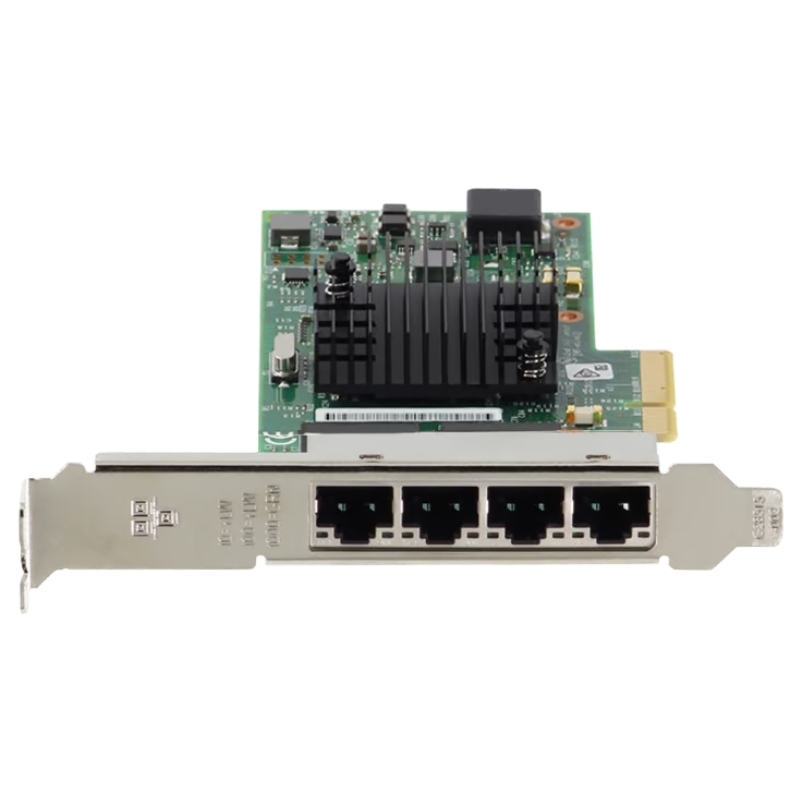
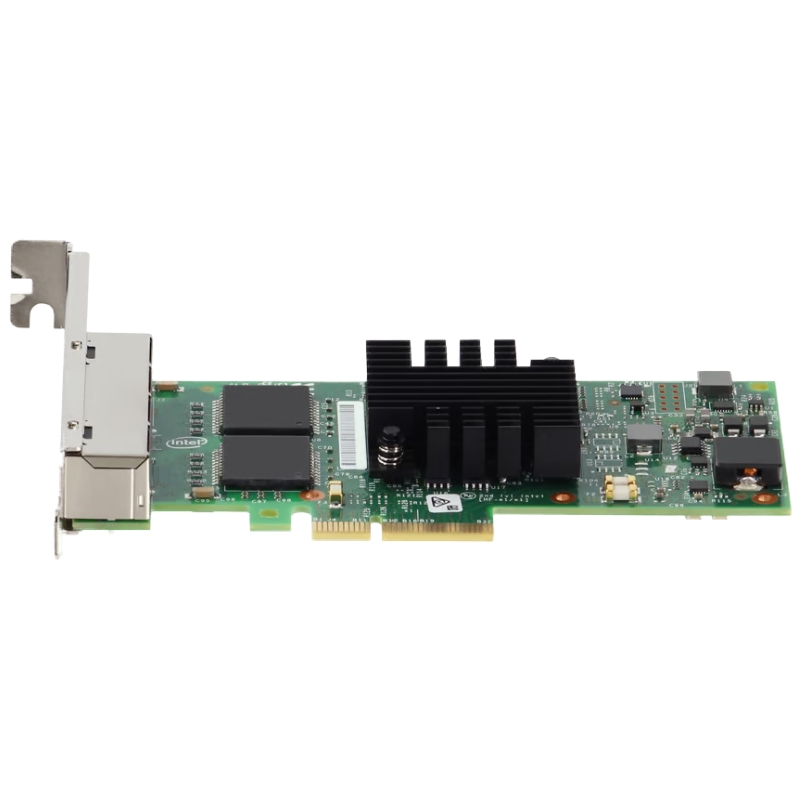
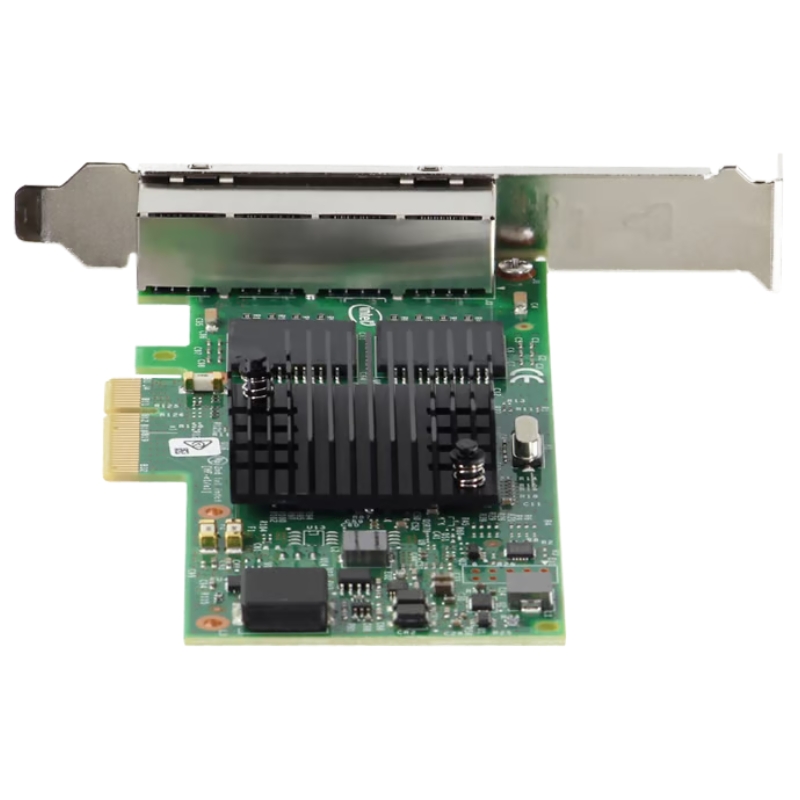
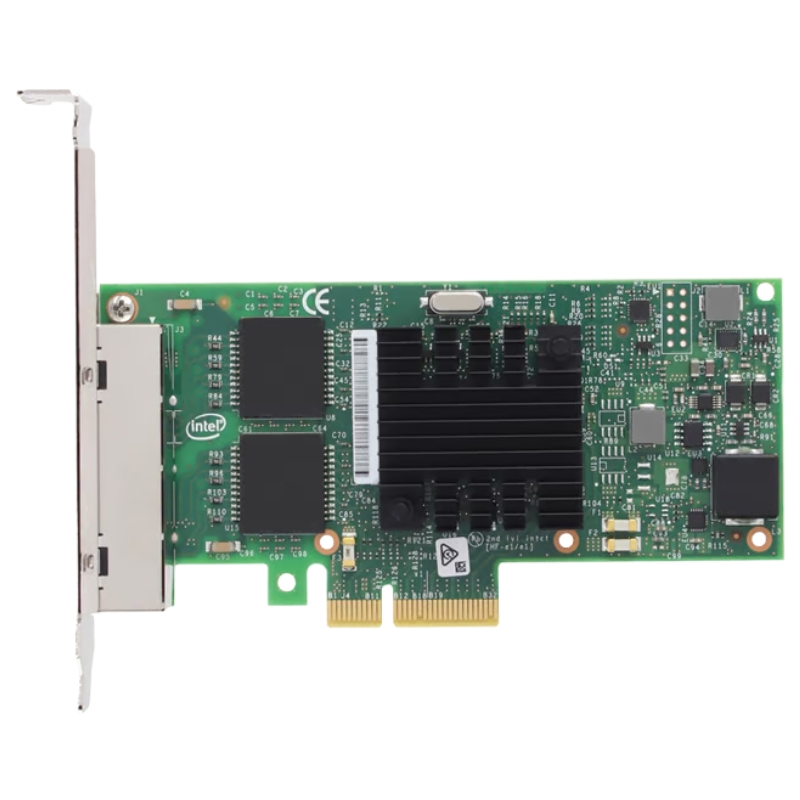
Dell 540-BBDS Intel Ethernet I350 4 Ports 1 Gigabit Server Network Adapters. Excellent Refurbished with 1 year replacement warranty
The Dell 540-BBDS I350 Server Network Adapter is equipped with 4 ports, making it an ideal choice for users who require a high level of connectivity. These ports provide the ability to connect multiple devices simultaneously, allowing for seamless data transfer and networking capabilities.
The Dell 540-BBDS Intel Ethernet I350 4 Ports 1 Gigabit Server Network Adapter is a high-performance PCI Express networking solution designed for enterprise servers, virtualization platforms, cloud infrastructures, and business-critical data center environments. Built around the proven Intel Ethernet I350 controller architecture, this server network adapter delivers reliable Gigabit Ethernet connectivity through four independent RJ45 ports, enabling organizations to optimize bandwidth allocation, improve network redundancy, and enhance overall server communication efficiency.
Engineered for continuous operation in demanding enterprise environments, the adapter combines advanced traffic management capabilities, hardware acceleration technologies, and flexible deployment options. Organizations implementing virtualization clusters, storage networks, web hosting infrastructures, and enterprise application environments can benefit from the adapter's ability to provide consistent throughput, low latency, and dependable network connectivity.
At the core of the Dell 540-BBDS adapter is the Intel Ethernet I350 controller, a server-class networking chipset specifically designed for modern enterprise workloads. The controller architecture incorporates sophisticated packet processing engines, intelligent queue management technologies, and advanced offload capabilities that reduce processor utilization while maintaining efficient network communication.
The Intel I350 platform delivers a balanced combination of performance, reliability, and scalability. Its architecture supports multiple traffic streams simultaneously, allowing administrators to separate production traffic, management traffic, backup operations, and storage communications across dedicated network interfaces.
The Intel I350 controller provides hardware-based packet processing that helps improve system responsiveness under heavy network loads. By offloading networking tasks from the host CPU, the controller allows server processors to focus on application execution, database operations, virtualization workloads, and business-critical computing functions.
Dedicated hardware resources within the controller support efficient packet transmission and reception, ensuring consistent communication performance across all four Gigabit Ethernet ports. This architecture becomes especially valuable in multi-tenant environments where multiple applications compete for networking resources.
Server infrastructures frequently require stable and predictable network performance. The Intel I350 controller addresses these requirements through advanced buffering mechanisms, intelligent queue management, and hardware acceleration features that contribute to efficient packet handling under varying workload conditions.
The controller's design supports high transaction rates, making it suitable for web servers, virtualization hosts, file servers, database platforms, and application servers that depend on reliable network connectivity.
One of the defining characteristics of the Dell 540-BBDS adapter is its four-port Gigabit Ethernet configuration. Each port provides independent 10/100/1000 Mbps connectivity, allowing organizations to implement flexible network architectures while maximizing available bandwidth resources.
The quad-port design enables administrators to deploy multiple network segments from a single adapter, reducing expansion slot requirements and simplifying server hardware configurations.
Each Gigabit Ethernet port operates independently, allowing separate IP addressing, VLAN assignment, security policies, and traffic management strategies. This flexibility makes the adapter particularly useful in environments requiring network segmentation and workload isolation.
Organizations can dedicate specific ports to production traffic, management networks, storage communications, backup operations, or virtualization traffic without requiring additional network interface cards.
Network segmentation improves security, performance, and operational efficiency. By assigning different workloads to separate network interfaces, administrators can reduce congestion, improve application responsiveness, and enhance overall network reliability.
Dedicated interfaces for management traffic ensure administrators maintain access to critical systems even during periods of elevated production network activity.
Traffic isolation helps organizations implement best-practice networking architectures. Critical applications can operate on dedicated network interfaces while less sensitive traffic utilizes separate communication paths.
The Dell 540-BBDS adapter utilizes a PCI Express interface designed to provide sufficient bandwidth for all four Gigabit Ethernet ports operating simultaneously. PCIe connectivity ensures efficient communication between the network controller and host server platform.
The PCI Express architecture delivers low-latency access to system resources while supporting modern server motherboard designs and enterprise computing platforms.
The PCIe interface creates a high-performance data path between the network controller and server memory subsystem. This architecture helps maintain consistent throughput levels during heavy network activity while minimizing communication bottlenecks.
Efficient data transfer capabilities contribute to improved application performance and reduced networking overhead across enterprise workloads.
The adapter is designed to integrate seamlessly with a wide range of Dell PowerEdge servers and other compatible enterprise platforms. Standard PCI Express connectivity simplifies installation and supports deployment across diverse server infrastructures.
Organizations upgrading existing systems can often implement the adapter without major hardware modifications, reducing deployment complexity and minimizing downtime.
Virtualization environments place unique demands on network infrastructure. The Dell 540-BBDS Intel Ethernet I350 adapter incorporates technologies specifically designed to improve virtual machine networking performance and scalability.
These capabilities enable efficient communication between virtual machines, storage systems, hypervisors, and external network resources.
The adapter supports virtualization-aware networking technologies that help optimize traffic flows within virtualized environments. Hardware-assisted packet processing reduces CPU overhead associated with virtual machine networking operations.
As virtual machine density increases, efficient network processing becomes increasingly important for maintaining predictable application performance.
Hardware acceleration technologies contribute to better utilization of server resources. Reduced networking overhead allows processors and memory subsystems to focus on application execution rather than packet processing activities.
This optimization can improve virtual machine scalability and enhance overall platform efficiency.
The Dell 540-BBDS adapter includes numerous management capabilities that support enterprise networking requirements. These features help administrators maintain visibility, control, and operational efficiency across complex server environments.
Virtual Local Area Network functionality enables logical segmentation of network traffic across physical infrastructure. VLAN support allows organizations to separate departments, applications, security zones, and operational functions while utilizing shared networking hardware.
This capability simplifies network administration and supports scalable infrastructure growth.
By combining multiple Gigabit Ethernet connections, organizations can increase aggregate network capacity to support demanding workloads. This capability benefits data-intensive applications, storage systems, and virtualization platforms.
Expanded bandwidth resources help accommodate growing business requirements without immediate infrastructure replacement.
Link aggregation also enhances availability by providing alternative communication paths in the event of a network failure. Automatic failover capabilities help maintain connectivity during component outages or maintenance activities.
Improved availability supports business continuity objectives and reduces service disruption risks.
The Intel I350 controller incorporates multiple hardware offload technologies designed to reduce CPU utilization and improve networking efficiency. These capabilities are particularly valuable in environments handling large volumes of network traffic.
TCP/IP processing tasks can consume significant processor resources in high-traffic environments. Hardware offload technologies transfer portions of these responsibilities to the network controller, reducing server CPU overhead.
This optimization helps maintain application responsiveness while supporting increased network activity levels.
Checksum calculations are essential for ensuring data integrity during transmission. Hardware-based checksum processing reduces computational requirements on host processors while maintaining accurate packet validation.
Efficient checksum handling contributes to improved overall networking performance.
Large Send Offload technology allows the operating system to transfer larger data blocks to the network adapter, which then segments the data into appropriately sized packets for transmission.
This capability reduces processor involvement in packet segmentation activities and improves network efficiency.
Advanced networking controllers incorporate mechanisms for detecting communication anomalies and supporting recovery processes. These capabilities help maintain data integrity and reduce the impact of transient network issues.
Enhanced reliability features support dependable communication across enterprise networks.
Multi-port architectures contribute to fault tolerance by providing alternative communication paths. Organizations can implement redundant network configurations that help maintain connectivity during hardware failures or network disruptions.
This capability supports high-availability environments where uninterrupted communication is essential.
The Dell 540-BBDS Intel Ethernet I350 adapter is suitable for a broad range of data center and enterprise computing applications. Its combination of quad-port connectivity, Gigabit Ethernet performance, and advanced management capabilities supports diverse deployment scenarios.
Virtualization servers frequently require multiple network interfaces to support virtual machine traffic, storage communication, management operations, and migration activities. The adapter's four-port configuration aligns well with these requirements.
Administrators can assign dedicated interfaces to different virtualization functions, improving organization and operational efficiency.
Database environments benefit from reliable and predictable network connectivity. The adapter supports database communications, replication activities, backup operations, and client access traffic while maintaining stable performance characteristics.
Multiple network ports enable separation of application traffic from administrative and maintenance functions.
Private cloud and hybrid cloud deployments require scalable networking solutions capable of supporting numerous users, applications, and services. The Dell 540-BBDS adapter provides flexible connectivity options suitable for cloud-oriented architectures.
Its combination of performance, reliability, and manageability helps organizations build efficient cloud infrastructure environments.


 Contact Us
 Information
 Catalog
 Solid State Drives (SSD)
 Network Switches
 Hard Disk Drives
 HBA & Controllers
 PC & Servers
 PC & Server Memory
 CPU & Processors
 Network Routers
 Power Supplies
 Tape Drives & Libraries
 Network Devices
 Computer & Network Cables