(7% discount is applied at checkout)
Cart is empty
Your go-to destination for cutting-edge server products


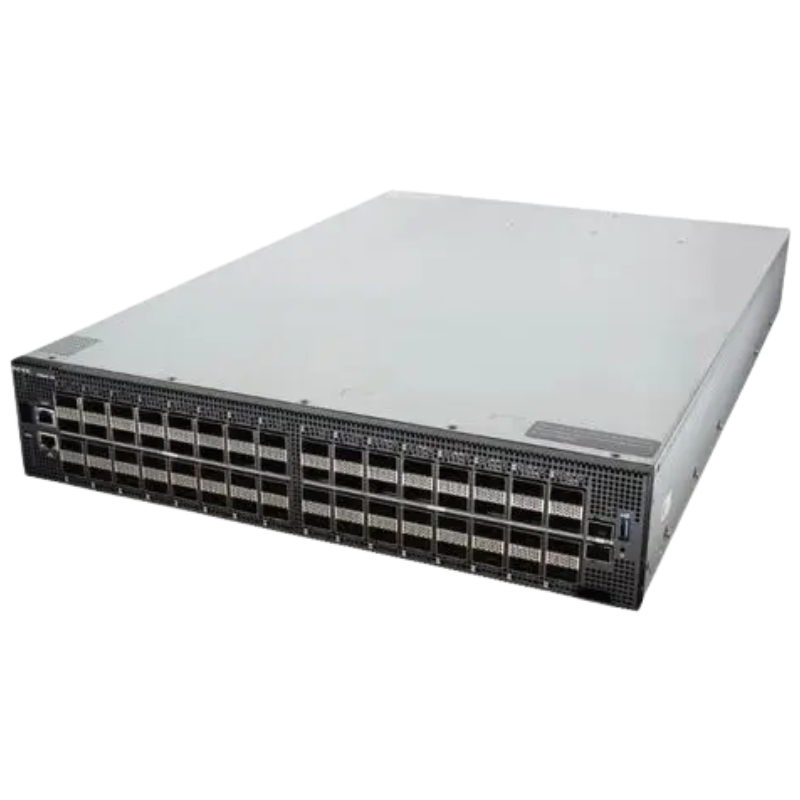
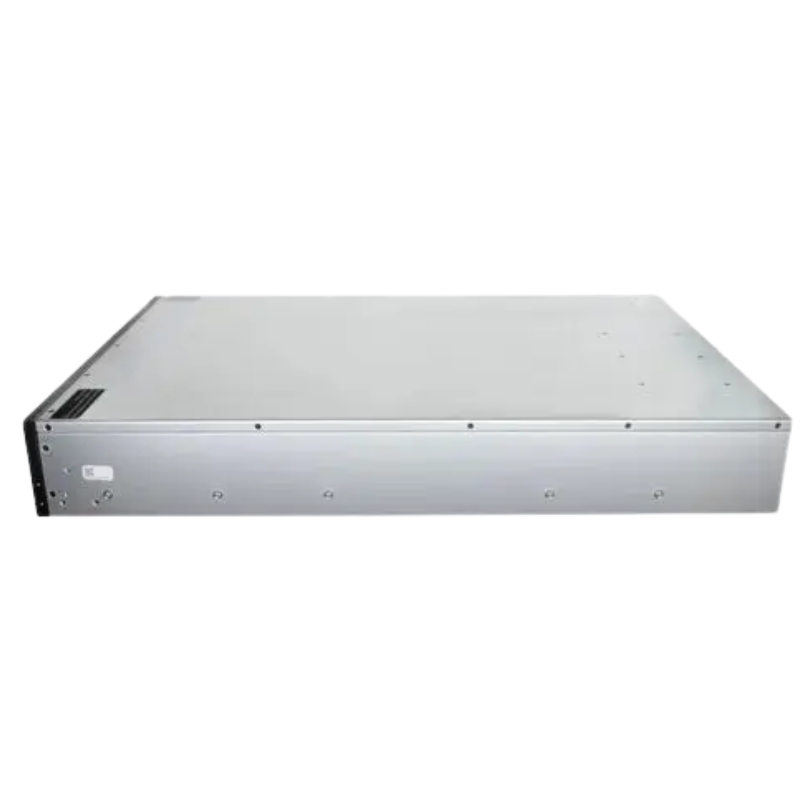
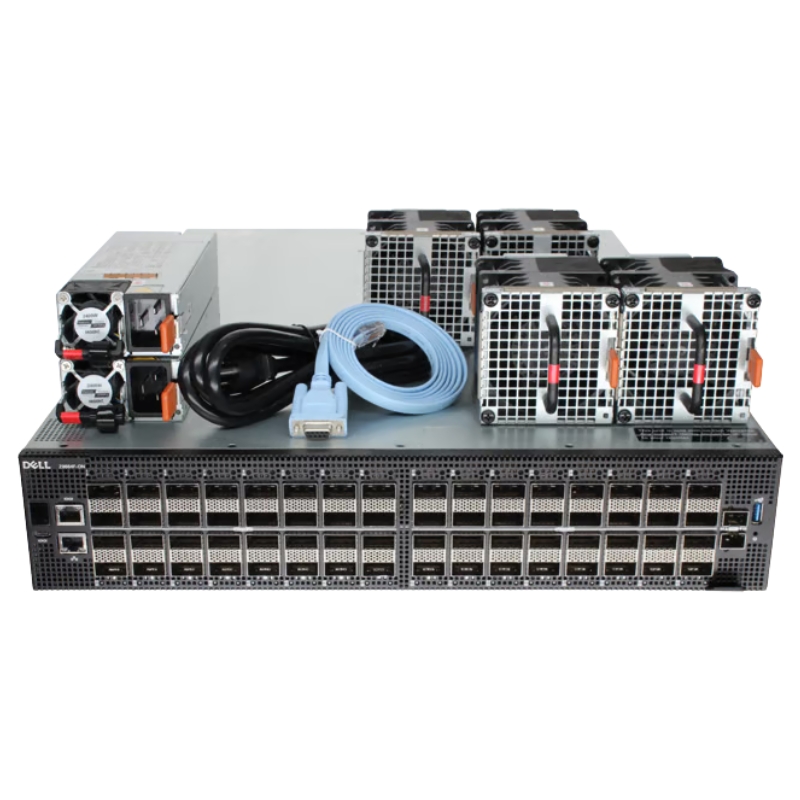
Dell 210-BGBN Z9664F-ON 64-Port 400GBE QSFP56-DD OS10 PSU I/O 2X Hot-Swappable 2400 Watt AC Reverse Airflow Rack Ears Networking Switch. Excellent Refurbished with 1-Year Replacement Warranty
The Dell 210-BGBN Z9664F-ON networking switch is engineered for enterprises requiring ultra-fast connectivity and reliable performance. With 64 high-capacity ports and advanced airflow design, it ensures seamless data transfer and efficient cooling.
The Dell 210-BGBN Z9664F-ON represents a flagship class of high-density, ultra-high-performance data center networking switches engineered for hyperscale, cloud service providers, enterprise core networks, and advanced colocation environments. This category of networking equipment focuses on delivering massive throughput, ultra-low latency, high port density, and operational efficiency while supporting modern open networking standards and disaggregated infrastructure strategies. Designed around 64 ports of 400 Gigabit Ethernet using QSFP56-DD transceivers, this class of switch addresses the exponential growth in east-west traffic, AI and machine learning workloads, distributed storage fabrics, and high-performance computing clusters. Within this category, the Dell Z9664F-ON serves as a cornerstone for next-generation leaf-spine architectures, providing a scalable foundation for organizations transitioning from 100GbE and 200GbE to 400GbE and beyond. This category emphasizes performance, power efficiency, reliability, and flexibility, ensuring seamless integration into heterogeneous environments while maintaining carrier-grade resiliency and enterprise-class manageability.
The defining characteristic of this category is its ability to deliver extremely high bandwidth density within a compact rack footprint. With 64 QSFP56-DD ports supporting 400GbE per port, this switch class achieves an aggregate switching capacity that exceeds 25 terabits per second, enabling massive data flows across data center fabrics. This level of throughput is essential for modern workloads such as distributed AI training, real-time analytics, large-scale virtualization, and container orchestration platforms. Each QSFP56-DD port supports backward compatibility with 100GbE and 200GbE through breakout configurations, allowing flexible network designs and smooth migration paths. This versatility makes the category particularly attractive to organizations that need to future-proof their infrastructure while maintaining compatibility with existing network assets. The architecture prioritizes low latency and high packet forwarding rates, ensuring that mission-critical applications, storage traffic, and latency-sensitive services operate at optimal performance levels. This category is designed to eliminate bottlenecks at the network core and aggregation layers, supporting massive parallelism and high fan-out topologies.
Switches in this category are built around state-of-the-art networking ASICs that provide line-rate forwarding, deep buffering, and advanced telemetry capabilities. These ASICs enable high-performance Layer 2 and Layer 3 forwarding, support for modern encapsulation protocols, and advanced congestion management mechanisms that are essential for large-scale data center fabrics. The Dell Z9664F-ON, as part of this category, leverages high-performance silicon to ensure deterministic packet processing, microsecond-level latency, and support for advanced features such as ECMP, VXLAN, EVPN, and segment routing. This silicon foundation is critical for delivering consistent performance across massive workloads and supporting the evolving needs of modern data center architectures.
This design supports horizontal scalability, allowing data centers to expand capacity incrementally without compromising performance or reliability. By serving as a high-capacity spine, this category enables organizations to build non-blocking, low-latency fabrics that support massive east-west traffic flows. This is essential for modern application architectures, including microservices, distributed databases, and AI workloads, where data movement within the data center often exceeds north-south traffic volumes.
A defining aspect of this category is its support for open networking principles, enabling disaggregated hardware and software models that promote flexibility, innovation, and cost efficiency. The Dell Z9664F-ON is designed to operate with Dell EMC’s OS10 operating system, a modern, modular, and Linux-based network operating system optimized for enterprise and data center environments. OS10 provides a robust platform for automation, programmability, and integration with modern DevOps workflows. It supports a wide range of network protocols, APIs, and management frameworks, enabling organizations to tailor their network behavior to specific operational requirements. This category’s emphasis on open networking allows organizations to avoid vendor lock-in, integrate third-party tools, and adopt best-of-breed solutions across their infrastructure stack.
Reliability and uptime are critical requirements for data center networking equipment, and this category is engineered to meet stringent availability standards. The Dell Z9664F-ON and similar switches incorporate redundant power supplies, hot-swappable components, and robust hardware design to minimize downtime and ensure continuous operation. This category is designed to support mission-critical applications, financial systems, healthcare platforms, and cloud services that demand high availability and fault tolerance. By incorporating redundant systems and hot-swappable components, these switches enable maintenance and upgrades without service disruption, supporting operational continuity and minimizing risk.
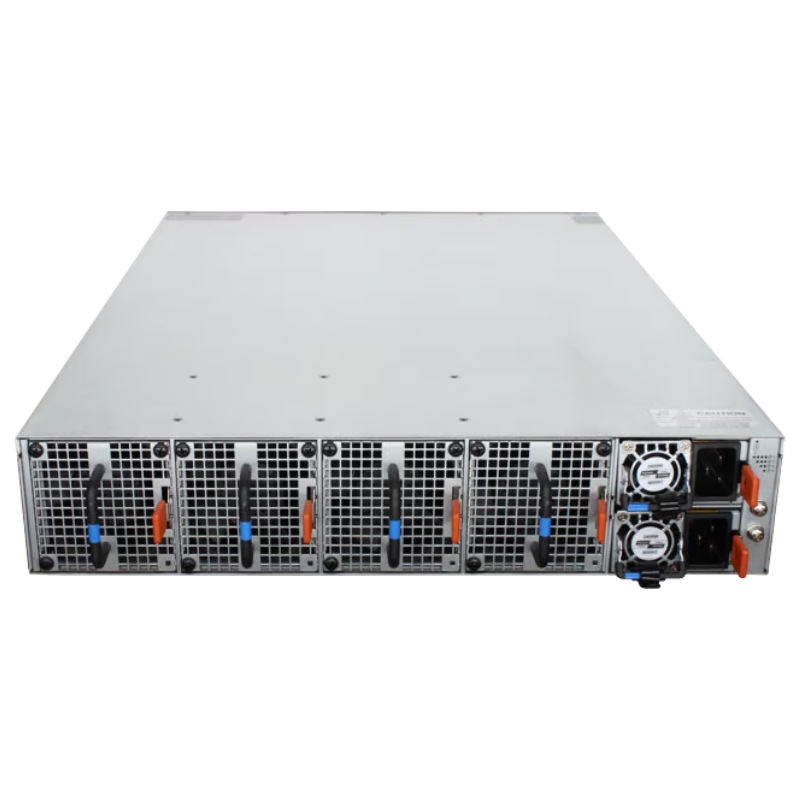
The inclusion of dual hot-swappable 2400 Watt AC power supplies ensures that the switch remains operational even in the event of a power supply failure. This redundancy supports continuous uptime and allows administrators to replace faulty power units without shutting down the device or disrupting network traffic. The high wattage rating of the power supplies supports the energy demands of high-density 400GbE ports, advanced ASICs, and internal cooling systems. This category emphasizes efficient power delivery and thermal management, ensuring stable operation under heavy workloads and high ambient temperatures.
Thermal management is a critical consideration for high-density networking equipment, and this category incorporates advanced cooling systems designed to maintain optimal operating temperatures. The reverse airflow design directs cool air from the rear of the rack to the front, aligning with modern data center airflow strategies and improving cooling efficiency in hot-aisle/cold-aisle environments. This airflow configuration enhances compatibility with data center rack layouts and supports efficient heat dissipation, reducing the risk of thermal throttling and extending component lifespan. By optimizing airflow patterns, this category supports high-performance operation in dense rack environments without compromising reliability.
This category of networking switches is designed to support a wide range of high-performance data center use cases, including cloud computing, AI and machine learning, high-performance computing, large-scale virtualization, and software-defined storage. The combination of high port density, massive throughput, and low latency makes these switches ideal for environments where performance and scalability are paramount. Organizations deploying this category of switch benefit from a flexible platform that can adapt to evolving workloads, emerging technologies, and changing business requirements. The Dell Z9664F-ON, as part of this category, serves as a strategic asset for building resilient, scalable, and future-ready network infrastructures.
Within large enterprise networks, this category serves as a powerful core or aggregation layer switch, interconnecting access and distribution layers while supporting high traffic volumes and diverse application workloads. The ability to handle massive throughput and support advanced routing protocols enables enterprises to build resilient, high-performance network backbones that support digital transformation initiatives.
The inclusion of rack ears ensures that this category of switch can be securely mounted in standard data center racks, supporting both fixed and sliding rail systems. This compatibility simplifies installation and integration into existing infrastructure, reducing deployment time and minimizing operational disruption. Standardized mounting options also support flexible rack layouts, enabling organizations to optimize space utilization, airflow patterns, and cable routing within their data center environments.
Thermal efficiency is achieved through intelligent cooling systems that optimize airflow patterns, fan speeds, and heat dissipation based on real-time temperature and workload conditions. The reverse airflow design supports modern data center cooling strategies, improving overall thermal management and reducing cooling costs. By maintaining optimal operating temperatures, this category ensures consistent performance, extends hardware lifespan, and reduces the risk of thermal-related failures. This focus on thermal efficiency supports reliable operation in dense, high-performance data center environments.


 Contact Us
 Information
 Catalog
 Solid State Drives (SSD)
 Network Switches
 Hard Disk Drives
 HBA & Controllers
 PC & Servers
 PC & Server Memory
 CPU & Processors
 Network Routers
 Power Supplies
 Tape Drives & Libraries
 Network Devices
 Computer & Network Cables