(7% discount is applied at checkout)
Cart is empty
Your go-to destination for cutting-edge server products
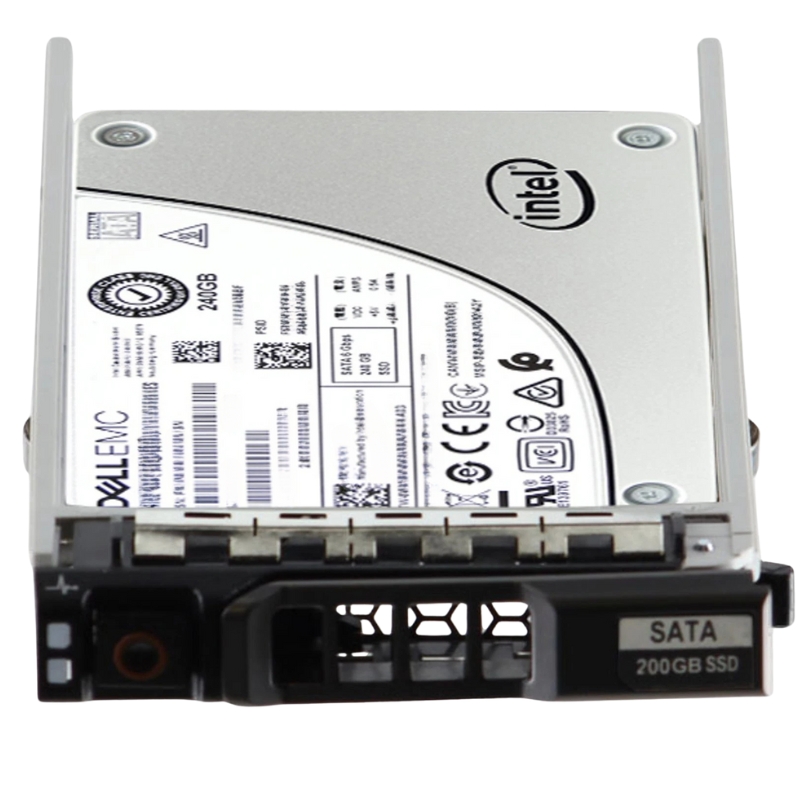


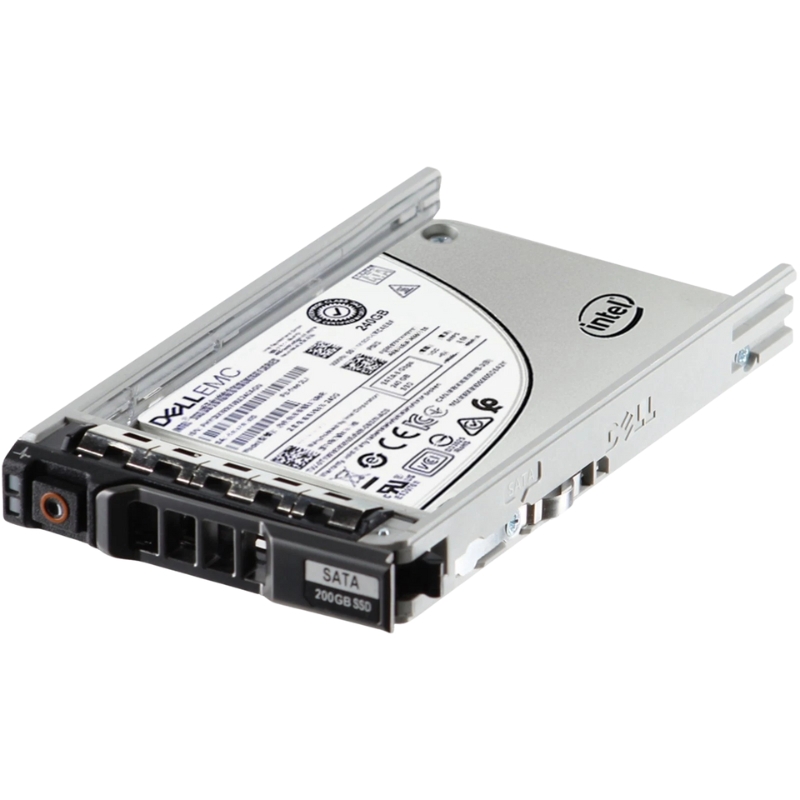
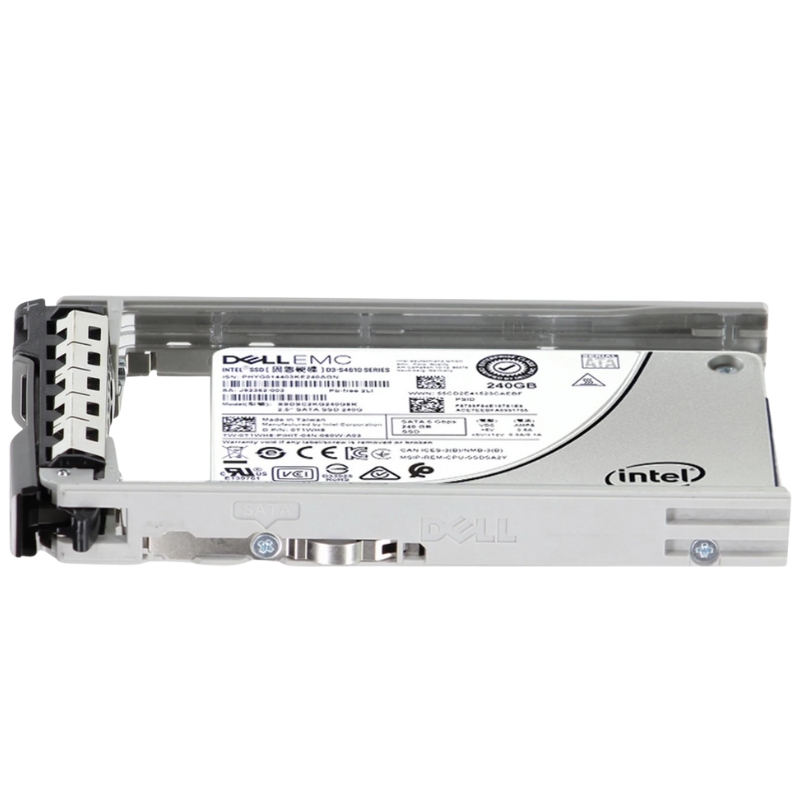
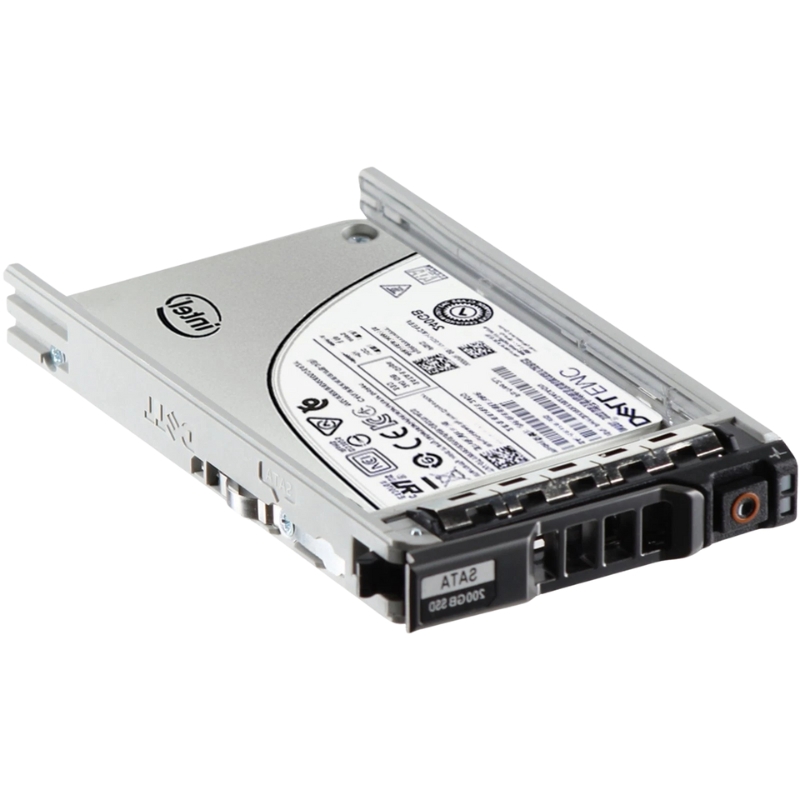
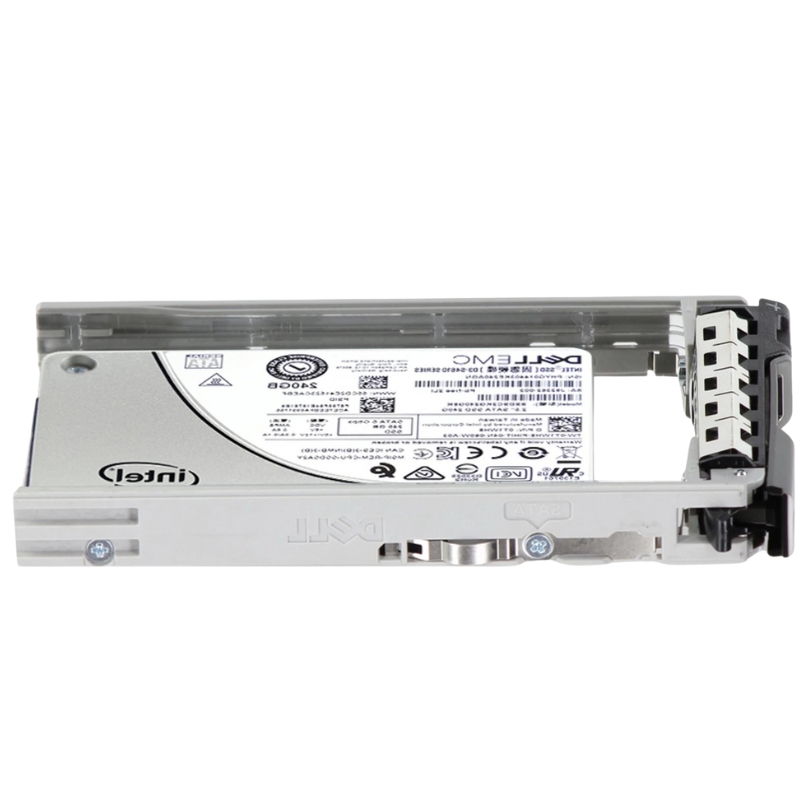
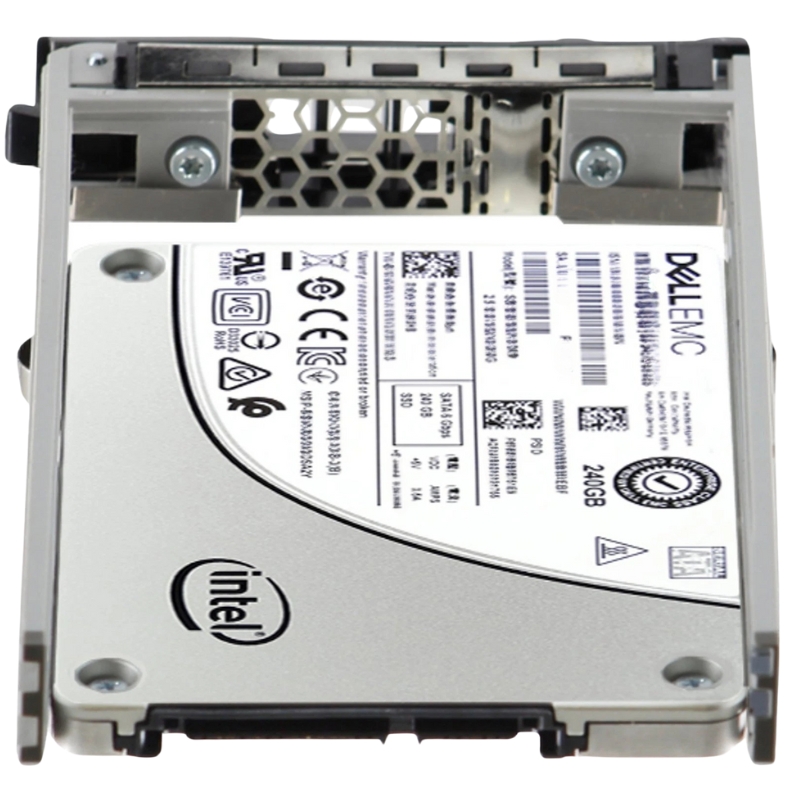
Dell 24RW7 240GB SATA-6GBPS SFF Read Intensive TLC Hot Swap Enterprise SSD. Excellent Refurbished with 1 year replacement warranty
Designed for demanding enterprise workloads where read-heavy performance, predictable latency, and operational continuity matter most, the Dell 24RW7 240GB SATA-6Gbps SFF Read Intensive TLC Hot Swap Enterprise SSD represents a focused balance of cost-efficiency and data center readiness. Built on triple-level cell (TLC) NAND optimized for read-intensive use cases, this drive is a compact 2.5-inch small form factor (SFF) SSD that fits modern rack servers, storage enclosures, and hybrid arrays. With a SATA 6Gbps interface and enterprise-grade firmware, the 24RW7 is engineered to accelerate read-dominant applications while offering the manageability and reliability enterprises require for production deployments.
As a Small Form Factor (SFF) 2.5-inch drive, the 240GB Dell 24RW7 fits standard enterprise drive caddies and sleds, enabling easy integration into Dell PowerEdge servers, storage shelves, and third-party enclosures that accept SFF drives. The compact footprint is particularly valuable in high-density servers, blade chassis, and converged infrastructure where rack space and power per U are at a premium. Compatibility with common RAID controllers and host bus adapters makes it straightforward to deploy as part of tiered storage designs, caching layers, read acceleration pools, or as the primary media for read-dominant application servers.
The performance emphasis for a read-intensive SSD model like the Dell 24RW7 is low-latency, high-throughput reads and consistent random read IOPS under realistic enterprise queuing. While TLC media traditionally trades some write endurance for capacity efficiency, enterprise-grade firmware and controller strategies—such as dynamic over-provisioning, advanced wear-leveling, and intelligent garbage collection—are used to ensure long-term reliability under read-heavy workloads. Typical deployment scenarios that benefit from this profile include large-scale web servers, content delivery, database read replicas, analytics query nodes, virtualization read caches, and storage tiering where reads dominate write operations.
Sequential performance is valuable for bulk reads such as backup restores or large dataset scans, and the SATA 6Gbps interface supports strong sequential throughput for its class. Random performance, measured in IOPS, is frequently the more important metric for enterprise applications such as databases and virtual machines. The 24RW7 is engineered to deliver predictable random read IOPS with low latency under multi-threaded access patterns, supporting thousands of sustained read requests per second depending on workload and host configuration. Performance characteristics are most favorable when the drive is used in read-tier roles or combined with write-optimized media for hybrid configurations.
Although TLC NAND typically offers lower write endurance than SLC or MLC, the Dell 24RW7’s “read intensive” designation signals endurance and firmware provisioning aligned with read-heavy service levels. Enterprise features such as power-loss protection mechanisms, advanced error correction (ECC), end-to-end data path protection, and SMART telemetry improve drive resilience and observability. Dell’s firmware tuning also targets consistent performance across the drive’s lifetime, reducing the risk of latency spikes during internal maintenance operations such as background garbage collection.
Manufacturers rate enterprise SSDs using metrics like MTBF and annualized failure rate (AFR) to indicate reliability expectations. The 24RW7’s design incorporates robust error detection and correction, CRC checks across the data path, and tailored wear-leveling strategies to protect data integrity under enterprise conditions. These protections, along with thorough validation and burn-in during manufacturing, help ensure that the drive meets the uptime and data safety expectations of production environments.
In dense server environments, thermal behavior and power consumption are important considerations. The Dell 24RW7 is engineered with thermal throttling thresholds and efficient power profiles to fit the thermal envelopes of modern rack systems. Under sustained read workloads, the drive maintains performance while limiting thermal rise through efficient controller design and firmware-managed IO scheduling. Power management features also reduce idle power draw and support instantaneous spin-up behavior that is predictable for hot-swap replacements and power cycling in clustered systems.
Hot-swap capability is essential for serviceability in enterprise environments where uptime is critical. The 24RW7’s hot-pluggable design supports removal and replacement without powering down the host, facilitating rapid field servicing and minimizing maintenance windows. This also enables on-the-fly upgrades, drive reseating, and quick repairs during hardware refresh cycles. Best practice dictates ensuring host OS and RAID/controller drivers fully support hot-swap events to prevent transient errors during replacement operations.
Read-intensive enterprise SSDs like the Dell 24RW7 excel in scenarios where read throughput, predictable latency, and cost-effective capacity converge. Common use cases include front-end web servers and caching layers for content delivery networks, virtualization environments using read-heavy VM images, analytics clusters performing repeated queries against large datasets, database read-replicas, log aggregation nodes, and storage tiering where SSDs serve as a read cache in front of higher-capacity HDD tiers. Enterprises also leverage these drives for metadata-heavy workloads—such as file system metadata storage—where small random reads are frequent and low latency is crucial.
In hybrid architectures, the 24RW7 can be paired with higher-endurance SSDs or HDDs to balance cost and serviceability. For example, a tiered array might use the 24RW7 for read cache or read hotspot acceleration, while write-centric drives or HDDs handle bulk storage. This approach lets data centers reduce total cost of ownership (TCO) while still delivering accelerated read performance for critical applications. Integration with software-defined storage solutions and caching layers is straightforward thanks to the SATA interface and predictable performance profile.
Firmware plays a pivotal role in SSD behavior. Dell-validated firmware for the 24RW7 ensures compatibility with tested server platforms and storage controllers. When deploying at scale, administrators should follow validated upgrade paths and cross-check firmware revisions against server and RAID controller compatibility matrices. Firmware updates can include improvements to performance consistency, power management, security patches, and fixes for corner-case behaviors observed in complex storage stacks.
Enterprise SSD security features protect both data at rest and operational integrity. The 24RW7 supports industry-standard features such as secure erase and may support hardware-based encryption or TCG Opal depending on specific model firmware and vendor options. Secure erase functionality is useful when repurposing or decommissioning drives, ensuring that sensitive data is irrecoverable. Additionally, robust error correction and end-to-end data protection mechanisms reduce the likelihood of silent data corruption, which is critical for regulatory compliance and business continuity.
For organizations subject to data protection regulations, the ability to reliably erase or encrypt data on storage media is often a requirement. The Dell 24RW7’s feature set should be validated against the organization’s compliance needs. Enterprises typically document drive encryption status, secure wipe procedures, and chain-of-custody during disposal to satisfy auditing and regulatory requirements.
The Dell 24RW7 occupies a tactical position for read-focused workloads—offering a lower-cost per-gigabyte choice compared with higher-endurance write-optimized SSDs while still providing enterprise-grade manageability and reliability. When evaluating fleet composition, IT architects often pair read-intensive models with mixed-use or write-intensive SSDs depending on application needs. Selecting the right mix reduces upfront media costs while preserving performance for the most demanding I/O patterns. For environments prioritizing maximum write endurance or ultra-low latency, alternative SLC/MLC-based or NVMe solutions may be considered; however, for many read-heavy production roles the 24RW7 delivers compelling value.
Read-intensive SSDs are the smart choice when the majority of I/O requests are reads and predictable read latency is more important than peak write endurance. If workloads involve heavy, sustained writes—such as transactional logging or high-velocity caching—then mixed-use or write-optimized drives provide better longevity. NVMe drives deliver significantly lower latency and higher parallelism than SATA SSDs and are preferable for ultra-low latency or highly concurrent workloads; yet the SATA 6Gbps interface maintains broad compatibility and remains cost-effective for many mainstream enterprise uses.
Total cost of ownership should account for purchase price, power and cooling, expected lifespan under the target workload, and administrative overhead for maintenance. Read-intensive TLC SSDs like the 24RW7 often offer attractive up-front costs and reduced power draw compared with spinning media, which can lower operational expenses in large deployments. Accurate workload characterization and capacity planning are essential to avoid premature drive replacement and to maximize return on investment.


 Contact Us
 Information
 Catalog
 Solid State Drives (SSD)
 Network Switches
 Hard Disk Drives
 HBA & Controllers
 PC & Servers
 PC & Server Memory
 CPU & Processors
 Network Routers
 Power Supplies
 Tape Drives & Libraries
 Network Devices
 Computer & Network Cables