(7% discount is applied at checkout)
Cart is empty
Your go-to destination for cutting-edge server products
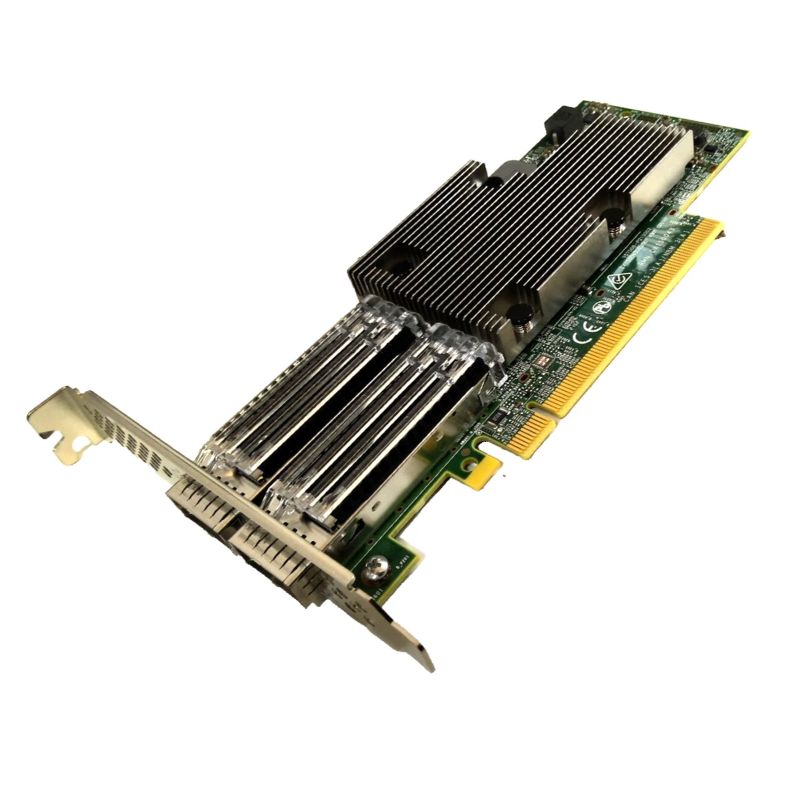


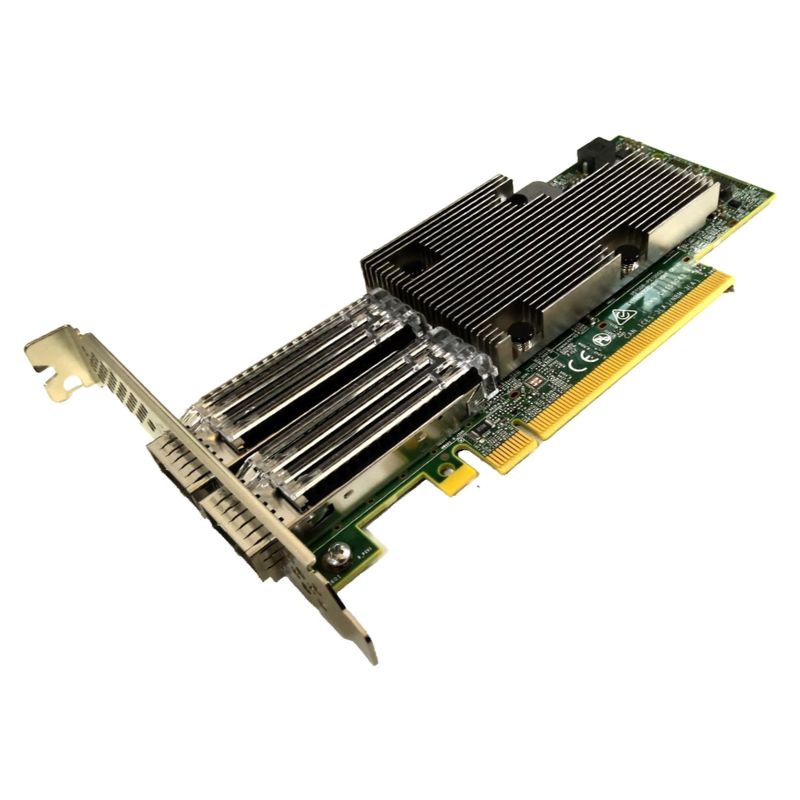
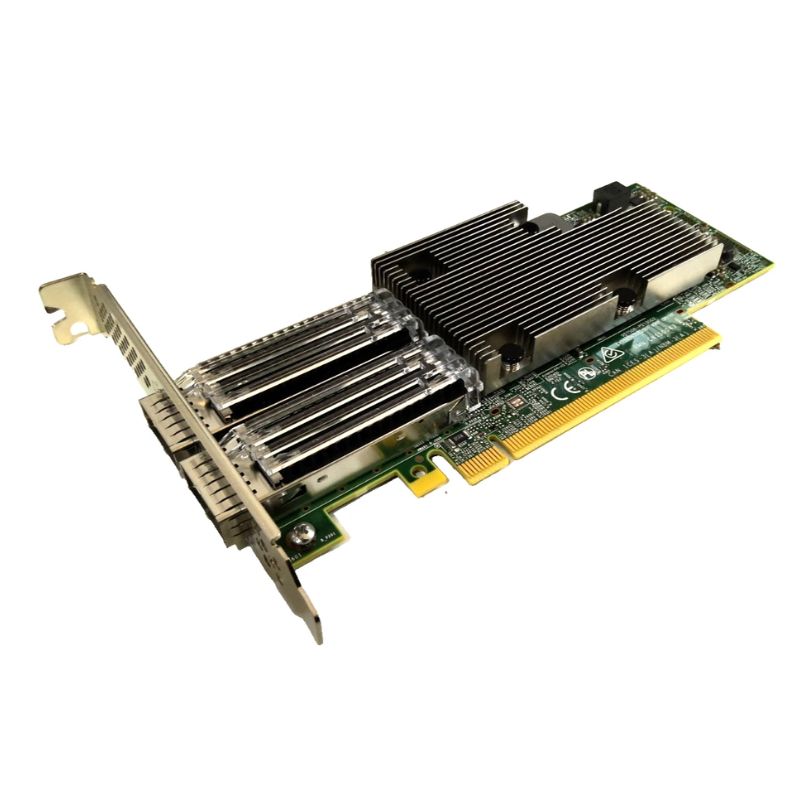
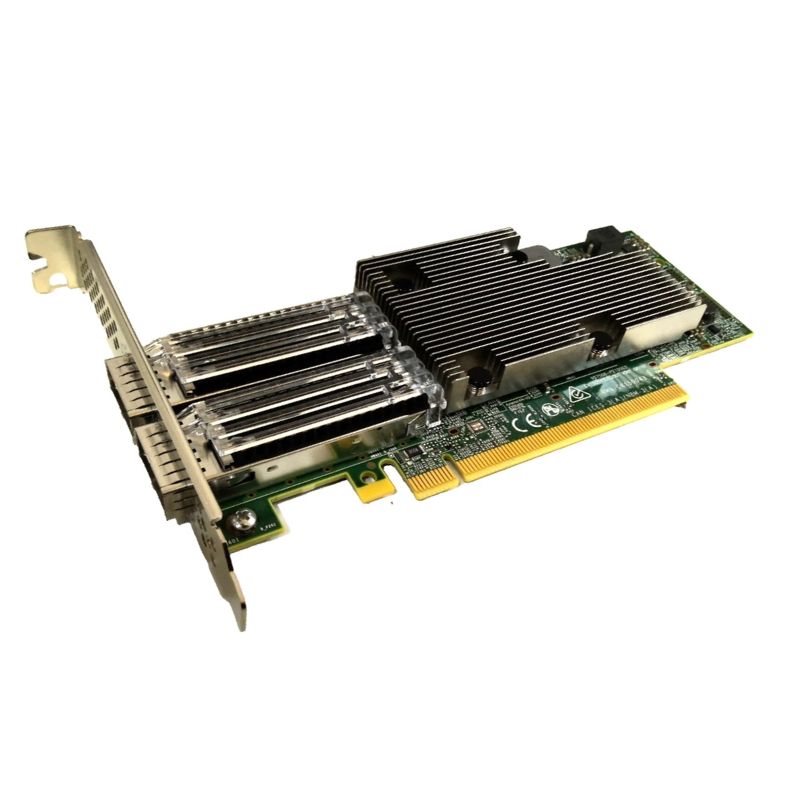
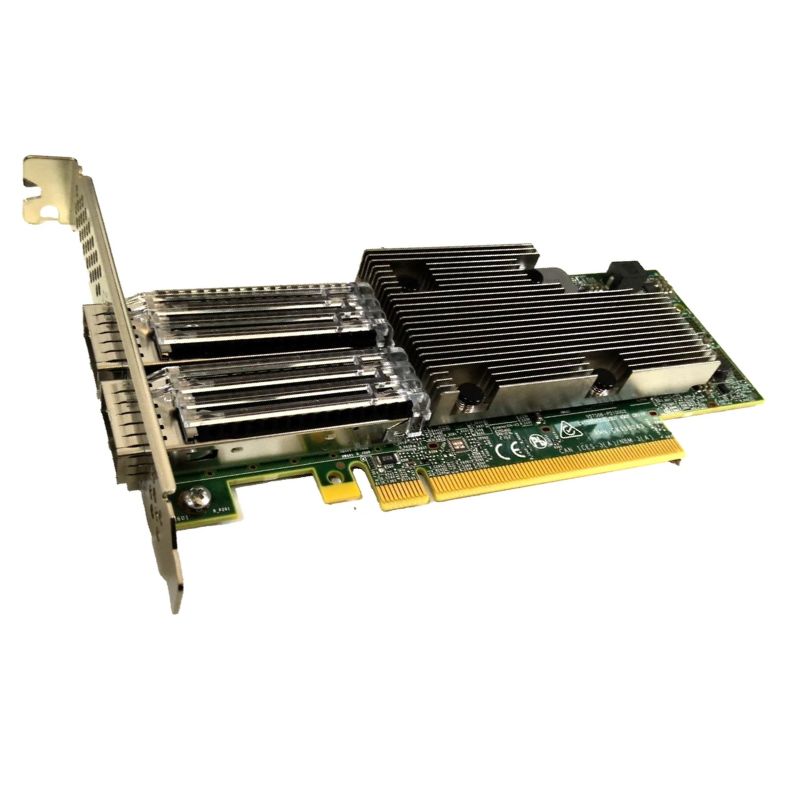
Dell 31XR6 Broadcom 57508 Dual Port 100GbE QSFP PCIe Adapter. Excellent Refurbished with 1 year Replacement Warranty
Overview of the 100GbE QSFP Adapter
These adapters are typically deployed in Dell PowerEdge server environments and are optimized for PCI Express (PCIe) connectivity, ensuring seamless integration with enterprise-grade compute nodes. The QSFP (Quad Small Form-factor Pluggable) interface supports flexible optical and direct-attach copper connectivity, enabling organizations to scale bandwidth without redesigning existing network fabrics. Within this category, solutions are focused on high-efficiency packet processing, hardware offload capabilities, and compatibility with modern software-defined networking (SDN) frameworks.
The 31XR6 Dell Broadcom 57508 Dual Port 100GbE QSFP PCIe Adapter category represents a high-performance class of enterprise network interface solutions engineered for next-generation data center workloads. This category encompasses advanced dual-port 100 Gigabit Ethernet adapters built on the Broadcom 57508 network controller architecture, designed to deliver ultra-low latency, massive throughput, and hardware-accelerated networking capabilities for mission-critical computing environments. As modern infrastructures evolve toward cloud-native architectures, artificial intelligence pipelines, distributed storage systems, and high-density virtualization clusters, this category plays a central role in ensuring scalable and resilient network performance.
At the heart of the 31XR6 Dell Broadcom 57508 Dual Port 100GbE QSFP PCIe Adapter category lies the Broadcom 57508 controller, a powerful network interface processor engineered for extreme throughput and advanced offload functionality. The architecture is built to handle dual 100GbE ports simultaneously, enabling aggregate bandwidth that supports demanding workloads such as distributed AI training, real-time analytics, and large-scale virtualization.
The hardware design emphasizes parallel packet processing pipelines, allowing the adapter to handle millions of packets per second with minimal CPU intervention. This is achieved through advanced offload engines that manage tasks such as TCP/IP segmentation, checksum calculations, and virtualization switching operations. By reducing CPU overhead, the adapter allows host systems to dedicate more resources to application-level workloads rather than network processing.
Another key design aspect is deep integration with PCIe Gen4 or Gen3 lanes depending on server configuration, ensuring sufficient upstream bandwidth to prevent bottlenecks. The architecture also supports multi-queue structures that enable efficient load distribution across CPU cores, improving overall system utilization and responsiveness under heavy traffic conditions.
The PCI Express interface is a defining characteristic of the 31XR6 Dell Broadcom 57508 Dual Port 100GbE QSFP PCIe Adapter category. These adapters are designed to integrate seamlessly into enterprise server motherboards through standard PCIe slots, providing high-bandwidth, low-latency communication between the network adapter and system memory.
PCIe lane allocation plays a crucial role in performance optimization. Depending on system design, these adapters typically utilize x16 or x8 PCIe configurations to maximize throughput. This ensures that both 100GbE ports can operate at full capacity without encountering bottlenecks caused by insufficient bus bandwidth.
Integration is further enhanced through compatibility with major operating systems and hypervisors, including Linux distributions, VMware ESXi, and Windows Server environments. Driver support from Broadcom and Dell ensures stable operation and access to advanced features such as SR-IOV (Single Root I/O Virtualization) and NIC partitioning.
One of the most important aspects of this category is the dual-port 100GbE QSFP interface. Each port supports up to 100 gigabits per second of bidirectional throughput, allowing for a combined potential bandwidth of 200GbE per adapter. This makes the category particularly suitable for high-density environments where network consolidation and efficiency are critical.
The QSFP interface supports multiple optical and copper transceiver options, including QSFP28 modules for long-range optical transmission and direct attach copper (DAC) cables for short-range, low-latency connections. This flexibility allows data center architects to design scalable topologies that meet both performance and cost requirements.
Additionally, the dual-port configuration enables redundancy and failover capabilities. In enterprise environments, this ensures continuous network availability even in the event of port failure or link degradation. Load balancing across both ports can also be implemented to optimize traffic distribution and maximize throughput efficiency.
The Broadcom 57508 chipset is central to the performance and functionality of this adapter category. It integrates a wide range of hardware acceleration features designed to optimize network performance while minimizing host CPU usage. These include TCP/UDP offload engines, stateless offload processing, and advanced checksum offloading mechanisms.
One of the most significant capabilities is support for RDMA over Converged Ethernet (RoCE), which enables direct memory access between servers without involving the CPU. This dramatically reduces latency and improves throughput in distributed computing environments, making it highly valuable for storage clusters and high-performance computing workloads.
The chipset also supports virtualization technologies such as SR-IOV, allowing multiple virtual machines to share a single physical adapter while maintaining isolated and high-performance network paths. This is essential for cloud infrastructure providers and enterprise virtualization environments.
Additional features include large receive offload (LRO), generic segmentation offload (GSO), and support for DPDK (Data Plane Development Kit), which enables user-space packet processing for high-speed networking applications.
Performance is a defining characteristic of the 31XR6 Dell Broadcom 57508 Dual Port 100GbE QSFP PCIe Adapter category. These adapters are engineered to deliver consistent line-rate performance under heavy workloads, ensuring that enterprise applications maintain stability even under peak traffic conditions.
Multi-queue architecture plays a significant role in performance optimization. By distributing network traffic across multiple CPU cores, the adapter reduces bottlenecks and ensures balanced processing. This is particularly important in multi-threaded environments where thousands of simultaneous connections may be active.
Interrupt moderation and adaptive buffering techniques further enhance performance by reducing CPU interrupt overhead and smoothing packet flow. These mechanisms are critical for maintaining low latency in latency-sensitive applications such as financial trading platforms and real-time analytics systems.
In addition, hardware-based packet classification and filtering allow the adapter to efficiently manage traffic prioritization, ensuring that high-priority workloads receive appropriate bandwidth allocation.
The category is widely deployed across multiple enterprise and hyperscale environments. One of the primary use cases is in cloud data centers, where high-density virtualization requires reliable and scalable network infrastructure. The dual 100GbE ports enable efficient VM migration, distributed storage access, and microservices communication.
In high-performance computing (HPC) environments, these adapters support parallel processing workloads such as scientific simulations, weather modeling, and computational fluid dynamics. The low-latency RDMA capabilities are particularly beneficial in reducing inter-node communication delays.
Artificial intelligence and machine learning workloads also benefit significantly from this category. Large-scale model training requires rapid data transfer between GPU clusters and storage nodes, and the high throughput of 100GbE connections ensures minimal bottlenecks during data ingestion and parameter synchronization.
Storage networking is another critical use case, particularly with NVMe over Fabrics (NVMe-oF) and iSCSI implementations. These adapters ensure fast and reliable access to distributed storage arrays, improving application performance and reducing I/O latency.
Virtualization support is a cornerstone of the 31XR6 Dell Broadcom 57508 Dual Port 100GbE QSFP PCIe Adapter category. SR-IOV enables physical network interfaces to be divided into multiple virtual functions, each of which can be assigned to a virtual machine. This allows near-native network performance within virtualized environments.
Cloud service providers rely heavily on this capability to ensure tenant isolation while maintaining high throughput. By bypassing hypervisor overhead in critical data paths, SR-IOV significantly improves packet processing efficiency.
Integration with containerized environments such as Kubernetes further enhances the flexibility of these adapters. Through CNI (Container Network Interface) plugins, network policies and segmentation can be implemented at scale, enabling secure and efficient microservices communication.
High-performance 100GbE adapters generate significant processing loads, requiring efficient thermal management. The 31XR6 Dell Broadcom 57508 Dual Port 100GbE QSFP PCIe Adapter category is designed with optimized heat dissipation systems to ensure stable operation under sustained workloads.
Power efficiency is also a key consideration. Advanced power management features allow the adapter to dynamically adjust power consumption based on traffic load, reducing energy usage during low-demand periods while maintaining peak performance when needed.
Reliability is enhanced through error correction mechanisms, link redundancy features, and firmware-level diagnostics. These capabilities ensure continuous operation in mission-critical environments where downtime is not acceptable.
The scalability of the 31XR6 Dell Broadcom 57508 Dual Port 100GbE QSFP PCIe Adapter category makes it suitable for a wide range of network topologies, including leaf-spine architectures commonly used in modern data centers. These architectures rely on high-bandwidth interconnects to minimize latency and maximize scalability.
In large-scale deployments, multiple adapters can be aggregated to create high-throughput network fabrics capable of supporting thousands of nodes. This is particularly important in hyperscale environments where horizontal scalability is a primary requirement.
Redundant network paths and link aggregation techniques further enhance resilience and ensure continuous availability even during hardware failures or maintenance operations.
QSFP compatibility is a defining feature of this category, supporting a wide range of optical transceivers and DAC cables. QSFP28 modules enable long-distance optical transmission suitable for inter-rack and inter-building connectivity.
Direct attach copper solutions provide cost-effective short-range connectivity within server racks, offering extremely low latency and simplified installation. Active optical cables can also be used to extend reach while maintaining signal integrity.
Proper selection of transceivers and cabling is essential to achieving optimal performance, as cable quality and compatibility directly impact signal stability and throughput efficiency.
Deployment of this category requires careful planning to ensure optimal performance and scalability. Network administrators must consider factors such as PCIe lane availability, airflow management, and firmware consistency across multiple nodes.
Load balancing strategies should be implemented to distribute traffic evenly across both 100GbE ports, maximizing throughput and reducing congestion. Additionally, quality of service (QoS) policies can be applied to prioritize critical workloads.
Regular performance benchmarking is recommended to ensure that the adapter continues to operate at peak efficiency as network demands evolve.
Security is an integral aspect of enterprise networking, and this category incorporates multiple hardware-assisted security features. These include secure boot mechanisms, encrypted firmware validation, and hardware-level packet filtering.
Integration with modern security frameworks allows for traffic segmentation and isolation, reducing the risk of unauthorized access in multi-tenant environments.
Additionally, offload capabilities reduce the need for software-based packet inspection, allowing security appliances to operate more efficiently without compromising throughput.


 Contact Us
 Information
 Catalog
 Solid State Drives (SSD)
 Network Switches
 Hard Disk Drives
 HBA & Controllers
 PC & Servers
 PC & Server Memory
 CPU & Processors
 Network Routers
 Power Supplies
 Tape Drives & Libraries
 Network Devices
 Computer & Network Cables