
(7% discount is applied at checkout)
Cart is empty
Your go-to destination for cutting-edge server products
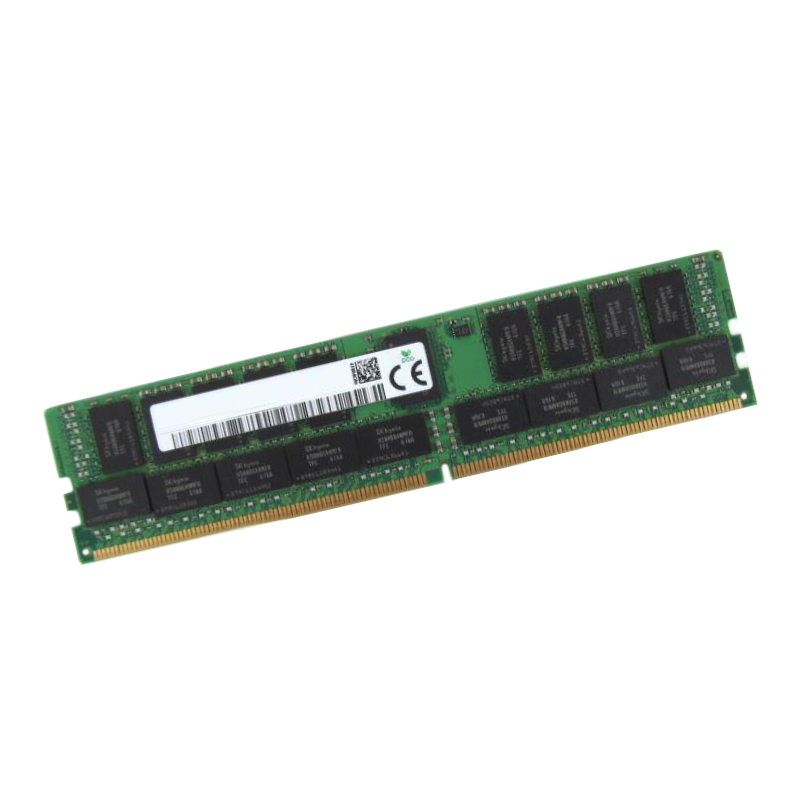
Dell 3C90W 32GB DDR4 2133MHz PC4-17000 ECC Registered 2RX4 CL15 288-Pin RDIMM 1.2V Module Memory. New Sealed in Box (NIB)
| SKU/MPN | Warranty | Price | Condition | You save |
|---|---|---|---|---|
| 3C90W | 1 Year Warranty | $383.00 | New (System) Pull | You save: $134.05 (26%) |
| 3C90W | 1 Year Warranty | $499.00 | New Sealed in Box (NIB) | You save: $174.65 (26%) |
High-performance 32GB DDR4 server memory from Dell Technologies Limited, model 3C90W. This ECC Registered RDIMM module delivers reliable error-correcting memory for enterprise servers, workstations and data-centre systems.
The Dell 3C90W 32GB DDR4 2133MHz memory module represents a specific class of server memory engineered for reliability, performance, and data integrity in demanding enterprise environments. As an ECC Registered RDIMM, this module is not intended for standard desktop computers but is a crucial component for servers, high-end workstations, and data center infrastructure. Understanding its specifications and compatibility is paramount for IT professionals, system administrators, and procurement specialists looking to maintain, upgrade, or build robust Dell PowerEdge and other compatible server systems.
Before delving into the benefits and applications, it's essential to decode the part number and key specifications of the Dell 3C90W module. Each element of its description signifies a critical aspect of its design and functionality.
The 32GB capacity of this module makes it an excellent choice for memory-intensive applications. In modern server environments, where virtualization, large databases, and in-memory processing are common, having substantial RAM per module is a significant advantage. It allows systems to achieve high total memory capacities with fewer physical slots occupied, which can be crucial for maximizing the potential of a server chassis.
The speed of 2133MHz (Megahertz) refers to the data transfer rate, meaning it can perform 2.133 billion transfers per second. In the DDR4 spectrum, 2133MHz is considered a base speed, often providing a balance of performance, stability, and compatibility with a wide range of server platforms, especially those from the earlier generations of DDR4 support.
The "PC4-17000" designation is another way to express the module's bandwidth. It is calculated by multiplying the bus speed (in MHz) by 8 (bytes transferred per clock cycle, due to DDR being 64-bit). 2133 MHz * 8 Bytes/cycle = approximately 17,064 MB/s, which is rounded to 17000. This "PC4" number indicates the theoretical peak transfer rate in megabytes per second (MB/s), which in this case is 17,000 MB/s.
This is where the Dell 3C90W truly distinguishes itself from consumer-grade memory. The terms "ECC" and "Registered" are foundational to its enterprise-grade status.
ECC memory includes extra bits (e.g., 8 bits for a 64-bit word) to store an encrypted code. As data is written to memory, the ECC code is calculated and stored. When the data is read, the code is recalculated and compared to the stored code. If a single-bit error is detected, the ECC circuitry corrects it instantly without any intervention from the operating system. Multi-bit errors are detected and reported, allowing the system to halt to prevent data corruption. In a server running 24/7, where even a single undetected memory error could corrupt a database, crash a virtual machine, or lead to miscalculations, ECC is not a luxury—it is a necessity for data integrity.
Registered memory includes a register, or buffer, placed between the system's memory controller and the DRAM chips on the module. This buffer handles the electrical load (or "fan-out") on the memory controller by re-driving the command and address signals. This reduces the electrical strain on the memory controller, allowing a single system to support a much larger number of memory modules and a higher total capacity than would be possible with Unbuffered (UDIMM) memory. The trade-off is a slight increase in latency (typically one clock cycle) due to the buffering process, but for server workloads that prioritize capacity and stability over ultra-low latency, this is an acceptable and essential compromise. The "2RX4" in the part name indicates the module's rank and physical organization, which is part of this overall design for high-density memory support.
The Dell 3C90W utilizes the standard 288-pin layout defined for DDR4 RDIMMs. This physical design is keyed differently from DDR3 modules to prevent accidental insertion into an incompatible motherboard. The RDIMM form factor is specifically engineered for server motherboards, ensuring a secure and reliable connection in environments that may be subject to vibration or other physical stresses.
One of the generational improvements of DDR4 over DDR3 is a reduction in operating voltage. This module runs at 1.2V, down from DDR3's typical 1.5V or 1.35V. This lower voltage translates directly into lower power consumption and reduced heat output, which is a critical factor in densely packed server racks where thermal management and energy efficiency are major operational concerns.
The CAS Latency (CL) of 15 is a timing parameter that indicates the number of clock cycles between a read command and the moment data is available. A CL15 rating at 2133MHz is a standard and robust timing for this class of server memory, offering a good balance of responsiveness and stability.
Identifying the correct memory for a server is a critical task. The Dell 3C90W is not a universal part and is designed for specific Dell platforms and potentially other compatible systems that share the same requirements.
This memory module is a certified and validated component for numerous Dell PowerEdge server families. It is crucial to consult the specific technical guide for your server model to confirm compatibility, but it is commonly used in generations such as the 13th generation (e.g., PowerEdge R730, R730xd, T630, M630) and other platforms that support DDR4 2133MHz RDIMMs. Using Dell-certified memory like the 3C90W ensures full system compatibility, optimal performance, and preserves the system's warranty and support agreements.
Server manufacturers maintain a Qualified Vendor List (QVL) for components like memory. The Dell 3C90W is on the QVL for the servers it is designed for, meaning it has been rigorously tested by Dell to function flawlessly with the specific memory controller, BIOS, and hardware of those systems. Using non-QVL memory can lead to boot failures, system instability, and performance issues.
The characteristics of the Dell 3C90W 32GB RDIMM make it exceptionally well-suited for a variety of demanding server roles.
Platforms like VMware vSphere, Microsoft Hyper-V, and Proxmox VE are notoriously memory-hungry. Each virtual machine (VM) requires a dedicated portion of physical RAM. A server equipped with multiple 32GB RDIMMs can host dozens of VMs, improving consolidation ratios and maximizing the return on investment for hardware and data center space.
Database applications such as Microsoft SQL Server, Oracle Database, and MySQL often benefit from having large portions of their active datasets cached in memory to accelerate query performance. The 32GB capacity and ECC protection of this module are vital for both the speed and integrity of critical business data.
Workloads involving scientific computing, financial modeling, and big data analytics (e.g., with Apache Spark) often process massive datasets in memory. The large capacity per module allows for the construction of servers with hundreds of gigabytes or even terabytes of RAM, enabling these memory-bound computations to complete efficiently.
Even traditional file servers and application servers (like those running ERP or CRM software) benefit from the stability of ECC memory and the capacity to handle multiple concurrent user sessions and caching operations without slowing down.


 Contact Us
 Information
 Catalog
 Solid State Drives (SSD)
 Network Switches
 Hard Disk Drives
 HBA & Controllers
 PC & Servers
 PC & Server Memory
 CPU & Processors
 Network Routers
 Power Supplies
 Tape Drives & Libraries
 Network Devices
 Computer & Network Cables