(7% discount is applied at checkout)
Cart is empty
Your go-to destination for cutting-edge server products
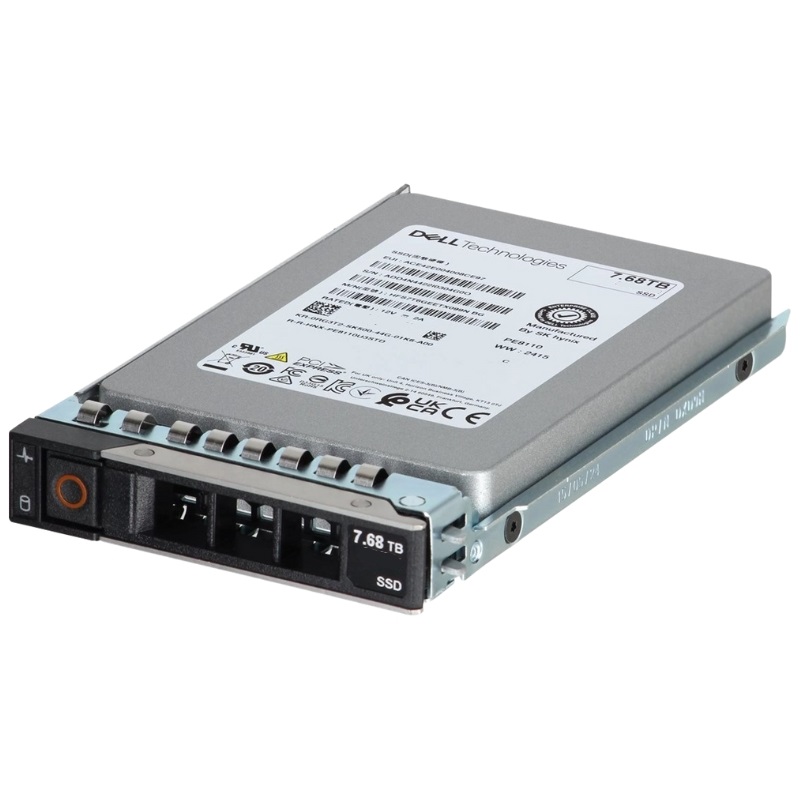


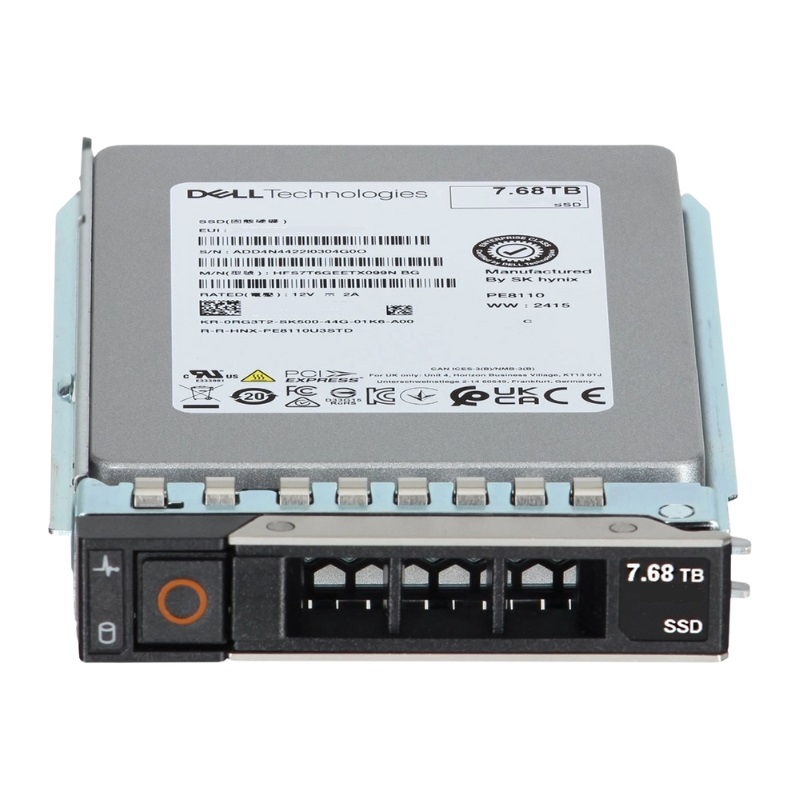
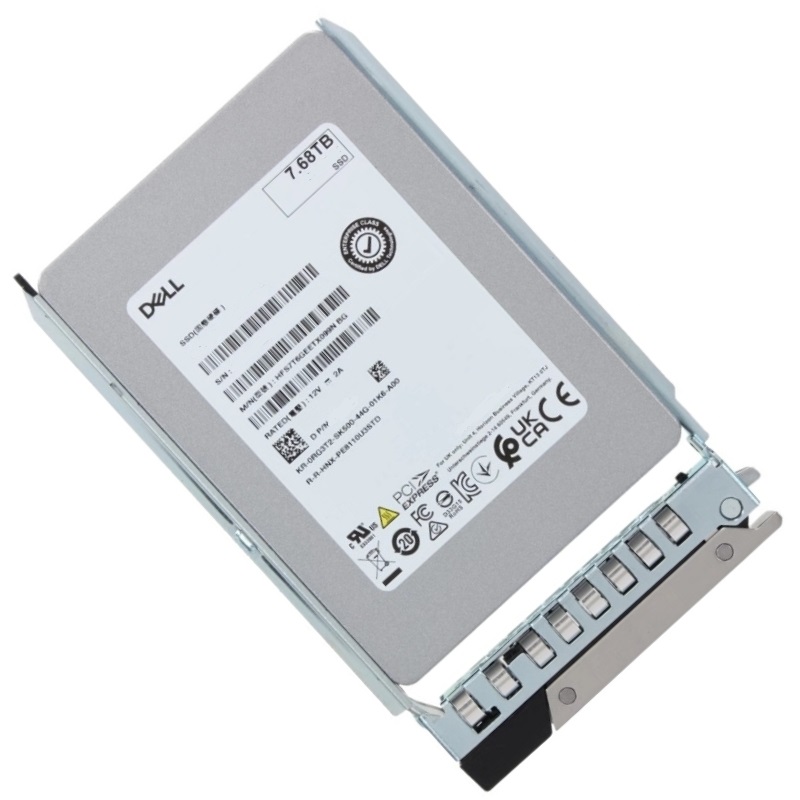
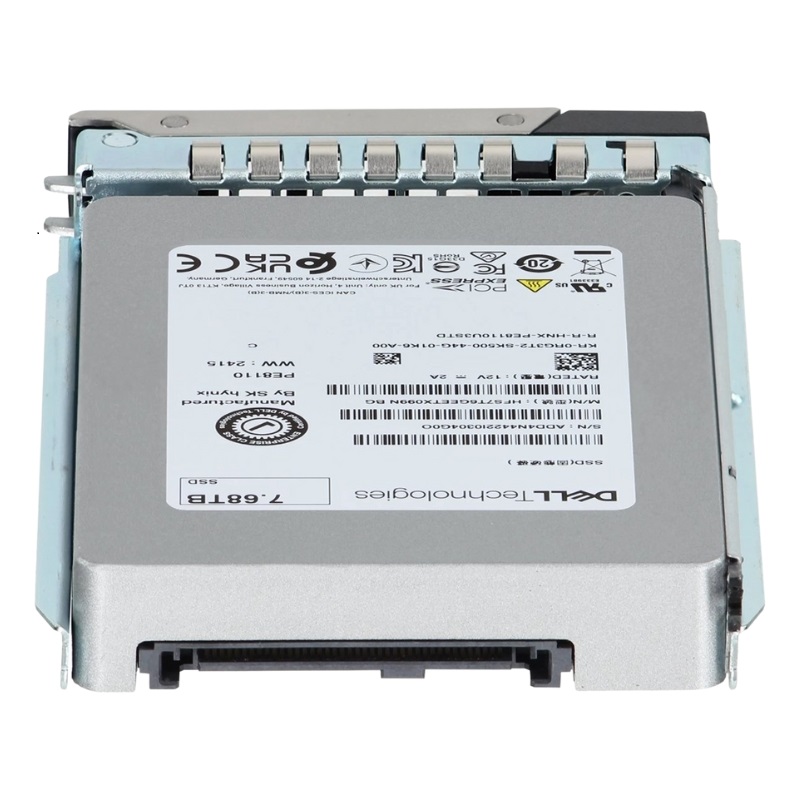
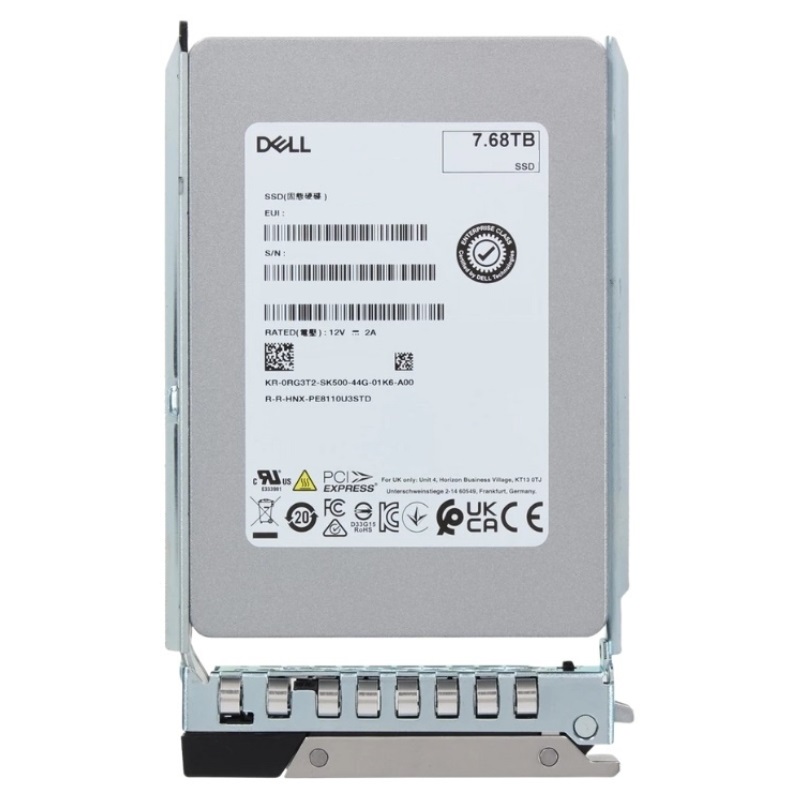
Dell 345-BBBQ 7.68TB SAS 12GBPS 2.5inch TLC Read Intensive 1DWPD Hot-plug Certified Solid State Drive. New Sealed in Box (NIB) with 1 year Replacement Warranty
The Dell 345-BBBQ 7.68TB SAS 12Gbps 2.5-inch TLC Read Intensive 1DWPD Hot-plug Solid State Drive brings enterprise-grade reliability, predictable performance, and dense capacity into a compact small-form-factor footprint designed for modern data centers. As part of the read-intensive class, this drive prioritizes sustained throughput, fast access to frequently read datasets, and low-latency consistency while maintaining an endurance profile tailored to real-world server workloads. Whether deployed in Dell PowerEdge platforms, integrated into shared storage arrays, or used in tiered architectures, the Dell 345-BBBQ 7.68TB SSD offers a careful balance of capacity, efficiency, and integration readiness to help organizations scale without compromising operational resilience.
Purpose-built for environments where the majority of I/O is read-dominant, the drive’s TLC NAND architecture and 1 DWPD endurance target provide a cost-efficient path to high-capacity solid-state storage that remains dependable under daily production demands. In addition to SAS-3 12Gbps connectivity and hot-plug usability for streamlined serviceability, the 2.5-inch form factor ensures broad compatibility across enterprise chassis, backplanes, and infrastructure designs. The category’s emphasis on read-intensive, hot-plug SAS SSDs aligns with use cases like virtualization boot images, large content repositories, analytics reference sets, email and collaboration platforms, and cloud-scale object or block storage tiers where predictable read performance and high availability are essential.
The Dell 345-BBBQ 7.68TB SAS 12Gbps 2.5-inch TLC Read Intensive 1DWPD Hot-plug Solid State Drive also fits neatly into performance-per-watt initiatives, simplifying the journey to lower power consumption while increasing the density of critical data. By combining proven SAS protocol reliability with enterprise firmware and controller logic optimized for queue depth and multi-initiator environments, this category supports the operational priorities of IT teams who need both speed and stability, along with the flexibility to mix multiple RAID configurations depending on the service’s tolerance for risk and capacity objectives.
At the heart of the Dell 345-BBBQ 7.68TB category is the SAS-3 12Gbps interface, a cornerstone of enterprise storage due to its robust signaling, dual-port capability, and hardened error-handling features. Unlike consumer SATA, SAS provides higher bandwidth potential, better multi-initiator coordination, and comprehensive command sets that suit clustered or shared-storage configurations. The 12Gbps link speed facilitates efficient sequential transfers and responsive access performance even when multiple workloads contend for resources, while the SAS stack’s maturity supports stable operation over long duty cycles. For organizations leveraging Dell server backplanes and SAS expanders, this interface fits the shape of enterprise deployment, bringing predictable behavior and fewer surprises during peak load windows.
Integration with Dell server ecosystems is a defining trait of this category. The 2.5-inch hot-plug design enables quick replacement without powering down the server, which helps maintain uptime in mission-critical applications. In enclosures designed for SAS drives, the Dell 345-BBBQ 7.68TB SSD aligns with standard trays and caddies, cooperating with the backplane’s power and data distribution. IT teams benefit from streamlined fleet management, simplified procurement, and confidence that the drive’s protocol-level characteristics will be compatible with existing controllers, HBA cards, and monitoring tools used widely across Dell’s infrastructure. SAS also continues to be relevant in hybrid environments where NVMe may handle ultra-latency-sensitive workloads while SAS layer reliably supports core data services and capacity tiers.
Beyond connectivity, SAS drives in this read-intensive category typically implement features that favor enterprise durability. Protocol timeouts, queue management, and link-level recovery mechanisms are tuned for minimal service disruption and predictable behavior during events like link resets or expander reconfigurations. For multi-path setups, SAS dual-port functionality can offer added resilience through redundant paths, enhancing accessibility during maintenance or component failure. These characteristics ensure the Dell 345-BBBQ 7.68TB SAS 12Gbps SSD is not just fast, but also engineered for the realities of continuous operations.
The 2.5-inch SFF profile of the Dell 345-BBBQ 7.68TB SSD is central to its versatility and density advantages. Modern server chassis are optimized around 2.5-inch bays to maximize drive count per rack unit, enabling more terabytes per server, more I/O channels per node, and finer-grained scaling. Hot-plug capability complements that density by allowing drives to be inserted or removed while the system remains online, which is particularly useful for replacing drives proactively, adding capacity, or isolating devices for diagnostic checks without impacting service availability. This reduces maintenance windows, accelerates incident response, and supports continuous delivery practices.
Operationally, hot-plug functionality minimizes risk during component swaps by coordinating power sequencing and link initialization at the backplane level. The SAS protocol and enterprise controllers work with the enclosure to recognize the insertion, negotiate link parameters, and bring the device online in a consistent, controlled manner. When aligned with best practices for device replacement, hot-plug actions become part of routine operations rather than emergency maneuvers, enabling IT teams to adopt a lifecycle approach that anticipates wear and maintains fleet health. In environments with strict SLAs, this design choice supports uptime metrics and helps avoid customer-facing disruption.
The compact form factor also aligns with thermal and acoustic considerations. 2.5-inch bays facilitate efficient airflow patterns, allowing more predictable cooling per drive while preserving room for power supplies, memory, and CPU heat sinks. This interplay of form factor and airflow contributes to overall system reliability, ensuring the drive can sustain its performance characteristics under typical server thermal loads. When combined with server-level management tools, technicians can track temperature thresholds, adjust fan curves, and maintain optimal operating conditions for the Dell 345-BBBQ 7.68TB SAS SSD throughout its lifecycle.
Triple-Level Cell (TLC) NAND provides the capacity and cost efficiency required for large-scale read-intensive deployments. The Dell 345-BBBQ 7.68TB SAS 12Gbps 2.5-inch TLC Read Intensive SSD leverages TLC’s density to deliver substantial storage per drive while aligning endurance to realistic enterprise usage patterns. Read-intensive classifications recognize that many server workloads skew toward reads, with writes occurring in bursts or at lower sustained rates. This distribution allows the drive to maintain solid performance characteristics and reliability while optimizing total cost of ownership in comparison to higher-endurance, write-intensive alternatives that may be unnecessary for these scenarios.
In practice, TLC NAND paired with enterprise-grade controllers and firmware can produce consistent read throughput, stable latency under queue depths common in virtualized environments, and predictable behavior during sustained traffic. Error correction codes, wear-leveling strategies, and block management routines ensure that TLC’s higher bits-per-cell design remains resilient over time. The balance of performance and endurance is fine-tuned for server applications, avoiding the volatility sometimes seen in consumer-class devices by prioritizing reliability features, thermal management, and power loss countermeasures.
For cache-heavy and reference-dataset workloads, TLC-based read-intensive drives often deliver throughput gains versus legacy spinning disks while controlling capital expenditure. The key is not only raw read speed but latency stability and timely completion under concurrency, ensuring that application threads get consistent service. By selecting the read-intensive TLC profile, organizations can position the Dell 345-BBBQ category as a mainline storage tier for assets that must be performant at scale yet cost-managed for steady expansion.
Drive Writes Per Day (DWPD) is a practical way to express endurance in enterprise contexts. A rating of 1 DWPD indicates the drive is engineered to handle the equivalent of one full drive write per day across its warranted service life under typical enterprise conditions. For a 7.68TB capacity device, this provides ample write allowance for many read-heavy workloads that still produce periodic write activity, such as updates, logging, metadata changes, index rebuilding, or patch deployment. It frames a realistic boundary that aligns with the everyday write patterns in virtualization hosts, file servers, content distribution nodes, and analytic query layers.
Endurance in the read-intensive class reflects a balance between longevity and budget. While write-intensive applications like continuous high-rate database logging or heavy OLTP workloads may require drives with higher DWPD or different NAND types, the 1 DWPD profile allows data center operators to scale quickly and sustainably for the majority of business services. This rating is further supported by firmware-level controls that manage write amplification, garbage collection timing, and thermal behavior, ensuring the drive’s wear characteristics remain within expected ranges during normal operations.
When planning deployments with the Dell 345-BBBQ 7.68TB SSD category, administrators should consider DWPD alongside RBM (read-byte mix), average daily writes from their monitoring data, and RAID overheads. In many environments, actual write rates are significantly below the DWPD limit, so the drive remains well within endurance margins while delivering performance advantages. This sizing discipline avoids overprovisioning and helps IT teams commit budgets to capacity and redundancy where they matter most.
Read-intensive SAS SSDs are engineered for high sustained read throughput and stable, low-latency access to frequently requested data. In virtualized environments, the Dell 345-BBBQ 7.68TB SAS 12Gbps 2.5-inch TLC Read Intensive SSD typically delivers responsive boot storms, fast VM migration staging, and swift application launches. The emphasis is on repeatable performance rather than peak-only metrics, so administrators can count on predictable behavior as workloads ebb and flow. Queue depth management is tuned for server scenarios, which often involve mixed I/O patterns and multi-threaded access, ensuring that reads remain swift as concurrency rises.
Sequential read operations benefit from the SAS 12Gbps pipeline and the drive’s internal controller optimizations, enabling efficient streaming of large files, backups, or media assets. Random read patterns, common in database lookups or index scans, are supported by NAND-level parallelism and intelligent caching to minimize access times to scattered data blocks. This dual-strength profile makes the Dell 345-BBBQ category suitable for a broad spectrum of services where read performance directly affects user experience and backend throughput.
Write behavior in read-intensive drives remains controlled and consistent for the intended usage profile. While not designed for continuous, extreme write workloads, the drive manages everyday write tasks reliably, including configuration changes, periodic data refresh cycles, and metadata operations. Administrators deploying the Dell 345-BBBQ 7.68TB SAS SSD should align these characteristics with application needs, placing ultra-write-heavy tasks on appropriate tiers while capitalizing on the read strengths of this category for the bulk of operational datasets.


 Contact Us
 Information
 Catalog
 Solid State Drives (SSD)
 Network Switches
 Hard Disk Drives
 HBA & Controllers
 PC & Servers
 PC & Server Memory
 CPU & Processors
 Network Routers
 Power Supplies
 Tape Drives & Libraries
 Network Devices
 Computer & Network Cables