(7% discount is applied at checkout)
Cart is empty
Your go-to destination for cutting-edge server products
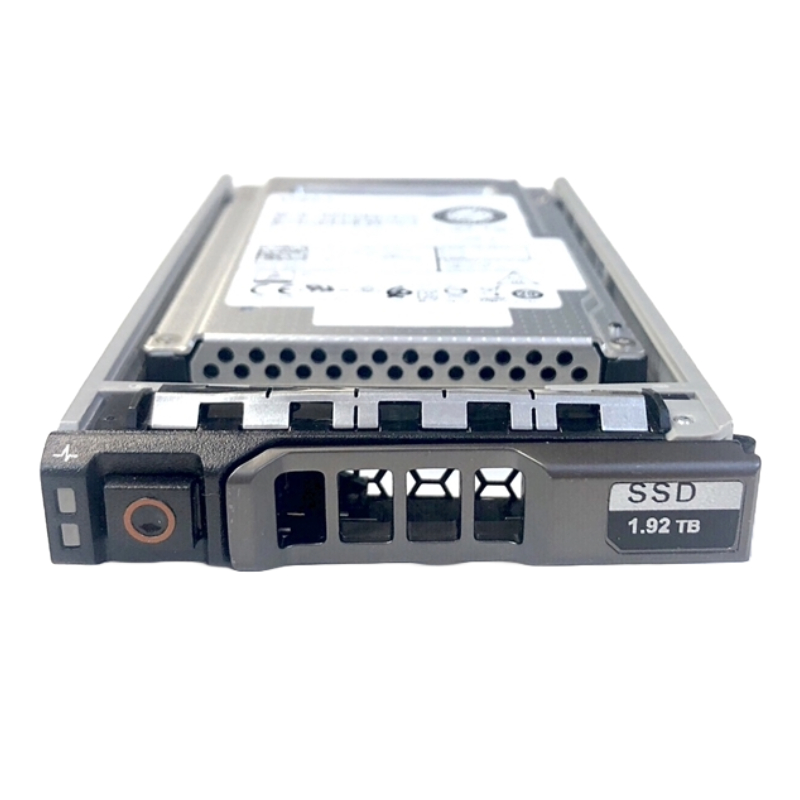


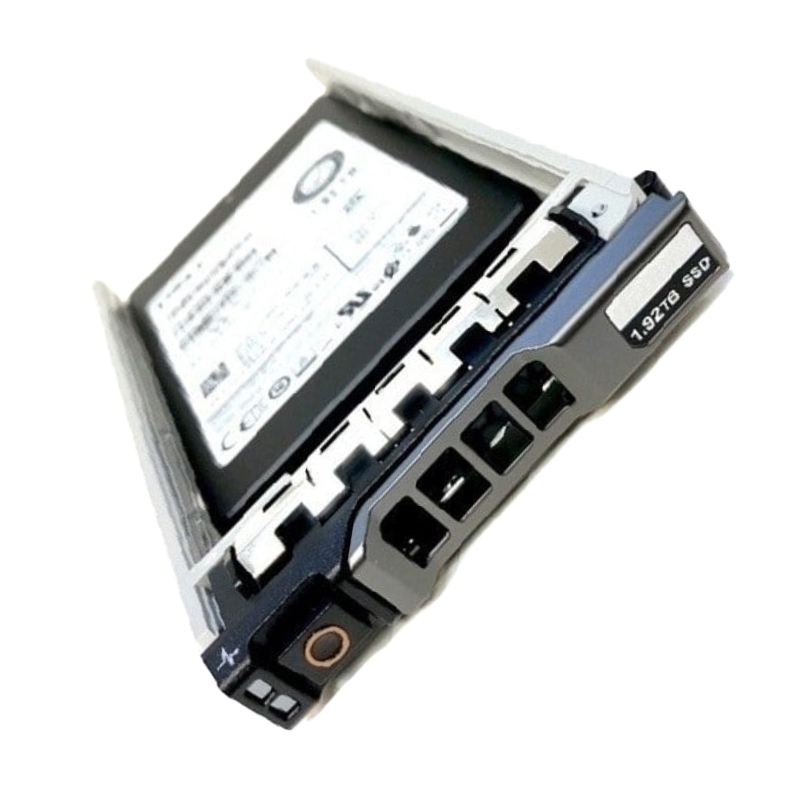
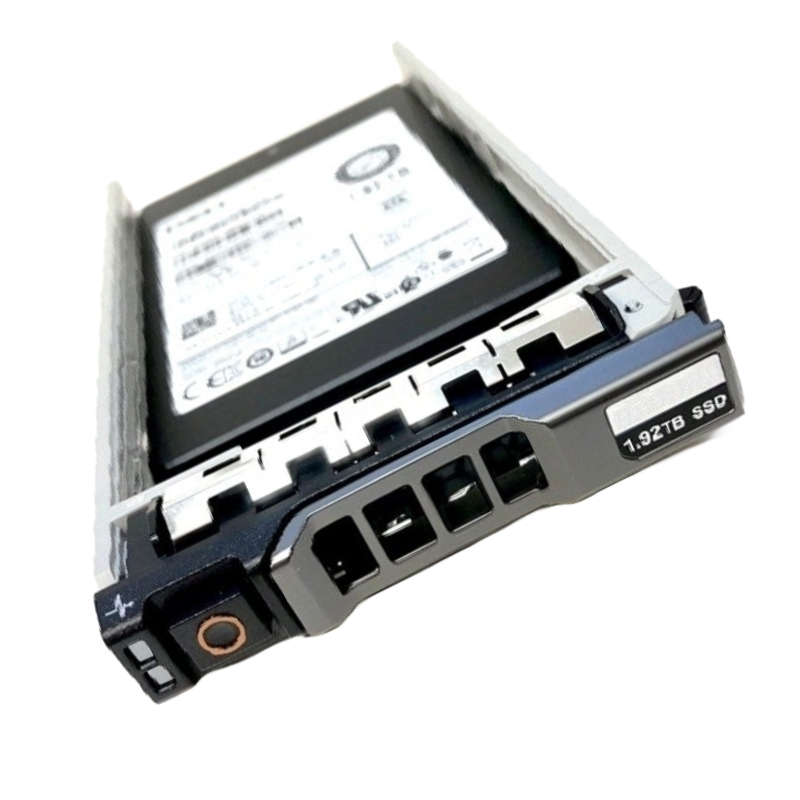
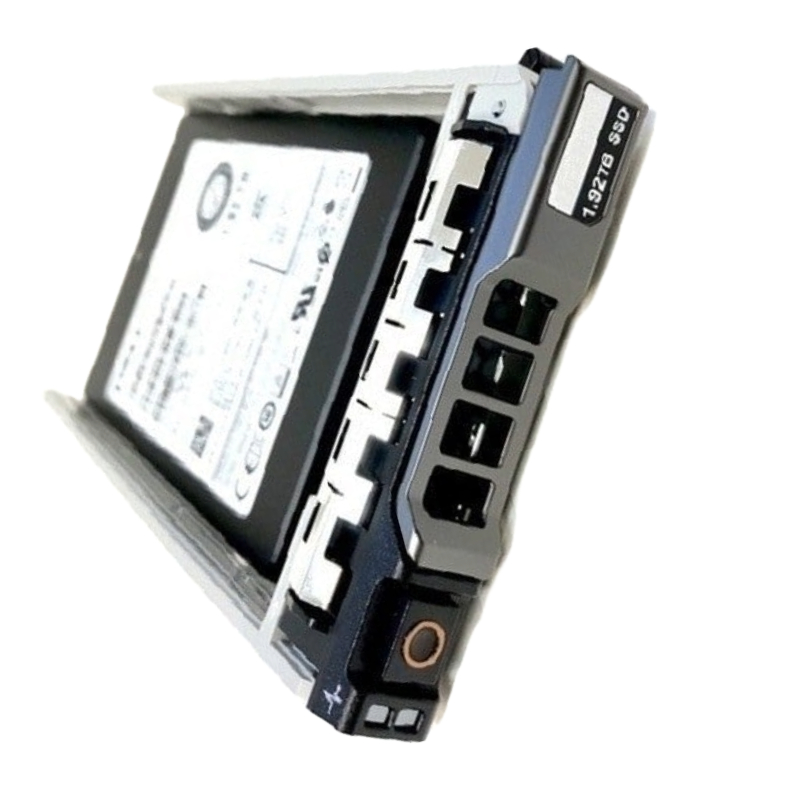
Dell 345-BBYE 1.92TB SAS-12GBPS Read Intensive Bics Flash 3d TLC Dell Certified Hot-plug SSD. New Sealed in Box (NIB) with 1 year Replacement Warranty
Designed for mission-critical server and storage environments, the Dell 345-BBYE 1.92TB SAS-12Gbps Read Intensive Bics Flash 3D TLC Dell Certified Hot-plug SSD represents a purpose-built storage solution that balances performance, endurance, and cost-efficiency. Built to fit into enterprise racks, converged infrastructures, and SAS-based storage arrays, this SSD focuses on read-dominant workloads commonly found in virtualization, database indexes, high-performance computing caches, and content delivery layers. Certified by Dell, validated for compatibility with a wide range of PowerEdge servers and Dell storage platforms, and engineered with SAS 12Gbps connectivity, it provides system integrators and IT teams with a drop-in component designed to minimize integration friction and maximize uptime through hot-plug capability.
The core attributes that classify the Dell 345-BBYE within the enterprise SAS SSD category include its 1.92TB capacity point, SAS-12Gbps interface, and Bics Flash 3D TLC NAND technology optimized for read intensive use. The 1.92TB capacity is a versatile size that fits both dense array slots and mixed-media bays; it provides an appealing density-to-cost ratio for storage tiering strategies. The SAS-12Gbps interface ensures low-latency, high-throughput connectivity with native enterprise features such as dual-port redundancy, full-backward compatibility with 6Gbps controllers, and robust error handling. Bics Flash 3D TLC, a triple-level cell architecture stacked vertically, offers increased density while keeping endurance metrics suitable for read-heavy scenarios; firmware and controller tuning further optimize performance for typical enterprise I/O profiles.
The Dell 345-BBYE excels where sustained read throughput and consistent IOPS matter more than write-heavy endurance. In real-world deployments, administrators will observe strong random read IOPS and robust sequential read bandwidth across common block sizes. The SAS-12Gbps link reduces transport bottlenecks, enabling the SSD to deliver predictable latency under concurrent multi-threaded access patterns typical of virtualization hosts, large-scale web applications, and OLAP query engines. Firmware-managed features like read-ahead caching, adaptive garbage collection, and prioritized read handling help maintain consistent tail latency—a critical metric for user-facing applications and database query responsiveness.
While 3D TLC inherently trades some write endurance compared to SLC or MLC media, the Dell 345-BBYE is specified as a read-intensive drive and is therefore optimized for workloads where writes are relatively light. Endurance parameters (specified in drive writes per day or total terabytes written over warranty) are aligned with the intended use-case: emphasizing read durability while offering controller-level wear-leveling and error correction mechanisms to protect stored data. Enterprise-grade power-loss protection, end-to-end data path protection, and on-drive ECC combine to reduce the chance of silent data corruption. Administrators planning to deploy these SSDs should match drive endurance to workload write profiles and consider higher-endurance options only where heavy sustained writes are expected.
Hot-plug functionality is central to enterprise maintenance workflows, enabling technicians to replace or upgrade drives without shutting down servers or disrupting storage arrays. The Dell 345-BBYE supports hot-swap removal and insertion, combined with LED indicators and carrier-friendly latch mechanisms that fit standard Dell sleds. This feature simplifies in-field maintenance, reduces mean time to repair (MTTR), and supports rolling upgrades in high-availability clusters. When replacing drives, system health reporting via the server management stack (such as iDRAC in Dell servers) provides telemetry on drive health so administrators can perform targeted replacements, minimizing risk and operational overhead.
Enterprises commonly deploy the Dell 345-BBYE in tiers where read throughput and low latency are prioritized over extreme write endurance. Typical use cases include read caching layers in hybrid storage arrays, acceleration tiers for virtual desktop infrastructure (VDI), indexing and search nodes for large-scale data systems, high-access content delivery nodes, and metadata stores for distributed file systems. In hyperconverged infrastructures, these drives often serve as the performance tier for frequently read VM images and application binaries. Due to their balance of capacity and read-optimized endurance, they are economical choices for accelerating read-heavy applications without incurring the cost premium of platinum-tier write-intensive SSDs.
When scaled across multiple nodes, the advantages of consistent read performance compound: caching layers reduce backend load, virtualization hosts deliver faster VM boot and snapshot operations, and distributed caches improve overall application responsiveness. Fleet management strategies for this category emphasize consistent firmware baselines, capacity planning with headroom for wear-leveling, and proactive monitoring of SMART attributes to detect early signs of trouble. Many operations teams implement automated alerts and rolling replacement schedules to maintain homogeneous performance across the cluster and prevent performance skew caused by mismatched drive ages or firmware versions.
Although SAS SSDs can be used with both hardware RAID controllers and software-defined storage stacks, the interplay between controller cache policies, RAID stripe size, and SSD internal garbage collection can significantly affect performance. For read-intensive drives like the Dell 345-BBYE, choose RAID configurations that optimize read redundancy without requiring excessive write amplification from parity calculations when possible—RAID 10 and read-optimized RAID levels are common choices. Software-defined controllers and distributed file systems can further leverage advanced features like erasure coding and tiering to maximize usable capacity while maintaining required performance characteristics.
Enterprise SSDs demand attention not only to electrical power but also to thermal dissipation. The Dell 345-BBYE’s design uses onboard thermal sensors and dynamic throttling to prevent overheating and preserve drive longevity. Rack cooling strategies and appropriate airflow through drive bays become crucial as SSD densities increase; administrators should follow manufacturer recommendations for drive spacing in dense enclosures. The drive’s power envelope is lower than comparable spinning disks, but peak power during certain controller-intensive operations can still require attention to power supply headroom, especially in high-density blade or sled configurations.
The Dell 345-BBYE fits standard SFF (Small Form Factor) enterprise sleds and carriers, allowing straightforward replacement and consolidation into existing arrays. Mechanical compatibility with Dell chassis and standardized sleds simplifies logistics and spare-part inventories. In addition, the drive’s dual-port SAS interface supports multipath connectivity, enabling redundancy and higher availability in SAN configurations where multipathing software or redundant HBAs are present.
Data protection and compliance are core concerns for enterprise storage. The Dell 345-BBYE supports features that aid regulatory compliance and secure operations, including cryptographic erase capabilities and secure firmware signing. Administrators concerned about data remanence can leverage on-drive secure erase commands or vendor-provided lifecycle tools to sanitize drives prior to repurposing or disposal. Additionally, the drive’s support for enterprise monitoring standards enables integration with centralized security and compliance reporting systems, simplifying audits and evidence collection for regulatory frameworks.
Self-encrypting drive (SED) functionality may be available in variants or via firmware options; when present, SED features provide hardware-level encryption that is transparent to host systems and reduces CPU overhead compared to software encryption. Proper integration with enterprise key management systems ensures that encryption keys are managed according to organizational policies and that drives rendered inaccessible upon decommissioning cannot be read without proper credentials. When SED features are required, confirm specific model capabilities and key management compatibility prior to procurement.
Effective lifecycle management begins at deployment: record firmware versions, set baseline SMART thresholds, and apply consistent provisioning policies. Schedule periodic drive health audits and maintain a rotation policy for spares. When drives reach end-of-warranty or approach projected endurance limits, plan replacements in controlled maintenance windows to avoid unplanned performance disruption. Documentation and tagging of installed drives within asset management tools will streamline audits and accelerate incident response.
Before wide-scale adoption, perform load testing with representative datasets and concurrency patterns. Measure tail latency, IOPS across mixed read/write ratios, and throughput at different block sizes to refine RAID stripe sizes, caching configurations, and controller queue depths. Validate behavior under thermal stress and power-loss scenarios to understand how the drive and the broader system respond. Collect baseline telemetry so future changes can be measured against initial performance profiles.


 Contact Us
 Information
 Catalog
 Solid State Drives (SSD)
 Network Switches
 Hard Disk Drives
 HBA & Controllers
 PC & Servers
 PC & Server Memory
 CPU & Processors
 Network Routers
 Power Supplies
 Tape Drives & Libraries
 Network Devices
 Computer & Network Cables