(7% discount is applied at checkout)
Cart is empty
Your go-to destination for cutting-edge server products
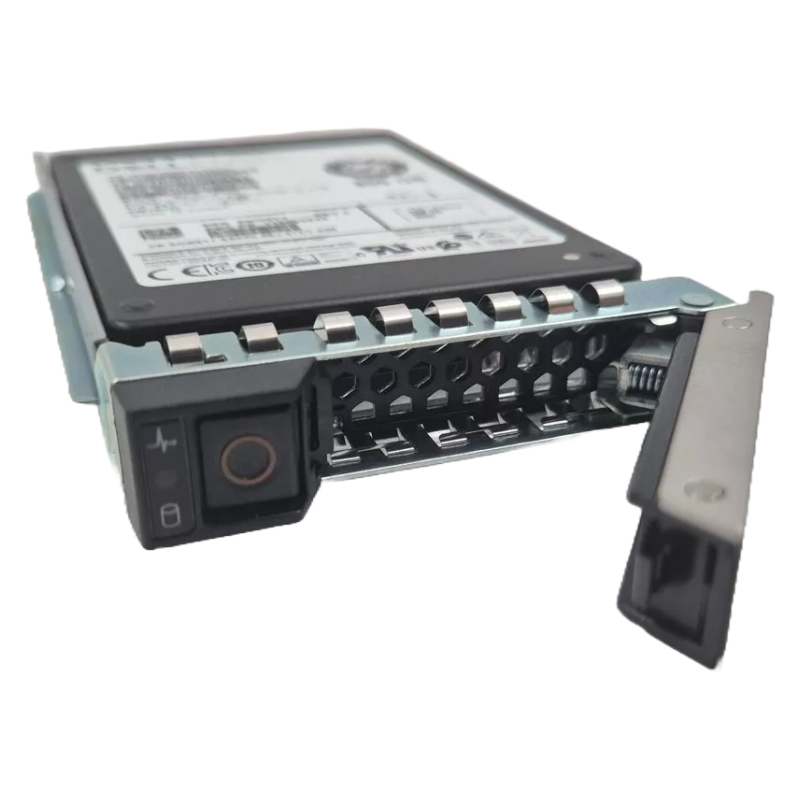


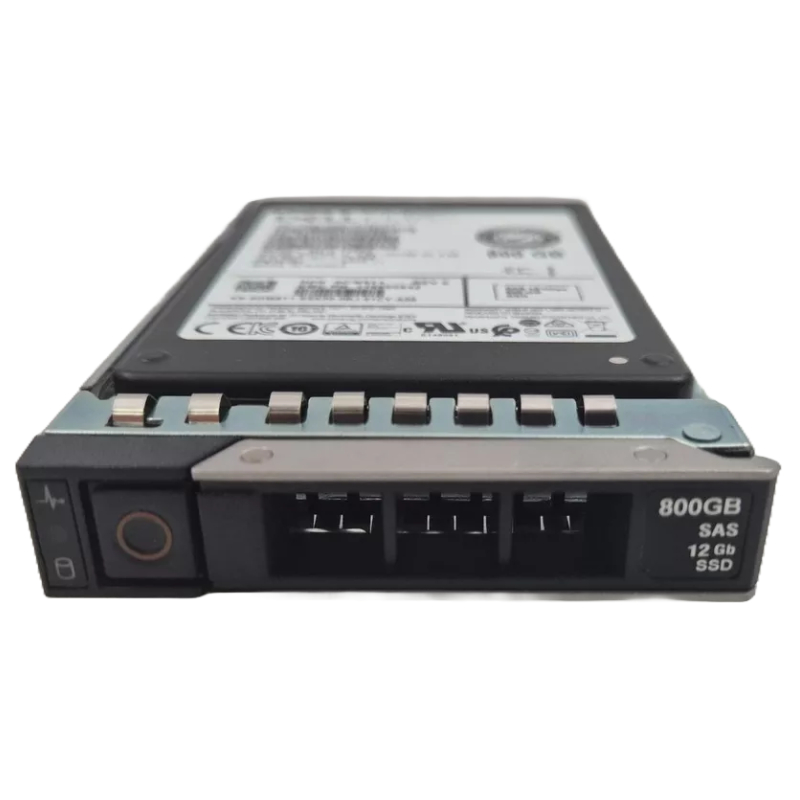
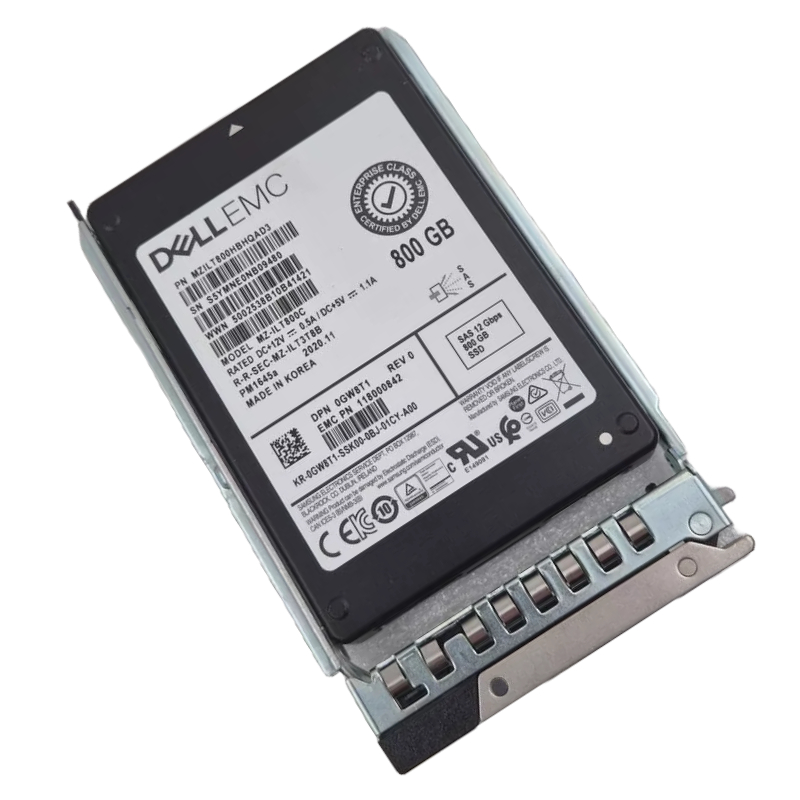
Dell 345-BCBQ 800GB SAS-12GBPS Write Intensive Hot Plug Solid State Drives. Excellent Refurbished with 1 year replacement warranty
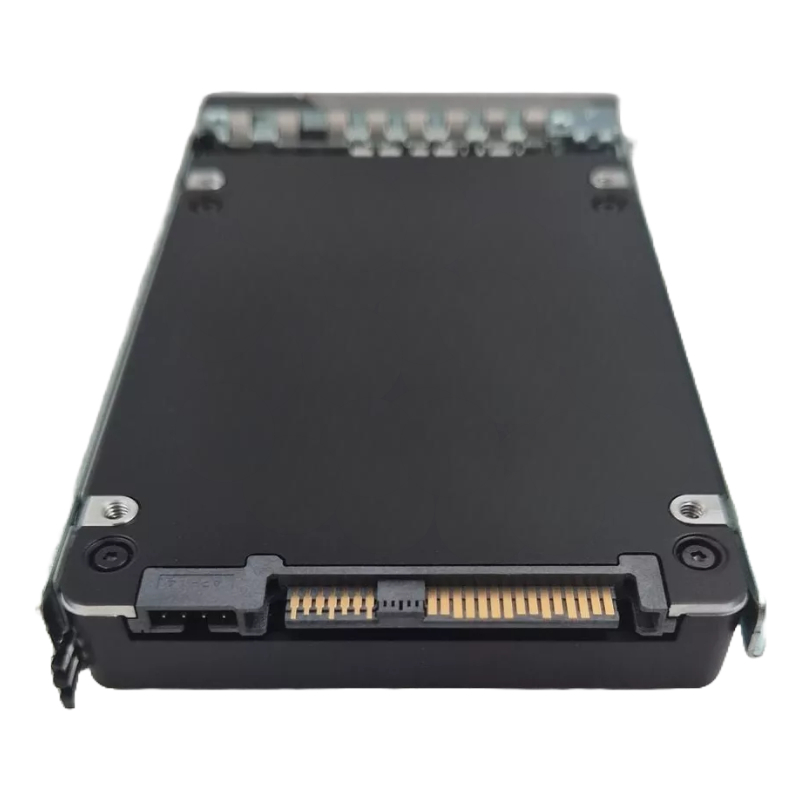
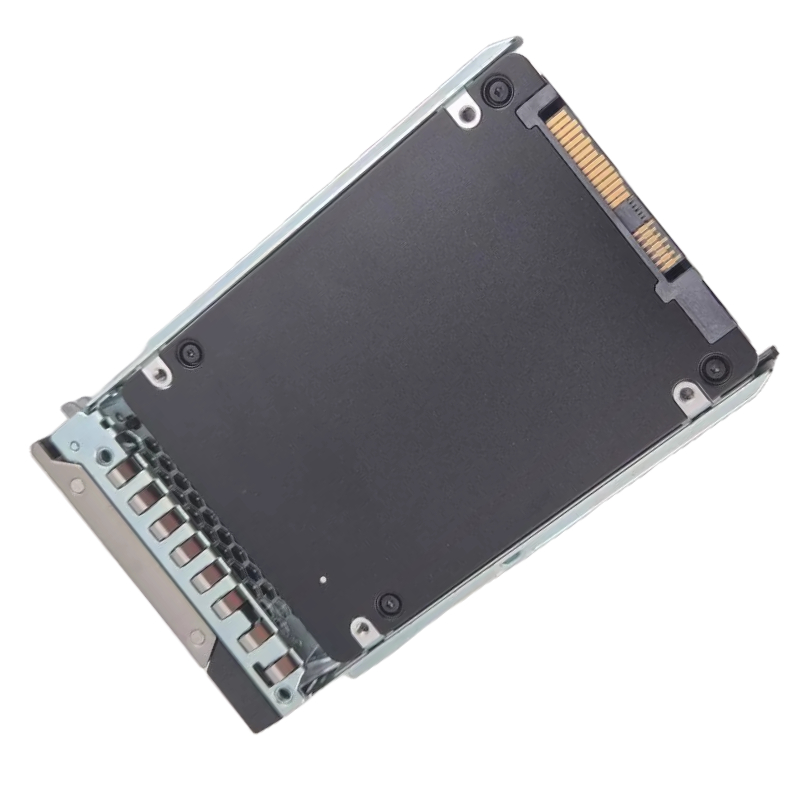
The Dell 345-BCBQ 800GB SAS 12Gbps Solid State Drive is engineered for demanding data-center environments where sustained write performance, predictable endurance and hassle-free integration into Dell PowerEdge platforms matter. This Dell-certified 2.5-inch hot-plug drive combines an 800GB usable capacity with enterprise-grade 3D TLC NAND (Bics Flash), a 12Gbps SAS interface and a rated endurance of 10 drive-writes-per-day (DWPD), delivering a balance of capacity, performance and longevity tailored to write-intensive applications. The drive ships with a compatible tray for seamless installation in PowerEdge 14G, 15G and 16G servers, eliminating fit-and-cabling guesswork and ensuring firmware and hardware compatibility across recent Dell server generations.
At the heart of the 345-BCBQ is modern 3D TLC NAND arranged and managed for enterprise reliability. The 12Gbps SAS interface provides multi-lane, dual-port connectivity options in many server architectures, enabling consistent throughput and robust failover behavior compared to single-port consumer interfaces. The drive’s 800GB capacity is optimized for high-density deployments where each drive needs to carry significant write volume without compromising on endurance budgets. The specified 10 DWPD endurance rating quantifies that an 800GB device can be written over in full ten times per day across the warranty window without exceeding design limits — a specification that positions the SSD for write-heavy use cases such as high-transaction databases, log and cache tiers, virtual desktop infrastructure, and intensive virtualization or container clusters.
Performance for enterprise SSDs must be predictable under mixed, sustained loads rather than peak-burst focused. The Dell 345-BCBQ targets predictable I/O latency and steady-state write throughput by combining high-quality NAND with enterprise firmware tuned for write amplification reduction and background housekeeping. The SAS 12Gbps link reduces the risk of host bottlenecking in multi-queue enterprise hosts, while enterprise-grade controller logic balances wear-leveling and background garbage collection to preserve consistent IOPS and low latency during heavy write cycles. For administrators planning storage tiers, this drive is ideal where write endurance and consistent IO response are critical, such as for database redo/commit logs, message queues, or write-back caching layers.
Endurance — expressed here as 10 DWPD — is a practical guide for lifecycle planning. Using the 10 DWPD figure, storage architects can model expected usable life for the device under planned application write profiles. For example, in a database server writing several terabytes per day, DWPD allows you to estimate replacement cycles and reserve provisioning. Enterprise deployments often pair drives like the 345-BCBQ with monitoring and predictive replacement policies so that drives are rotated out prior to end-of-life when SMART telemetry indicates increasing reallocated sectors or sustained write amplification. The drive’s enterprise firmware typically supports SMART reporting and vendor health metrics which integrate with server management stacks for automated alerts and firmware updates.
Being Dell certified means the 345-BCBQ has been validated by Dell for use within specified PowerEdge chassis and RAID controller combinations. This certification reduces integration risk: firmware levels are tested for stable operation under the host firmware, controller drivers and management software that Dell ships on PowerEdge 14G, 15G and 16G servers. The included tray ensures proper mechanical fit, backplane alignment and hot-plug behavior without custom shims or drive adapters. For procurement teams and system integrators, this reduces the verification cycle and ensures that standard support channels can be leveraged should hardware issues arise.
The 345-BCBQ is offered with a tray compatible with Dell PowerEdge 14G, 15G and 16G platforms, which are common in enterprise rack and modular deployments. Compatibility testing for these server families typically covers backplane signaling (12Gbps SAS lanes), drive bay power delivery and hot-swap mechancal latching. Administrators replacing drives in service windows will appreciate that the certified tray preserves bezel aesthetics and front-panel indicators, and that Dell management tools like iDRAC/OMSA can discover, report and manage the device as expected within the wider server monitoring ecosystem.
Dell-certified drives are usually shipped with vendor-approved firmware versions that are compatible with Dell’s controllers and host firmware. Firmware compatibility is a frequent source of support issues in mixed-vendor deployments; using Dell-certified drives simplifies troubleshooting and firmware maintenance because the device firmware and host firmware have been tested together. System administrators should track firmware revision notes, apply Dell-recommended updates during scheduled maintenance, and use Dell’s management utilities to validate drive health and compatibility. Dell support status for certified devices also simplifies RMA and replacement workflows when drives fail pre- or post-warranty.
Enterprise SSDs are more than raw capacity and peak IOPS; they include features that preserve data integrity during unexpected events and that simplify long-term management. Typical features available or supported by enterprise-class Dell drives include power-loss protection mechanisms that flush internal volatile caches to nonvolatile regions, advanced error-correcting code (ECC) and background scrubbing to minimize uncorrectable errors, and persistent SMART telemetry for predictive failure analysis. While exact feature sets vary by part and firmware, drives in this class are designed to protect committed writes and provide diagnostically useful health metrics to server management tools. For mission-critical services where data durability is paramount, these protections reduce the risk of silent data corruption and offer administrators actionable health indicators.
SMART monitoring exposes key metrics such as media wear, reallocated sectors, uncorrectable errors, and other vendor-specific health counters. Dell-certified drives integrate with common server management stacks so that SMART and vendor telemetry can be forwarded to monitoring systems, logged and used for predictive maintenance. Integrating telemetry into observability tooling enables teams to build replacement workflows and to automate alerts that trigger preemptive drive swaps during low-impact maintenance windows, reducing unplanned downtime risk.
The combination of 800GB capacity, 10 DWPD endurance, 12Gbps SAS interface and enterprise firmware positions the Dell 345-BCBQ for several high-value storage tiers. It is particularly well-suited to write-intensive workloads that require both endurance and low-latency response, such as OLTP databases, data-warehouse ingestion nodes, high-rate logging/telemetry collectors, caching layers for web services, real-time analytics pipelines and virtualization platforms where write amplification would otherwise shorten consumer-grade SSD lifetimes. Additionally, when used in RAID configurations, multiple 345-BCBQ drives can form very responsive, durable logical volumes for application tiers that would otherwise rely on spinning media.
Virtualized and containerized infrastructures often generate many small, random writes — especially in multi-tenant or VDI environments. The high endurance and enterprise-grade background management of the 345-BCBQ make it an effective choice for datastore backends where predictable performance is necessary. When integrated into software-defined storage solutions or hyperconverged infrastructures, certified enterprise SSDs minimize variability that can degrade VM performance and complicate capacity planning.
Databases with heavy write loads — particularly transactional systems that flush redo logs and transaction commits frequently — benefit from a drive rated for write-intensive use. The 10 DWPD rating helps ensure that the device can handle high cumulative daily writes without unexpected wear-out, while enterprise firmware endeavors to keep latency low and consistent for small-block commits that drive transaction latency. Architects should still design redundancy and replication into database layers, but selecting a drive with high endurance reduces storage-level risk and replacement churn.
Choosing the right SSD involves not only selecting a part with appropriate specs, but also mapping it to an architecture that aligns with workload behavior and operational practices. Drives like the Dell 345-BCBQ can be deployed in multiple patterns: as a dedicated log/caching tier supporting backing storage on higher-capacity media; as the primary storage medium within all-flash arrays; or as part of a mixed-media tiered architecture where hot data is placed on high-endurance SSDs and colder data is migrated to larger-capacity SATA or SAS HDD tiers. When designing for endurance, consider over-provisioning, RAID level selection, and write workload shaping (for example, write coalescing or buffering at application or controller layers) to extend drive life and maintain performance headroom.
Enterprise deployers must consider RAID levels (or erasure coding) that balance capacity, performance and failure recovery. In write-heavy environments, RAID rebuild times and the impact of a drive rebuild on remaining drives can be significant. Using drives with enterprise endurance and predictable performance reduces the risk of degraded operations during rebuilds, but architects should still evaluate RAID controller features such as background rebuild throttling, drive sparing strategies, and hot-spare allocation. For mission-critical datasets, combining 345-BCBQ drives in RAID configurations with robust backup and replication ensures that single-drive failures and rebuild windows do not compromise service levels.
High-density deployments must account for thermal behavior and power draw. While enterprise 2.5" SSDs typically consume less power and generate less heat than equivalent HDD arrays at scale, sustained heavy writes and controller background tasks can elevate internal temperatures. Adequate chassis cooling, monitoring through iDRAC and sensible power budgets at the system level prevent thermal throttling and keep devices within operating ranges. Dell-certified trays and tested configurations help avoid mismatch problems where inadequate airflow or incompatible caddies might cause thermal stress.
Operational excellence for storage requires ongoing monitoring, a proactive lifecycle policy and an update plan for firmware and host integration. The 345-BCBQ benefits from Dell’s management ecosystem, so administrators can rely on iDRAC, OpenManage and other tools to monitor drive health, apply firmware updates and coordinate RMAs. Good practices include maintaining firmware baselines, tracking SMART and vendor-specific counters, scheduling firmware updates during maintenance windows and keeping spare drives available for fast, low-impact replacements. For larger fleets, automated telemetry collection and predictive failure analytics will reduce mean time to resolution and preserve overall service reliability.
Although 800GB per drive may appear modest against multi-terabyte consumer SSDs, the enterprise value comes from endurance, performance consistency and certification. When planning capacity, administrators should model usable capacity after RAID overheads, parity schemes, and expected growth rates. Over-provisioning both at the SSD level (reserved spare area) and at the system level (capacity buffer to reduce write amplification) is a common tactic to maximize drive lifespan and maintain predictable performance during peak operations.
In modern deployments, storage security and compliance are essential. Enterprise drives are often deployed with host-side or controller-level encryption and access controls, ensuring that data-at-rest protections meet regulatory and corporate policies. While the drive itself may support encryption-friendly features or integrate with controller encryption services, architects should treat drive-level protections as one layer in a multi-layered security approach that includes encrypted backups, secure key management and strict access controls for management interfaces. Certified devices also streamline compliance audits because their validated status reduces ambiguity about supportability and documented firmware behavior.
Even with enterprise drives and high-quality firmware, data protection must include backups and replication strategies. The 345-BCBQ is well-suited as part of primary high-performance tiers feeding replication services to secondary sites or object storage. Frequent snapshots, continuous replication for zero-downtime failover and tested restore procedures are essential complements to enterprise-class SSD deployment. Integrating SSD health data into backup orchestration ensures that failing drives are replaced before they impact restore windows or replication consistency.


 Contact Us
 Information
 Catalog
 Solid State Drives (SSD)
 Network Switches
 Hard Disk Drives
 HBA & Controllers
 PC & Servers
 PC & Server Memory
 CPU & Processors
 Network Routers
 Power Supplies
 Tape Drives & Libraries
 Network Devices
 Computer & Network Cables