(7% discount is applied at checkout)
Cart is empty
Your go-to destination for cutting-edge server products
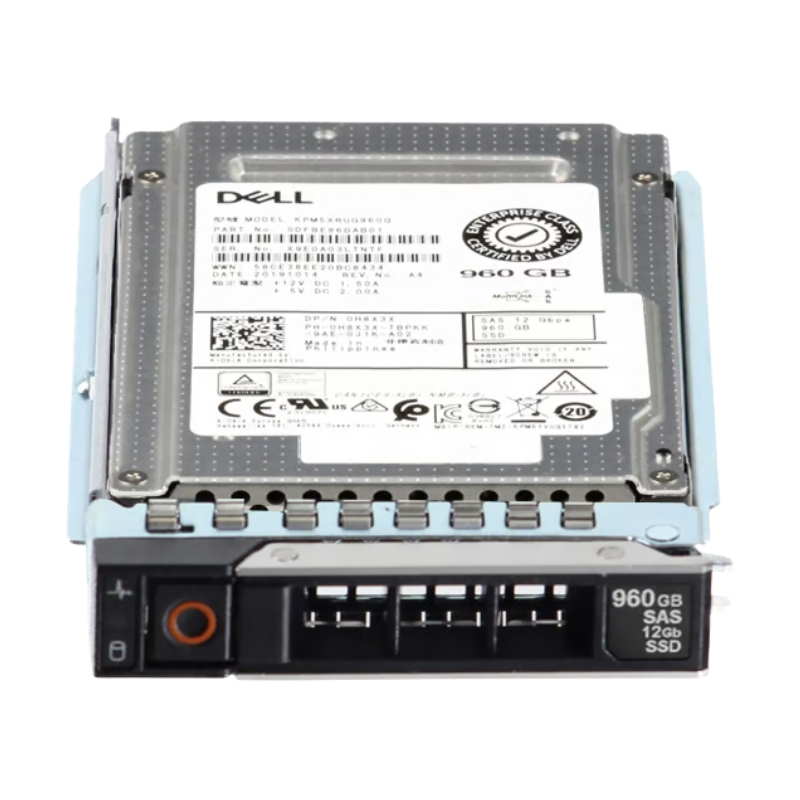


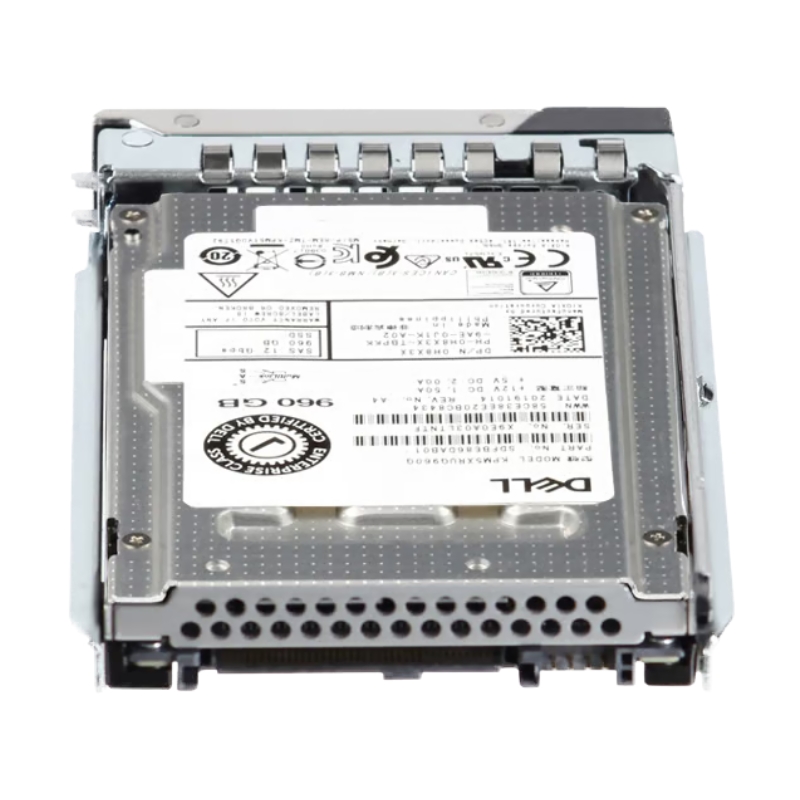
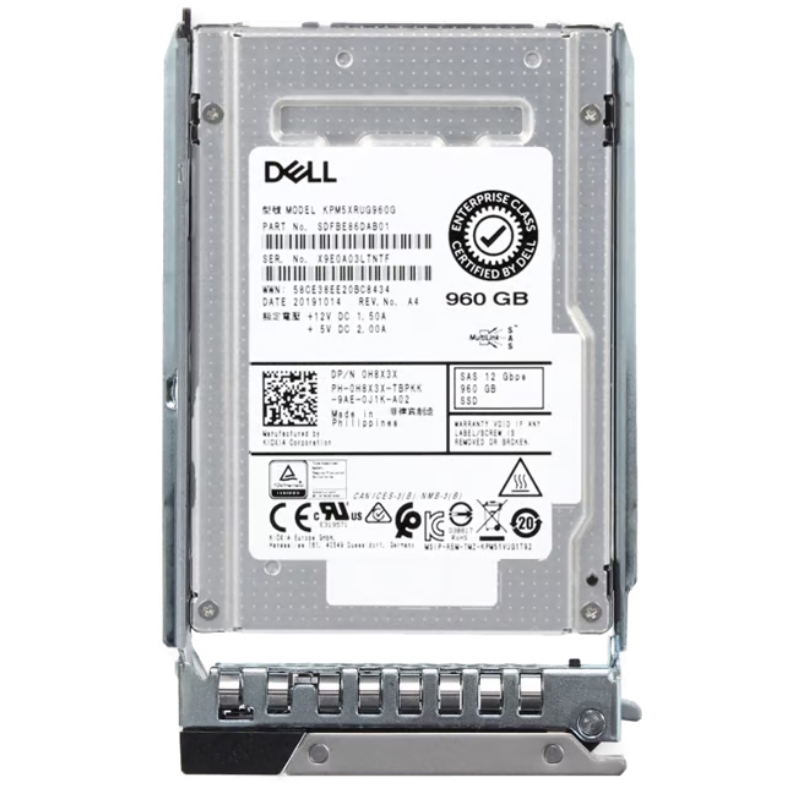
Dell 345-BCMG 960GB SAS-12GBPS Self-encrypting Sed Read Intensive 1dwpd Tlc 2.5Inch Hot-plug Certified SSD. New Sealed in Box (NIB) with 1 Year Warranty
Technical specifications
The drive is fully compatible with a wide range of PowerEdge platforms — ideal for mixed-rack deployments and heterogeneous compute clusters.
Because server firmware revisions and RAID/controller cards vary, always validate your chassis firmware and controller compatibility before wide deployment. DELL certification reduces integration risk but confirm any legacy controller limitations for maximum performance.
The Dell 345-BCMG 960GB SAS-12GBPS Self-encrypting SSD represents a significant advancement in enterprise storage technology, combining high-speed data transfer with robust security features. This 2.5-inch hot-plug drive is specifically engineered for read-intensive applications, offering exceptional performance and reliability for demanding enterprise environments.
With its 12Gbps SAS interface, this SSD delivers exceptional bandwidth capabilities, making it ideal for data centers, servers, and storage arrays where rapid data access is critical. The self-encrypting drive (SED) functionality provides hardware-based encryption without compromising performance, ensuring that sensitive data remains protected at all times.
Random read performance reaches up to 180,000 IOPS (Input/Output Operations Per Second), while random write performance can achieve up to 40,000 IOPS. These performance metrics make the drive ideal for applications requiring quick access to large datasets.
One of the standout features of the Dell 345-BCMG SSD is its consistently low latency. With average read latency of less than 100 microseconds and average write latency of less than 15 microseconds, this drive ensures responsive performance even under heavy workloads.
The drive maintains consistent performance over time thanks to advanced garbage collection algorithms and wear-leveling technology. This consistency is crucial for enterprise applications where performance predictability is essential.
The SAS-12Gbps (Serial Attached SCSI) interface represents the latest evolution in SAS technology, offering significant advantages over previous generations and alternative interface technologies.
The 12Gbps SAS interface provides double the bandwidth of 6Gbps SAS, enabling faster data transfer rates and improved performance for bandwidth-intensive applications. This increased bandwidth allows for better utilization of SSD performance capabilities, reducing bottlenecks in storage subsystems.
SAS technology also offers superior scalability compared to SATA, supporting expansive storage configurations with thousands of devices. The dual-port capability of SAS provides redundant paths for data access, enhancing availability and fault tolerance in enterprise environments.
The Dell 345-BCMG SAS-12Gbps SSD maintains backward compatibility with 6Gbps and 3Gbps SAS infrastructures, allowing for seamless integration into existing storage environments. When connected to older SAS controllers, the drive will automatically negotiate to the appropriate speed.
The self-encrypting drive capability of the Dell 345-BCMG SSD provides a hardware-based security solution that protects data at rest without impacting performance.
SED technology incorporates encryption circuitry directly into the drive controller. All data written to the NAND flash memory is automatically encrypted using advanced encryption algorithms, typically AES-256. When data is read from the drive, it is automatically decrypted by the controller.
This process is transparent to the host system and applications, requiring no additional CPU resources for encryption and decryption operations. The encryption keys are managed within the drive's protected memory space, never exposed to the host system.
The primary security benefit of SED technology is protection against unauthorized data access when drives are retired, repurposed, or physically stolen. Without the proper authentication credentials, the encrypted data remains inaccessible even if the physical drive is removed from the system.
SED technology also simplifies data sanitization through cryptographic erasure. Instead of overwriting all data on the drive (which can take hours for large-capacity SSDs), cryptographic erasure instantly renders data inaccessible by deleting the encryption key, a process that takes milliseconds.
The Dell 345-BCMG SSD is specifically optimized for read-intensive applications, which typically involve frequent data retrieval with less frequent data writes.
Read-intensive workloads are common in various enterprise scenarios, including web servers, content delivery networks, databases with read replicas, virtual desktop infrastructure (VDI), and data analytics applications. These workloads typically exhibit read-to-write ratios of 70/30 or higher.
The 1 DWPD endurance rating indicates that users can write the entire drive capacity once per day over the warranty period without exceeding the drive's designed endurance limits. This makes the drive suitable for applications where write operations are less frequent but read performance is critical.
The use of TLC NAND flash in a read-optimized configuration allows for a balance between cost, capacity, and performance. Advanced controller algorithms and SLC caching techniques help maintain write performance despite using higher-density TLC NAND.
The 2.5-inch form factor with hot-plug capability makes the Dell 345-BCMG SSD ideal for enterprise storage systems where high density, serviceability, and availability are critical.
Hot-plug capability allows drive installation or removal while the system remains powered on and operational. This feature minimizes downtime for maintenance and drive replacement, enhancing overall system availability.
Enterprise storage systems typically include redundant power and data connections to support hot-plug operations safely. Proper hot-plug procedures ensure that drives can be replaced without causing electrical damage or data corruption.
The 2.5-inch form factor provides higher storage density compared to 3.5-inch drives, allowing more drives to be installed in the same physical space. This increased density is particularly valuable in data center environments where space is at a premium.
The smaller form factor also typically results in lower power consumption per drive, reducing overall energy costs and thermal output in large storage deployments.
The Dell 345-BCMG SSD undergoes rigorous testing and certification to ensure compatibility and reliability in enterprise environments.
Dell enterprise SSDs undergo extensive qualification testing to ensure compatibility with Dell PowerEdge servers, PowerVault storage arrays, and Dell EMC storage solutions. This testing includes validation of hardware compatibility, firmware interoperability, and management software integration.
The certification process also includes stress testing under various environmental conditions and workload profiles to verify reliability and performance consistency.
The drive is designed to work seamlessly with Dell OpenManage systems management tools, providing comprehensive monitoring and management capabilities. These tools can report drive health, status, and predictive failure alerts, enabling proactive maintenance.
For SED functionality, the drive integrates with Dell's security management solutions, providing streamlined key management and security policy enforcement.
The Dell 345-BCMG SSD is designed for enterprise-grade reliability with features that ensure data integrity and extended service life.
The drive boasts an impressive MTBF rating of 2.5 million hours, reflecting its robust design and high-quality components. This rating indicates the expected reliability of the drive under typical operating conditions.
Advanced error correction algorithms protect against data corruption, while end-to-end data path protection ensures integrity from host interface to NAND flash memory.
Power-loss protection mechanisms safeguard data in transit during unexpected power interruptions, preventing corruption or loss of data being written to the drive.
The Dell 345-BCMG SSD is designed to operate reliably in typical data center environments with specific temperature, humidity, and altitude specifications.
The drive operates within a temperature range of 0°C to 70°C, with a maximum altitude of 3,000 meters during operation. Non-operating storage conditions allow for a wider temperature range from -40°C to 85°C.
Power efficiency is optimized for enterprise environments, with active power consumption typically around 5-7 watts during read/write operations and lower power during idle states.
Successful deployment of the Dell 345-BCMG SSD requires careful planning and consideration of several factors.
Ensure that target systems have appropriate SAS controllers supporting the 12Gbps interface. While backward compatible with 6Gbps SAS, the drive will only achieve its full performance potential when connected to 12Gbps SAS controllers.
Consider the appropriate RAID configuration based on performance and redundancy requirements. RAID configurations can impact both performance and effective capacity available to applications.
For organizations leveraging the SED capability, proper key management procedures must be established. This includes secure key storage, access controls, and key recovery processes.
The Dell 345-BCMG SSD incorporates features that help protect investments and support future scalability requirements.
SAS-12Gbps technology represents the current industry standard for enterprise storage interfaces, ensuring compatibility with future server and storage platforms for several product generations.
The SAS architecture supports expansive storage configurations, allowing organizations to scale storage capacity by adding additional drives or enclosures as needed.


 Contact Us
 Information
 Catalog
 Solid State Drives (SSD)
 Network Switches
 Hard Disk Drives
 HBA & Controllers
 PC & Servers
 PC & Server Memory
 CPU & Processors
 Network Routers
 Power Supplies
 Tape Drives & Libraries
 Network Devices
 Computer & Network Cables