(7% discount is applied at checkout)
Cart is empty
Your go-to destination for cutting-edge server products


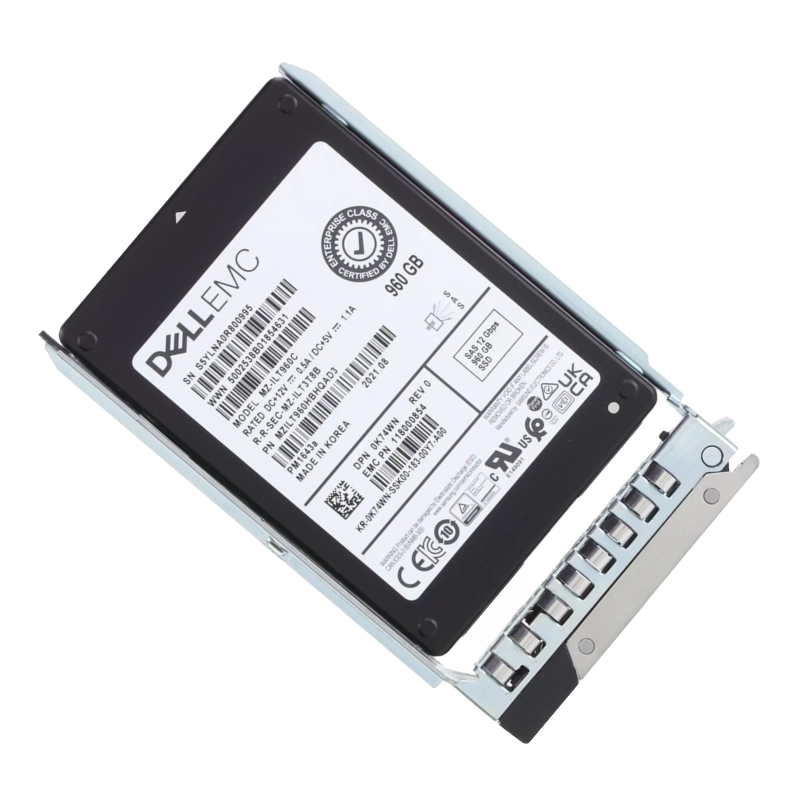
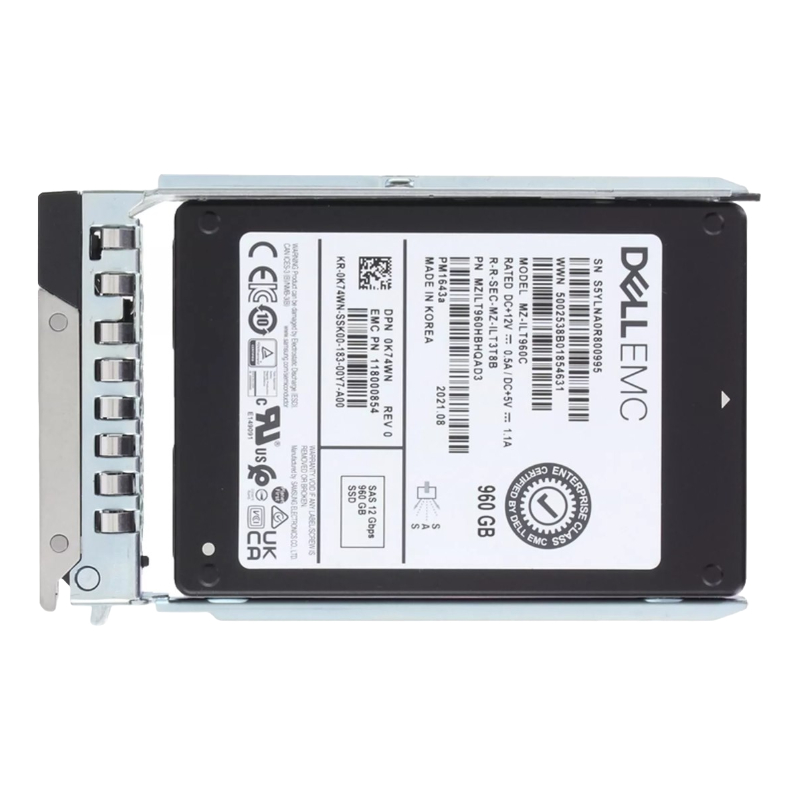
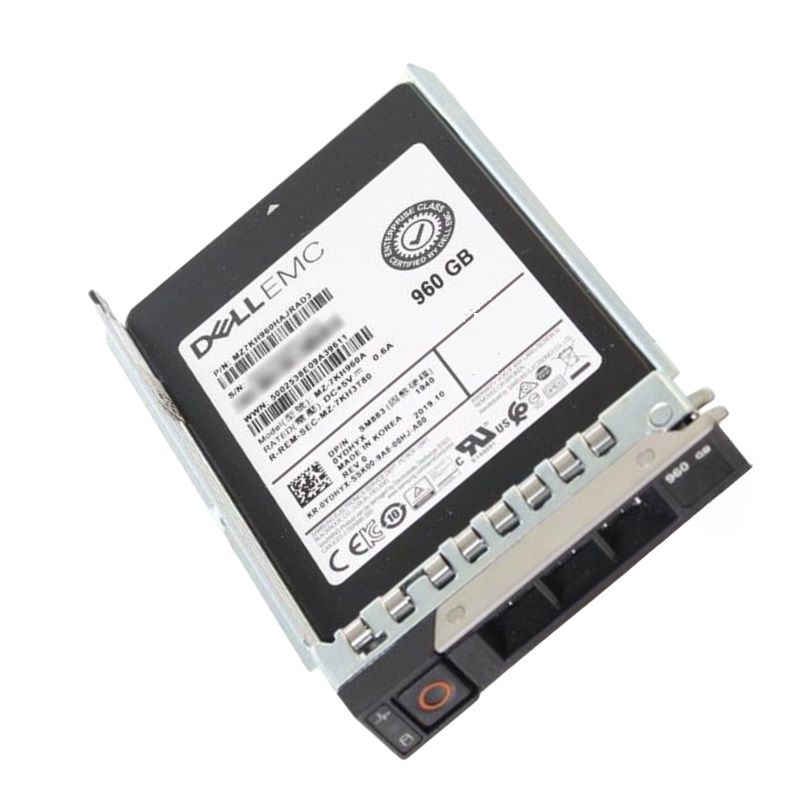
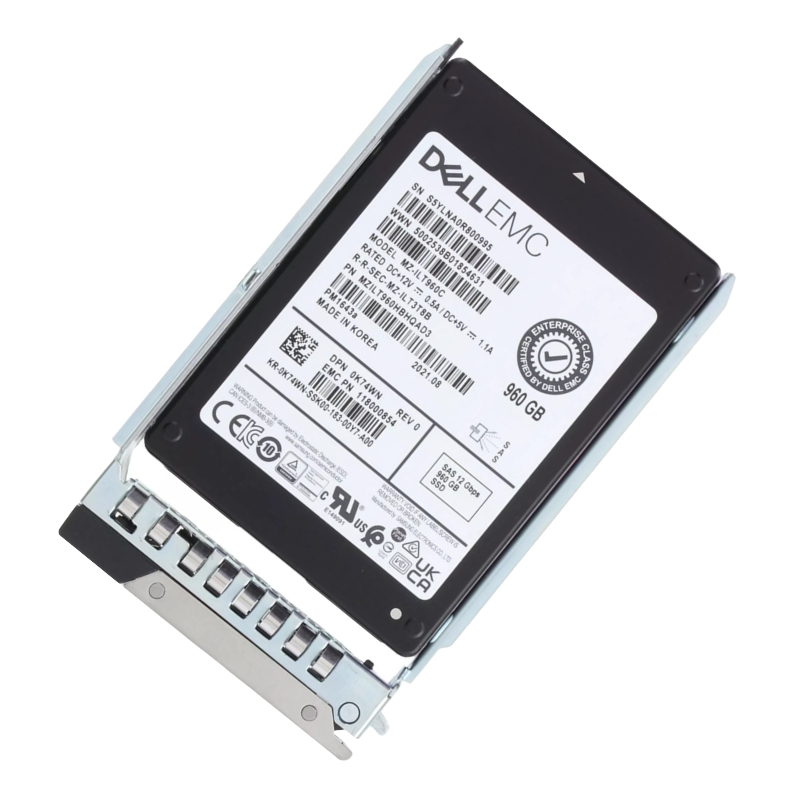
Dell 345-BCVV 960GB Self Encrypting SAS-12GBPS Mixed Use TLC 512e 2.5Inch Hot-plug SSD. New Sealed in Box (NIB) with 1-Year Warranty
This drive is validated for a wide range of Dell PowerEdge platforms. Confirm BIOS/firmware compatibility before deployment.
The Dell 345-BCVV 960GB Self Encrypting SAS (SAS-12Gbps) Mixed Use solid state drive represents a purpose-built storage class designed for modern datacenter workloads that demand a balance between high sustained performance, strong endurance, and enterprise-grade security. This category focuses on 2.5-inch, hot-plug, tray-mounted SSDs that use triple-level cell (TLC) 3D NAND with 512e sector emulation, optimized for mixed-use application patterns where both read and write activities are significant. As a certified OEM part for 14th generation Dell PowerEdge servers, these drives align tightly with Dell’s firmware, monitoring tools, and support paths, making them a preferred choice for administrators who require a combination of performance, manageability, and data protection.
The mixed-use characteristic of the Dell 345-BCVV positions it ideally for a broad spectrum of enterprise workloads. Unlike read-optimized drives that prioritize sequential read throughput, mixed-use SSDs deliver consistent I/O performance for transactional databases, virtual desktop infrastructure (VDI), virtual machine (VM) densification, hyperconverged infrastructure (HCI), application servers, and multi-tenant virtualization environments. Typical deployments include boot volumes, application data volumes, caching layers, and mixed read/write databases where predictable latency, strong IOPS at low queue depths, and endurance are business-critical. In consolidation scenarios where dozens of VMs share a physical host, the 960GB capacity also provides a reasonable balance between density and per-VM storage space, allowing infrastructure teams to maintain performance without over-provisioning at the server level.
One of the standout attributes of this category is self-encryption. Self-Encrypting Drives (SEDs) offload cryptographic operations to the drive’s own controller and secure key storage, protecting data-at-rest without imposing CPU overhead on the host. For organizations subject to regulatory controls or with strict data privacy mandates, SEDs simplify compliance by enabling secure erase, cryptographic erase, and key management integrations. When deployed in PowerEdge servers, the Dell-certified SED functionality can be paired with server-based key management or enterprise key management systems to automate key rotation and minimize risk in multi-tenant environments. The result is stronger data protection with minimal administrative friction compared to software-only encryption models.
Deliberately engineered for the SAS-12Gbps interface, these SSDs take advantage of the mature, enterprise-class SAS protocol which provides robust signaling, dual-port redundancy for high-availability topologies, and advanced end-to-end data integrity features. SAS at 12 gigabits per second offers a high-bandwidth channel compared to legacy SAS speeds, and when combined with the drive’s internal controller optimizations and mixed-use firmware, it yields low-latency responses and high random IOPS in enterprise queues. Measurements in typical server configurations show the drives deliver strong performance at both small-block random IO and larger sequential IO, making them versatile building blocks in tiered storage designs and all-flash server arrays.
In practical deployments, the 345-BCVV family exhibits consistent sub-millisecond latency under realistic load levels, particularly when queued IO remains moderate. Random IOPS performance is tailored to common enterprise patterns—sustained under moderate mixed workloads rather than peak burst numbers in synthetic testing. Throughput scales well as aggressive read/write streams are funneled through the SAS-12Gbps interface, and the TLC 3D NAND’s controller algorithms are tuned to smooth out performance variability that sometimes appears in high duty-cycle environments. The drive is especially effective when paired with server-side caching strategies and when used as the primary volume for latency-sensitive services.
A core consideration for mixed-use drives is endurance measured in drive writes per day (DWPD) and total bytes written (TBW). The Dell 345-BCVV line is designed with endurance ratings appropriate for mixed transactional workloads, blending flash management techniques like wear leveling, over-provisioning, and intelligent garbage collection to extend usable life. The 512e logical sector emulation facilitates compatibility with existing storage stacks and operating systems that expect 512-byte sector semantics, while internally using a larger physical sector size to improve NAND efficiency. This sector translation allows organizations to upgrade servers to modern NAND technologies without requiring sweeping changes to their storage or backup software ecosystems.
Enterprise reliability is also enforced through features such as power-loss protection, end-to-end data path protection, and firmware robustness that target long-term uptime. Power-loss protection capsulate in-flight data in the event of sudden power failures, helping to prevent corruption. Combined with aggressive error correction code (ECC) and background media management, these drives prioritize data integrity. Dell-certified firmware variants ensure compatibility with PowerEdge telemetry and monitoring frameworks, enabling proactive failure prediction and simplified RMA processes through Dell’s parts ecosystem.
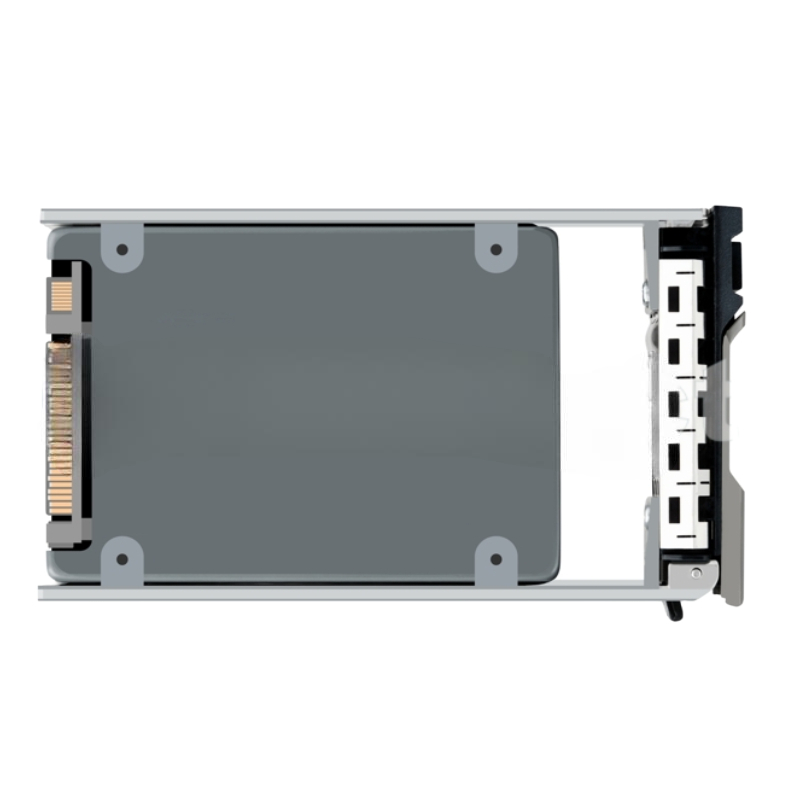
The 2.5-inch form factor with hot-plug tray support is crucial for modern server management. Hot-plugability allows drives to be replaced or upgraded without powering down the system in many supported topologies, minimizing maintenance windows and delivering operational continuity for production services. The tray design adheres to Dell’s mechanical specifications for the 14G PowerEdge chassis, ensuring correct airflow, retention, and front-panel activity indicators. This tight mechanical and firmware coupling is an advantage for teams that want predictable behavior when drives are swapped during maintenance or replaced under warranty.
Because these drives operate in dense server environments, thermal management is an important deployment consideration. The tray and 2.5-inch design enable consistent airflow paths when installed in PowerEdge drive bays; however, system integrators should validate server chassis configurations, fan curves, and ambient temperature ranges to ensure thermal headroom. Mixed-use workloads can elevate sustained write activity, which slightly increases drive temperature; proper airflow and occasional firmware-driven thermal throttling safeguards maintain long-term drive health while preserving data integrity. In practice, monitoring drive temperature via iDRAC and logging during peak loads will help administrators establish safe operating thresholds tailored to their environment.
Compatibility is a key selling point for Dell-certified storage. The 345-BCVV family is validated against Dell PowerEdge 14th generation servers—ensuring seamless firmware update paths, accurate SMART and telemetry reporting to iDRAC, integrated health alerts, and access to Dell support channels for troubleshooting. Administrators benefit from simplified inventory tracking and warranty service when using certified components. Furthermore, Dell’s compatibility validation reduces the risk of subtle interoperability issues that sometimes arise with third-party or non-certified SSD firmware variations.
Firmware for Dell-certified drives is maintained with enterprise administrators in mind. Firmware updates are distributed through Dell’s channels and are typically tested against PowerEdge platforms to ensure predictable behavior. Management integration extends to health and predictive failure warnings surfaced through the server management console, enabling administrators to schedule maintenance proactively and minimize downtime. For environments using enterprise orchestration tools, the drive’s telemetry and status attributes can be consumed programmatically for automated alerting and inventory reconciliation.
Adopting Dell 345-BCVV SSDs into a production landscape benefits from deliberate planning around RAID configurations, hot-spare strategies, and tiering decisions. For mixed workloads, software-defined storage solutions and hyperconverged infrastructures often use these mixed-use SSDs as primary storage tiers while offloading colder data to higher-capacity HDD tiers. Choosing RAID levels should balance performance and redundancy—RAID 10 typically offers strong write performance with redundancy, while RAID 6 provides more efficient capacity with trade-offs in write performance that must be considered for write-heavy applications. For environments with high write amplification (for example, certain database types or logging systems), additional over-provisioning at the controller or array level can be useful to preserve drive endurance over time.
While SEDs protect against unauthorized physical access, they are not a substitute for a robust backup and disaster recovery plan. Regular snapshots, offsite replication, and immutable backup strategies remain essential. Administrators should ensure that encryption keys are managed correctly; losing encryption keys without a recoverable backup of plaintext data can result in permanent data loss. Integrating the drive’s SED features with enterprise key management solutions helps automate secure erase procedures during decommissioning and supports compliance audits that require verifiable disposal of sensitive data.
The 960GB capacity point offers a sweet spot for many enterprise scenarios, balancing per-drive usable space with performance characteristics that avoid the endurance penalties sometimes associated with the highest density TLC parts. When capacity needs grow, scaling out with additional drive bays or scaling up via higher-capacity SSDs in the same family can be planned with predictable performance behavior thanks to Dell certification. For large deployments, capacity planning should also account for RAID overhead, snapshot reserves, and growth for operating system or application-level reserve space to prevent performance cliffs as a drive approaches full capacity.
Total cost of ownership (TCO) for this category is driven by a combination of performance-per-watt, performance-per-dollar, lifespan, and supportability. Mixed-use TLC SSDs typically offer a favorable balance, delivering enterprise performance at lower cost than high-endurance SLC or eMLC drives, while providing better endurance than pure read-optimized options. When evaluating TCO, include factors such as energy consumption, cooling requirements, expected replacement cycles, and administrative overhead. The Dell OEM certification also reduces operational risk, often leading to lower hands-on time for troubleshooting and potentially faster RMA turnaround if issues occur.


 Contact Us
 Information
 Catalog
 Solid State Drives (SSD)
 Network Switches
 Hard Disk Drives
 HBA & Controllers
 PC & Servers
 PC & Server Memory
 CPU & Processors
 Network Routers
 Power Supplies
 Tape Drives & Libraries
 Network Devices
 Computer & Network Cables