(7% discount is applied at checkout)
Cart is empty
Your go-to destination for cutting-edge server products
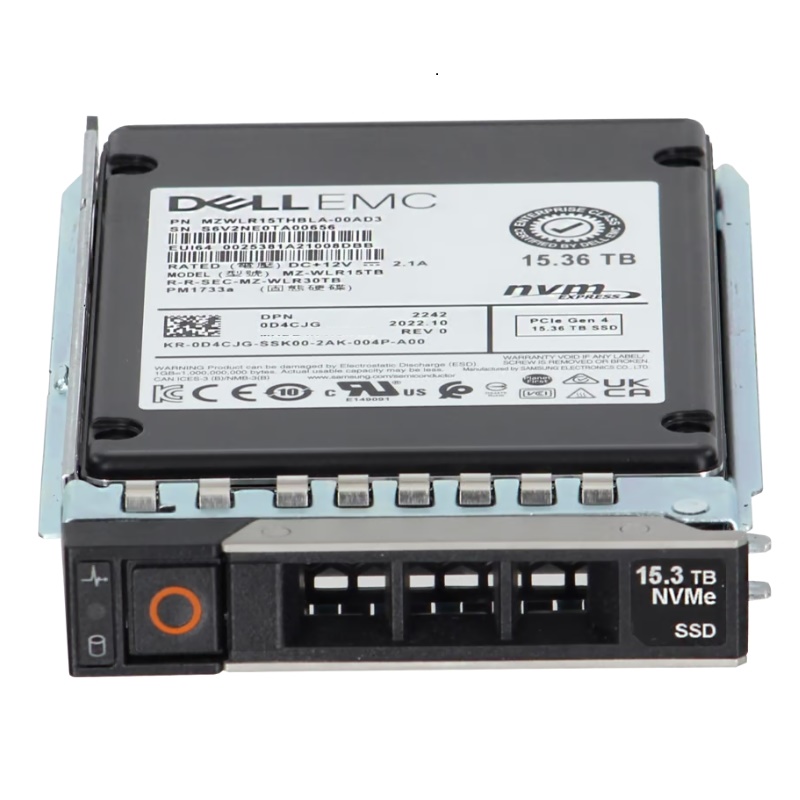


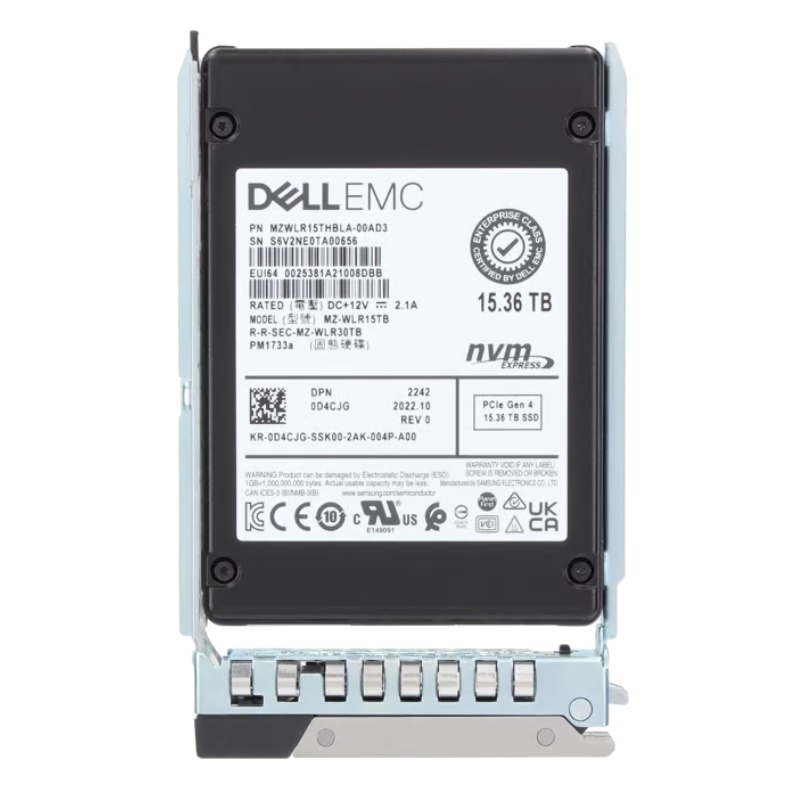
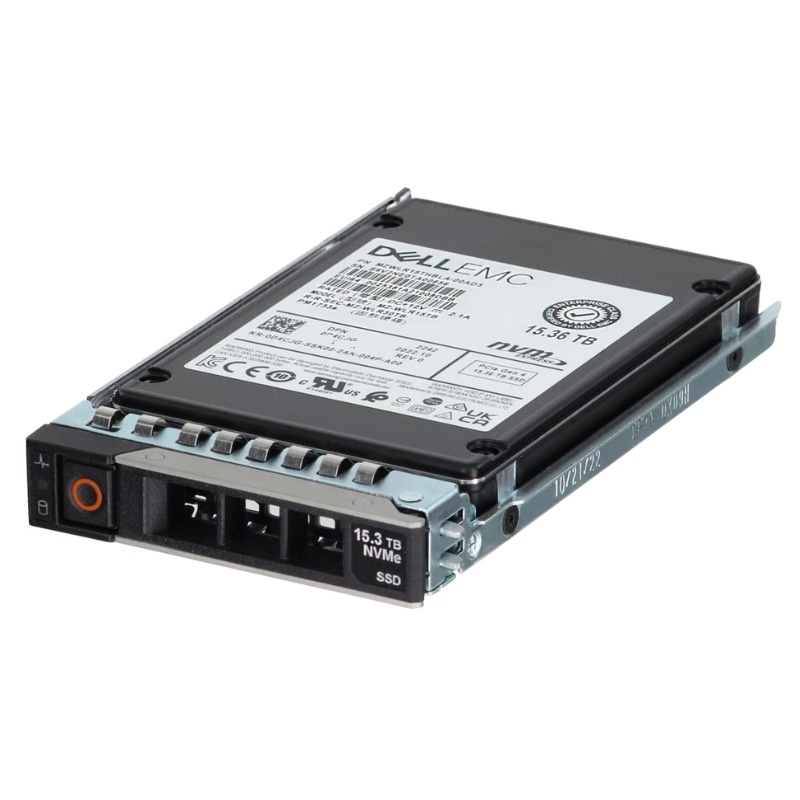
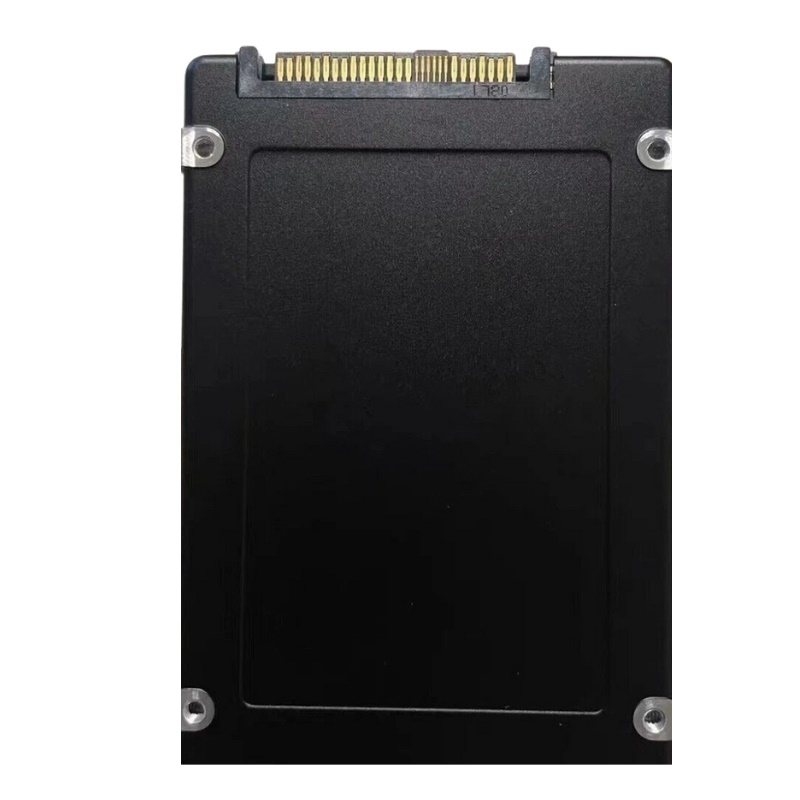
Dell 345-BEQM 15.36TB PCIe Gen4 NVMe U.2 SFF SSD. New Sealed in Box (NIB) with 1 year Warranty
The Dell 345-BEQM 15.36TB PCIe Gen4 NVMe U.2 Small Form Factor (SFF) SSD represents a pinnacle in enterprise-grade solid-state storage. Engineered for data-intensive environments, this drive combines massive capacity, cutting-edge PCIe Gen4 performance, and NVMe protocol efficiency to deliver unparalleled throughput, scalability, and reliability. Ideal for hyperscale data centers, virtualized infrastructures, AI/ML workloads, and high-performance computing (HPC), the 345-BEQM SSD is optimized for read/write-intensive applications requiring consistent low latency and high IOPS.
Leveraging the PCIe Gen4 interface, the Dell 345-BEQM SSD offers up to 16GT/s per lane, translating to a theoretical bandwidth of 64Gbps across four lanes. This enables significantly faster data transfer rates compared to Gen3, reducing bottlenecks in high-throughput environments and accelerating application performance.
The Non-Volatile Memory Express (NVMe) 1.4 protocol enhances queue depth, command set efficiency, and latency reduction. Unlike legacy AHCI-based interfaces, NVMe is designed specifically for SSDs, enabling parallelism and lower CPU overhead. This results in faster response times and improved scalability across multi-core systems.
While optimized for PCIe Gen4 platforms, the 345-BEQM SSD maintains backward compatibility with Gen3 slots, allowing seamless integration into existing server infrastructures. This ensures flexibility during phased upgrades or mixed-generation deployments.
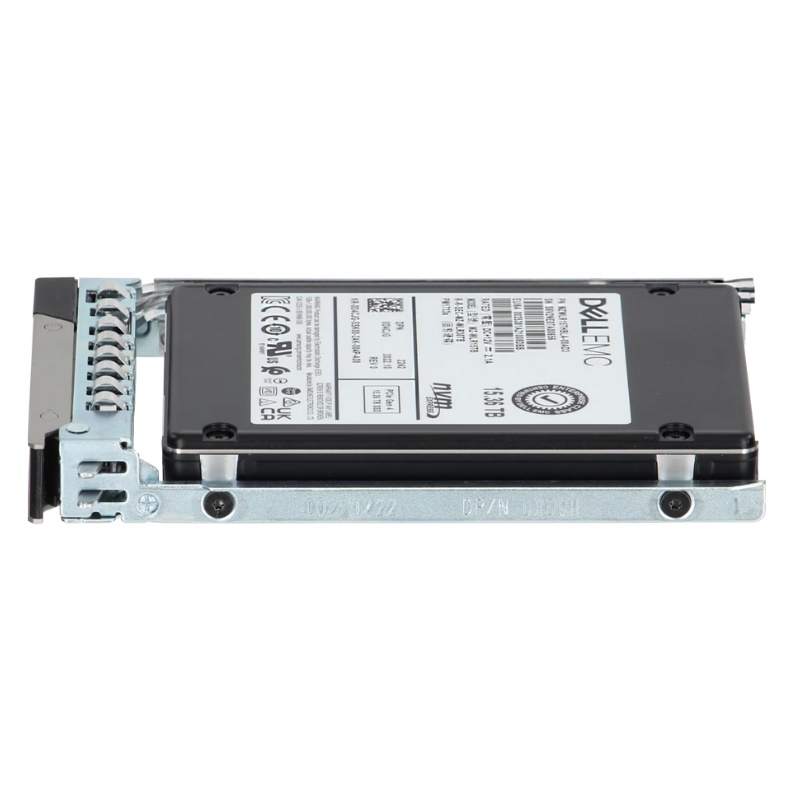
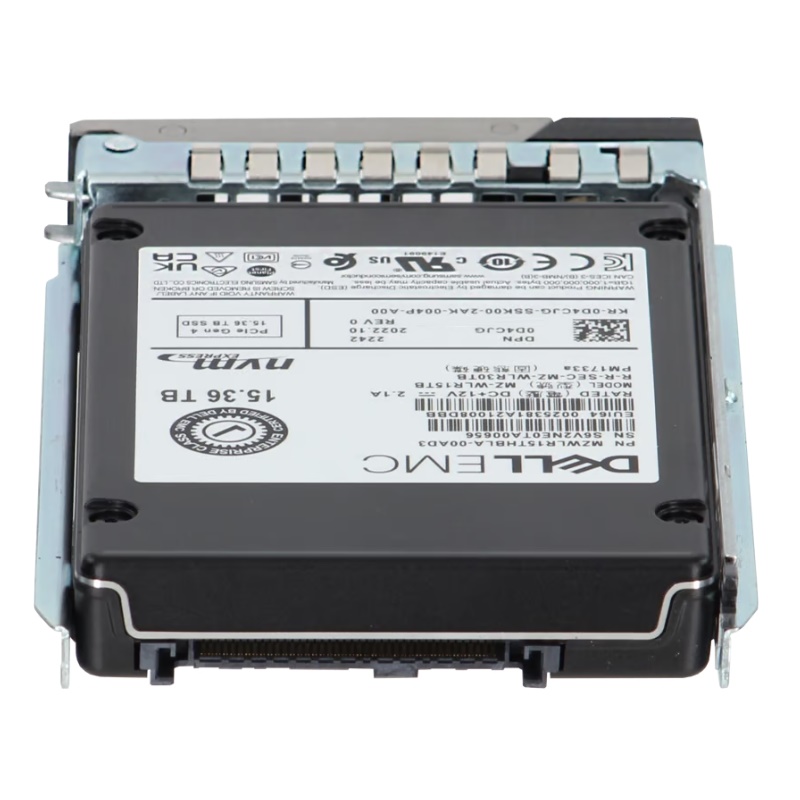
The 2.5-inch U.2 SFF design enables hot-swappable deployment in enterprise servers and storage arrays. U.2 connectors support high-speed PCIe lanes while maintaining compatibility with standard drive bays, simplifying installation and maintenance.
Hot-plug support allows administrators to replace or upgrade drives without system downtime. This feature is critical for maintaining service continuity in mission-critical environments such as financial services, healthcare, and cloud platforms.
With a massive 15.36TB capacity, the Dell 345-BEQM SSD enables consolidation of storage resources, reducing footprint and power consumption. This capacity is ideal for storing large datasets, virtual machine images, media libraries, and transactional databases.
The SSD utilizes advanced 3D TLC NAND flash with multi-layer stacking, maximizing storage density without compromising endurance. This architecture supports high-capacity configurations in compact form factors, enabling scalable storage solutions.
The drive is tuned for both read and write-intensive operations, making it suitable for mixed-use scenarios such as OLTP databases, real-time analytics, and virtualization platforms. Its endurance and performance characteristics ensure consistent throughput across diverse applications.
The Dell 345-BEQM SSD delivers sequential read speeds exceeding 7,000MB/s and write speeds up to 6,800MB/s, depending on system configuration. This enables rapid access to large files, accelerating backup, restore, and data migration processes.
With random read/write IOPS in the hundreds of thousands, the drive ensures responsiveness in latency-sensitive applications. This includes virtual desktop infrastructure (VDI), AI inference engines, and high-frequency trading platforms.
The NVMe protocol and PCIe Gen4 interface work in tandem to minimize latency, achieving sub-millisecond response times. This is critical for real-time applications and workloads requiring deterministic performance.
The Dell 345-BEQM SSD features a robust Drive Write Per Day (DWPD) rating, supporting sustained write workloads over a five-year warranty period. This endurance ensures reliability in environments with frequent data updates and high transaction volumes.
The SSD incorporates LDPC error correction, dynamic wear-leveling, and over-provisioning algorithms to maintain data integrity and extend lifespan. These features reduce the risk of data corruption and ensure consistent performance over time.
With a Mean Time Between Failures (MTBF) exceeding 2 million hours and an Unrecoverable Bit Error Rate (UBER) below 1 in 1017, the drive meets stringent enterprise reliability standards. These metrics validate its suitability for continuous operation in mission-critical deployments.
The Dell 345-BEQM SSD supports Instant Secure Erase, enabling rapid and irreversible data sanitization. This feature is essential for compliance with data protection regulations and secure asset disposal.
The drive includes support for TCG Opal 2.0 and AES 256-bit hardware encryption, ensuring data confidentiality at rest. These security protocols protect sensitive information from unauthorized access and support regulatory compliance.
The 345-BEQM SSD is validated for use in Dell PowerEdge servers and storage platforms. It integrates seamlessly with Dell RAID controllers, BIOS firmware, and management utilities, ensuring optimal performance and simplified deployment.
The drive is compatible with leading hypervisors such as VMware ESXi, Microsoft Hyper-V, and KVM. Its high IOPS and low latency make it ideal for hosting virtual machines, containers, and cloud-native applications.
The SSD supports integration into RAID arrays, including RAID 0, 1, 5, and 10 configurations. Its U.2 interface and hot-swap capability enable flexible storage architectures tailored to performance, redundancy, or capacity optimization.
In HPC environments, the SSD enables rapid access to simulation data, scientific datasets, and computational results. Its PCIe Gen4 interface ensures minimal latency and high bandwidth for parallel processing tasks.
The drive supports dense VDI deployments by delivering fast boot times, responsive user sessions, and consistent performance across virtual desktops. Its endurance ensures reliability under continuous read/write operations.
For transactional and analytical databases, the SSD reduces query latency and improves throughput. Its high IOPS and low latency benefit OLTP, OLAP, and hybrid database architectures.


 Contact Us
 Information
 Catalog
 Solid State Drives (SSD)
 Network Switches
 Hard Disk Drives
 HBA & Controllers
 PC & Servers
 PC & Server Memory
 CPU & Processors
 Network Routers
 Power Supplies
 Tape Drives & Libraries
 Network Devices
 Computer & Network Cables