(7% discount is applied at checkout)
Cart is empty
Your go-to destination for cutting-edge server products
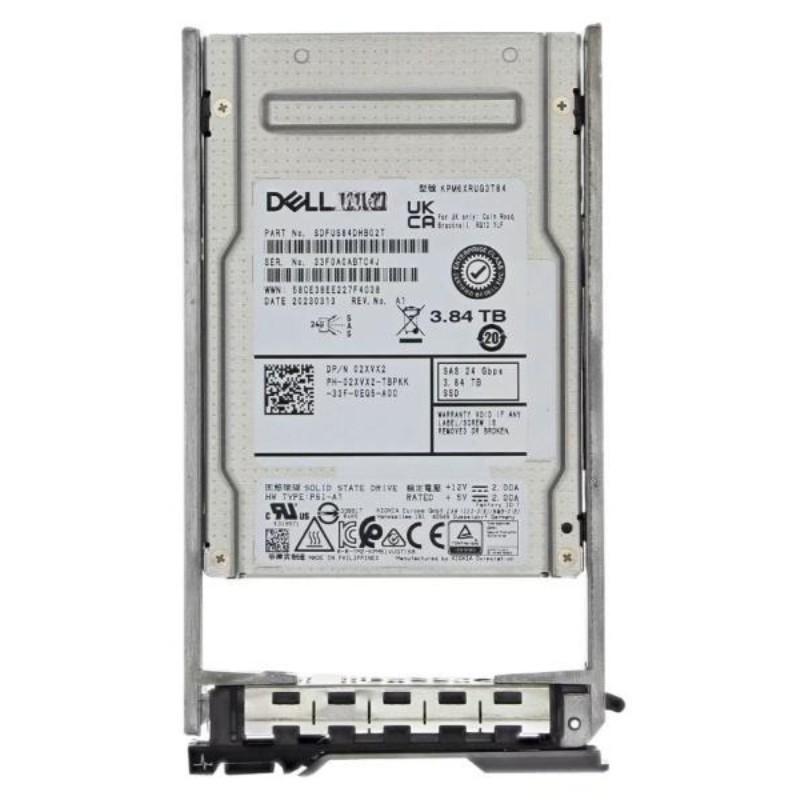


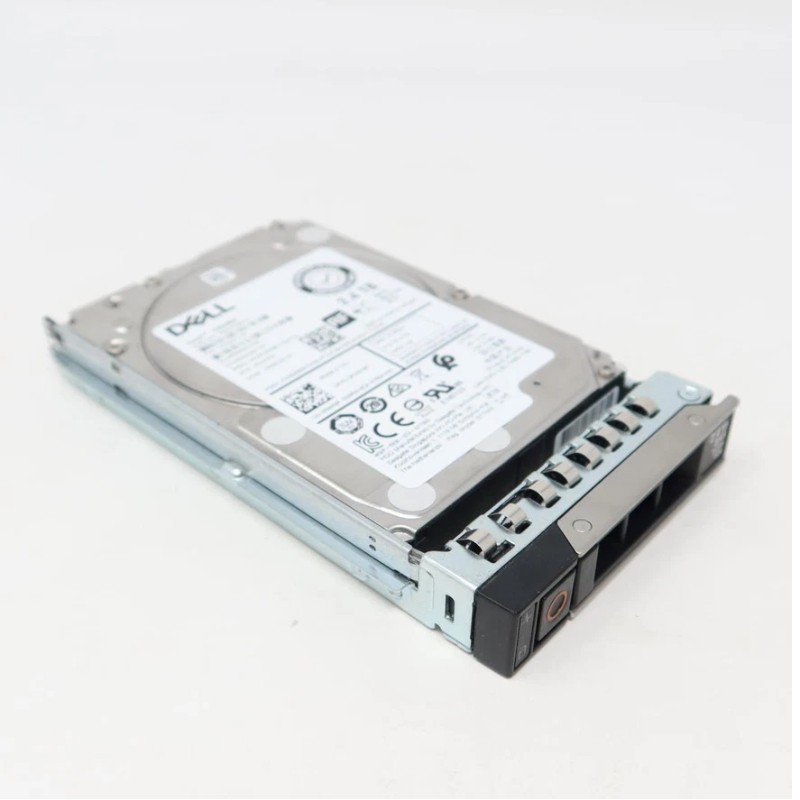
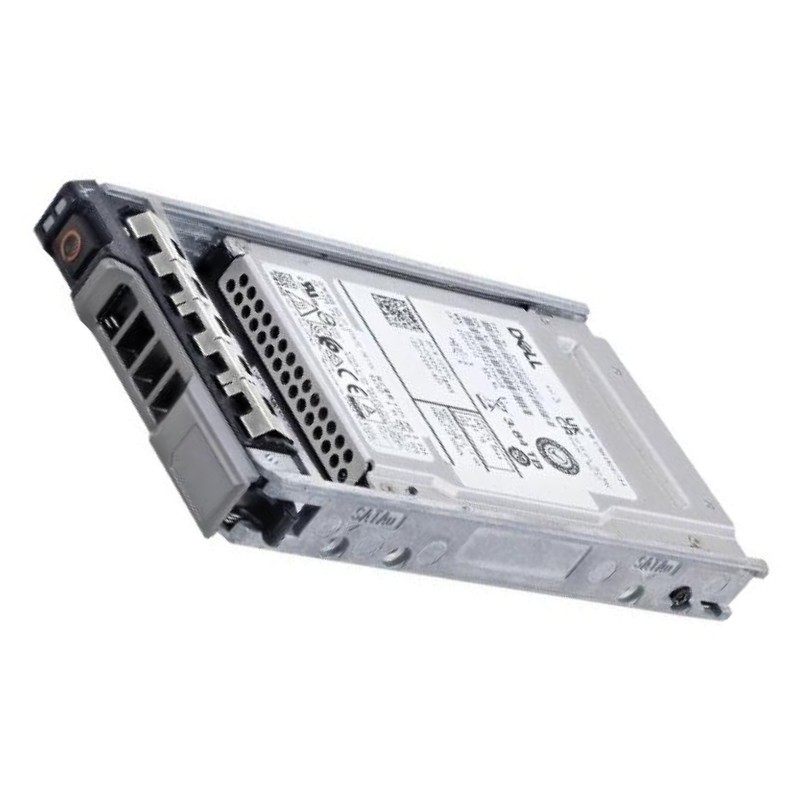
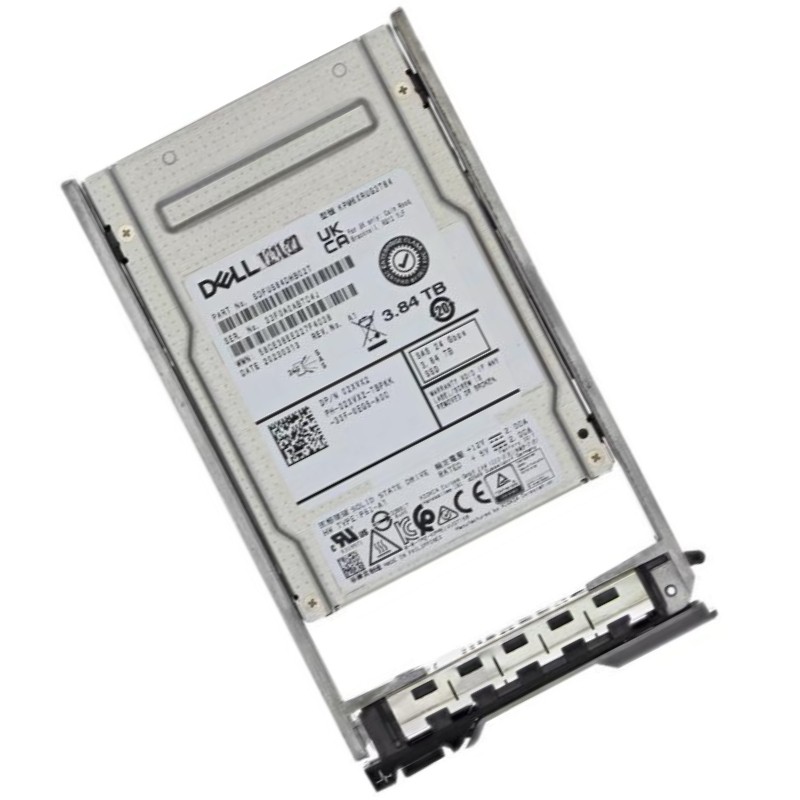
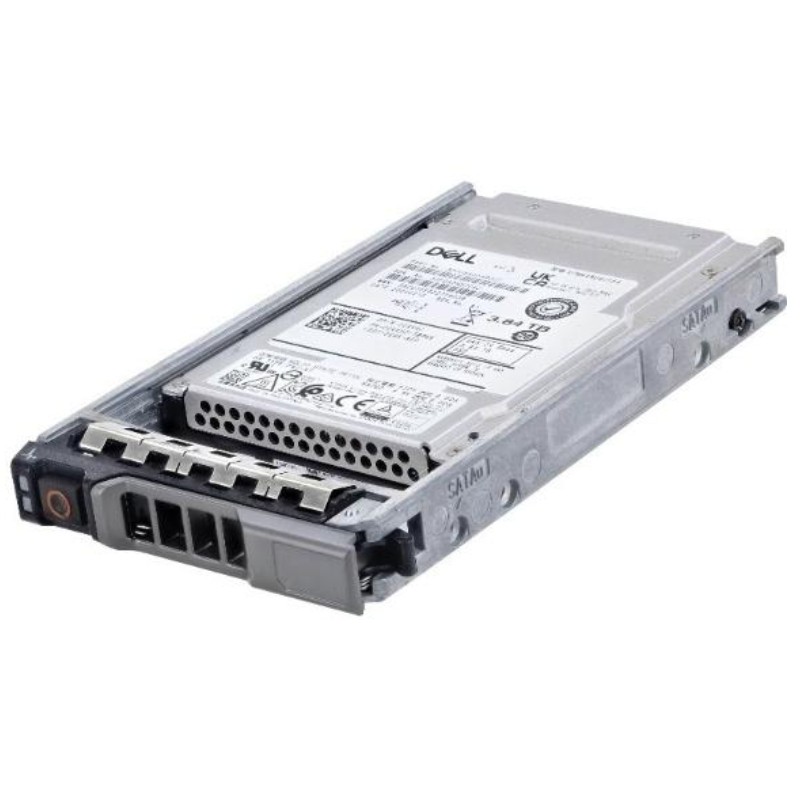
Dell 345-BFTF 3.84TB SAS 24GBPS Ise Read Intensive 512e 2.5Inch Internal Solid State Drive with Tray. New Sealed in Box (NIB) with 1 Year Warranty
The Dell 345-BFTF 3.84TB SSD Up To SAS 24Gbps Read Intensive 512e 2.5-Inch Internal Drive with Tray for 15G PowerEdge Server represents a purpose-built storage option for modern enterprise workloads that require high I/O throughput, predictable latency, and increased capacity density in 2.5-inch bays. Designed for read-intensive applications, this SSD balances cost per gigabyte against sustained read performance, making it ideally suited for OLTP databases under heavy read loads, virtual desktop infrastructure (VDI) with a large number of read operations, content delivery and caching layers, and analytics engines that repeatedly access large datasets. The combination of the 3.84TB capacity and SAS 24Gbps interface positions this drive as a compelling choice for organizations seeking to consolidate working sets and accelerate application responsiveness within PowerEdge server platforms.
At its core, the Dell 345-BFTF leverages a SAS 24Gbps (also referred to as 24GB/s in industry shorthand) link to deliver a high-bandwidth channel between the drive and the host controller. This greater bandwidth, compared with earlier SAS generations, reduces the likelihood of host-side bottlenecks for sequential and mixed I/O, enabling more consistent end-to-end throughput for multi-threaded server workloads. The 512e sector emulation provides compatibility with legacy sector sizes while supporting modern flash translation schemes, giving administrators flexibility during migration or in mixed fleets. Packaged in a 2.5-inch form factor and supplied with an OEM tray for direct insertion into 15G PowerEdge drive sleds, the drive fits neatly into dense compute/storage servers, allowing organizations to scale capacity without sacrificing rack density.
Read-intensive SSDs are optimized to provide a high number of read operations per second and stable read latency under sustained workloads. For applications where read throughput matters most—content repositories, large-scale cache nodes, or read-optimized database replicas—the Dell 345-BFTF is engineered to return a consistent quality of service. In mixed I/O environments, where writes occur but read activity dominates, the drive’s internal controllers and firmware manage wear and block reclamation to preserve read performance while ensuring sufficient write handling for metadata updates, logs, and occasional checkpoints.
Enterprise buyers selecting the Dell 3.84TB drive should plan around the drive’s strengths: low and consistent read latency and high sustained IOPS for random read patterns. These metrics translate into lower query response times and faster user-facing transactions for database-driven applications. When measuring end-to-end system performance, remember that the overall latency envelope will also depend on RAID controller settings, host CPU utilization, queuing depth, and the storage fabric. Achieving optimal I/O operations per second typically requires tuning the server stack (OS scheduler, driver settings, and hypervisor queues) to complement the SSD’s behavior.
While read-intensive SSDs deliver robust random read performance, their sequential throughput also benefits from the 24Gbps SAS interface. Large sequential reads—common in backup, restore, and certain analytical scans—can saturate the link more effectively than older interfaces. However, real-world throughput will vary depending on workload concurrency and how the server aggregates multiple drives. For use cases requiring consistently high sequential write bandwidth, consider mixed-use or write-optimized SSDs; for primarily sequential read-heavy operations, the 345-BFTF offers a compelling balance of capacity and speed.
Endurance in read-intensive drives is engineered around the expectation that writes will be a minority of total I/O. The controller and NAND management algorithms focus on optimizing read stability and maintaining predictable behavior across the drive’s service life. Enterprises benefit from features such as power-loss protection (where implemented), background media management, and advanced wear leveling, which together increase the drive’s mean time between failures (MTBF) and reduce the likelihood of unexpected data loss.
Firmware plays a central role in enterprise SSD reliability. The 345-BFTF’s firmware controls garbage collection, bad block management, and error correction code (ECC) behavior that collectively preserve data integrity. In production fleets, maintain a firmware update policy—testing updates in a staging environment prior to widespread deployment—to take advantage of performance improvements, bug fixes, and new compatibility features released by the vendor. Properly applied firmware updates can improve compatibility with PowerEdge storage controllers and enhance the drive’s behavior under corner-case workloads.
SMART telemetry and vendor-specific health indicators allow administrators to monitor drive health and detect early signs of degradation. Integrating these signals with system management tools enables predictive maintenance workflows: drives with elevated reallocation counts or anomalous error metrics can be scheduled for replacement during planned maintenance windows, minimizing unplanned downtime. For datacenters operating at scale, automated alerting tied to these metrics is essential to maintain operational continuity.
The Dell 345-BFTF is supplied with a tray compatible with 15G PowerEdge servers, simplifying installation and ensuring secure electrical and mechanical connection. OEM-tray inclusion is particularly important for compatibility with hot-swap backplanes, drive bay locking mechanisms, and server front-panel indicators. Administrators should always verify chassis and controller compatibility lists—particularly when using older RAID or HBA firmware revisions—and consider cross-referencing Dell’s server documentation to ensure the desired drive behavior in RAID, HBA, or passthrough modes.
When deployed behind hardware RAID controllers, the drive will interact with RAID-level caching, write-back policies, and predictive rebuild features. For read-intensive deployments, RAID configurations that emphasize read performance and availability—such as RAID 10—are common. RAID 6 may be preferred in scenarios requiring high data protection with larger arrays, though rebuild times and sustained workload behavior should be planned for, as rebuild stress can change the performance characteristics of the entire array. Understanding how the controller schedules background consistency checks and rebuilds is crucial when placing read-intensive SSDs into large logical volumes.
Because the drive is designed for enterprise servers, it supports hot-swap removal and insertion when used with appropriate trays and backplanes. This enables non-disruptive replacements for failed drives in redundant arrays and simplifies scaling activities when adding capacity to hyperconverged or clustered environments. Serviceability increases overall system availability and reduces operational friction for administrators performing regular hardware refreshes or capacity upgrades.
The 3.84TB capacity point for a 2.5-inch drive represents a middle ground between cost-effective large disks and ultra-high endurance small-capacity SSDs. In dense compute clusters or storage servers, deploying multiple 3.84TB SSDs allows organizations to attain substantial usable capacity while preserving the compactness of 2.5-inch channels. Capacity planning should consider usable capacity after RAID parity or mirroring overhead, filesystem overhead, and the operational need for spare capacity to absorb write amplification and maintain performance consistency during background management tasks.
Assessment of working set size, read/write ratios, and peak concurrency are essential steps when right-sizing SSD capacity. For read-dominant workloads, prioritize read latency and cache hit rates; for environments where occasional writes spike—such as snapshots, backups, or maintenance windows—ensure that available spare capacity and endurance headroom are sufficient to handle transient write bursts without compromising read performance. Consider also the implications of thin provisioning and overcommitment: while these techniques boost apparent capacity utilization, they can interact with SSD garbage collection in ways that increase background activity and affect service levels.
Many organizations employ a mixed-tier storage architecture, combining read-intensive SSDs like the 345-BFTF with higher-endurance SSDs for write-heavy nodes or with high-capacity spinning disks for archive and cold storage. In such topologies, the read-intensive drives act as fast caches or primary storage for frequently accessed data, while slower tiers store backups and infrequently accessed objects. Designing appropriate data movement and tiering policies—using software-defined storage tools, cache warming, and automated tiering—maximizes ROI while maintaining the application performance users expect.


 Contact Us
 Information
 Catalog
 Solid State Drives (SSD)
 Network Switches
 Hard Disk Drives
 HBA & Controllers
 PC & Servers
 PC & Server Memory
 CPU & Processors
 Network Routers
 Power Supplies
 Tape Drives & Libraries
 Network Devices
 Computer & Network Cables