(7% discount is applied at checkout)
Cart is empty
Your go-to destination for cutting-edge server products
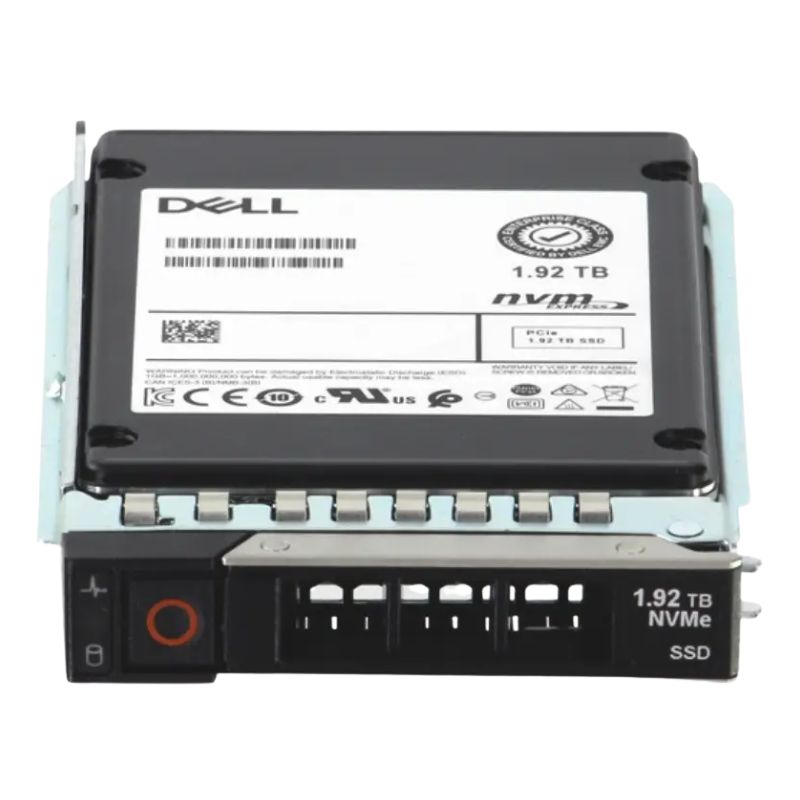


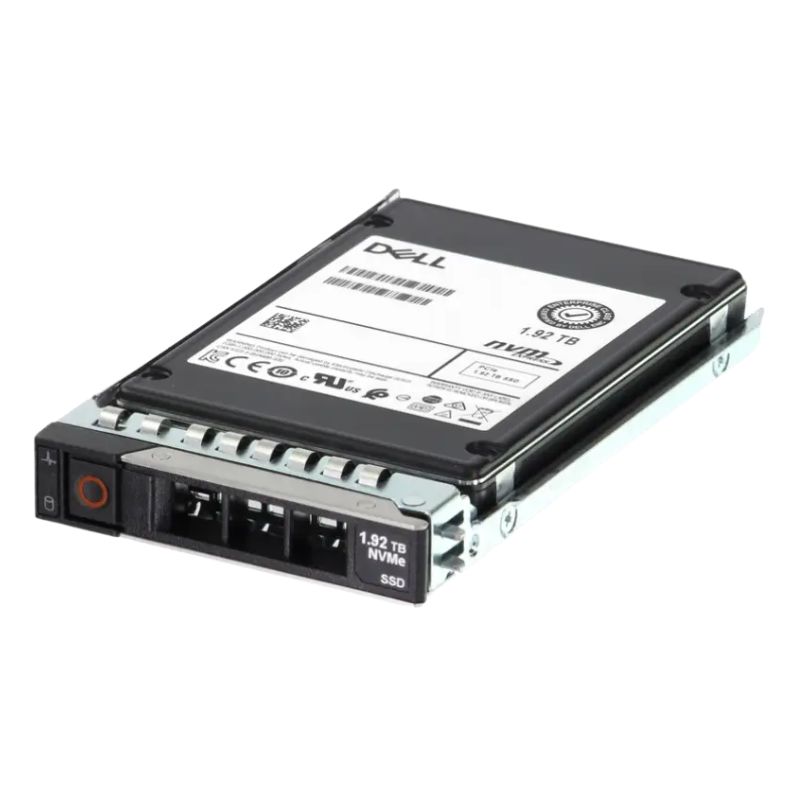
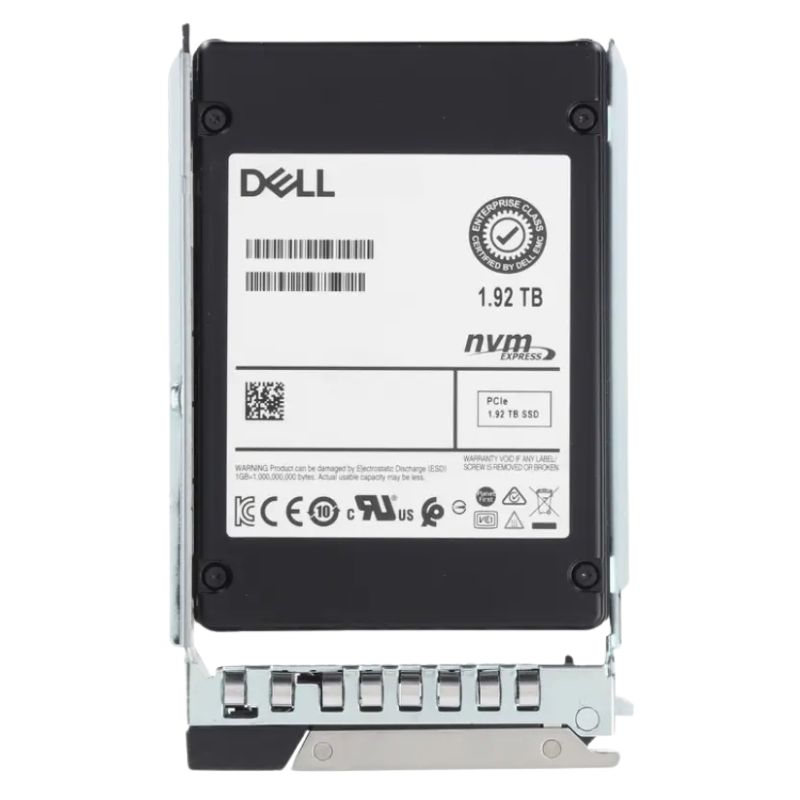
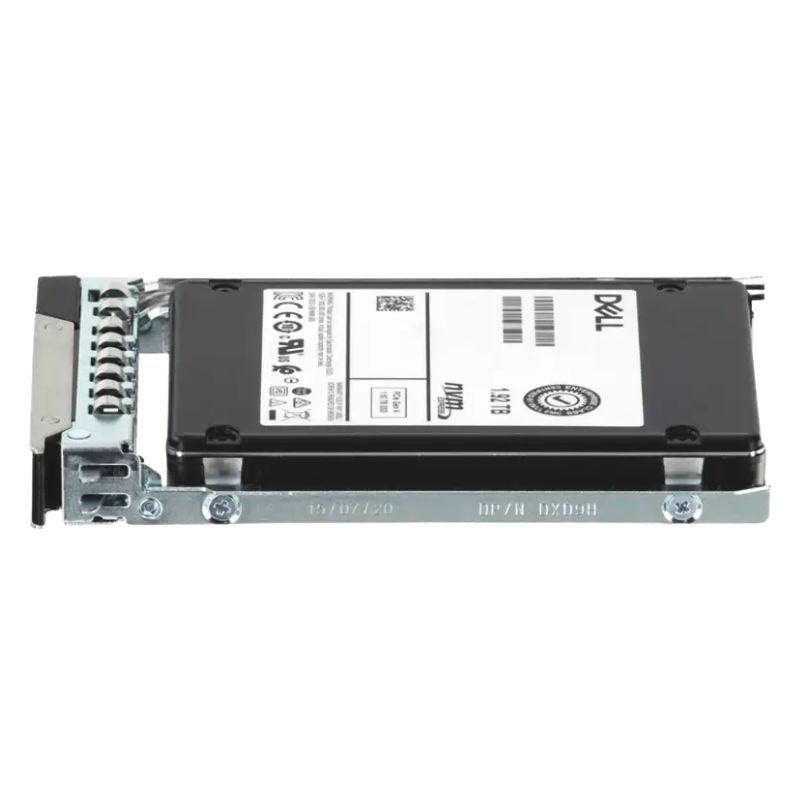
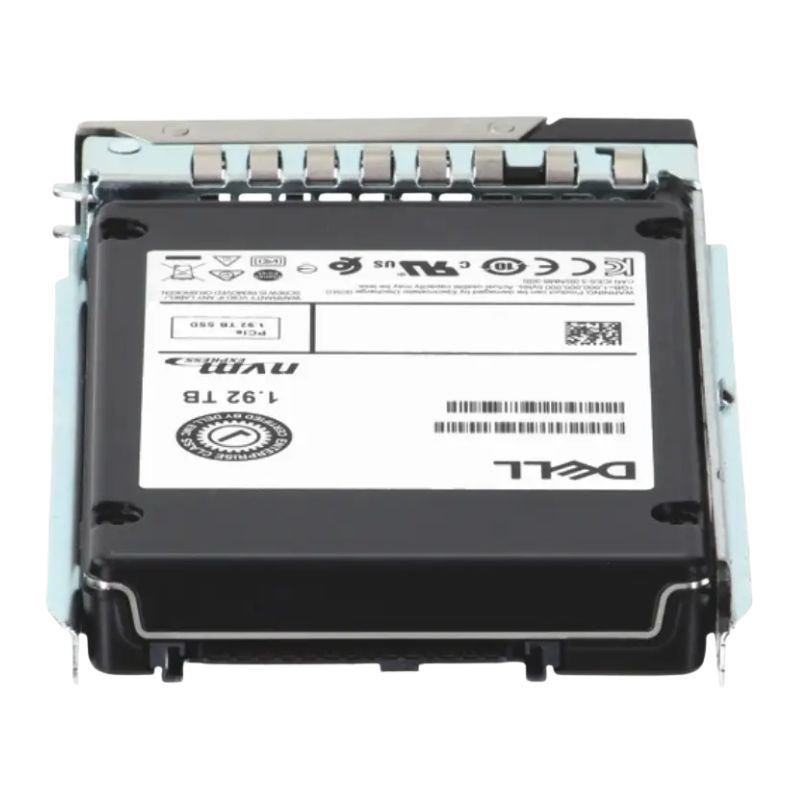
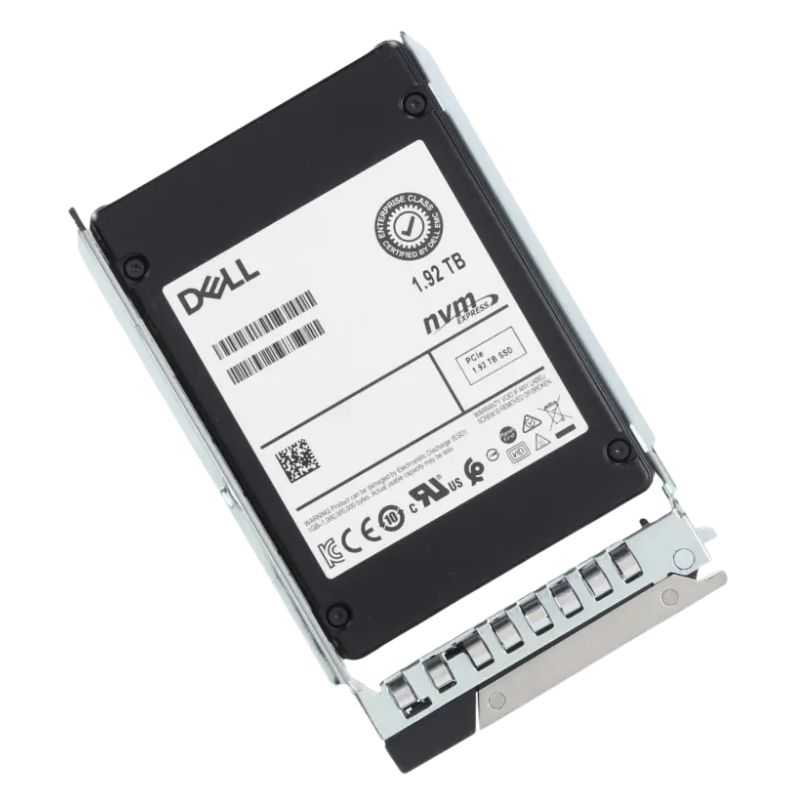
Dell 345-BHXQ 1.92TB PCIe Gen4 NVMe U.2 2.5 Inch Read Intensive Solid State Drive. New Sealed in Box (NIB) with 1-Year Replacement Warranty
The Dell 345-BHXQ 1.92TB PCIe Gen4 NVMe U.2 solid state drive is designed to deliver consistent, high-speed storage performance for modern enterprise workloads. Built for read-intensive operations, this 2.5-inch U.2 SSD enhances data center efficiency, accelerates application response times, and ensures dependable data integrity across Dell PowerEdge servers. Leveraging PCIe Gen4 x4 and NVMe architecture, it offers superior throughput, reduced latency, and optimized scalability for mission-critical environments.
The Dell 345-BHXQ 1.92TB PCIe Gen4 NVMe U.2 2.5 Inch Read Intensive Solid State Drive belongs to a specialized category of enterprise-grade storage solutions designed to address the growing performance, scalability, and reliability requirements of modern data centers. This category focuses on high-throughput NVMe SSDs that leverage the PCI Express Gen4 interface to deliver significantly improved bandwidth, lower latency, and enhanced parallelism compared to legacy SATA and SAS-based storage technologies. Drives in this category are engineered for mission-critical workloads where consistent read performance, predictable latency, and endurance efficiency are essential.
Enterprise NVMe SSDs such as this model are optimized for server and storage platforms deployed in virtualization environments, cloud infrastructures, database clusters, analytics engines, and content delivery systems. The emphasis on read-intensive workloads reflects the increasing demand for storage that can rapidly access large datasets, frequently queried records, and cached application content without introducing performance bottlenecks. The Dell 345-BHXQ SSD exemplifies this category by balancing capacity density, interface speed, and enterprise firmware optimizations.
The PCIe Gen4 NVMe architecture defines a critical advancement within the enterprise SSD category. PCIe Gen4 doubles the per-lane bandwidth available in PCIe Gen3, enabling storage devices to achieve higher sequential and random throughput without saturating the bus. In the context of enterprise servers, this increased bandwidth allows multiple NVMe drives to operate concurrently at high performance levels, supporting dense storage configurations and parallel workloads.
NVMe, or Non-Volatile Memory Express, is a protocol specifically designed for solid state storage that eliminates the inefficiencies associated with legacy command sets. By enabling a large number of parallel queues and commands, NVMe significantly reduces I/O latency and improves scalability under heavy load. The Dell 345-BHXQ SSD leverages this protocol to ensure that read-intensive operations remain responsive even as concurrency increases across virtual machines, containers, or application threads.
One of the defining features of this category is ultra-low latency performance. Enterprise NVMe SSDs minimize the delay between request submission and data retrieval, which is crucial for workloads such as transactional databases, search indexing, and real-time analytics. The reduced latency of PCIe Gen4 NVMe drives directly translates into faster application response times, improved user experiences, and higher overall system efficiency.
In multi-tier architectures, low-latency storage helps reduce dependency on caching layers and minimizes the performance gap between memory and persistent storage. This allows architects to design more streamlined systems where NVMe SSDs serve as both primary storage and high-speed cache tiers.
The read intensive classification within the enterprise SSD category refers to drives that are engineered for environments where read operations significantly outnumber write operations. This optimization strategy focuses on maximizing read throughput, reducing read latency, and extending usable lifespan under read-heavy access patterns. The Dell 345-BHXQ SSD is tailored for such scenarios, making it well-suited for content distribution, data warehousing, reporting systems, and reference databases.
Read intensive SSDs employ firmware tuning, wear-leveling strategies, and flash management techniques that prioritize consistent read performance while maintaining sufficient write endurance for metadata updates, logging, and background maintenance tasks. This approach ensures that the drive delivers stable performance over extended deployment periods without unnecessary overprovisioning.
Within enterprise infrastructure, read intensive NVMe SSDs are frequently deployed in scenarios where large datasets are accessed repeatedly with minimal modification. Examples include virtual desktop infrastructure images, web application assets, analytics dashboards, and machine learning inference models. By aligning storage characteristics with workload demands, organizations can achieve better performance-per-dollar and optimize total cost of ownership.
The Dell 345-BHXQ SSD fits naturally into these environments by providing a balance of capacity and performance that supports high read concurrency without compromising reliability. Its design reflects a category-wide emphasis on predictable behavior under sustained read load.
The U.2 2.5 inch form factor plays a significant role in the enterprise SSD category by enabling NVMe performance within a familiar and serviceable physical design. Unlike add-in cards or proprietary modules, U.2 drives support hot-swapping and front-access installation in standard server bays. This enhances operational flexibility and simplifies maintenance procedures in data center environments.
The 2.5 inch U.2 form factor allows system integrators to deploy high-performance NVMe storage without sacrificing compatibility with existing server chassis designs. This continuity is particularly valuable for organizations upgrading from SAS or SATA SSDs, as it minimizes infrastructure changes while delivering substantial performance improvements.
Enterprise NVMe SSDs operating at PCIe Gen4 speeds generate more heat than earlier generations, making thermal management a critical aspect of the category. U.2 drives are designed with robust enclosures and airflow considerations that help dissipate heat effectively within server environments. The Dell 345-BHXQ SSD benefits from these design principles, ensuring sustained performance without thermal throttling.
Power efficiency is another important consideration. Read intensive NVMe SSDs are optimized to deliver high performance per watt, enabling dense deployments without exceeding power and cooling budgets. This efficiency supports scalability in large data centers where operational costs are closely monitored.
A capacity of 1.92TB positions this SSD within a sweet spot of the enterprise storage category, offering ample space for large datasets while maintaining high performance characteristics. This capacity level is particularly attractive for applications that require fast access to substantial volumes of data without the complexity of managing numerous smaller drives.
High-capacity NVMe SSDs enable consolidation of workloads and reduction of storage sprawl. By storing more data on fewer high-performance drives, organizations can simplify storage architectures, reduce failure points, and improve overall system manageability.
In scale-out environments, NVMe SSDs with capacities around 2TB are often used as building blocks for distributed storage systems. These systems benefit from the combination of fast local access and aggregated performance across nodes. The Dell 345-BHXQ SSD aligns with this architectural approach, supporting scalable designs that grow in both capacity and throughput as demand increases.
Such scalability is essential for cloud service providers, managed hosting platforms, and enterprises adopting hyperconverged infrastructure models. NVMe SSDs in this category enable predictable scaling without introducing storage bottlenecks.
Reliability is a defining attribute of the enterprise SSD category. Drives like the Dell 345-BHXQ are built to operate continuously under demanding conditions, with features that protect data integrity and ensure consistent availability. Enterprise-grade components, rigorous validation processes, and advanced firmware contribute to long-term dependability.
Error detection and correction mechanisms are integral to this category, safeguarding data against corruption during transmission and storage. These mechanisms are particularly important in read intensive environments where data accuracy is critical for analytics, reporting, and decision-making processes.
Although read intensive SSDs prioritize read performance, they are still engineered to provide sufficient write endurance for enterprise workloads. Background processes such as garbage collection, wear leveling, and metadata updates are carefully managed to minimize impact on flash memory lifespan. This ensures that the drive maintains consistent performance and reliability throughout its service life.
The Dell 345-BHXQ SSD exemplifies this balance by delivering enterprise-level endurance metrics aligned with its intended usage profile. This makes it a dependable choice for long-term deployments where stability is as important as speed.
As part of Dell’s enterprise storage portfolio, this SSD category is designed for seamless integration with Dell PowerEdge servers and storage systems. Compatibility testing and firmware alignment ensure that the drive operates optimally within Dell-certified configurations. This ecosystem approach reduces deployment risk and simplifies lifecycle management.
Enterprise customers benefit from unified support, streamlined updates, and validated performance when deploying storage solutions within a single vendor ecosystem. The Dell 345-BHXQ SSD reflects this philosophy by adhering to strict qualification standards and interoperability guidelines.
The category encompassing the Dell 345-BHXQ SSD supports a wide range of enterprise use cases. In virtualization platforms, high-speed NVMe storage reduces boot times, accelerates VM provisioning, and improves overall host utilization. In database environments, fast read access enhances query performance and reduces reporting latency.
Content delivery networks and web hosting platforms rely on read intensive NVMe SSDs to serve static and dynamic content efficiently to large user bases. Analytics and business intelligence systems benefit from rapid access to historical data, enabling faster insights and more responsive dashboards.
As technologies such as artificial intelligence, machine learning, and real-time data processing continue to evolve, the demand for high-performance read access will only increase. NVMe SSDs in this category provide a foundation that supports these emerging workloads by minimizing data access delays and maximizing throughput.
The PCIe Gen4 interface ensures that the storage subsystem remains relevant as processor and memory technologies advance. This future-proofing aspect makes enterprise NVMe SSDs a strategic investment for organizations planning long-term infrastructure upgrades.
Beyond raw performance, enterprise NVMe SSDs contribute to overall data center efficiency. Faster storage reduces job completion times, allowing systems to return to idle states more quickly and conserve energy. High-density NVMe deployments also reduce the physical footprint required for storage, freeing up rack space for additional compute resources.
The Dell 345-BHXQ SSD, as part of this category, supports these efficiency gains by delivering consistent performance in a compact form factor. This alignment with data center optimization goals makes NVMe SSDs a key component of modern infrastructure strategies.
While enterprise NVMe SSDs represent a premium storage option, their performance density can lead to cost savings at the system level. By achieving higher throughput with fewer drives, organizations can reduce hardware counts, licensing costs, and operational overhead. Read intensive SSDs further optimize costs by aligning endurance with workload requirements.
This category-driven approach to storage selection enables more precise resource allocation and improved return on investment. The Dell 345-BHXQ SSD embodies this principle by offering a balanced combination of capacity, speed, and endurance tailored to read-focused applications.


 Contact Us
 Information
 Catalog
 Solid State Drives (SSD)
 Network Switches
 Hard Disk Drives
 HBA & Controllers
 PC & Servers
 PC & Server Memory
 CPU & Processors
 Network Routers
 Power Supplies
 Tape Drives & Libraries
 Network Devices
 Computer & Network Cables