(7% discount is applied at checkout)
Cart is empty
Your go-to destination for cutting-edge server products
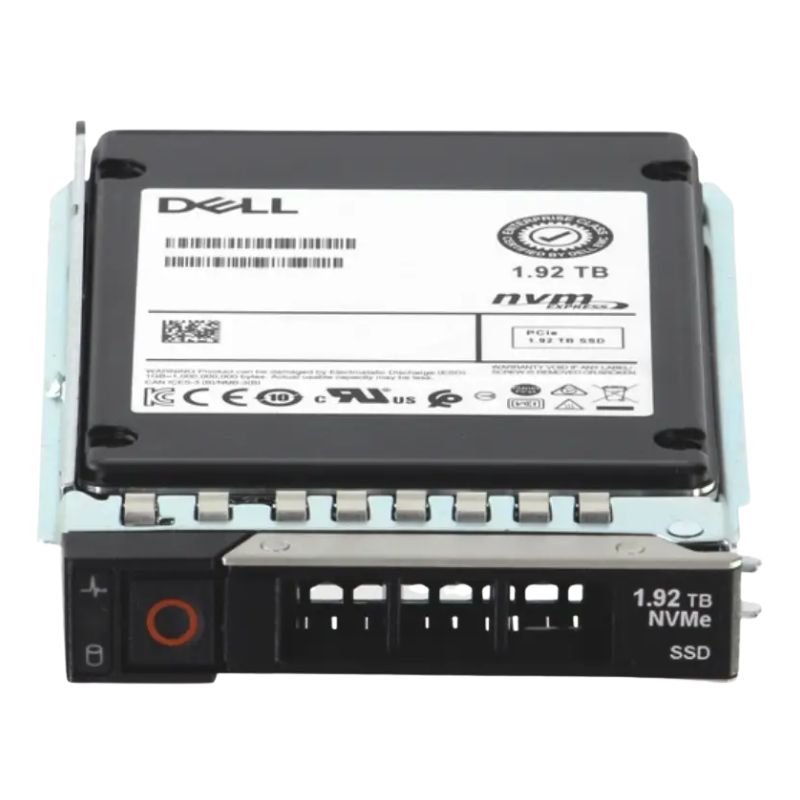


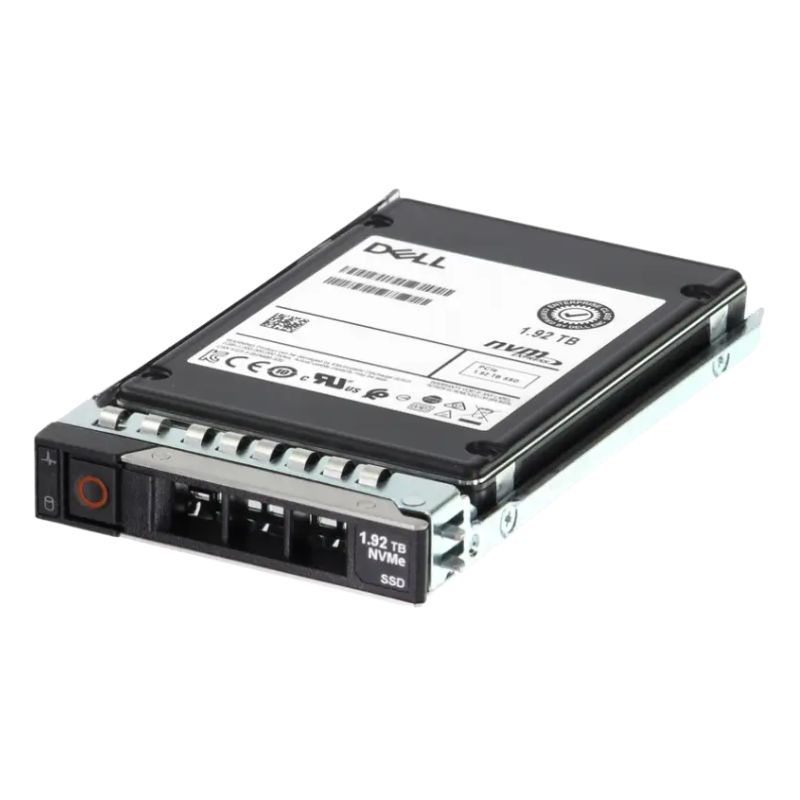
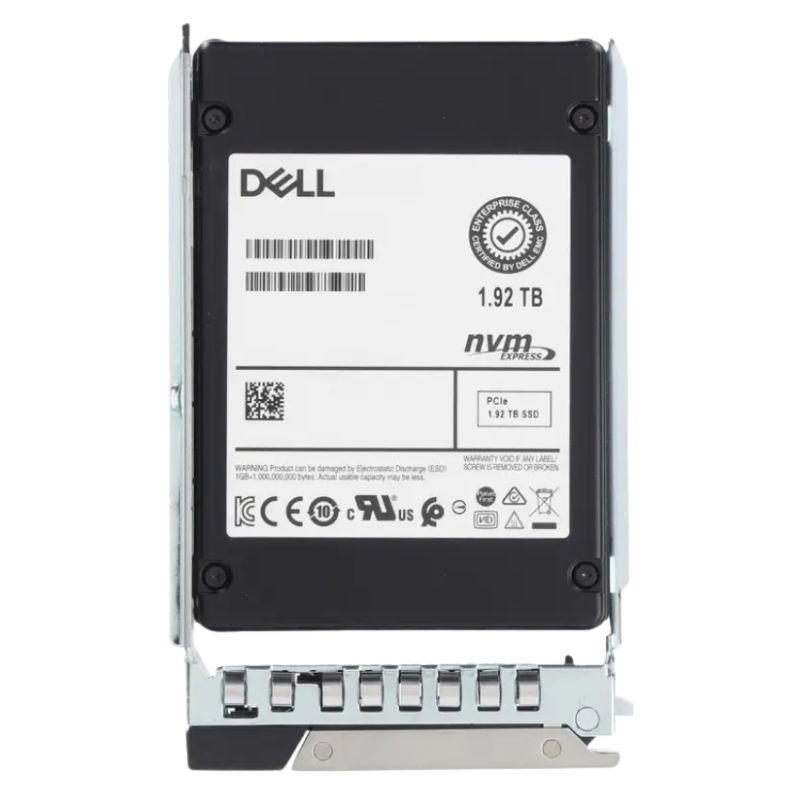
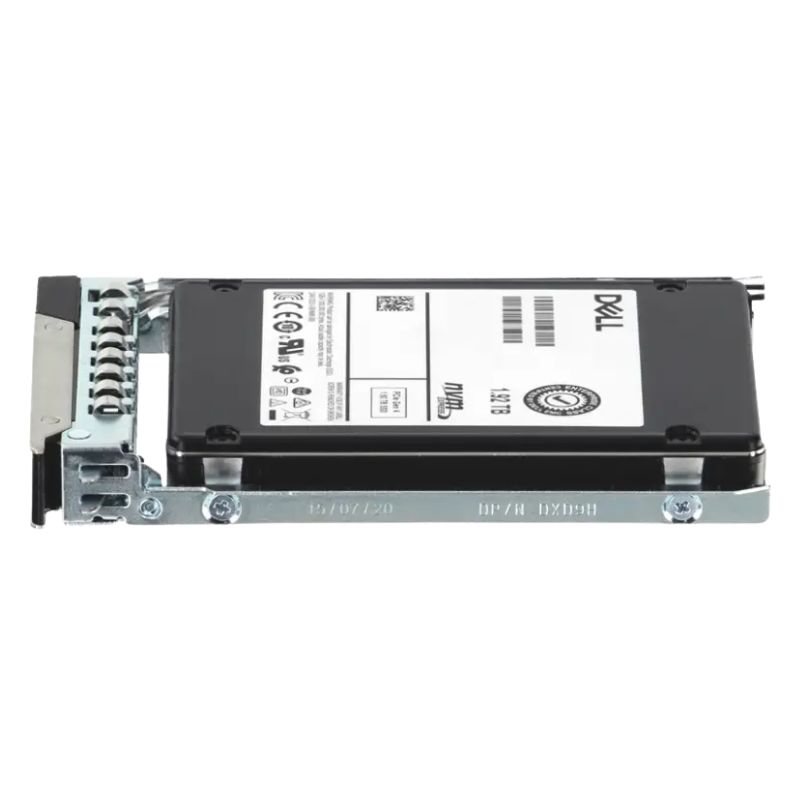
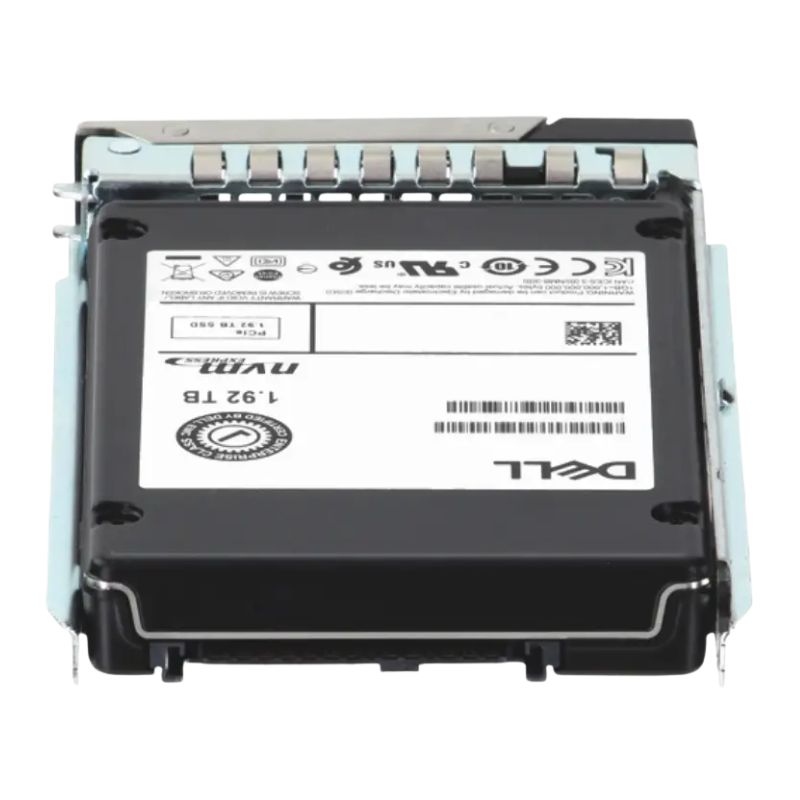
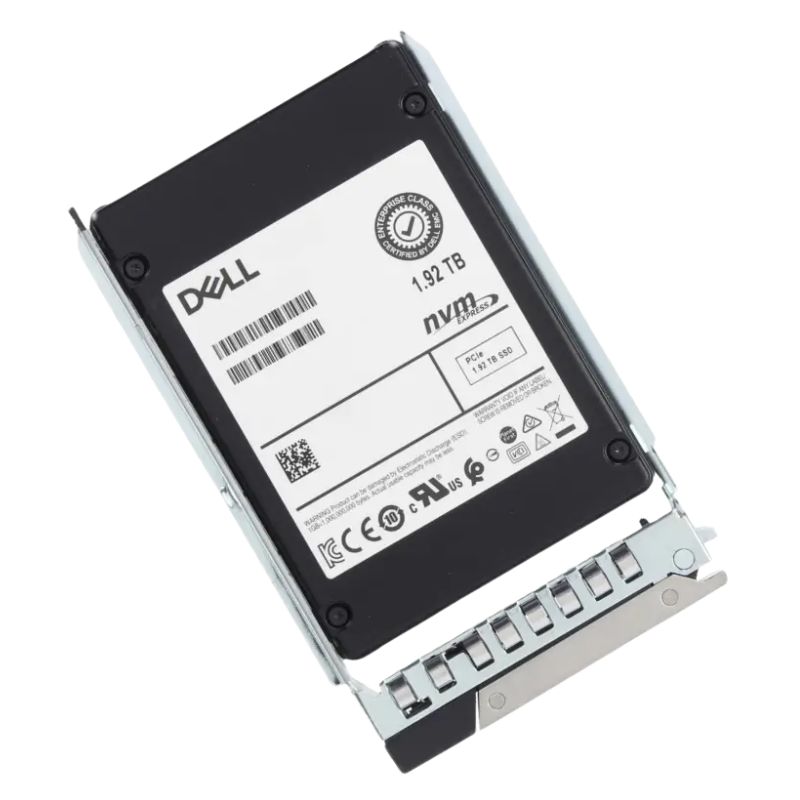
Dell 345-BHZG 1.92TB PCI-E Gen4 NVMe U.2 2.5 Inch Read Intensive Solid State Drive. New Sealed in Box (NIB) with 1-Year Replacement Warranty
The Dell 345-BHZG 1.92TB PCIe Gen4 NVMe U.2 2.5-inch Read Intensive Solid State Drive is engineered to deliver high-speed data access, enterprise-grade reliability, and consistent performance for modern data center workloads. Designed specifically for Dell PowerEdge servers, this NVMe SSD leverages advanced PCI Express Gen4 technology to maximize throughput, reduce latency, and improve overall system responsiveness in mission-critical environments.
The Dell 345-BHZG 1.92TB PCI-E Gen4 NVMe U.2 2.5 Inch Read Intensive Solid State Drive belongs to a specialized class of enterprise storage devices designed for data centers, cloud platforms, virtualization infrastructures, and performance-driven enterprise servers. This category focuses on high-speed non-volatile memory express technology combined with Dell’s enterprise-grade engineering standards. Drives in this class are optimized for fast data access, predictable latency, and sustained read-heavy workloads while maintaining compatibility with Dell PowerEdge server ecosystems.
Enterprise NVMe SSDs in the read intensive category are engineered to support environments where data is frequently accessed but written less often. These use cases include content delivery networks, analytics dashboards, virtualization boot volumes, read-optimized databases, and large-scale application hosting. The Dell 345-BHZG exemplifies this category by balancing capacity, performance efficiency, endurance optimization, and advanced PCI Express Gen4 connectivity.
PCI Express Gen4 technology defines a major leap forward in enterprise storage bandwidth and throughput. NVMe SSDs using PCIe Gen4 operate across four lanes of the PCI Express interface, delivering significantly higher data transfer rates compared to legacy SATA and SAS solutions. This architecture eliminates traditional storage bottlenecks and enables servers to process massive volumes of data in real time.
The NVMe protocol itself is designed specifically for solid state memory, allowing thousands of parallel command queues and reduced instruction overhead. This ensures lower latency and consistent performance under heavy load. In enterprise environments where response time directly affects application performance, NVMe Gen4 storage provides measurable advantages.
Compared to SATA-based SSDs, NVMe drives offer dramatically improved bandwidth and lower latency due to their direct connection to the CPU via PCI Express lanes. SAS drives, while reliable, introduce additional protocol layers that increase latency. NVMe eliminates these inefficiencies, making it ideal for latency-sensitive workloads.
In large-scale deployments, NVMe storage reduces the number of drives required to achieve performance targets. This leads to lower power consumption, reduced cooling demands, and simplified infrastructure management. The Dell 345-BHZG fits seamlessly into this performance-focused category by leveraging NVMe Gen4 advantages while maintaining enterprise reliability standards.
One of the defining features of NVMe architecture is its ability to support thousands of input and output queues, each capable of handling thousands of commands. This level of parallelism is essential for modern multi-core processors and virtualized environments where multiple applications access storage simultaneously.
Enterprise NVMe SSDs like the Dell 345-BHZG allow servers to fully utilize CPU resources without being constrained by storage latency. This scalability ensures consistent performance even as workloads grow in complexity and volume.
Read intensive solid state drives are specifically optimized for scenarios where data is read far more frequently than it is written. This classification is essential in enterprise environments because it aligns storage endurance with actual workload patterns. Read intensive SSDs typically offer lower write endurance compared to mixed-use or write-intensive drives, but they compensate with optimized firmware, cost efficiency, and excellent read performance.
The Dell 345-BHZG 1.92TB NVMe SSD is positioned within this category to support applications such as virtualization boot drives, data warehousing queries, streaming services, and content repositories. By tailoring the drive’s endurance profile to read-heavy workloads, Dell ensures long service life and predictable performance.
Enterprise SSD endurance is commonly measured in drive writes per day, which indicates how many times the entire drive capacity can be written each day over its warranty period. Read intensive SSDs are designed with lower DWPD ratings, making them suitable for workloads where writes are minimal compared to reads.
This optimization allows organizations to deploy cost-effective high-capacity storage without overpaying for unnecessary write endurance. The Dell 345-BHZG aligns with this approach by delivering reliable endurance for read-centric operations while maximizing usable capacity.
Read intensive NVMe SSDs are widely used in enterprise environments where fast access to static or semi-static data is critical. Examples include virtual desktop infrastructure boot images, frequently accessed databases, machine learning inference models, and web application assets.
By using a read optimized NVMe drive, organizations can achieve faster response times, improved user experience, and reduced server load. The Dell 345-BHZG supports these outcomes through its combination of NVMe performance and enterprise-grade reliability.
The U.2 2.5 inch form factor plays a critical role in enterprise server storage design. This form factor allows NVMe drives to be installed in traditional 2.5 inch drive bays, enabling easy integration into existing server chassis without major hardware changes.
U.2 connectivity supports PCI Express signaling, power delivery, and hot-swap capability, making it ideal for enterprise environments that require serviceability and scalability. The Dell 345-BHZG leverages the U.2 interface to provide high-speed NVMe performance while maintaining compatibility with Dell PowerEdge servers.
Hot-swappable storage is essential in enterprise data centers where downtime is costly. U.2 NVMe SSDs can be replaced or upgraded without shutting down the server, ensuring continuous operation and simplified maintenance.
The Dell 345-BHZG supports hot-swap functionality when used in compatible server platforms. This feature enhances operational efficiency and reduces the risk associated with hardware maintenance.
High-performance NVMe SSDs generate more heat than traditional SATA drives due to increased data throughput. The 2.5 inch U.2 form factor provides sufficient surface area and airflow to manage thermal output effectively.
Enterprise-class NVMe drives incorporate advanced thermal management and power regulation features to maintain consistent performance. The Dell 345-BHZG is designed to operate within Dell server cooling architectures, ensuring reliability under sustained workloads.
The 1.92TB capacity tier represents a balanced option in enterprise storage deployments. It offers substantial storage density without compromising performance or endurance. This capacity is particularly suitable for virtualization hosts, application servers, and read-heavy databases that require fast access to large datasets.
Enterprise SSD categories often standardize around capacities such as 960GB, 1.92TB, and 3.84TB. The 1.92TB option provides flexibility in RAID configurations, allowing organizations to design storage pools that balance redundancy, performance, and cost.
Using 1.92TB NVMe SSDs allows administrators to create efficient RAID arrays that optimize both capacity utilization and fault tolerance. This capacity tier works well in mirrored, striped, or parity-based RAID setups commonly used in enterprise servers.
The Dell 345-BHZG integrates seamlessly into Dell-supported RAID controllers and software-defined storage solutions, enabling predictable performance and data protection.
High-capacity NVMe SSDs reduce the number of physical drives required to meet storage needs. This improves rack density, lowers power consumption, and simplifies cable management.
By deploying 1.92TB NVMe drives, organizations can maximize storage efficiency while maintaining high throughput. The Dell 345-BHZG contributes to this efficiency by combining capacity and performance in a compact form factor.
Reliability is a defining characteristic of enterprise storage categories. Enterprise NVMe SSDs are built with advanced error correction, data protection, and firmware validation to ensure consistent operation over extended periods.
The Dell 345-BHZG incorporates features such as end-to-end data protection, power-loss protection, and enterprise-grade NAND management. These features safeguard data integrity even in the event of unexpected power interruptions or system faults.
Sudden power loss can result in incomplete write operations and data inconsistency. Enterprise NVMe SSDs include capacitors or firmware-based mechanisms to flush data from volatile buffers to non-volatile storage.
This protection ensures that critical metadata and in-flight data are preserved. The Dell 345-BHZG is designed to meet enterprise power loss protection standards, making it suitable for mission-critical applications.
Dell enterprise SSD categories are engineered for seamless integration with Dell PowerEdge servers. This includes validated firmware, compatibility testing, and support alignment to ensure optimal performance and reliability.
The Dell 345-BHZG is part of Dell’s supported storage portfolio, ensuring that it works reliably within PowerEdge server configurations. This integration simplifies deployment and ongoing management.
The category of read intensive NVMe SSDs addresses a wide range of modern IT requirements. From private data centers to hybrid cloud environments, these drives deliver the performance and reliability needed for digital transformation initiatives.
Organizations deploying virtualization, containerized applications, and analytics platforms benefit from the low latency and high throughput of NVMe storage. The Dell 345-BHZG supports these environments by delivering predictable read performance and enterprise-grade durability.
Virtualized environments require fast storage access to support multiple virtual machines simultaneously. Read intensive NVMe SSDs are well suited for hosting operating system images, application binaries, and shared libraries.
The Dell 345-BHZG enables faster VM boot times and smoother operation, improving overall infrastructure efficiency.
Analytics platforms and AI inference workloads depend heavily on fast read access to large datasets. NVMe SSDs reduce data access latency, accelerating query execution and model inference.
Content delivery and media streaming services also benefit from read optimized storage by delivering consistent performance to end users. The Dell 345-BHZG fits naturally into these high-demand scenarios.
The enterprise read intensive NVMe SSD category delivers a strategic balance of performance, capacity, and cost efficiency. By aligning endurance characteristics with real-world workload demands, organizations can optimize storage investments without sacrificing reliability.
The Dell 345-BHZG 1.92TB PCI-E Gen4 NVMe U.2 2.5 Inch Read Intensive Solid State Drive exemplifies this category by combining advanced NVMe architecture, enterprise reliability features, and seamless server compatibility. This makes it a foundational component for modern, performance-driven IT infrastructures.


 Contact Us
 Information
 Catalog
 Solid State Drives (SSD)
 Network Switches
 Hard Disk Drives
 HBA & Controllers
 PC & Servers
 PC & Server Memory
 CPU & Processors
 Network Routers
 Power Supplies
 Tape Drives & Libraries
 Network Devices
 Computer & Network Cables