(7% discount is applied at checkout)
Cart is empty
Your go-to destination for cutting-edge server products
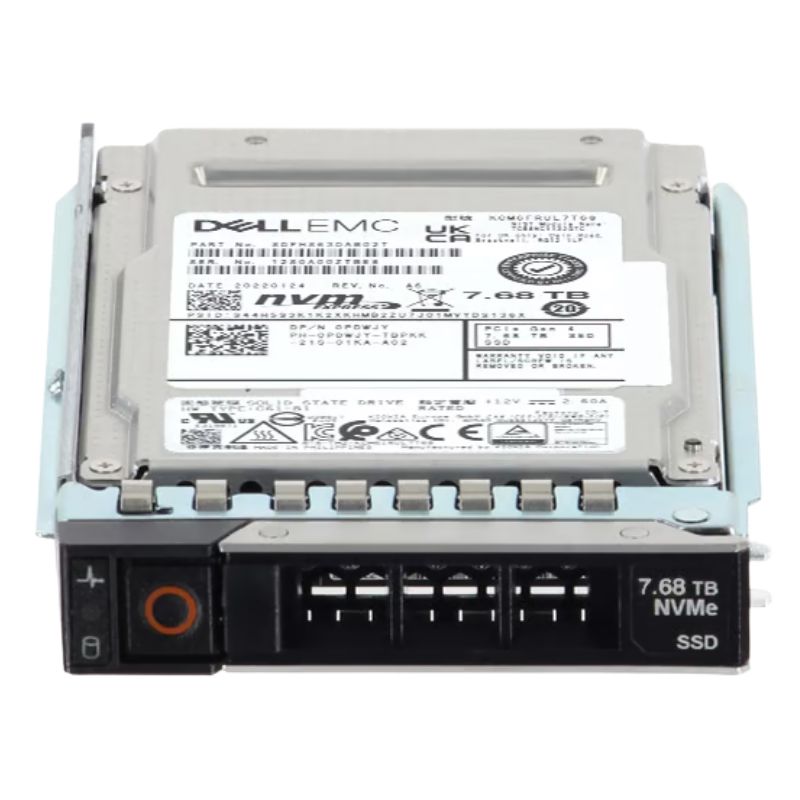


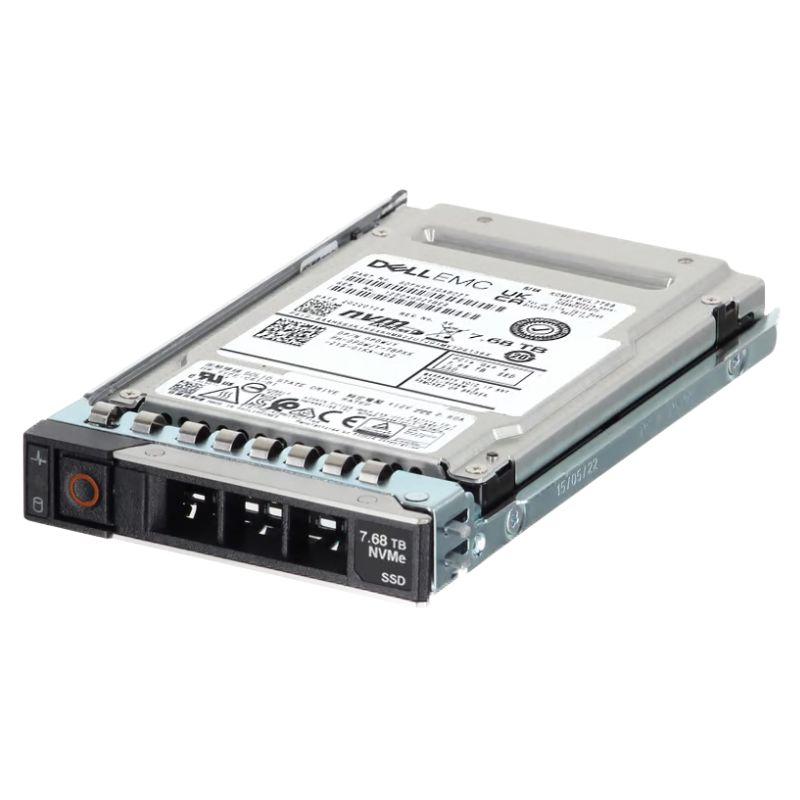
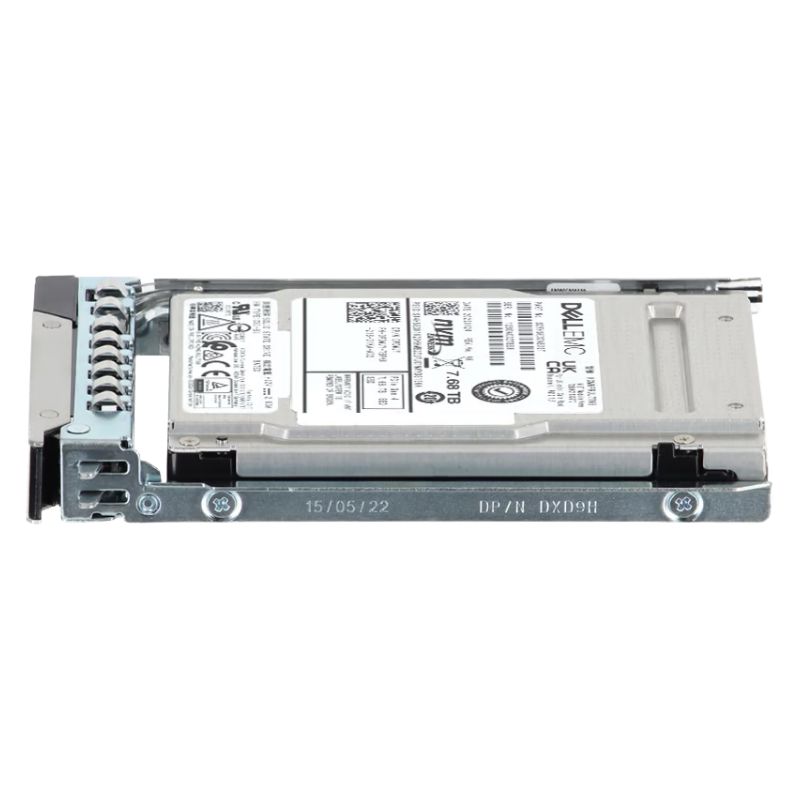
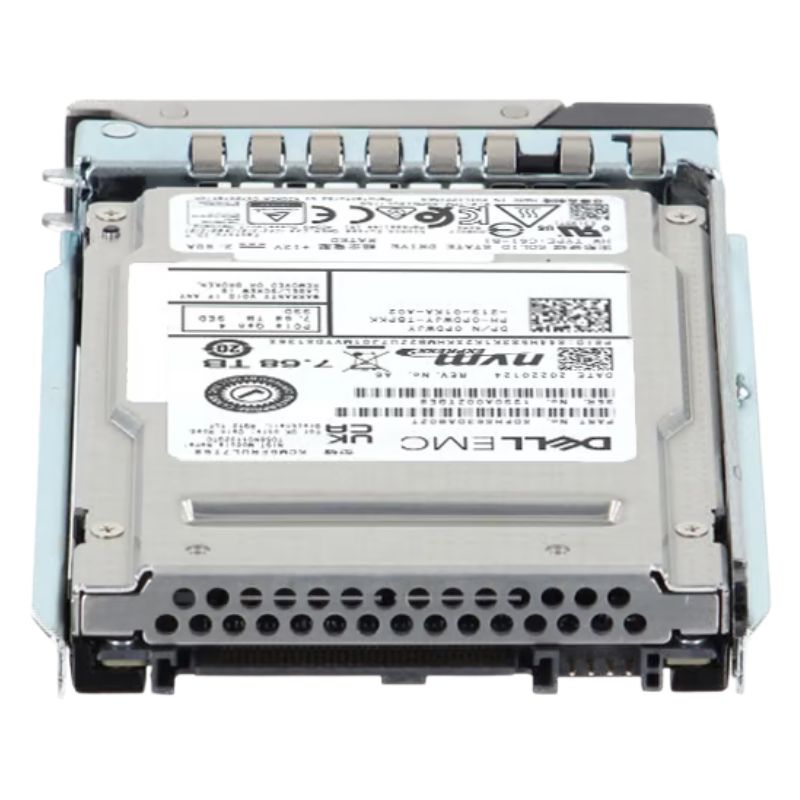
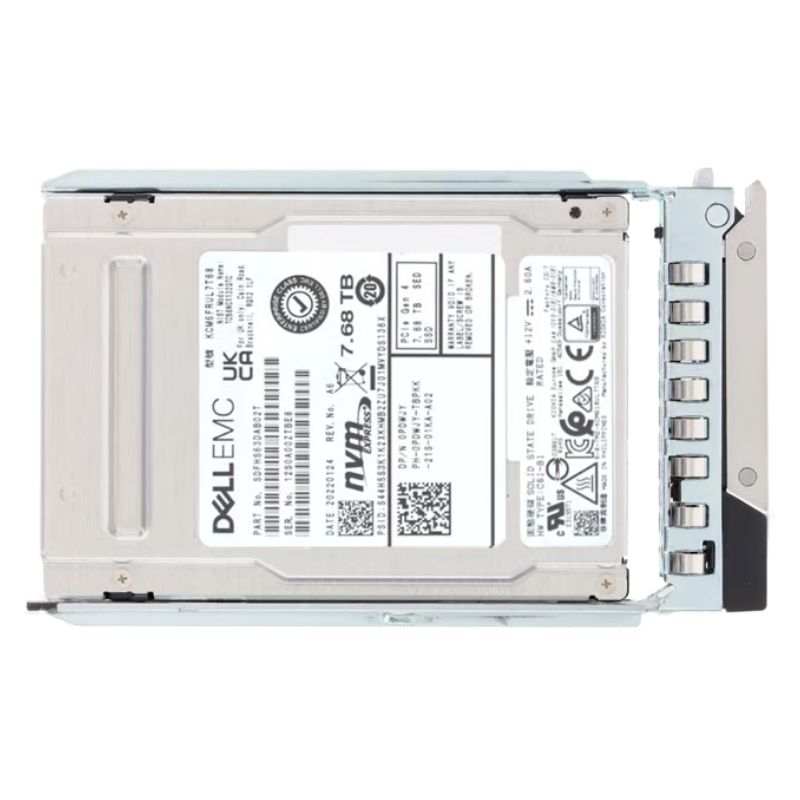
Dell 345-BJBG 7.68TB PCI-E Gen4 NVMe U.2 2.5 Inch Read Intensive Solid State Drive. New Sealed in Box (NIB) with 1 year Warranty
Engineered for high-throughput environments, the Dell 345-BJBG internal SSD offers robust performance and reliability for data-intensive applications. With a generous 7.68TB capacity and PCIe Gen 4.0 x4 interface, this drive is tailored for read-heavy workloads in enterprise infrastructures.
This enterprise-grade SSD is equipped with dual PCI-E Gen 4.0 x4 NVMe interfaces, ensuring rapid data access and minimal latency. It fits seamlessly into a 2.5-inch internal bay, making it ideal for scalable server deployments.
Fully validated for a wide array of Dell PowerEdge servers, this SSD ensures seamless integration and dependable performance across multiple generations and configurations.
This category centers on enterprise-grade NVMe solid state drives in the U.2 small form factor (SFF) designed specifically for Dell PowerEdge servers and similar rack and blade platforms. Drives like the Dell 345-BJBG 7.68TB PCI-E Gen 4.0 x4 NVMe are targeted at read-intensive workloads in data centers where low latency, high IOPS, consistent quality of service, and long service lifecycles matter. The NVMe U.2 form factor keeps hot-swap capability while offering a compact 2.5-inch footprint and the thermal and mechanical design required for dense server arrays. These drives use TLC (triple-level cell) NAND tuned for enterprise reliability, and they are characterized by a 1 drive write per day endurance rating (1 DWPD) which balances cost and longevity for read-heavy applications.
The PCI-Express Gen 4.0 x4 interface provides a significant uplift in raw bandwidth compared with previous generations, enabling peak throughput and higher queue depth utilization. In practical terms for the Dell 345-BJBG family, Gen 4.0 allows higher sequential and random transfer rates—important for accelerating database queries, analytics, caching layers, and virtualization workloads. The NVMe protocol reduces host CPU overhead and streamlines command handling, producing lower latency and superior parallelism in multi-tenant environments where multiple VMs or containers access storage concurrently.
U.2 (SFF-8639) connectors permit the drive to be inserted into hot-swap bays, enabling fast serviceability without powering down servers. The U.2 SFF design aligns with standard server backplanes and allows for effective airflow and heat dissipation inside 1U to 4U chassis. Dell’s firmware calibrations and PowerEdge integration ensure the drive reports SMART metrics and telemetry to server management tools so administrators can monitor health, remaining life, and performance trends through iDRAC or other OEM utilities. Compatibility with server trays, caddies, and RAID/boot controllers is a core strength of the category, reducing deployment friction in homogeneous Dell environments.
For read-intensive class drives rated at 1 DWPD, the architecture assumes workloads dominated by reads with periodic writes. Workloads such as content delivery, web caching, large-scale indexing, or analytics benefit strongly from these drives because the read-centric endurance delivers excellent value per TB while still providing enterprise-grade error management, DRAM or DRAM-less controller designs with power-loss protection, and overprovisioning strategies that maintain consistent over the drive lifetime.
Enterprise drives in this category typically include features such as capacitive power-loss protection to ensure in-flight data is safely committed to NAND during unexpected outages. Coupled with robust firmware-level error correction, background media management, and end-to-end data path protection, these drives safeguard data integrity in latency-sensitive and transactional systems. When paired with server RAID solutions or software-defined redundancy, the drives contribute to a resilient storage fabric capable of meeting strict SLAs for availability and durability.
Performance metrics in this category must be considered across multiple axes: random read IOPS at small block sizes, sequential throughput at larger transfer sizes, and tail latency at high queue depths. NVMe Gen 4.0 drives deliver exceptional random read IOPS that accelerate application response times, while sequential throughput supports rapid bulk ingestion and large file movement. Tail latency is often the deciding factor for user experience in multi-user systems; enterprise U.2 NVMe drives are engineered to maintain low 99th and 99.9th percentile latencies via internal QoS algorithms and overprovisioning. Synthetic benchmarking with tools like FIO and real-world tests using representative workloads are essential to estimate realistic behavior in production systems.
Choosing the correct capacity and endurance requires careful workload profiling. In a pure read cache or CDN edge use case, 1DWPD 7.68TB drives can sustain years of service. For mixed or write-heavy databases, tiering strategies that move frequent writes to higher DWPD drives or to a write-accelerator tier can extend medium DWPD drives’ life. Administrators should model peak and average write rates, consider host-level caching (RAM or NVMe cache), and implement monitoring to convert raw SMART counters into predictive replacement schedules. Right-sizing also considers RAID overhead, metadata footprints, and filesystem behavior which can influence usable capacity and performance headroom.
One of the strongest arguments for purchasing branded U.2 NVMe drives like the Dell 345-BJBG is firmware validation and compatibility with Dell PowerEdge server ecosystems. OEM-validated firmware ensures drives interact correctly with server firmware, storage controllers, and management agents. This validation reduces unexpected incompatibilities during firmware updates, simplifies RMA and support conversations, and often extends integrated diagnostics beyond what generic drives can provide. Data center engineers should confirm supported drive lists for specific PowerEdge models and review vendor release notes when planning large-scale rollouts to ensure compatibility with existing RAID controllers and BIOS/UEFI revisions.
Read-intensive NVMe U.2 SSDs excel at accelerating database read paths in OLTP and read-replica scenarios. By serving hot datasets, indexes, and query results from NVMe storage, applications observe substantial reductions in query latency and improved throughput. For database clusters that separate read and write responsibilities, these drives can serve as dedicated read tiers, freeing higher endurance drives to absorb write amplification. The balance between capacity and latency makes the 7.68TB class desirable where large indexes or datasets are required without committing to higher endurance drive tiers.
Virtualization stacks and VDI deployments often have spiky read access patterns as many virtual desktops boot or access shared images simultaneously. NVMe U.2 drives with high random read IOPS reduce I/O contention, improve boot storms, and deliver consistent performance for end users. In multi-tenant hosting, predictable tail latency mitigates noisy neighbor effects when combined with proper QoS and software-level I/O throttling. The physical hot-swap and robust telemetry of OEM drives also simplify maintenance windows and capacity planning for service providers.
Choosing the appropriate redundancy model is critical for enterprise reliability. Many deployments favor RAID configurations that balance rebuild time with usable capacity—consider RAID levels that minimize rebuild stress on remaining drives while preserving performance for active workloads. NVMe drives interact differently with RAID controllers and software RAID engines compared to spinning media, and rebuild IO patterns can stress controllers if not planned.
Within the enterprise NVMe space, alternatives range from read-intensive drives like the 1 DWPD 7.68TB class to mixed-use and write-intensive drives with higher DWPD ratings but typically at higher cost per TB. The decision matrix should consider expected write amplification, RAID rebuild strategies, and application tolerance for degraded performance during maintenance. For many environments, a mixed fleet approach yields the best balance: place read-heavy data on 1 DWPD drives and reserve higher endurance drives for transaction logs, write-amplified databases, or persistent caching layers.
U.2 remains popular for compatibility with existing backplanes and hot-swap trays, but newer form factors like U.3 and EDSFF (E1.S/E3.S) are emerging with additional features and density advantages. When designing new deployments, evaluate whether upstream investments in newer form factors are justified by expected lifespan and server refresh cycles. EDSFF offers better airflow and higher thermal headroom for extreme density deployments, while U.2 provides a practical path for migrating legacy infrastructure into NVMe performance without reworking chassis backplanes.


 Contact Us
 Information
 Catalog
 Solid State Drives (SSD)
 Network Switches
 Hard Disk Drives
 HBA & Controllers
 PC & Servers
 PC & Server Memory
 CPU & Processors
 Network Routers
 Power Supplies
 Tape Drives & Libraries
 Network Devices
 Computer & Network Cables