(7% discount is applied at checkout)
Cart is empty
Your go-to destination for cutting-edge server products


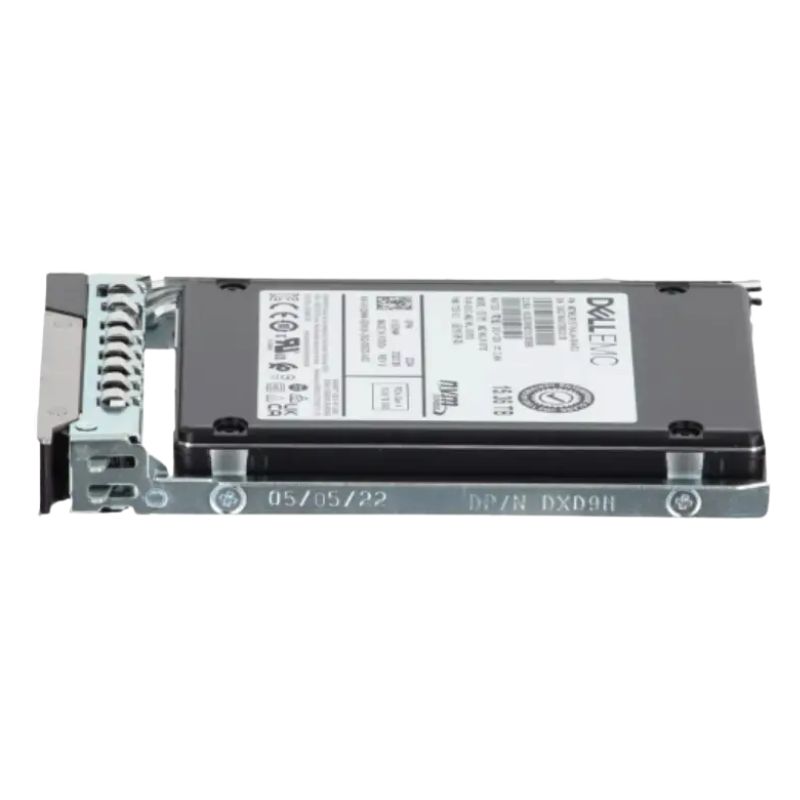
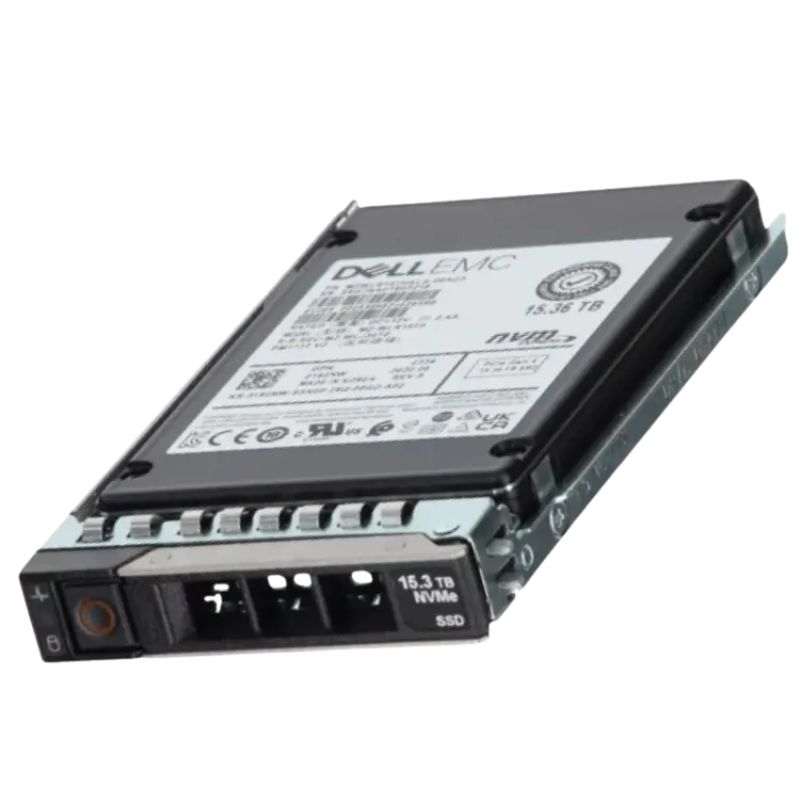
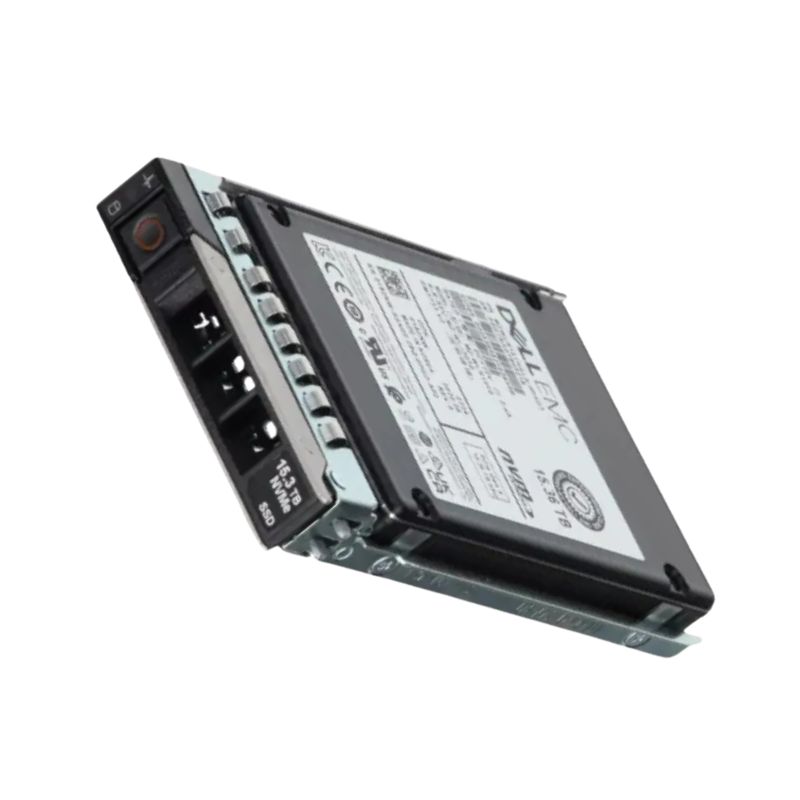
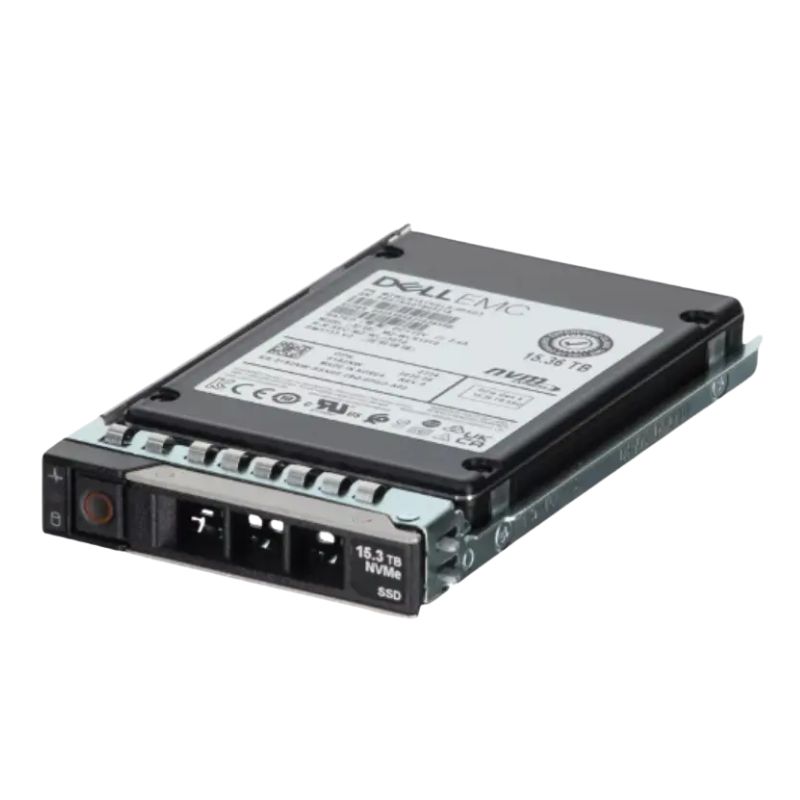
Dell 345-BJCB 15.36TB PCIe Gen5 NVMe Read Intensive TLC E3.S Solid State Drive. New Sealed in Box (NIB) with 1-Year Replacement Warranty
The Dell 345-BJCB 15.36TB PCIe Gen5 NVMe Read Intensive TLC E3.S Solid State Drive is engineered for next-generation enterprise data centers that demand extreme throughput, ultra-low latency, and dependable endurance. Built to leverage the PCIe Gen5 x4 interface, this internal SSD delivers exceptional performance scalability for mission-critical workloads, including virtualization, artificial intelligence, analytics, and high-performance computing environments. Its E3.S form factor ensures efficient thermal management and dense storage deployment in modern Dell PowerEdge servers.
The Dell 345-BJCB 15.36TB PCIe Gen5 NVMe Read Intensive TLC E3.S Solid State Drive belongs to a high-performance enterprise storage category engineered to address modern data center workloads that demand extreme throughput, ultra-low latency, and consistent reliability. This category encompasses next-generation NVMe solid state drives designed specifically for servers, cloud platforms, virtualization clusters, and hyperscale environments where data access speed and endurance optimization are critical. PCIe Gen5 NVMe SSDs represent a substantial evolution over previous generations by doubling bandwidth, enhancing parallelism, and enabling more efficient data handling across mission-critical applications.
This category is purpose-built for read-intensive use cases, making it ideal for analytics platforms, content delivery networks, virtualization infrastructures, AI and machine learning pipelines, and large-scale database environments. By leveraging advanced TLC NAND technology and the E3.S enterprise form factor, these drives align with emerging server architectures while offering scalability, thermal efficiency, and improved serviceability.
Enterprise-class NVMe solid state drives such as the Dell 345-BJCB are engineered with a focus on sustained performance, predictable latency, and compatibility with modern server backplanes. The E3.S form factor introduces a standardized design that improves airflow, power delivery, and hot-swap capability, enabling data centers to maximize density without sacrificing thermal stability. This architectural approach ensures seamless integration into next-generation server platforms optimized for PCIe Gen5 connectivity.
The internal architecture emphasizes parallel data paths, advanced controllers, and intelligent firmware algorithms that optimize read performance while maintaining data integrity. These drives are designed to operate continuously under heavy workloads, supporting enterprise-grade features such as power-loss protection, advanced error correction, and end-to-end data path protection.
PCIe Gen5 NVMe technology defines a new performance tier within enterprise storage categories. With significantly increased bandwidth per lane compared to PCIe Gen4, Gen5 NVMe SSDs deliver faster data transfers and reduced bottlenecks for applications that rely on rapid data retrieval. This interface advancement allows enterprise systems to handle higher IOPS, lower latency, and greater concurrency, which are essential for data-driven operations.
The NVMe protocol itself is optimized for solid-state storage, eliminating legacy storage constraints and enabling direct communication between the drive and the CPU. This results in streamlined command execution and improved scalability across multi-core server architectures. Within this category, PCIe Gen5 NVMe drives are positioned as foundational components for future-ready infrastructure.
Read intensive NVMe SSDs are specifically tuned for environments where read operations dominate overall workload patterns. This category prioritizes high read throughput, consistent latency, and efficient caching behavior while maintaining balanced endurance suitable for enterprise usage. The Dell 345-BJCB exemplifies this focus by delivering optimized performance for scenarios such as virtual desktop infrastructure, web hosting platforms, and data warehousing.
By utilizing TLC NAND with enterprise-grade firmware management, these drives achieve a balance between storage density and reliability. Advanced wear-leveling algorithms and intelligent block management ensure long-term operational stability even under sustained read-heavy conditions.
The E3.S form factor represents a modern standard for enterprise NVMe SSDs, offering advantages over traditional 2.5-inch U.2 designs. This category benefits from improved airflow and thermal dissipation, enabling higher sustained performance in dense server configurations. The compact yet robust design supports higher drive counts per server, increasing overall storage capacity without expanding physical footprint.
E3.S drives are engineered for hot-plug environments, allowing data center operators to replace or upgrade storage devices without system downtime. This feature is particularly valuable in enterprise and cloud environments where uptime and service continuity are paramount.
Thermal management is a critical aspect of enterprise storage categories, especially with high-speed PCIe Gen5 interfaces. The E3.S design enhances airflow patterns within server chassis, reducing thermal hotspots and enabling consistent performance under heavy workloads. Advanced power management features dynamically adjust power consumption based on workload intensity, ensuring optimal efficiency without compromising responsiveness.
This category supports modern data center sustainability initiatives by reducing energy waste and improving overall power utilization effectiveness. Intelligent firmware controls further contribute to balanced thermal behavior and extended drive lifespan.
Dell enterprise NVMe SSD categories are designed for seamless compatibility with Dell PowerEdge server architectures. The Dell 345-BJCB aligns with Dell’s validated hardware ecosystems, ensuring reliable interoperability, simplified deployment, and streamlined lifecycle management. This integration reduces configuration complexity and supports enterprise-grade management tools for monitoring, diagnostics, and firmware updates.
Compatibility with Dell server platforms ensures that organizations can deploy these drives confidently across diverse workloads, from edge computing environments to centralized data centers.
Triple-Level Cell NAND technology plays a significant role in defining this storage category. Enterprise-grade TLC NAND provides higher storage density compared to MLC while maintaining sufficient endurance for read-intensive applications. This balance allows organizations to achieve cost-effective scalability without sacrificing performance reliability.
Advanced error correction mechanisms, combined with intelligent firmware optimization, mitigate the inherent challenges of high-density NAND. As a result, this category delivers consistent data integrity, predictable performance, and long-term durability suitable for enterprise deployment.
Read intensive enterprise SSDs are engineered with endurance profiles that align with their intended workload patterns. The Dell 345-BJCB category emphasizes sustained read operations while supporting moderate write activity typical of enterprise environments. Sophisticated wear-leveling and garbage collection processes distribute write operations evenly across NAND cells, extending usable lifespan.
Reliability features such as power-loss protection capacitors and end-to-end data path protection ensure that data remains secure during unexpected power interruptions or system events. These features are essential for maintaining data consistency in mission-critical environments.
Enterprise NVMe SSD categories incorporate advanced error correction codes and data verification mechanisms to protect against data corruption. These technologies operate transparently, ensuring accurate data delivery even under demanding workloads. Continuous background monitoring and self-healing processes further enhance reliability, making this category suitable for sensitive data applications.
Scalability is a defining attribute of PCIe Gen5 NVMe enterprise storage categories. The Dell 345-BJCB supports high queue depths and parallel command execution, enabling servers to handle increasing data demands without performance degradation. This scalability is particularly beneficial for multi-tenant environments and distributed computing architectures.
As organizations adopt containerized applications, microservices, and AI-driven analytics, the need for scalable storage performance becomes increasingly critical. This category addresses these requirements by delivering consistent throughput and low latency across diverse workload profiles.
Enterprise NVMe SSDs in this category are well-suited for virtualization platforms and cloud-native infrastructures. High read performance and predictable latency enhance virtual machine responsiveness, reduce boot times, and improve overall user experience. These benefits translate into higher consolidation ratios and improved resource utilization.
Cloud service providers and private cloud operators benefit from the ability to scale storage capacity and performance independently, aligning with dynamic workload demands and service-level agreements.
AI and analytics workloads rely heavily on rapid data access and consistent throughput. The Dell 345-BJCB category supports these requirements by enabling faster dataset loading, improved model training efficiency, and accelerated query processing. High-capacity 15.36TB configurations further enhance the ability to store large datasets locally, reducing reliance on slower secondary storage tiers.
Security is an integral component of enterprise storage categories. NVMe SSDs designed for data centers incorporate features that support secure data handling, regulatory compliance, and risk mitigation. Firmware-level security controls, secure boot processes, and data sanitization capabilities contribute to a robust security posture.
These features are essential for industries that handle sensitive information, including finance, healthcare, and government sectors. The category supports compliance with enterprise security standards while maintaining performance efficiency.
Investing in PCIe Gen5 NVMe enterprise SSD categories positions organizations for future growth and technological advancement. As data volumes continue to expand and application requirements evolve, these drives provide the performance headroom and scalability needed to adapt without frequent hardware refreshes.
The Dell 345-BJCB 15.36TB PCIe Gen5 NVMe Read Intensive TLC E3.S Solid State Drive exemplifies this future-ready approach, offering a combination of capacity, speed, and reliability that aligns with next-generation data center strategies.


 Contact Us
 Information
 Catalog
 Solid State Drives (SSD)
 Network Switches
 Hard Disk Drives
 HBA & Controllers
 PC & Servers
 PC & Server Memory
 CPU & Processors
 Network Routers
 Power Supplies
 Tape Drives & Libraries
 Network Devices
 Computer & Network Cables