(7% discount is applied at checkout)
Cart is empty
Your go-to destination for cutting-edge server products
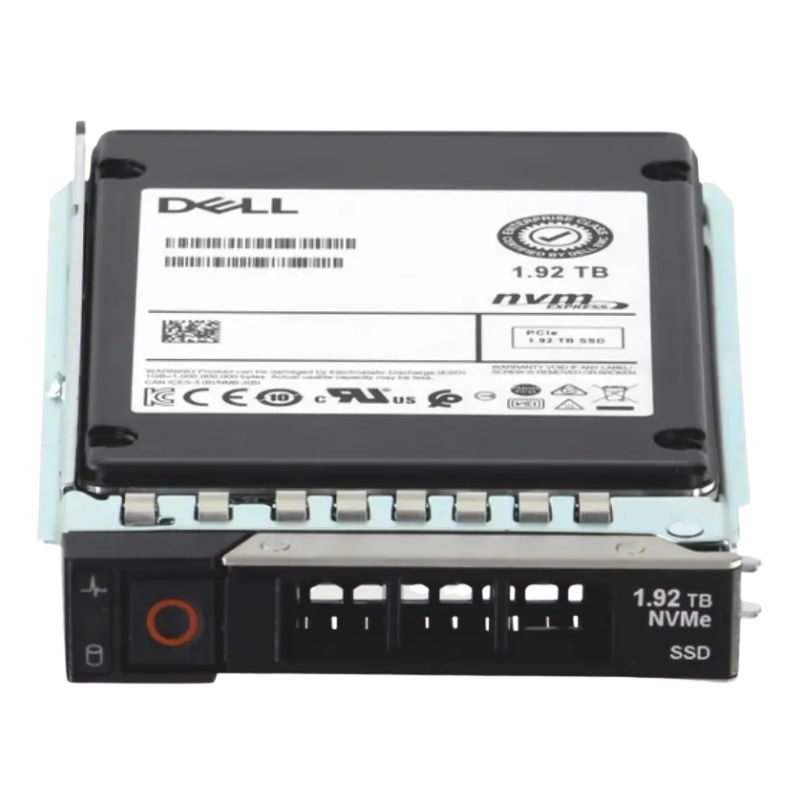


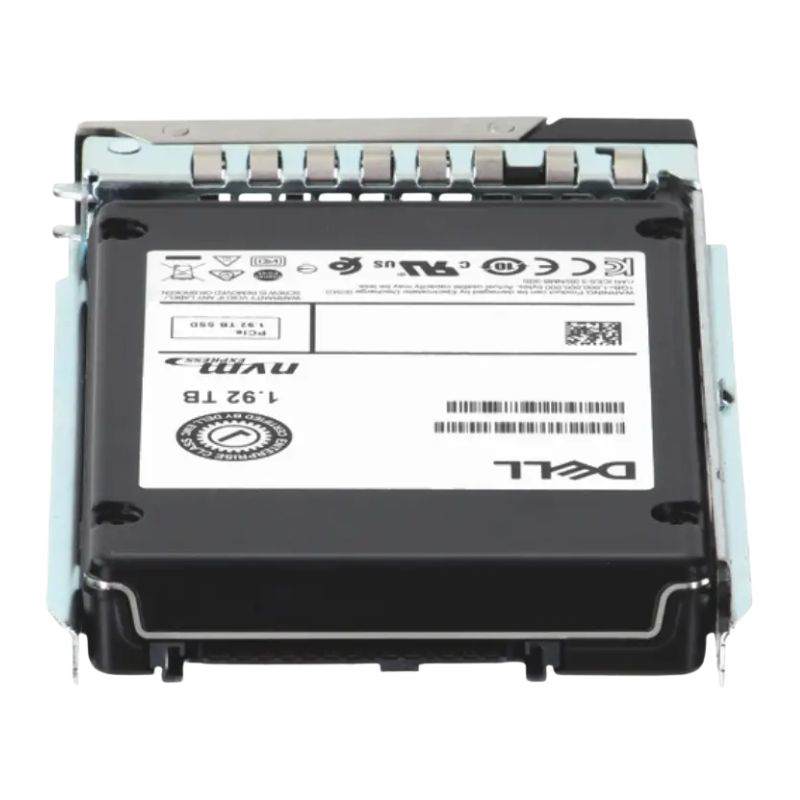
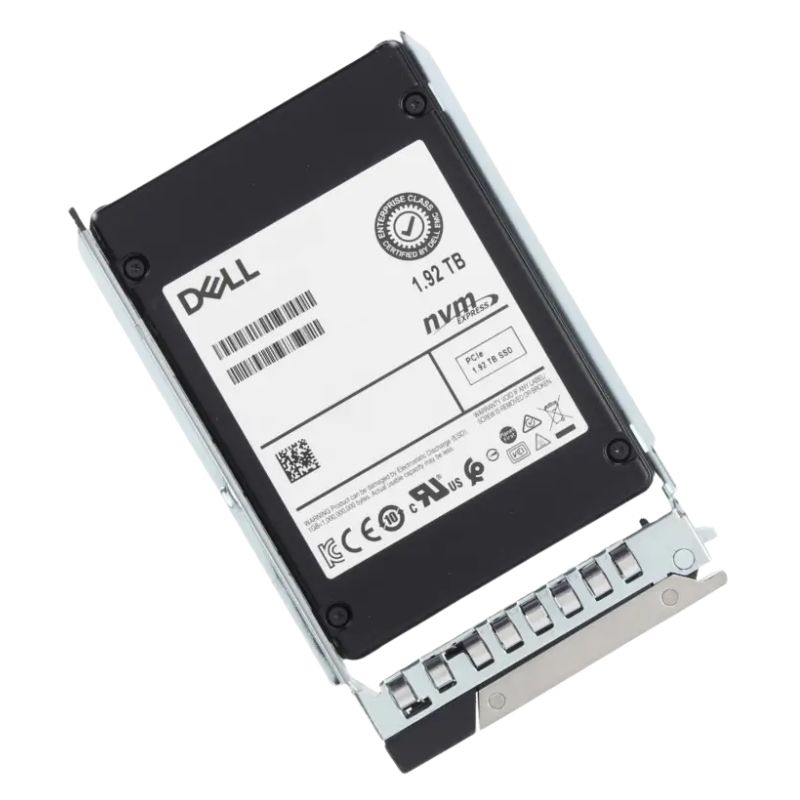
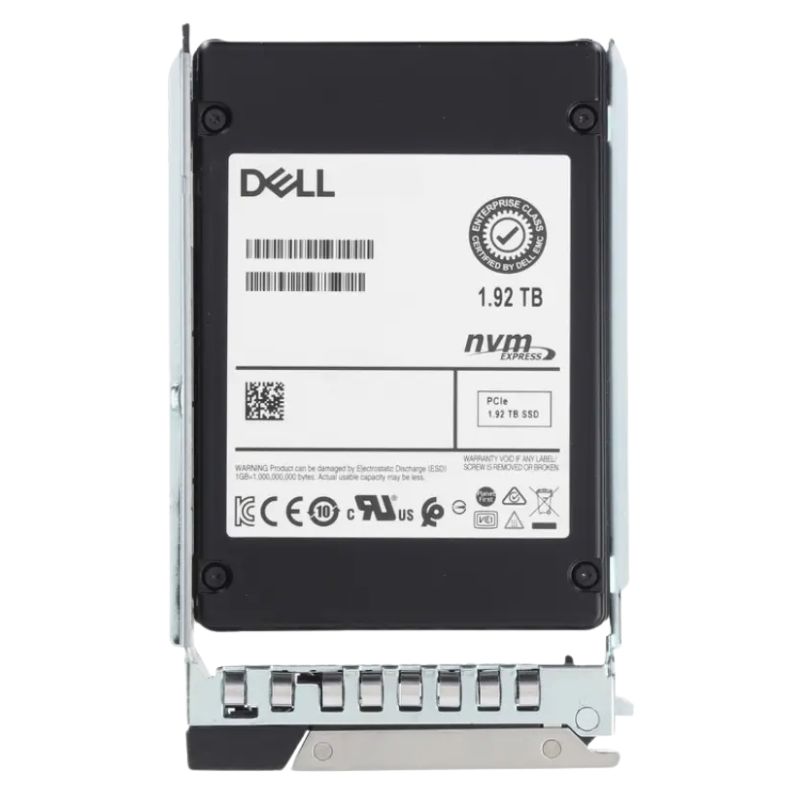
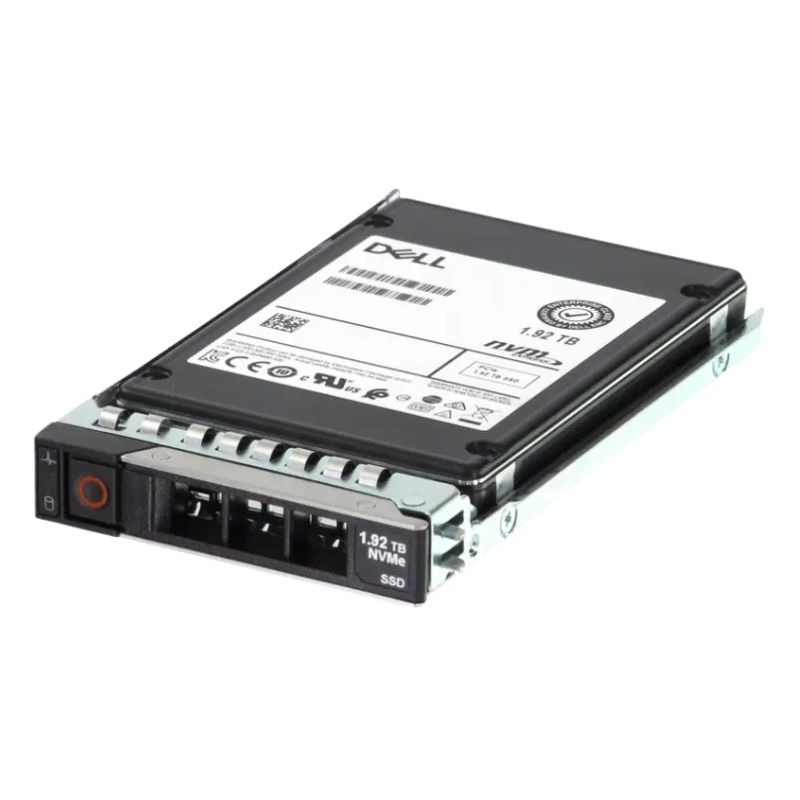
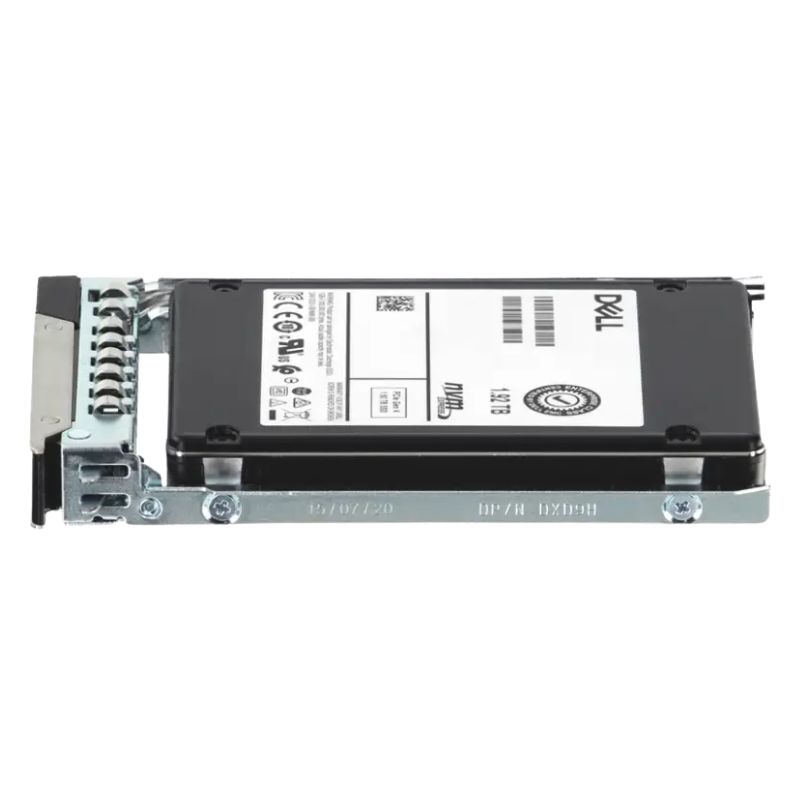
Dell 345-BJCD 1.92TB PCI-E Gen5.0 NVMe 2.5 Inch EDSSF E3.S Read Intensive Solid State Drive. New Sealed in Box (NIB) with 1 year Replacement Warranty
The Dell 345-BJCD 1.92TB PCIe Gen5 NVMe Read Intensive Solid State Drive is engineered to meet the demanding performance and reliability requirements of modern enterprise data centers. Designed for internal server deployments, this high-speed storage device leverages next-generation PCI Express Gen 5.0 architecture and NVMe 1.4 protocol to deliver exceptional throughput, low latency, and consistent responsiveness across data-intensive workloads.
The Dell 345-BJCD 1.92TB PCI-E Gen5.0 NVMe 2.5 Inch EDSSF E3.S Read Intensive Solid State Drive belongs to a high-performance enterprise storage category designed to address modern data center demands. This class of solid state drives is engineered for environments where speed, endurance, scalability, and reliability are critical. Built on PCI Express Gen5.0 technology, this category represents a major evolution from earlier Gen3 and Gen4 NVMe solutions, delivering dramatically increased bandwidth and lower latency for mission-critical workloads.
Enterprise NVMe SSDs within this segment are optimized for read-intensive applications that require fast data access, consistent throughput, and predictable performance under sustained loads. The Dell 345-BJCD model reflects this category’s emphasis on advanced flash memory design, optimized controllers, and robust firmware tuned for enterprise servers, virtualization platforms, and cloud-scale infrastructures.
PCI Express Gen5.0 defines the foundation of this SSD category by enabling significantly higher data transfer rates compared to previous generations. With a maximum interface speed reaching up to 128 GT/s across a Gen5 x4 lane configuration, drives in this category are capable of supporting data-intensive workloads that push storage subsystems to their limits. This bandwidth expansion allows servers to process massive volumes of transactional data, analytics queries, and AI-driven workloads without storage becoming a bottleneck.
The adoption of PCIe Gen5.0 in enterprise SSDs also supports future scalability, ensuring compatibility with next-generation processors and server platforms. This forward-looking design positions Dell Gen5 NVMe drives as long-term investments for organizations modernizing their infrastructure.
The Non-Volatile Memory Express protocol plays a central role in this storage category by providing an optimized communication pathway between the SSD and the host system. NVMe reduces command overhead and improves queue handling efficiency, which is particularly beneficial for read-intensive workloads. In data centers where applications frequently access large datasets, NVMe-enabled drives deliver faster response times and improved overall system efficiency.
This category of SSDs leverages NVMe 1.4 features that enhance error handling, power management, and namespace flexibility. These capabilities ensure stable operation under continuous use while maintaining high throughput across virtualized and containerized environments.
The E3.S form factor, part of the Enterprise and Data Center SSD Form Factor standard, defines the physical and electrical characteristics of this SSD category. Designed to replace legacy 2.5-inch U.2 and U.3 drives, E3.S provides improved thermal efficiency, higher density, and better serviceability in modern server architectures. The Dell 345-BJCD SSD exemplifies how E3.S drives are tailored for next-generation server designs.
This category emphasizes efficient airflow and heat dissipation, which is essential for PCIe Gen5.0 devices operating at higher power levels. The compact yet robust E3.S form factor supports high-capacity configurations while maintaining optimal performance under sustained workloads.
Enterprise SSDs in the E3.S category are engineered to integrate seamlessly with Dell PowerEdge servers and other enterprise-grade platforms. Their standardized dimensions and connectors allow for straightforward installation, hot-swap capability, and simplified maintenance. This compatibility reduces deployment complexity and ensures consistent performance across large-scale server deployments.
The design also supports high-density storage configurations, enabling data centers to maximize storage capacity within limited rack space while maintaining performance and reliability.
Thermal management is a critical aspect of this SSD category. PCIe Gen5.0 drives generate more heat due to increased performance capabilities, making advanced cooling strategies essential. The E3.S form factor enhances airflow efficiency, allowing servers to maintain stable operating temperatures even under heavy workloads.
Power efficiency improvements within this category contribute to lower total cost of ownership by reducing energy consumption and cooling requirements. This balance between performance and efficiency is a defining characteristic of Dell enterprise NVMe SSD solutions.
The Dell 345-BJCD SSD is part of a read-intensive storage category designed for applications where data is accessed frequently but written less often. This optimization strategy allows the drive to deliver exceptional read performance while maintaining adequate endurance for enterprise use cases. Read-intensive SSDs are commonly deployed in environments such as content delivery networks, data analytics platforms, and virtualization infrastructures.
This category prioritizes fast random read performance, low latency, and consistent throughput, making it ideal for workloads that rely on rapid data retrieval rather than heavy write operations.
Enterprise read-intensive NVMe SSDs are widely used in databases, web hosting platforms, and business intelligence systems. These environments benefit from the drive’s ability to handle millions of input/output operations per second, ensuring smooth application performance even during peak usage periods.
Virtual desktop infrastructure deployments also leverage this category to provide responsive user experiences by minimizing storage-related delays during system boot and application access.
While optimized for read-heavy workloads, this SSD category still maintains enterprise-grade endurance through the use of advanced 3D TLC flash memory and intelligent wear-leveling algorithms. These technologies ensure reliable operation over the drive’s lifespan, even in environments with continuous data access.
Enterprise firmware further enhances reliability by monitoring drive health, managing error correction, and providing predictive failure alerts to support proactive maintenance strategies.
The use of 3D TLC NAND flash is a defining feature of this SSD category, balancing performance, capacity, and cost efficiency. Three-dimensional stacking of memory cells allows for higher storage density while maintaining fast access speeds and reliable endurance characteristics. This technology enables the Dell 345-BJCD SSD to deliver 1.92TB of usable capacity within a compact enterprise form factor.
3D TLC flash also supports improved power efficiency and thermal performance compared to earlier planar NAND designs, aligning with the requirements of modern data centers.
Enterprise SSDs in this category rely on sophisticated controllers to manage flash memory operations efficiently. These controllers coordinate tasks such as garbage collection, wear leveling, and error correction to ensure consistent performance and data integrity.
Firmware optimizations are specifically tuned for read-intensive workloads, prioritizing fast access times and minimizing latency spikes that could impact application performance.
Data integrity is a critical consideration for enterprise storage solutions. This category incorporates advanced error correction codes and end-to-end data protection mechanisms to safeguard information during transmission and storage. These features help prevent data corruption and ensure compliance with enterprise reliability standards.
Power-loss protection mechanisms further enhance data safety by preserving in-flight data during unexpected power interruptions, a crucial requirement for mission-critical applications.
Enterprise PCIe Gen5 NVMe SSDs are designed to scale performance alongside modern multi-core processors and high-speed interconnects. The Dell 345-BJCD SSD category supports extremely high random read IOPS and sustained sequential throughput, enabling applications to process large datasets efficiently.
This performance scalability allows organizations to consolidate workloads onto fewer servers while maintaining or improving overall system responsiveness.
Low latency is a key advantage of this SSD category, particularly for real-time analytics and transaction processing systems. Faster data access reduces application response times and enhances user experiences across enterprise platforms.
High throughput capabilities ensure that large volumes of data can be streamed and processed without interruption, supporting demanding workloads such as media streaming and scientific computing.
By reducing storage bottlenecks, this category of SSDs improves CPU utilization and overall system efficiency. Applications spend less time waiting for data, allowing computing resources to be used more effectively.
This efficiency translates into improved return on investment by maximizing the performance potential of existing server infrastructure.
Enterprise SSD categories like the Dell 345-BJCD are designed with manageability and serviceability in mind. Features such as hot-swap capability, standardized form factors, and firmware management tools simplify deployment and maintenance across large-scale environments.
Integration with Dell management ecosystems allows administrators to monitor drive health, performance metrics, and lifecycle status from centralized dashboards.
Enterprise SSDs in this category incorporate security features such as secure erase, access control, and encryption support to protect sensitive data. These capabilities help organizations meet regulatory compliance requirements and safeguard critical information.
Secure design principles ensure that data remains protected throughout the drive’s operational lifespan, from deployment to decommissioning.
The Dell 345-BJCD SSD category represents a forward-looking approach to enterprise storage by embracing PCIe Gen5.0, NVMe optimization, and E3.S form factor standards. This combination ensures compatibility with emerging server architectures and evolving workload requirements.
As data volumes continue to grow and applications demand faster access to information, this category provides the performance headroom and scalability needed to support future innovations.
Enterprise NVMe SSDs are foundational components of cloud-native and hybrid infrastructures. Their high performance and reliability support elastic workloads, container orchestration platforms, and software-defined storage solutions.
This category enables seamless scaling across on-premises and cloud environments, supporting flexible deployment models.


 Contact Us
 Information
 Catalog
 Solid State Drives (SSD)
 Network Switches
 Hard Disk Drives
 HBA & Controllers
 PC & Servers
 PC & Server Memory
 CPU & Processors
 Network Routers
 Power Supplies
 Tape Drives & Libraries
 Network Devices
 Computer & Network Cables