(7% discount is applied at checkout)
Cart is empty
Your go-to destination for cutting-edge server products


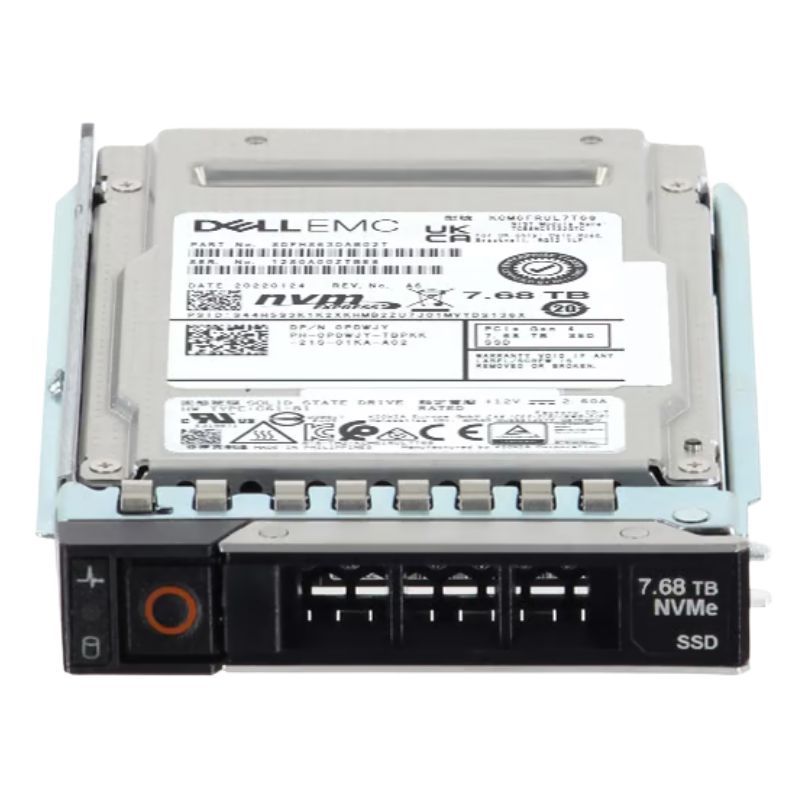
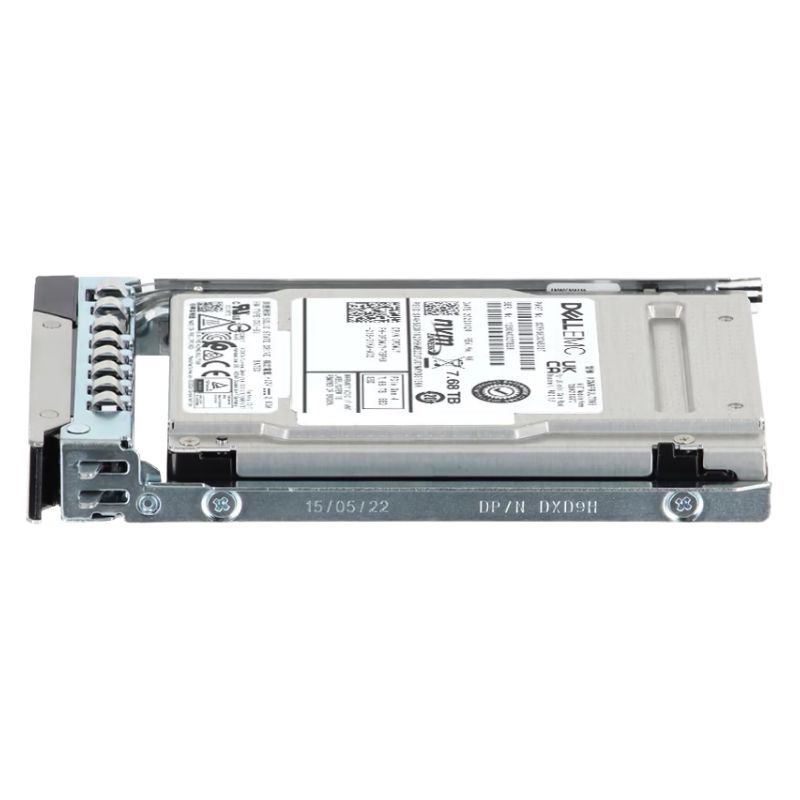
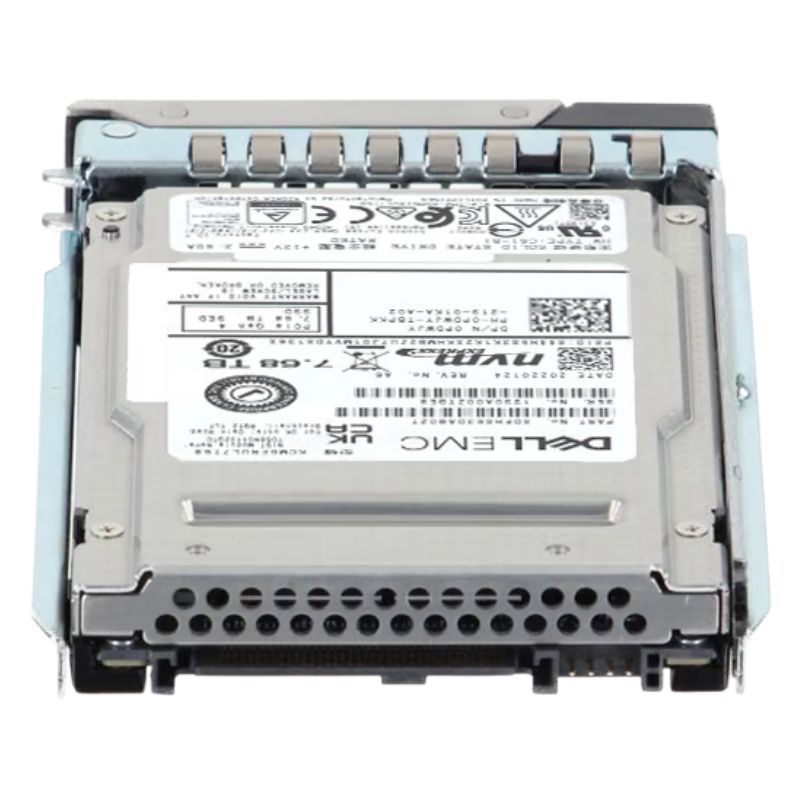
Dell 345-BJDN 7.68TB PCI-E Gen 4.0 X4 Nvme U.2 SFF Read-intensive TLC 1dwpd Enterprise Internal Solid State Drive for Poweredge Server. New Sealed in Box (NIB) with 1 year Warranty
The Dell 345-BJDN is a high-capacity enterprise-class internal solid state drive engineered for read-intensive applications. Packing 7.68TB of TLC NAND in a U.2 2.5" / 15mm form factor and leveraging PCIe 4.0 x4 NVMe, this drive delivers low-latency access and sustained throughput for database query acceleration, large-scale virtualization layers, and high-performance caching tiers. Designed and validated for Dell PowerEdge platforms, the 345-BJDN blends endurance, efficiency, and enterprise manageability into a drop-in storage building block.
The Dell 345-BJDN 7.68TB PCI-E Gen 4.0 x4 NVMe U.2 SFF Read-Intensive TLC 1dwpd Enterprise Internal Solid State Drive for PowerEdge Server is a storage category anchored on high-capacity, low-latency NVMe U.2 form factor drives optimized for read-heavy enterprise workloads. This category emphasizes the intersection of modern PCIe Gen 4.0 bandwidth and enterprise-grade endurance characteristics, providing a balance between capacity density and predictable lifespan. Drives in this category are designed specifically to slot into PowerEdge servers or comparable enterprise platforms as internal storage, offering hot-swap compatibility, full NVMe command set support, and integration with server management stacks for firmware updates, health telemetry and event logging. The combination of 7.68TB capacity, TLC NAND optimized for read-intensive patterns, and a 1 drive write per day endurance rating makes this family ideal for large read-dominant datasets where throughput, predictable performance, and storage economics are the priorities.
At the core of the category is the PCI-E Gen 4.0 x4 NVMe interface which multiplies available bandwidth relative to previous generations while retaining backwards compatibility with Gen 3 slots. The U.2 small form factor (SFF) adds enterprise convenience: a 2.5-inch, hot-pluggable package with a standard connector and drive sled compatibility across many server chassis. The drives use triple-level cell (TLC) NAND flash with firmware and controller logic tuned for read-intensive operation; that means wear leveling, read disturb mitigation, and background garbage collection are specifically balanced so that read performance is sustained for extended periods under enterprise access patterns. The 1dwpd rating clarifies endurance expectations: the drive is intended to safely tolerate writes equivalent to one full drive write per day over its warranted service life without compromising data integrity. Enterprise features commonly found in this family include power loss protection mechanisms to preserve in-flight data, SMART telemetry for monitoring, support for NVMe namespaces and features such as background sanitization and crypto erase, and compatibility with server telemetry frameworks for integrated monitoring.
These U.2 SFF NVMe drives are engineered to fit in a broad range of modern rack and tower servers that support 2.5-inch bays, and they are often delivered with carrier sleds tailored to PowerEdge server models. Physical integration involves a U.2 cable or direct backplane connection depending on chassis architecture. The U.2 connector provides both the high-speed PCIe lanes and necessary power and control signals, enabling hot-swap replacement without powering the host down. Physical design also considers thermal dissipation: a metal housing with heatsink properties helps transfer heat into the server air stream while drive firmware cooperates by reporting temperature and adjusting performance to avoid thermal throttling. For installations in systems that lack native U.2 bays, adapters that convert U.2 to M.2 or to a PCIe add-in card slot exist, but enterprise deployments typically favor direct U.2 backplane connections for reliability and hot-swap support.
Performance in this category centers on predictable, low-latency reads with high random read IOPS and large sequential bandwidth when needed. PCI-E Gen 4.0 x4 provides ample headroom for multithreaded server workloads, enabling database queries, metadata lookups, search indexes, and content delivery tasks to complete faster and at lower latency than SATA-based or older SAS SSDs. The NVMe protocol reduces software stack overhead via an optimized command set and deep queueing; real world benefits show when queue depths and parallelism in the host OS are correctly tuned. Drive firmware will typically prioritize read service time while performing background tasks such as wear leveling and garbage collection in I/O-friendly windows; administrators should be aware that heavy random write bursts beyond the 1dwpd target may trigger longer background reclamation cycles that can cause temporary latency spikes if not provisioned for. For read-heavy deployments, this design yields a stable read latency profile and consistent throughput across mixed read/write bursts common in virtual desktop infrastructure, web serving, and analytics nodes.
Endurance is specified as 1 drive write per day, which provides a clear operational budget for write activity relative to capacity. Storage planners translate that into daily write throughput ceilings and derive retention, replication, and backup cadence accordingly. Beyond endurance, enterprise reliability is supported through multi-layered mechanisms. Firmware implements robust error-correction code (ECC) and block retirement to prevent latent errors from corrupting data. Many drives include capacitors or equivalent power loss protection to flush volatile write caches to nonvolatile media if mains power is unexpectedly interrupted. SMART logs and telemetry expose metrics such as remaining write endurance, bad block counts, temperature, and power cycle counts so that predictive replacement processes can be automated. These reliability features are designed to dovetail with server management ecosystems to reduce unplanned downtime and to allow preemptive actions based on drive health trends.
Although marketed with PowerEdge servers in mind, drives in this category are engineered to be interoperable with a broader class of enterprise servers that support U.2 NVMe drives. Dell PowerEdge server firmware and OpenManage frameworks typically surface drive health, firmware update management, and inventory details that make life simpler for administrators in homogeneous Dell environments. Integrating NVMe drives into RAID or HBA configurations requires attention: NVMe does not use the same legacy RAID controllers as SAS/SATA drives, so system architects often employ NVMe-capable controllers or use host-based software RAID and logical volume managers that are NVMe-aware. When configuring in a PowerEdge server, ensure the BIOS and firmware levels support NVMe boot if a drive will host the OS, and validate that driver stacks and OS kernels have contemporary NVMe drivers for full functionality. Dell’s management utilities may offer firmware staging and mass updating for fleets, which streamlines security and performance patches across large deployments.
Enterprise NVMe drives typically include optional security features that align with corporate data protection policies, including device-level encryption and secure erase commands. Hardware-based encryption, when supported, offloads cryptographic tasks to the drive’s controller while preserving performance; administrators should confirm whether self-encrypting drive (SED) options are enabled by default or available as a configuration choice. The NVMe specification includes sanitize and secure erase commands to remove key material or securely wipe flash in line with organizational decommissioning policies. Integration with key management systems and host-side encryption frameworks ensures that drive replacement or theft does not expose sensitive data. When deploying in regulated environments, reference to compliance frameworks and the specific encryption certifications of the drive model is advisable to demonstrate adherence to organizational and legal requirements.
This drive category occupies a niche where very large read datasets are accessed frequently and write volumes are modest or predictable. Ideal use cases include content delivery platforms that serve large media libraries, analytics databases optimized for OLAP queries, search indices that require rapid random reads across large datasets, virtual desktop infrastructure where many VDI instances generate mostly read activity after boot storms, and caching tiers in hybrid storage architectures that offload hot data from slower bulk storage. Deployments in read-centric database replicas, web caching nodes, and metadata stores in distributed file systems similarly benefit. Because of the 7.68TB capacity, these drives enable consolidation of many working sets into fewer devices, simplifying storage pools and reducing management overhead compared to using many smaller drives.
In modern datacenter architectures, NVMe U.2 drives like the 7.68TB model are often used as a hot tier in multi-tier storage strategies. They are paired with higher endurance, lower latency NVMe devices for the most write-intensive workloads and with high-capacity HDDs for cold archival storage. Data tiering policies move frequently accessed blocks to the NVMe tier and relegate colder blocks to denser media. This approach reduces TCO by aligning media economics with workload characteristics. In software-defined storage stacks, the NVMe drives serve as cache or performance tiers, accelerating read latency and increasing overall cluster responsiveness. When designing tiering rules, account for the 1dwpd endurance by steering write-heavy temporary workloads to suitable drives or to write buffering layers that are designed to absorb heavy writes without impacting the read-optimized NVMe pool.
Compared to high-endurance NVMe drives that are tuned for constant heavy write workloads, this read-intensive 1dwpd class delivers a lower price per terabyte while still providing enterprise features. Against SATA or SAS SSDs, the PCIe Gen 4.0 x4 NVMe U.2 devices provide dramatically lower latency and higher parallel throughput. When stacking against ultra-high performance NVMe devices designed for intensive write caching or write-anchored databases, the tradeoff is capacity and cost efficiency: the 7.68TB U.2 drive gives more usable capacity and lower per-TB cost, making it preferable where write intensity is within the defined endurance envelope and read performance is the primary objective.


 Contact Us
 Information
 Catalog
 Solid State Drives (SSD)
 Network Switches
 Hard Disk Drives
 HBA & Controllers
 PC & Servers
 PC & Server Memory
 CPU & Processors
 Network Routers
 Power Supplies
 Tape Drives & Libraries
 Network Devices
 Computer & Network Cables