(7% discount is applied at checkout)
Cart is empty
Your go-to destination for cutting-edge server products
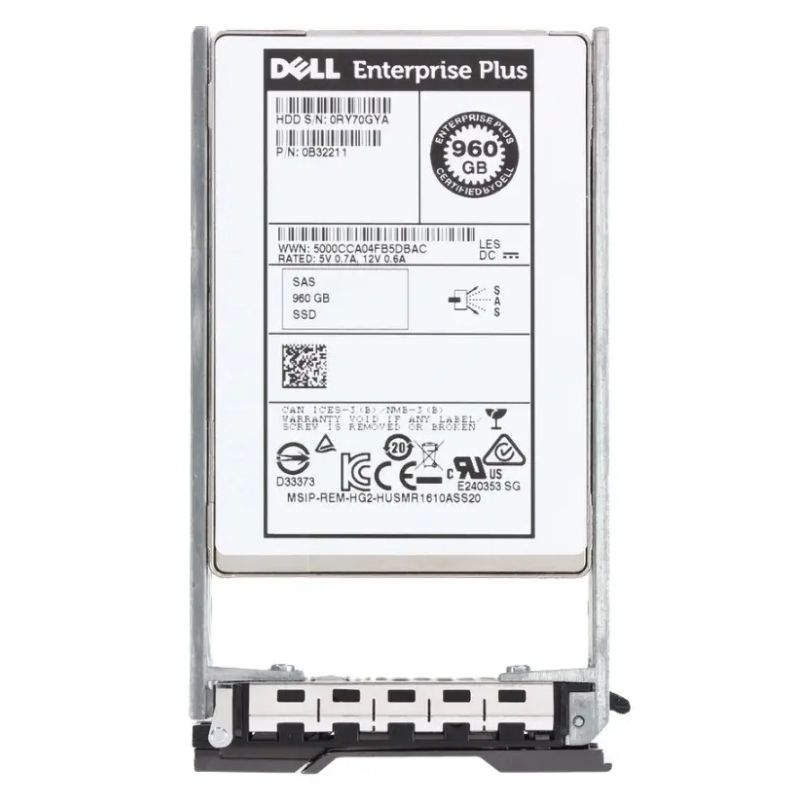


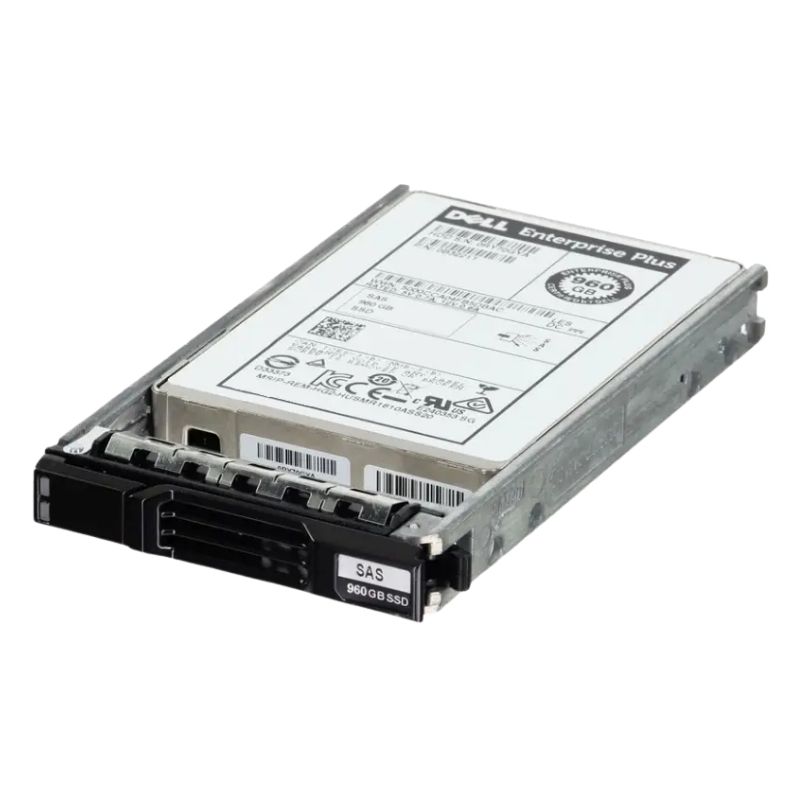
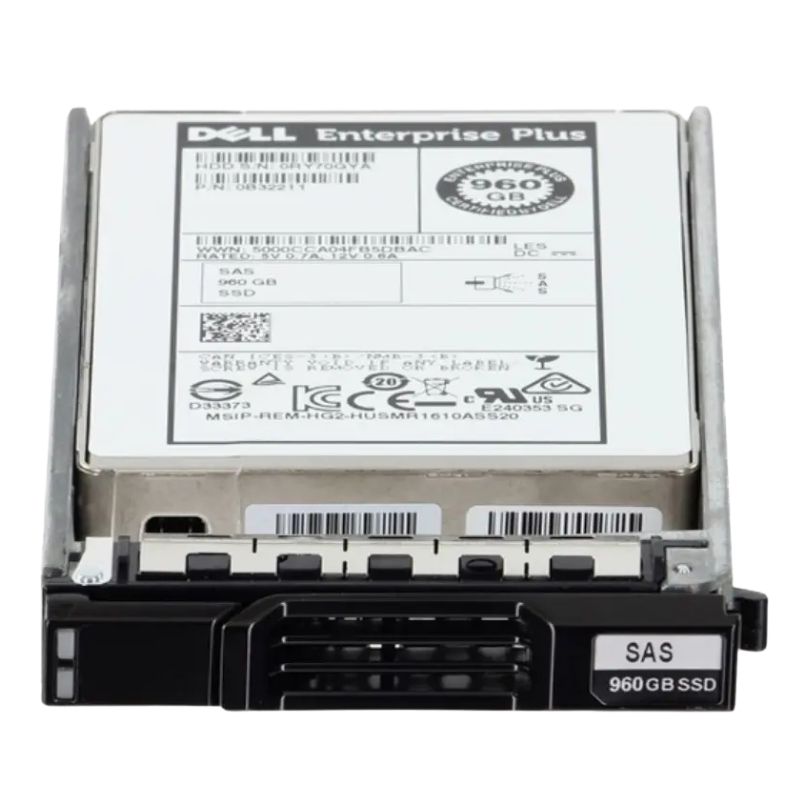
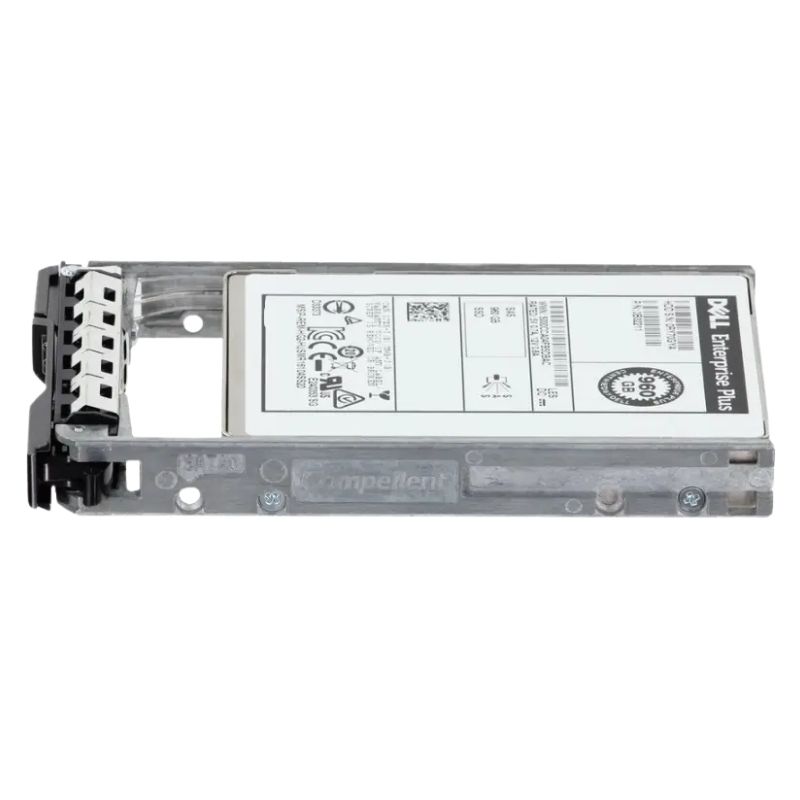
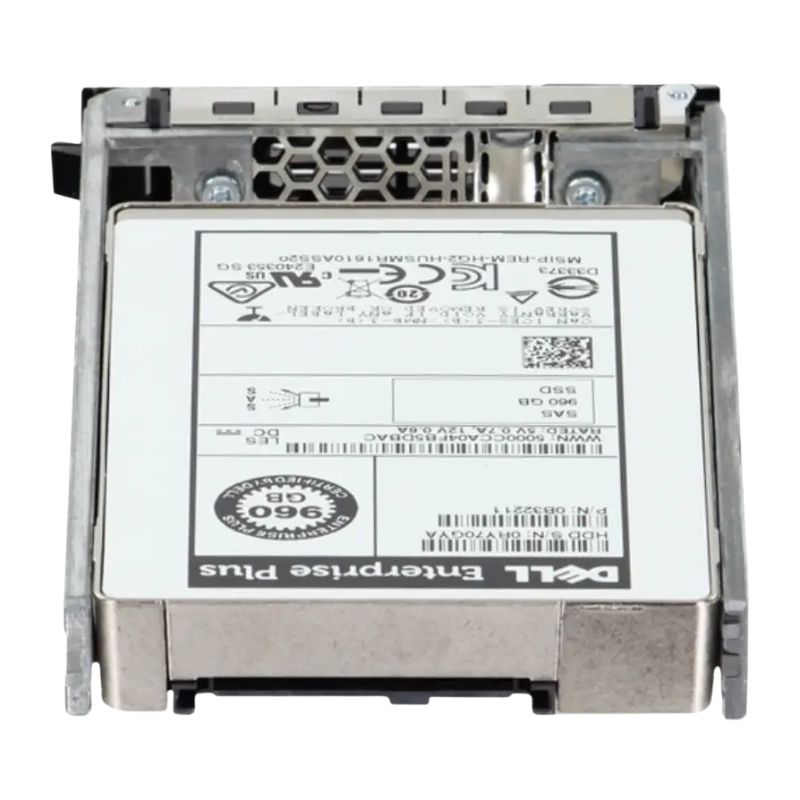
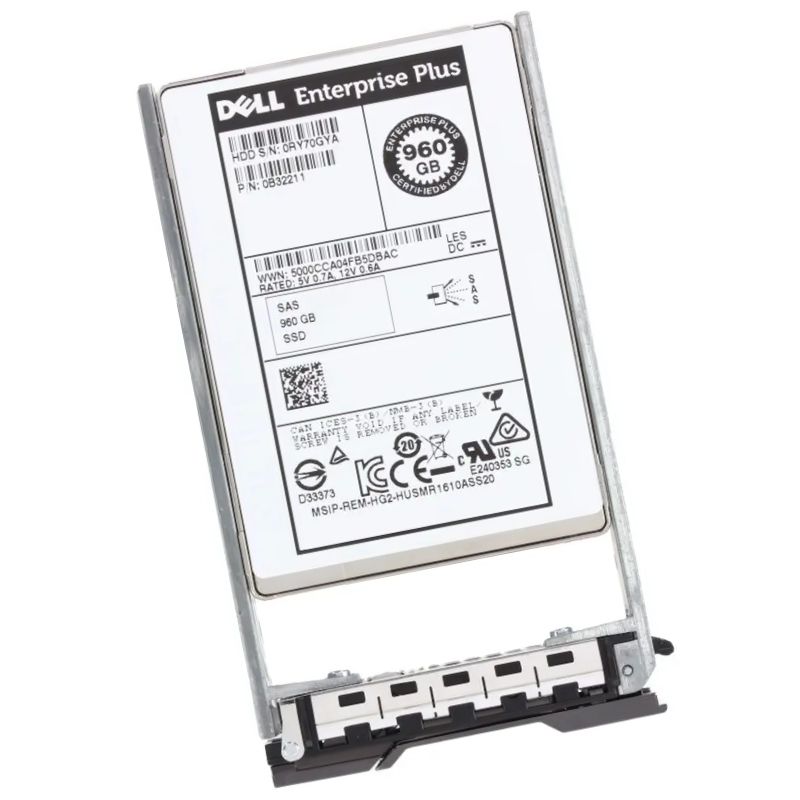
Dell 345-BJDT 960GB SED SAS-24Gbps Read-Intensive 1DWPD 2.5 Inch Solid State Drive. New Sealed in Box (NIB) with 1-Year Replacement Warranty
The Dell 345-BJDT solid state drive is engineered for enterprise environments that demand dependable performance, advanced data protection, and consistent read-focused workloads. Designed in a compact 2.5-inch hot-swappable form factor, this 960GB SSD leverages high-speed SAS 24Gbps connectivity and TLC NAND flash technology to deliver stable throughput, low latency, and enhanced operational efficiency across Dell PowerEdge and PowerVault platforms.
The Dell 345-BJDT 960GB SED SAS-24Gbps Read-Intensive 1DWPD 2.5 Inch Solid State Drive belongs to the enterprise-grade storage device category, specifically engineered for data center and mission-critical server environments. This category focuses on high-reliability solid state drives designed to replace or significantly outperform traditional mechanical hard disk drives in enterprise infrastructures. These storage solutions emphasize consistent performance, low latency, predictable endurance, and advanced data protection features that align with modern virtualization, database processing, analytics, and cloud computing workloads.
Within this category, read-intensive SAS solid state drives are optimized for scenarios where data retrieval operations greatly exceed write operations. The 1 Drive Write Per Day endurance rating confirms that the drive is intended for applications such as online transaction processing databases, virtualization boot volumes, data warehousing queries, and content delivery systems. The combination of Serial Attached SCSI technology and solid state architecture ensures dependable throughput under sustained multi-user workloads, making this subcategory critical for enterprise IT environments that demand reliability and scalability.
The architectural foundation of the Dell 345-BJDT is built on NAND flash memory technology, eliminating the mechanical components found in traditional hard drives. This solid state construction reduces failure points, enhances shock resistance, and enables rapid access times. Enterprise solid state drives in this category use advanced controllers and firmware specifically tuned for server workloads, ensuring stable operation across long duty cycles.
Read-intensive SSDs prioritize optimized data paths for frequent read operations, enabling high input/output operations per second while maintaining consistent response times. The Dell 345-BJDT integrates advanced wear management and error correction mechanisms to ensure data integrity throughout its operational lifespan. These architectural decisions place the drive squarely within a performance-focused enterprise storage segment that balances endurance, capacity, and cost efficiency.
Enterprise SAS solid state drives rely on sophisticated flash management algorithms to distribute wear evenly across memory cells. The Dell 345-BJDT incorporates dynamic wear leveling and over-provisioning strategies that extend usable life while maintaining steady performance. These features are particularly important in read-intensive environments where background operations such as garbage collection and error correction must not disrupt foreground performance.
The 1DWPD endurance classification reflects careful optimization between capacity utilization and write tolerance. This design approach ensures that the drive remains dependable for enterprise applications that require frequent data access without excessive write amplification.
The Serial Attached SCSI interface defines this category as a premium enterprise storage solution. SAS-24Gbps connectivity represents a significant advancement over previous SAS generations, offering increased bandwidth, improved signal integrity, and enhanced scalability. This interface is engineered for enterprise servers and storage arrays where multiple drives operate concurrently under heavy workloads.
Unlike consumer-oriented interfaces, SAS supports dual-port connectivity, allowing redundant data paths for high availability configurations. The Dell 345-BJDT benefits from this architecture by enabling seamless failover and uninterrupted access in mission-critical environments. The 24Gbps bandwidth ensures that the drive can fully leverage its internal flash performance without being constrained by interface limitations.
This category of SAS solid state drives is designed for integration with enterprise-class servers, blade systems, and storage enclosures. The Dell 345-BJDT aligns with Dell PowerEdge platforms and other SAS-compatible infrastructures, ensuring broad deployment flexibility. Hot-swap capability allows IT administrators to replace or upgrade drives without system downtime, a critical requirement for enterprise operations.
Support for SAS expanders and backplanes further enhances scalability, enabling organizations to build dense storage configurations while maintaining performance consistency.
The inclusion of Self-Encrypting Drive functionality places the Dell 345-BJDT within a security-focused enterprise storage category. Hardware-based encryption ensures that all data written to the drive is automatically encrypted using advanced cryptographic standards without impacting performance. This approach simplifies data protection strategies by eliminating the need for software-based encryption overhead.
SED technology is essential for organizations handling sensitive information, regulatory compliance requirements, and data sovereignty concerns. By encrypting data at rest, the drive protects against unauthorized access in the event of physical theft or decommissioning.
Self-encrypting SAS solid state drives support compliance with industry standards and regulations related to data protection. The Dell 345-BJDT enables secure key management and rapid cryptographic erase functionality, allowing organizations to safely repurpose or retire storage devices. This capability reduces operational risk and simplifies lifecycle management in large-scale data centers.
The 960GB capacity positions this drive within a balanced storage tier that accommodates both performance and efficient space utilization. This capacity range is well-suited for operating system volumes, application data sets, and frequently accessed databases. Enterprise environments often deploy multiple drives of this capacity to create redundant arrays that deliver both performance and fault tolerance.
In the broader category of enterprise SSDs, the 960GB segment offers an optimal balance between cost per gigabyte and usable performance. This makes it a preferred choice for organizations seeking predictable performance without excessive storage overhead.
Mid-capacity read-intensive solid state drives are commonly deployed in virtualization clusters, private cloud infrastructures, and enterprise applications requiring fast boot times and responsive data access. The Dell 345-BJDT supports these scenarios by delivering consistent read throughput and low latency across diverse workloads.
The 2.5 inch form factor is a widely adopted standard in enterprise storage systems, providing compatibility with a broad range of servers and enclosures. This form factor allows for high storage density while maintaining efficient airflow and thermal management. The Dell 345-BJDT adheres to this standard, ensuring straightforward integration into existing infrastructures.
Standardized dimensions simplify inventory management and system upgrades, enabling organizations to scale storage capacity without redesigning hardware layouts.
Solid state drives in the 2.5 inch enterprise category are engineered for continuous operation under demanding conditions. The Dell 345-BJDT benefits from efficient thermal dissipation and robust construction that supports long-term reliability in densely populated server racks.
Read-intensive SSDs are specifically optimized to handle workloads dominated by read operations. This category targets applications such as content delivery networks, data analytics queries, and virtual desktop infrastructures. The Dell 345-BJDT delivers fast access times and consistent throughput, ensuring responsive user experiences even under peak demand.
Advanced caching algorithms and controller optimizations further enhance read performance, reducing latency and improving overall system efficiency.
Enterprise environments require predictable performance metrics to maintain service level agreements. The Dell 345-BJDT provides stable latency characteristics, minimizing performance variability and supporting reliable application behavior across diverse workloads.
Reliability is a defining characteristic of enterprise storage categories. The Dell 345-BJDT incorporates advanced error correction, power-loss protection mechanisms, and robust firmware validation processes. These features ensure data integrity and operational stability, even during unexpected power interruptions or extended usage cycles.
The 1DWPD endurance rating reflects a design optimized for sustained read activity with controlled write exposure, aligning with the needs of enterprise applications that prioritize data availability and longevity.
Enterprise SAS SSDs integrate power management features that safeguard in-flight data during power disruptions. The Dell 345-BJDT leverages these technologies to prevent data corruption and ensure seamless recovery, reinforcing its suitability for mission-critical deployments.
This category of enterprise solid state drives is commonly deployed within RAID arrays to enhance performance and resilience. The Dell 345-BJDT supports various RAID levels, enabling organizations to tailor storage architectures to specific performance and redundancy requirements.
High availability configurations benefit from the drive’s dual-port SAS connectivity, which allows redundant paths and minimizes single points of failure.
Scalable storage architectures rely on consistent performance across multiple devices. The Dell 345-BJDT contributes to scalable designs by maintaining predictable behavior when deployed in large arrays, supporting growth without compromising reliability.
Enterprise SSD categories emphasize robust firmware that supports advanced monitoring, diagnostics, and management capabilities. The Dell 345-BJDT includes firmware designed to integrate with enterprise management tools, enabling proactive health monitoring and predictive maintenance.
These features reduce administrative overhead and support long-term operational planning by providing insights into drive performance and lifespan.
Solid state drives in this category offer significant energy efficiency advantages over traditional storage media. The Dell 345-BJDT consumes less power while delivering higher performance, contributing to reduced operational costs and improved sustainability metrics.
Lower power consumption also translates to reduced heat output, enabling denser storage configurations without increasing cooling requirements.
Energy-efficient storage solutions support modern data center initiatives focused on reducing environmental impact. The Dell 345-BJDT aligns with these objectives by delivering high performance per watt, supporting sustainable infrastructure strategies.
The category encompassing the Dell 345-BJDT is widely adopted across industries such as finance, healthcare, telecommunications, and cloud services. These sectors require fast, secure, and reliable access to data, making enterprise read-intensive SAS SSDs a foundational component of their IT infrastructures.
By combining high-speed connectivity, robust security, and enterprise-grade reliability, this drive category supports diverse applications ranging from transactional databases to large-scale analytics platforms.
Investing in SAS-24Gbps solid state drives positions organizations to meet future performance demands. The Dell 345-BJDT represents a forward-looking approach to enterprise storage, ensuring compatibility with evolving server technologies and growing data volumes.


 Contact Us
 Information
 Catalog
 Solid State Drives (SSD)
 Network Switches
 Hard Disk Drives
 HBA & Controllers
 PC & Servers
 PC & Server Memory
 CPU & Processors
 Network Routers
 Power Supplies
 Tape Drives & Libraries
 Network Devices
 Computer & Network Cables