(7% discount is applied at checkout)
Cart is empty
Your go-to destination for cutting-edge server products
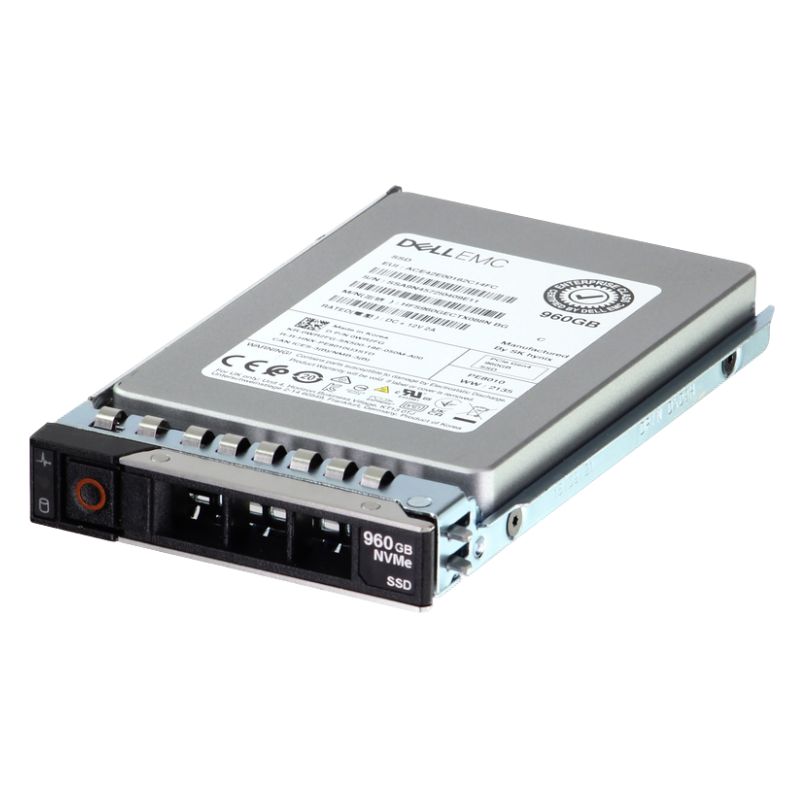


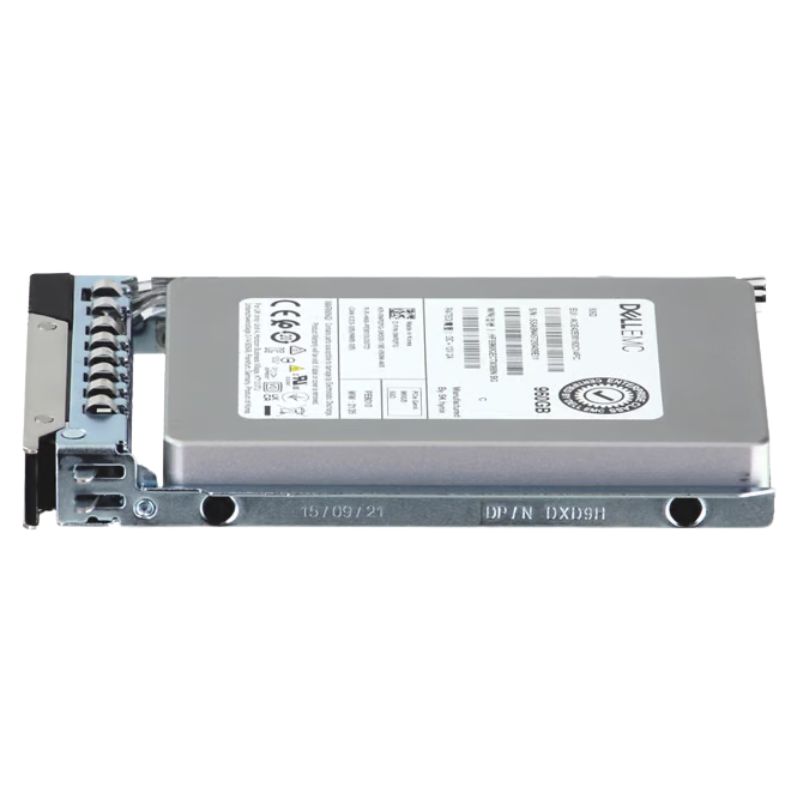
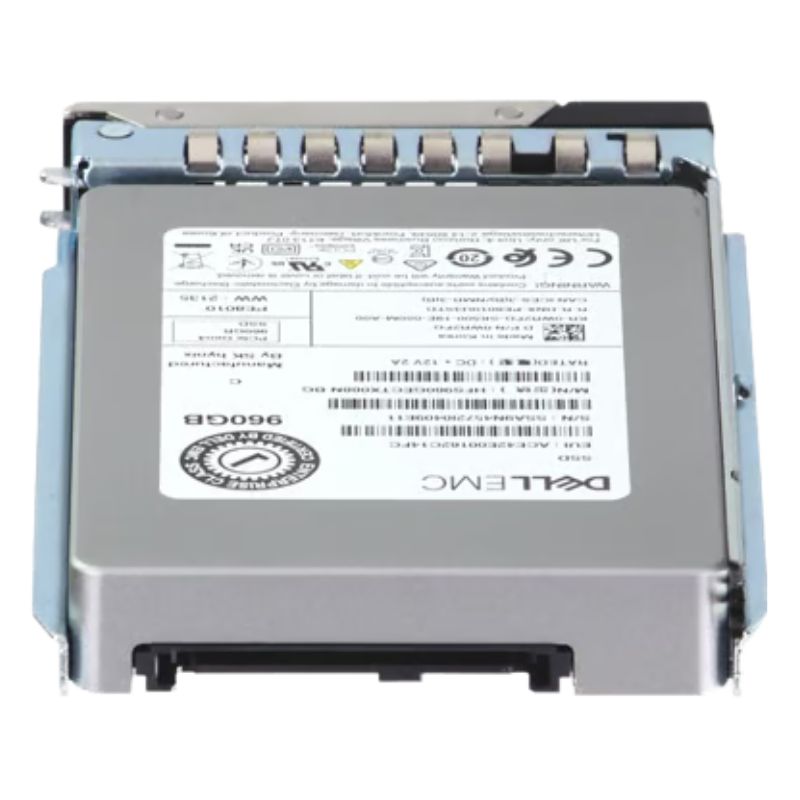
Dell 345-BJHN 960GB PCI-E Gen4 Nvme Data Center Read Intensive U2 SFF Solid State Drive with Carrier for Poweredge Server. New Sealed in Box (NIB) with 1 year Warranty
The Dell 345-BJHN is a purpose-built enterprise solid-state drive engineered for datacenter workloads that demand sustained read performance, endurance and platform compatibility. Delivering 960GB of flash storage via PCI Express 4.0 x4 NVMe in a 2.5-inch U.2 form factor, this drive suits PowerEdge servers and high-density storage arrays that prioritise reliability and operational efficiency.
Engineered for seamless integration into server infrastructure, this SSD supports dual PCIe 4.0 x4 lanes and fits into a single 2.5-inch internal bay.
This SSD is validated for a wide array of Dell PowerEdge platforms, ensuring optimal performance and compatibility across multiple server generations.
While the above list covers primary supported models, additional PowerEdge configurations and select MD PowerVault arrays may also be compatible. Always verify with your system documentation or Dell support for extended compatibility.
The Dell 345-BJHN 960GB PCI-E Gen4 NVMe Data Center Read Intensive U.2 SFF Solid State Drive with Carrier for PowerEdge Server represents a purpose-built storage component engineered for modern data center workloads that prioritize high read throughput, low latency, and reliable long-term operation. This category of drives is optimized around PCI-Express Gen4 NVMe protocols and a U.2 small form factor to fit directly into PowerEdge server bays using a vendor-matched carrier, enabling hot-swap replacement and compatibility with existing server management. The 960GB capacity is aimed at dense storage tiers that support read-heavy applications such as content delivery, OS boot volumes for large server fleets, caching layers for hybrid storage architectures, and high-performance index or metadata stores.
The U.2 small form factor (SFF) design is central to the product’s value for enterprise deployments. U.2 provides a 2.5-inch interface shape while using NVMe electrical connections suitable for full PCI-Express lanes, allowing direct insertion into front-accessible drive bays in PowerEdge servers without requiring adapter cards. The drive ships with a Dell-compatible carrier that preserves mechanical fit, drive LED behavior, and sled locking mechanisms so replacements and maintenance procedures conform to data center standard operating procedures. This carrier integration minimizes the chance of incompatibility in large-scale rollouts and preserves the server’s firmware-assisted media management and health monitoring.
Mechanically, the sled aligns with the server tray dimensions and secures the drive for vibration and shock resilience expected in dense rack environments. Electrically, NVMe over PCI-E Gen4 provides doubled bandwidth per lane compared to Gen3, and when paired with a native U.2 connector it enables full throughput without sacrificing the convenience of front-access bays. The combination of a U.2 interface and a carrier means the drive can be serviced during scheduled windows or as part of an emergency swap with minimal disruption to operations, provided the server and RAID or software-defined storage controllers support NVMe hot-swap semantics.
Performance-wise, this category is tuned for read-intensive workloads. Read-intensive SSDs use media and controller configurations that favor read I/O performance while delivering adequate write endurance for typical read-heavy patterns. PCI-E Gen4 bandwidth multiplies the raw data path relative to previous generations, allowing more parallelism in I/O operations and lower latencies under high concurrency. For data center patterns such as web caching, analytics query layers, or virtual desktop infrastructure read bursts, the 960GB NVMe in a U.2 form factor delivers consistent IOPS and predictable tail latency, which is crucial for service level objectives that constrain response time percentiles rather than average latency alone.
The controller used in this category typically supports multiple hardware queues and deep command concurrency to exploit multi-core server CPUs and modern storage stacks. Queue depth scaling and optimized firmware scheduling reduce head-of-line blocking and improve sustained throughput. Combined with Gen4’s wider data lanes, the controller’s parallel channels across NAND packages facilitate high sustained reads and enable the SSD to saturate NVMe links within the practical limits of the server backplane and software layers.
Enterprise NVMe devices provide telemetry via SMART and vendor-specific namespaces, including metrics for media wear, error counts, power cycles, and thermal statistics. The drive’s firmware surface will publish these indicators for integration with Dell OpenManage or other hardware monitoring tools, enabling predictive maintenance workflows. Administrators should leverage these telemetry streams to build alerts for rising media wear indicators and to automate provisioning of spare drives in high-availability pools.
Security capabilities in this SSD category often include hardware-based encryption and secure erase functions. Self-encrypting drive (SED) features help satisfy regulatory and compliance requirements by cryptographically protecting data at rest and enabling rapid cryptographic erase as part of a decommissioning workflow. Firmware-level secure erase adheres to standards for instant data invalidation and can be integrated into server retirement or repurposing procedures. Additionally, enterprise devices include power-loss protection and internal data path protection mechanisms that reduce the risk of data corruption during unexpected power events, ensuring metadata structures remain consistent for reliable rebuilds and mount operations.
Compatibility is a cornerstone for drives sold with carriers for Dell PowerEdge servers. The sleded design preserves server bay behavior and maintains firmware-level status reporting through the embedded NIC and server management processors. When integrated into a PowerEdge chassis, the drive will be recognized by iDRAC and OpenManage, enabling health reporting, firmware updates, and replacement workflows. Storage administrators should reference server release notes and BIOS firmware compatibility matrices when deploying Gen4 NVMe devices, especially when older server backplanes or RAID controllers require firmware updates to support Gen4 signaling or NVMe passthrough modes cleanly.
Read-intensive NVMe drives find natural placement in multiple tiers of modern data center architectures. They excel as caching layers in hybrid storage arrays where hot datasets are served from NVMe while colder data resides on high-capacity HDDs. They are well suited for read-heavy databases and index stores that require rapid lookup performance for large volumes of small reads. Additionally, these drives can serve as operating system boot volumes for hyperconverged nodes, improving boot storm behavior and enabling faster provisioning of instances during scale-out events. Content distribution nodes and edge cache servers also leverage read-optimized NVMe media to maximize throughput for read-dominant access patterns.
These NVMe drives are commonly integrated into tiered storage models, acting as fast tiers in conjunction with enterprise NVMe-oF, direct-attached NVMe pools, or software-defined storage fabrics. Storage architects use drives like the Dell 345-BJHN 960GB to accelerate metadata operations, reduce tail-latency for front-end services, and provide a reliable, high-performance layer for hot datasets. In clustered or distributed filesystems, NVMe devices reduce read amplification and improve random IOPS performance, translating directly into faster application response times and improved concurrency for parallel workloads.


 Contact Us
 Information
 Catalog
 Solid State Drives (SSD)
 Network Switches
 Hard Disk Drives
 HBA & Controllers
 PC & Servers
 PC & Server Memory
 CPU & Processors
 Network Routers
 Power Supplies
 Tape Drives & Libraries
 Network Devices
 Computer & Network Cables