(7% discount is applied at checkout)
Cart is empty
Your go-to destination for cutting-edge server products
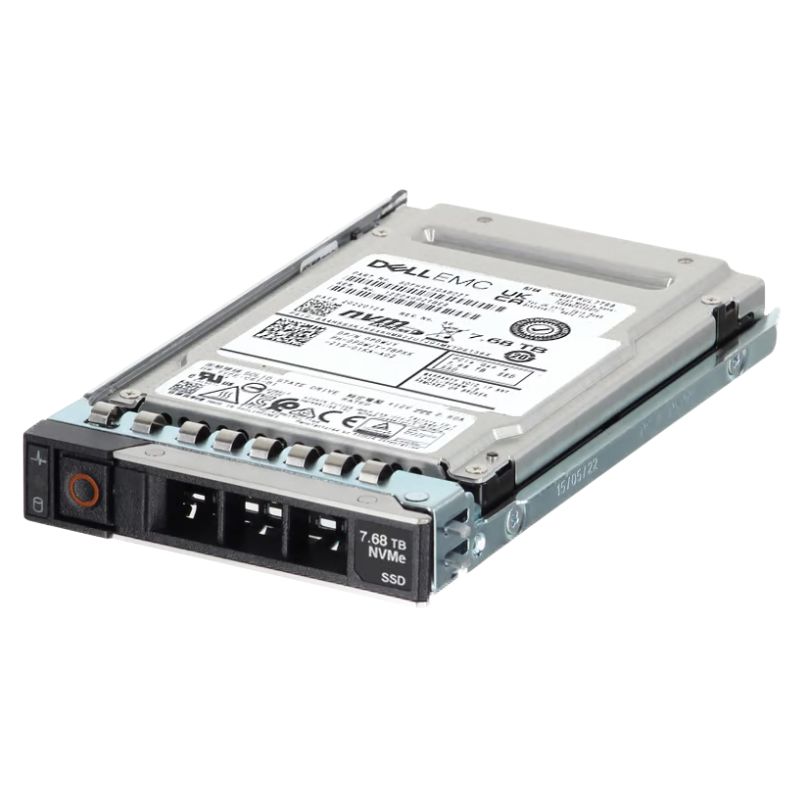


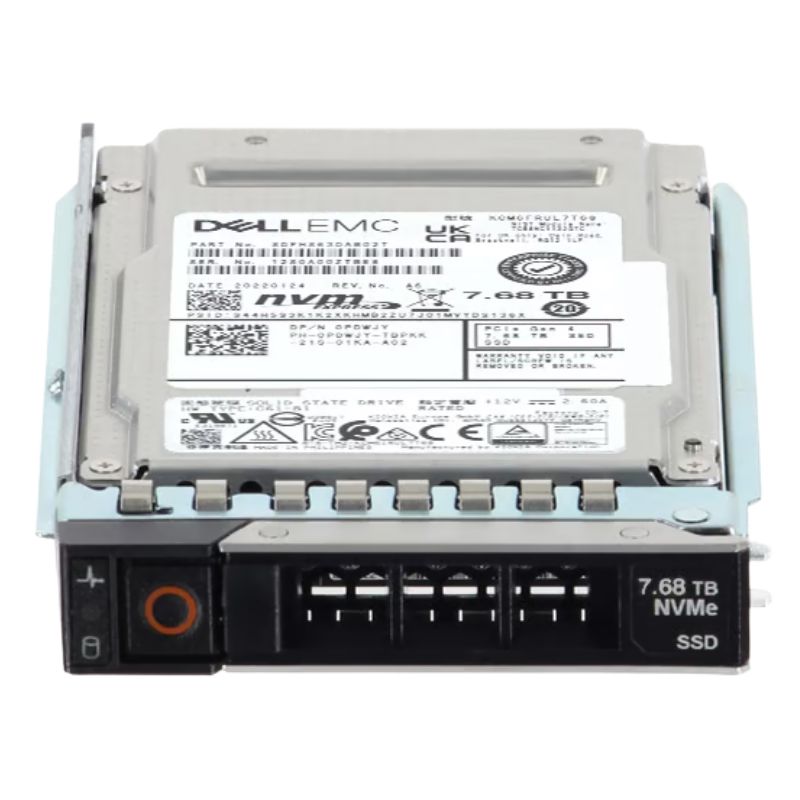
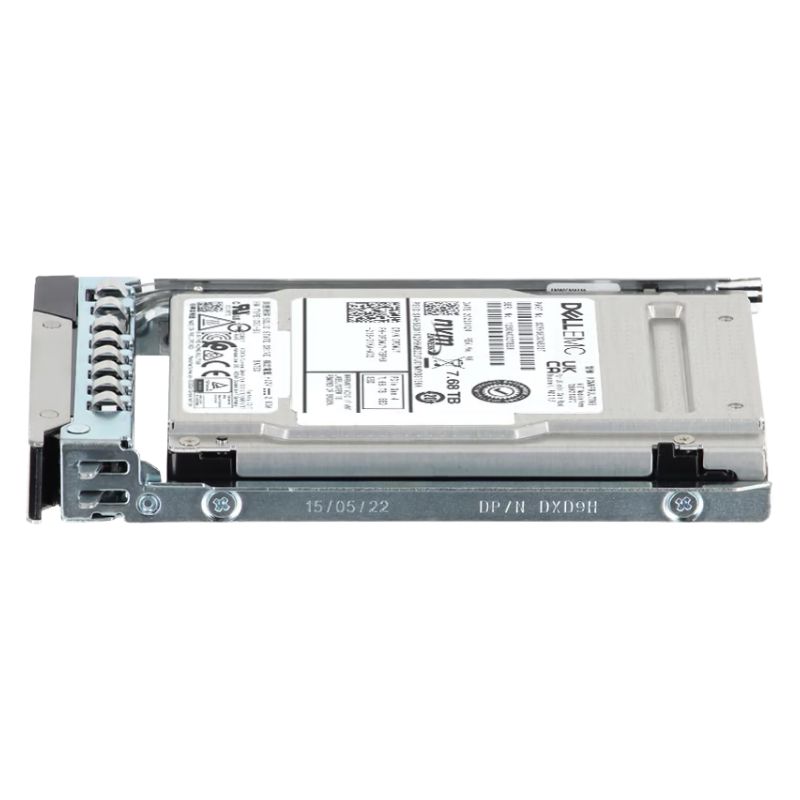
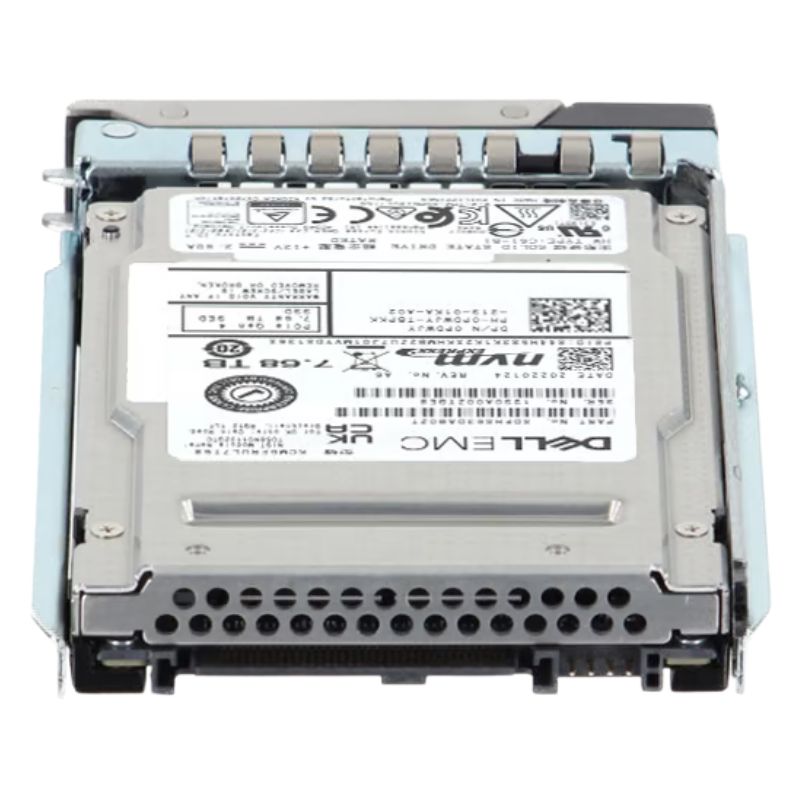
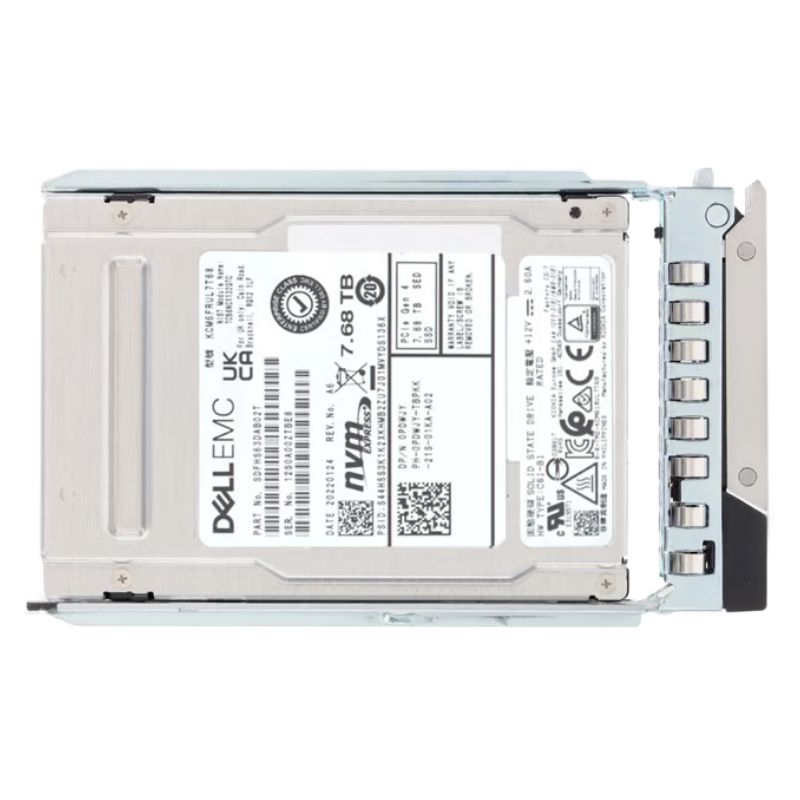
Dell 345-BJJY 7.68TB PCI-E Gen 4.0 X4 NVMe U.2 2.5 Inch Read Intensive TLC 1DWPD Solid State Drive. New Sealed in Box (NIB) with 1 year Warranty
The Dell 345-BJJY is a high-capacity, enterprise-grade internal solid state drive engineered for read-intensive applications. Built in a 2.5-inch U.2 15mm form factor and leveraging PCIe 4.0 x4 NVMe, this 7.68TB SSD pairs dense storage with data-center reliability and 1DWPD endurance for consistent performance under heavy read workloads.
Optimized for read-intensive use, the 345-BJJY balances large capacity with a write endurance suited to mostly-read datasets. The NVMe over PCIe Gen4 x4 connection maximizes bandwidth for sequential and random reads, helping latency-sensitive applications respond faster and sustaining heavy read operations typical of enterprise deployments. The specified 1DWPD endurance indicates a design focus on longevity for read-dominant workloads.
The 345-BJJY is validated for a wide range of Dell PowerEdge platforms. Below are servers commonly used in enterprise fleets where this SSD can be deployed reliably:
The Dell 345-BJJY 7.68TB PCIe Gen 4.0 x4 NVMe U.2 2.5" Read-Intensive TLC 1DWPD Enterprise Internal SSD is engineered for datacenter workloads that demand large capacity, low latency, and consistent read performance. Designed as a direct-fit storage option for Dell PowerEdge 14G, 15G, 16G and 17G servers, this drive targets read-heavy applications such as virtualization boot volumes, content delivery, database reads, analytics, and large-scale web and object storage layers.
The PCIe Gen 4.0 x4 interface doubles the per-lane bandwidth compared to Gen 3, giving enterprise NVMe media much greater headroom for sustained throughput and higher IOPS. For read-heavy datasets — such as analytics queries, VM boot storms, or content distribution — the Dell 345-BJJY provides:
NVMe’s lightweight command set and native queuing architecture help drive down request latency. The Dell 345-BJJY leverages controller optimizations and enterprise firmware to deliver consistent latency under sustained loads — a critical metric for multi-tenant virtualization and latency-sensitive services.
The specified endurance of 1 Drive-Write-Per-Day indicates the drive can sustain full-capacity writes equivalent to its capacity once per day over its warranty term without exceeding design stress limits. For most read-intensive environments this margin provides robust longevity and predictable replacement cycles.
Enterprise NVMe drives include features to safeguard data in case of sudden power loss. The Dell 345-BJJY incorporates:
2.5" U.2 SSDs are compact but can run warm under sustained activity. Ensure your PowerEdge server’s airflow and drive bay cooling meet Dell’s guidelines. Many drives include thermal throttling to protect data integrity — but for best performance, maintain recommended inlet temperatures and unobstructed cooling paths.
Virtual Desktop Infrastructure and multi-VM hosts benefit from the Dell 345-BJJY’s low-latency reads and high IOPS for boot storms, user profile access, and application launches. Using NVMe boot volumes or caching tiers can dramatically shorten VM startup times and improve user experience.
Read-dominant database workloads — such as reporting queries, read replicas, and OLAP scans — gain a performance uplift from high sustained read throughput. The 7.68TB capacity allows large datasets to remain on fast media, reducing the need to tier frequently accessed data to slower pools.
For content repositories, object stores, and streaming services that serve heavy read traffic, large NVMe drives reduce the number of drives required and simplify capacity planning. Consolidating popular content on high-capacity NVMe lowers the mechanical failure surface area and improves delivery consistency.
Use the Dell 345-BJJY as a cache layer in hybrid storage architectures — fronting slower HDD arrays with an NVMe layer that accelerates read operations and caches hot datasets for immediate delivery.
NVMe drives are increasingly used in RAID configurations with software-defined or hardware RAID solutions designed for NVMe. When designing arrays:
Enterprise SSD vendors often reserve some capacity (over-provisioning) to improve sustained performance and endurance. When configuring, allow room for background maintenance tasks and reserve spare capacity to maintain consistent QoS under heavy loads.
Active health monitoring is essential. Integrate SMART telemetry, NVMe health logs, and Dell OpenManage alerts into your monitoring stack to track wear levels, error rates, and temperature anomalies. Early detection enables planned maintenance instead of reactive replacements.
Read-intensive TLC drives provide a strong capacity/price balance. For write-heavy transactional workloads (e.g., intensive OLTP), consider drives rated for higher DWPD or enterprise SLC/MLC alternatives. Match the endurance rating to the expected write profile to avoid premature wear and unexpected replacements.
When planning capacity, account for over-provisioning, RAID overhead, and future growth. Large single-drive capacities like 7.68TB simplify rack design and reduce the number of drives required, which can lower power, cooling, and service costs.
SSD arrays consume less power than equivalent HDD capacity, but NVMe drives under heavy load can still draw significant power. Factor in peak power draw and thermal dissipation when sizing power supplies and cooling systems.
Use SMART telemetry and wear metrics to plan drive refresh cycles. Because TLC media has limited program/erase cycles compared to SLC/MLC, proactive lifecycle management ensures predictable budgeting and minimal downtime.
The Dell 345-BJJY 7.68TB PCIe Gen 4 x4 NVMe U.2 2.5" Read-Intensive TLC SSD is a strategic choice for organizations seeking dense, high-performance read storage within Dell PowerEdge environments. It balances cost, capacity, and enterprise reliability while integrating into Dell’s management ecosystem for lifecycle control. Whether used as primary read-tier storage, an accelerator cache layer, or for virtualization workloads, this drive simplifies capacity planning and helps deliver predictable, low-latency application performance at scale.


 Contact Us
 Information
 Catalog
 Solid State Drives (SSD)
 Network Switches
 Hard Disk Drives
 HBA & Controllers
 PC & Servers
 PC & Server Memory
 CPU & Processors
 Network Routers
 Power Supplies
 Tape Drives & Libraries
 Network Devices
 Computer & Network Cables