(7% discount is applied at checkout)
Cart is empty
Your go-to destination for cutting-edge server products
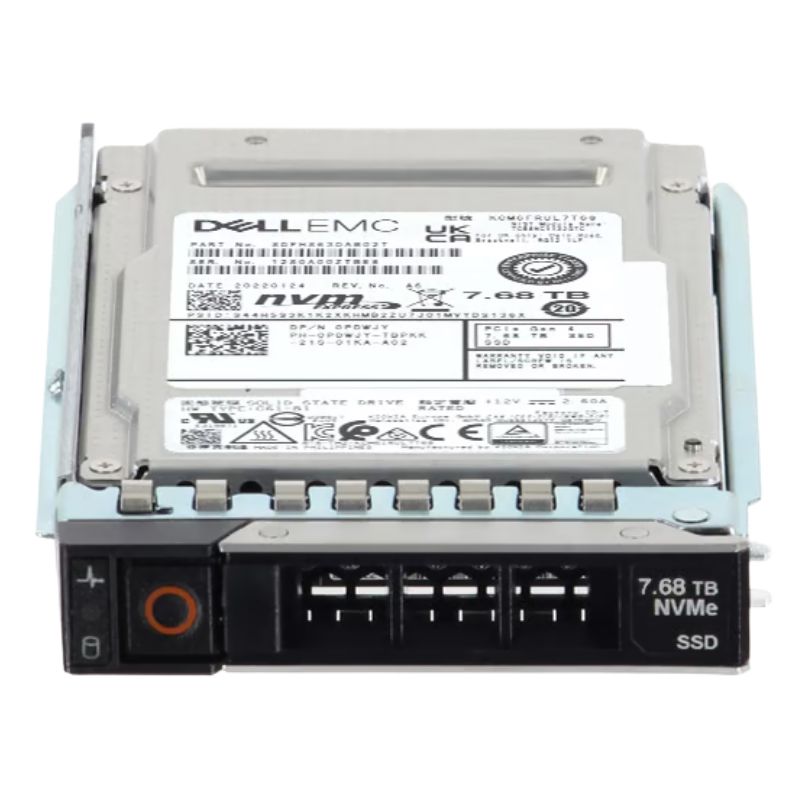


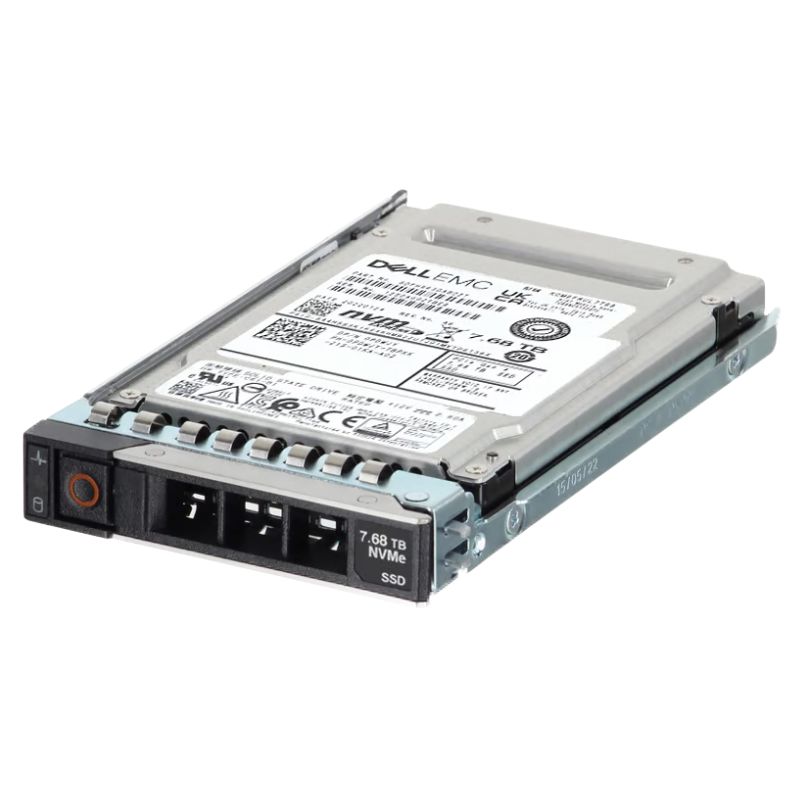
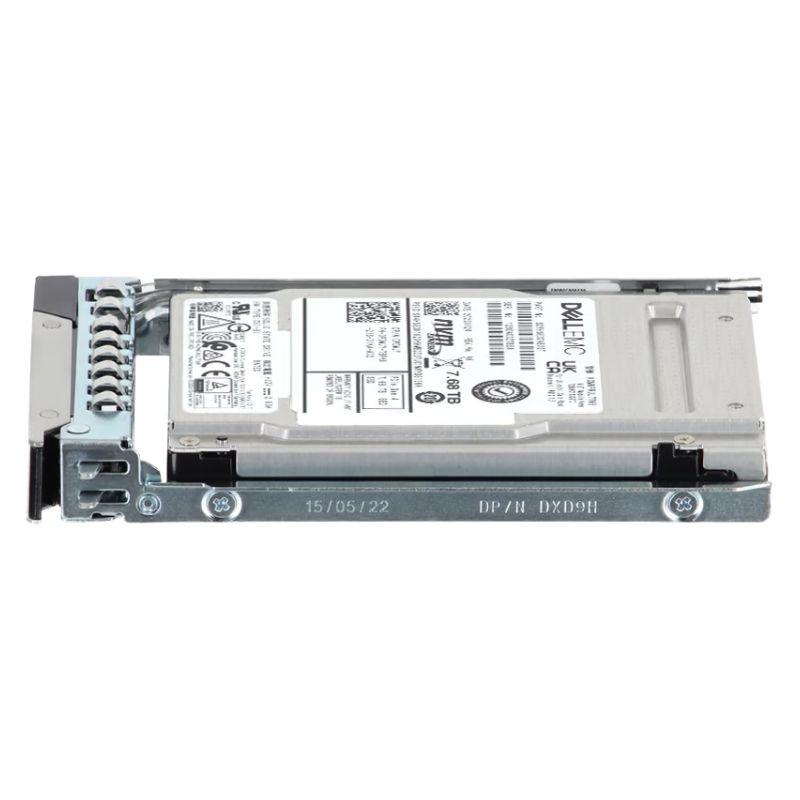
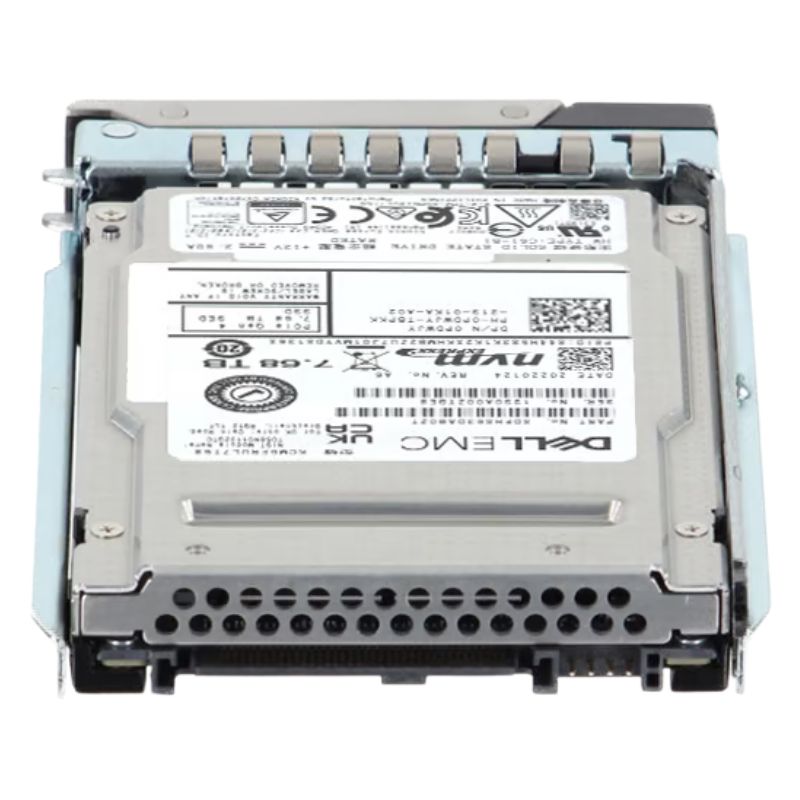
Dell 345-BJJZ 7.68TB PCI-E Gen4 NVMe U.2 2.5 Inch Read Intensive Solid State Drive. New Sealed in Box (NIB) with 1 year Warranty
The Dell 345-BJJZ is a high-density internal solid-state drive built to deliver fast, reliable read-heavy performance in data center servers and storage arrays. With 7.68TB of usable capacity, PCIe 4.0 x4 NVMe connectivity and a U.2 2.5" 15mm form factor, this drive balances large-scale storage needs with the low latency and throughput modern applications demand. It’s designed for mixed virtualized environments, database query acceleration, caching layers and other read-centric workloads where predictable, high-speed access to data is essential.
The 345-BJJZ exposes NVMe storage over PCIe 4.0 x4 lanes, supporting modern server backplanes and NVMe-enabled hot-swap bays. It is intended for single internal 2.5" drive slots and can be integrated into NVMe-capable chassis that accept U.2 devices.
Designed around read-intensive NAND and firmware tuning, the drive prioritizes high sustained sequential and random read throughput while maintaining consistent I/O response under load. Endurance is tuned to 1 drive write per day (1 DWPD), making this SSD ideal for cache tiers, content delivery, analytics, and database read replicas where writes are limited but read rates are high.
The U.2 2.5" 15mm form-factor ensures compatibility with a wide range of Dell PowerEdge systems and other servers that support U.2 NVMe drives. Its PCIe Gen4 x4 interface unlocks higher bandwidth compared with previous-generation drives when paired with Gen4-capable motherboards or HBA/NVMe backplanes.
The 345-BJJZ is compatible with many PowerEdge platforms commonly used in enterprise deployments. Supported systems include a broad set of rack and dense-compute servers, ensuring straightforward integration into existing Dell infrastructure:
The Dell 345-BJJZ family represents a class of high-capacity, enterprise-grade NVMe solid-state drives engineered for modern data centers and mission-critical server workloads. Designed to slot into U.2 2.5" bays and to take full advantage of PCIe Gen4 x4 NVMe bandwidth, the 7.68TB read-intensive TLC (1 DWPD) variant offers a balance of high density, low latency, predictable performance, and enterprise reliability tailored for Dell PowerEdge rack servers across generations 14G, 15G, 16G and 17G.
This SSD is optimized for read-dominated workloads where capacity and throughput matter more than extremely high sustained write endurance. Typical use cases include:
PCI Express Gen4 doubles per-lane throughput compared with Gen3, and the x4 NVMe connection allows the 345-BJJZ drive to achieve significantly higher sequential and random performance figures than legacy SATA or SAS SSDs. The NVMe protocol reduces I/O overhead, improves IOPS per watt, and lowers latency for small block and mixed workloads.
The drive uses triple-level cell (TLC) 3D NAND configured for read-intensive endurance. With an endurance rating of approximately 1 Drive-Write-Per-Day (DWPD) over the warranty period, this SSD is ideal where read performance is paramount and write amplification is moderate. TLC delivers excellent density and cost-effectiveness compared to higher-endurance SLC/MLC options while still meeting enterprise reliability standards.
At 7.68TB usable capacity, this U.2 2.5" SSF (small form factor) drive packs massive storage into one server bay — enabling dense, high-capacity storage configurations without the footprint of 3.5" drives. This helps reduce rack space and improves power efficiency per terabyte.
Built-in power management features and thermal throttling safeguards maintain data integrity and stable performance under heavy sustained IO. The drive supports enterprise SMART attributes and telemetry, enabling integration with server management tools for proactive monitoring.
PCIe Gen4 x4 and NVMe allow the 7.68TB Dell 345-BJJZ drive to deliver high sequential read bandwidth suitable for moving large datasets and streaming workloads. Sequential read speeds are optimized for large-file transfer and content delivery scenarios.
Random read IOPS are a major strength of NVMe-based enterprise SSDs. The drive provides high IOPS at low latency for small-block random reads — a crucial attribute for database query response times, virtualization, and interactive application performance.
Enterprise firmware ensures consistent I/O response under mixed loads. Quality-of-Service (QoS) stability reduces latency spikes caused by background maintenance tasks like garbage collection or wear leveling, making this drive appropriate for latency-sensitive production deployments.
The drive is explicitly targeted for compatibility with a range of Dell PowerEdge server generations — 14th through 17th generation systems. Use of Dell-certified firmware and validation ensures compatibility with server backplanes, RAID controllers configured for NVMe passthrough, and Dell iDRAC/SR management stacks.
The U.2 connector and small form factor mean drives can be deployed in hot-swap bays where supported by server hardware and firmware. This enables rapid replacement and serviceability in enterprise environments without taking hosts offline.
Dell-validated firmware releases for the 345-BJJZ SSD include enhancements for compatibility, telemetry, and performance tuning. Fleet administrators can use Dell OpenManage and iDRAC to review SMART status, update firmware, and perform drive diagnostics across many servers.
Depending on the workload and redundancy needs, the 7.68TB NVMe drives can be used as standalone high-performance boot/data drives or aggregated into local NVMe pools. For high-availability and redundancy, combine NVMe drives with software RAID or NVMe-oF (NVMe over Fabrics) where supported to balance performance with resiliency.
Use these drives as the “hot” read tier in a tiered storage architecture. Cold or archival data can be placed on high-capacity HDDs or lower-cost SATA SSDs, while the Dell 345-BJJZ drives serve frequently-accessed datasets — improving overall application responsiveness and reducing total cost of ownership (TCO).
When architecting VDI or containerized workloads, allocate read-centric golden images and persistent caches to these NVMe drives. Their high random read throughput dramatically shortens boot storms and improves user experience during peak concurrency.


 Contact Us
 Information
 Catalog
 Solid State Drives (SSD)
 Network Switches
 Hard Disk Drives
 HBA & Controllers
 PC & Servers
 PC & Server Memory
 CPU & Processors
 Network Routers
 Power Supplies
 Tape Drives & Libraries
 Network Devices
 Computer & Network Cables