(7% discount is applied at checkout)
Cart is empty
Your go-to destination for cutting-edge server products
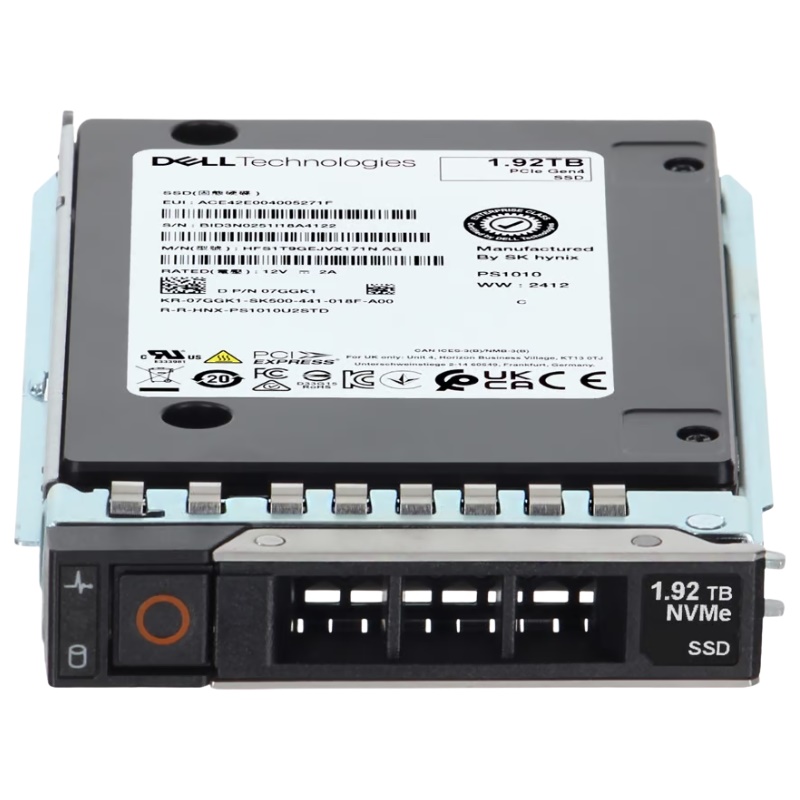


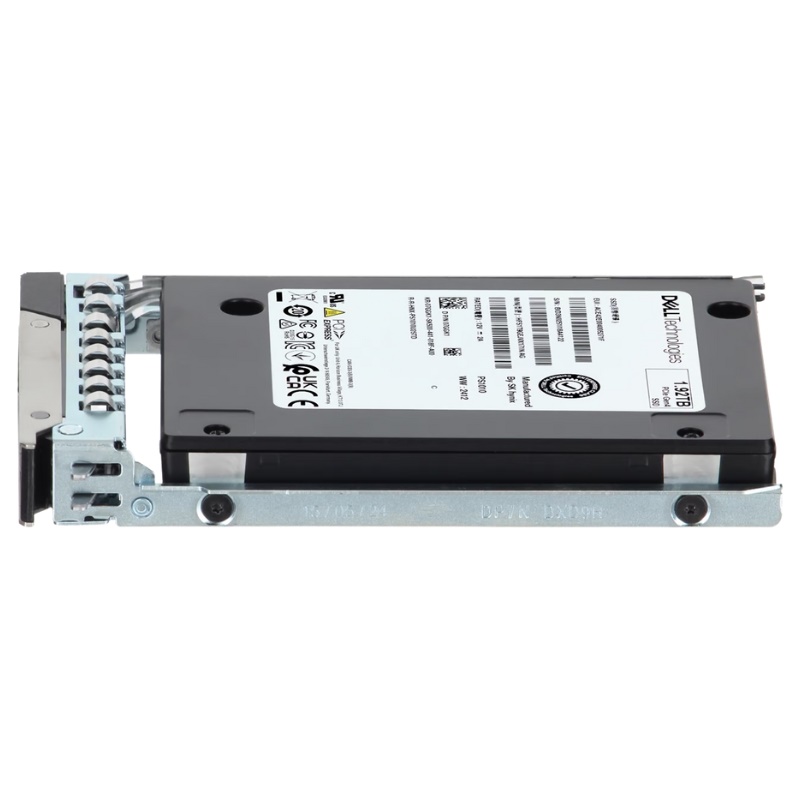
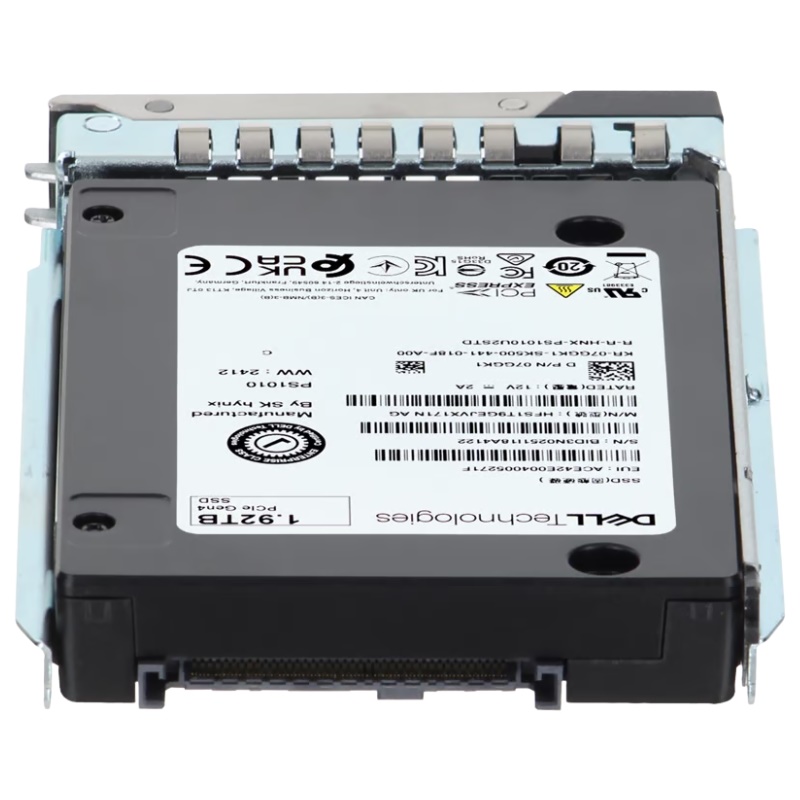
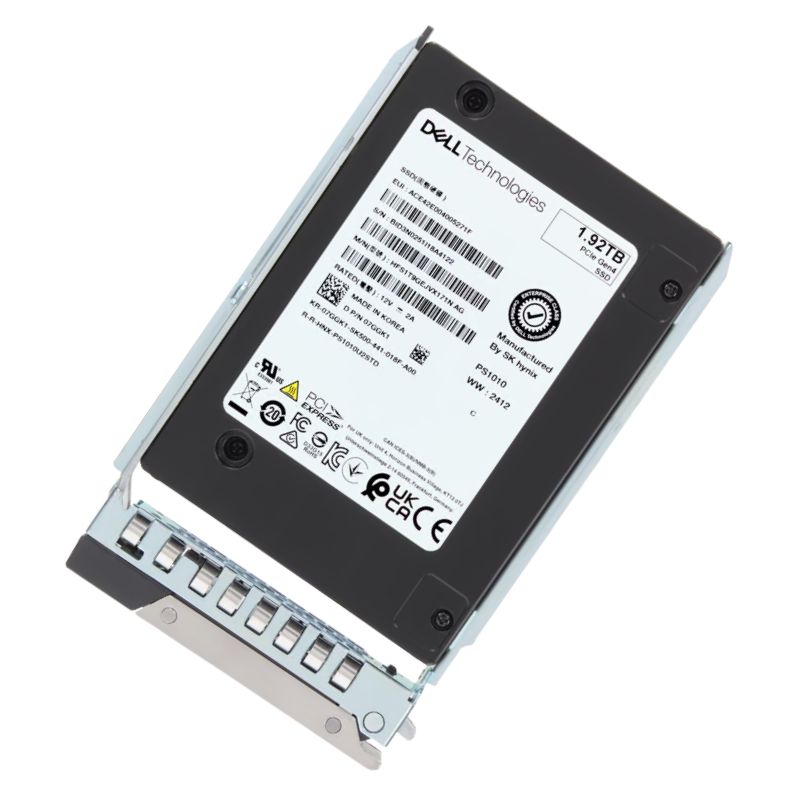
Dell 345-BJNS 1.92TB PCI-E 4.0 X4 Gen4 NVMe U.2 SFF TLC 3D Nand Read Intensive Solid State Drive. New Sealed in Box (NIB) with 1 Year Warranty
Understanding the detailed specifications of the Dell 345-BJNS is crucial for making an informed infrastructure decision. Below is a comprehensive breakdown of its core technical attributes.
The drive offers a usable capacity of 1.92 Terabytes, a sweet spot for many enterprise applications balancing cost and performance. It is housed in a U.2 (SFF-8639) Small Form Factor (SFF) 2.5-inch enclosure with a 15mm z-height. This industry-standard form factor is designed for hot-pluggability and is widely supported in enterprise server bays, allowing for easy installation and replacement in the field without requiring tools or system downtime.
The 1.92TB capacity is presented as a native storage size. It is important to note that a portion of this capacity is reserved for over-provisioning, a standard practice in SSD design that enhances performance and extends the drive's lifespan by managing wear-leveling, garbage collection, and bad block management more efficiently. This ensures consistent performance and long-term reliability under sustained write workloads.
At the heart of this drive's performance is its PCI Express 4.0 x4 NVMe interface. The NVMe (Non-Volatile Memory Express) protocol is built from the ground up for flash storage, significantly reducing latency and increasing Input/Output Operations Per Second (IOPS) compared to legacy protocols like SATA or SAS.
PCIe Gen 4.0 doubles the bandwidth per lane compared to the previous PCIe 3.0 generation. With a x4 lane configuration, this drive achieves a theoretical maximum bandwidth of nearly 8 GB/s, enabling it to saturate the bus with high-speed data transfers. This is critical for applications requiring rapid data access, such as real-time analytics, high-frequency trading, and large-scale virtualization.
The Dell 345-BJNS utilizes 3D TLC (Triple-Level Cell) NAND flash memory. This technology stacks memory cells vertically, allowing for higher densities and lower costs per gigabyte compared to planar NAND, while maintaining a strong balance of performance and endurance.
This drive is classified as a Read-Intensive (RI) solution. This means it is engineered to handle workloads where read operations significantly outnumber write operations. The endurance, measured in Drive Writes Per Day (DWPD), is calibrated for this use case. For example, a typical rating might be 1 DWPD over a 5-year warranty period, meaning you can write the entire 1.92TB drive capacity once every day for five years. This makes it perfect for boot drives, application hosting, web servers, and virtual desktop infrastructure (VDI) where data is frequently read but not constantly overwritten.
The theoretical advantages of the PCIe 4.0 and NVMe interface translate into tangible real-world performance gains. The Dell 345-BJNS is designed to deliver consistent, low-latency throughput.
This drive excels in sequential data transfer tasks, which involve reading or writing large, contiguous blocks of data. This is essential for tasks like loading large database files, video streaming, and scientific computing. Expect sequential read speeds to reach up to several gigabytes per second, with sequential write speeds also being exceptionally high, though typically lower than read speeds in a read-intensive design.
For server applications, Random IOPS (Input/Output Operations Per Second) are often a more critical metric than sequential speed. This measures the drive's performance when accessing small, random blocks of data, which is representative of database transactions, email servers, and operating system operations. The Dell 345-BJNS delivers high random read IOPS, ensuring rapid response times for user requests and application queries. Random write IOPS are robust, sufficient for handling the write components of its targeted read-centric workloads.
The 345-BJNS is not a generic drive; it is a Dell-branded and qualified component, ensuring deep integration and flawless operation within the Dell ecosystem.
This drive is certified for use in Dell's 14th, 15th, 16th, and 17th Generation PowerEdge servers. This includes a wide range of models such as the R740xd, R750xa, R760, and MX760c, among others. Using a Dell-qualified drive guarantees that the server firmware, iDRAC (Integrated Dell Remote Access Controller), and OpenManage systems will correctly recognize, monitor, and manage the drive, providing health alerts, predictive failure analysis, and seamless firmware updates.
For 16th and 17th Generation PowerEdge servers, which natively support PCIe 4.0, the 345-BJNS SSD operates at its full potential. These servers are architected to handle the increased bandwidth, allowing the drive to deliver maximum performance and reduce bottlenecks in the storage subsystem, thereby accelerating overall application performance.
When installed in 14th and 15th Generation PowerEdge servers (which are based on PCIe 3.0), the drive will automatically operate at the slower PCIe 3.0 speeds. While this means the maximum theoretical bandwidth is capped, the drive still provides exceptional performance thanks to the efficiency of the NVMe protocol, often outperforming native PCIe 3.0 NVMe drives. This backwards compatibility protects your investment and provides a clear upgrade path.
The U.2 form factor supports hot-plug capability. This allows system administrators to install or replace the drive while the server is still running, ensuring maximum uptime and serviceability. Furthermore, these drives can be configured in hardware or software RAID arrays using Dell PERC (PowerEdge RAID Controller) cards or software solutions to provide data redundancy (RAID 1, 10, 5, 6) and enhance performance.
To safeguard data from corruption as it moves through the drive's internal architecture, the 345-BJNS employs end-to-end data protection. This means data is protected by cyclic redundancy checks (CRC) from the moment it enters the drive's buffer until it is written to the NAND and vice-versa, preventing silent data corruption.
The specific design of the Dell 345-BJNS makes it exceptionally well-suited for a range of server applications where fast data access and high read throughput are paramount.
In virtualized environments running VMware vSphere, Microsoft Hyper-V, or KVM, this drive can host a large number of virtual machines (VMs). The high random read performance allows multiple VMs to boot and run their applications simultaneously without experiencing I/O contention, leading to higher VM density and better user experience.
For database systems like Microsoft SQL Server or Oracle Database, this drive is ideal for housing read-only replicas, reporting instances, or indexing tables. The fast read speeds enable complex queries to return results much faster, accelerating business intelligence and analytics processes.
Hosting applications such as CRM systems (e.g., Salesforce), ERP software (e.g., SAP), and large-scale caching solutions (e.g., Redis or Memcached) on this drive ensures that data is retrieved from storage with minimal delay, directly improving application performance and transaction times.
Beyond raw performance, the drive includes a suite of enterprise features for robust management and security.
The drive supports the NVMe Management Interface, a standardized command set for managing NVMe devices over a sideband interface (like SMBus/I2C) or in-band. This allows data center management tools, including Dell OpenManage, to monitor drive health, temperature, and performance metrics, and perform management tasks without consuming host processor resources.
To protect sensitive data, the drive likely supports security features compliant with the TCG (Trusted Computing Group) Opal and Pyre standards. This enables hardware-based full-disk encryption. Additionally, it supports instant, cryptographically secure erase (Sanitize) and block erase commands, which render all data on the drive irrecoverable in a matter of seconds, a crucial capability for decommissioning or repurposing drives.
Enterprise SSDs are equipped with sophisticated Power Loss Protection (PLP) circuits. These typically include a bank of capacitors that, in the event of a sudden power failure, provide enough hold-up energy to complete any in-progress writes from the volatile DRAM cache to the non-volatile NAND flash. This prevents data corruption and ensures data integrity, a fundamental requirement for any mission-critical storage device.


 Contact Us
 Information
 Catalog
 Solid State Drives (SSD)
 Network Switches
 Hard Disk Drives
 HBA & Controllers
 PC & Servers
 PC & Server Memory
 CPU & Processors
 Network Routers
 Power Supplies
 Tape Drives & Libraries
 Network Devices
 Computer & Network Cables