(7% discount is applied at checkout)
Cart is empty
Your go-to destination for cutting-edge server products
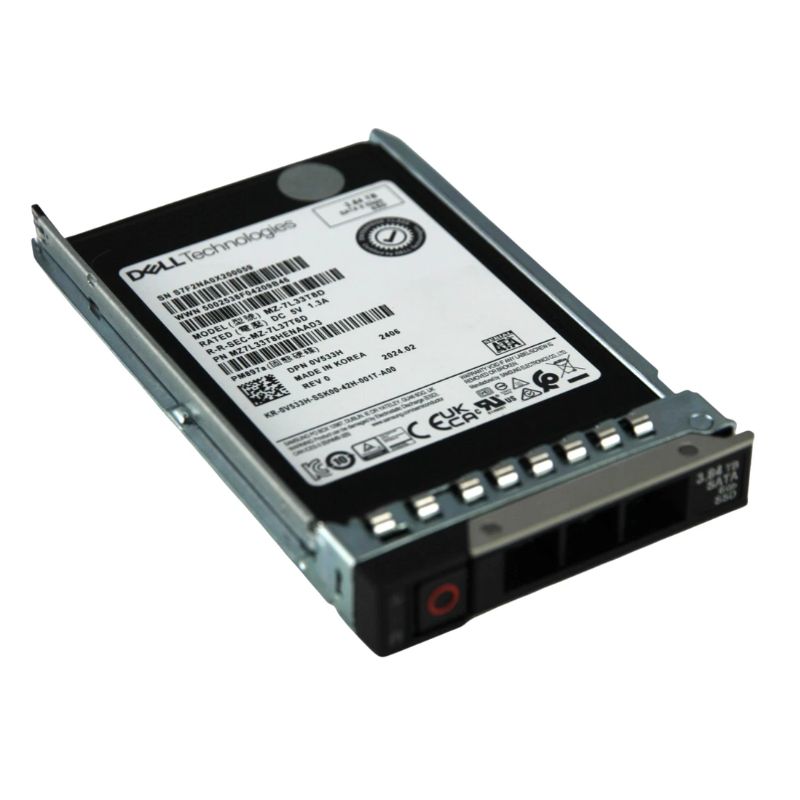


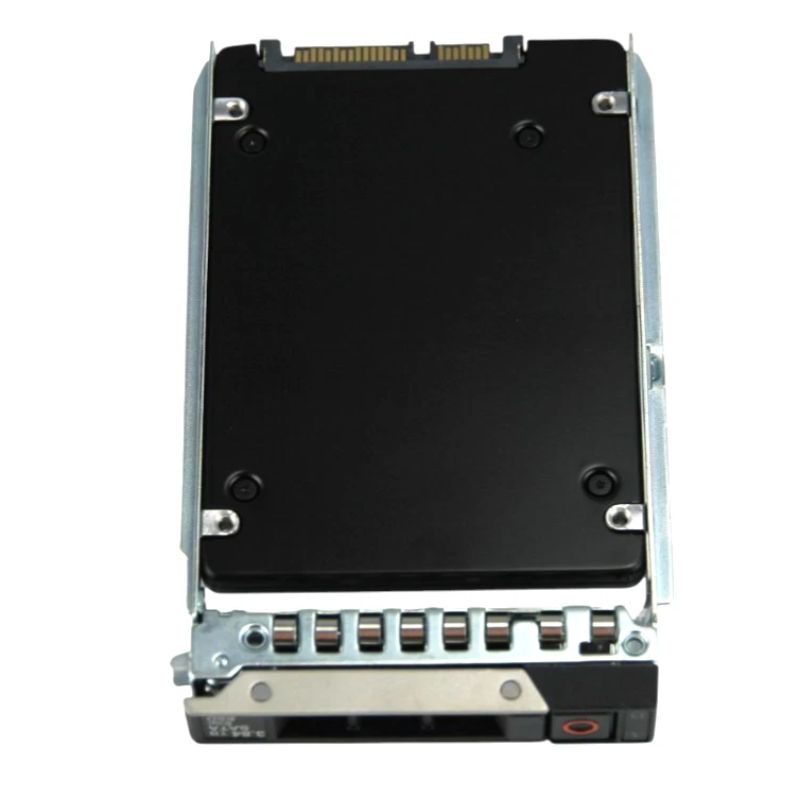
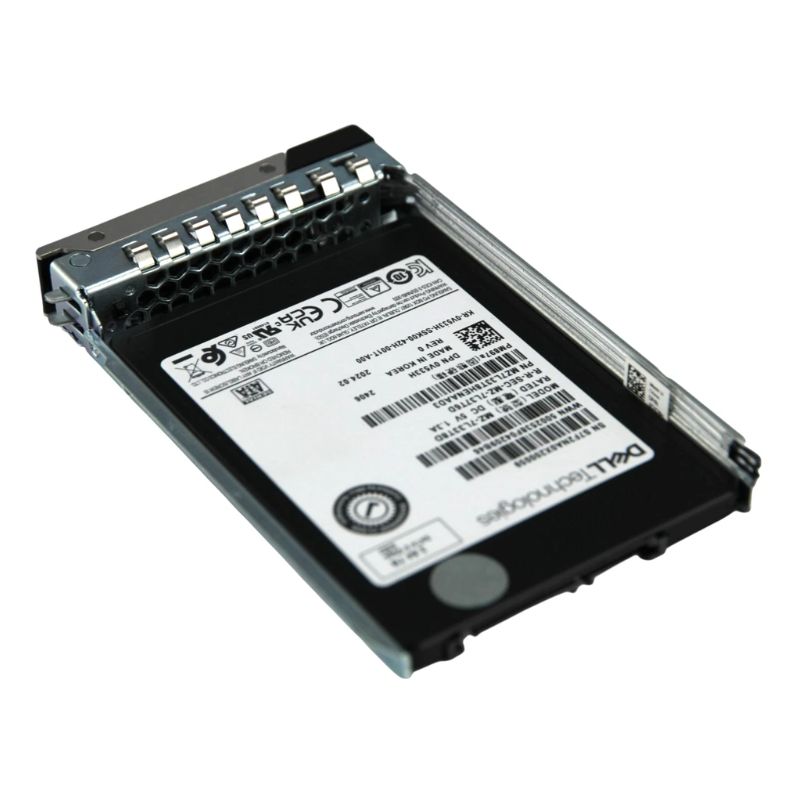
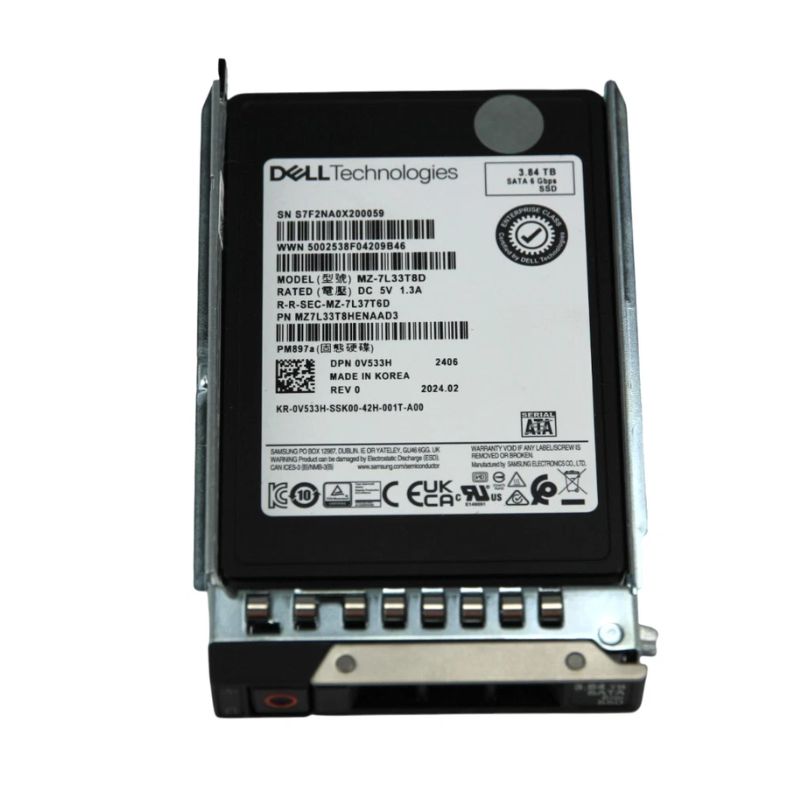
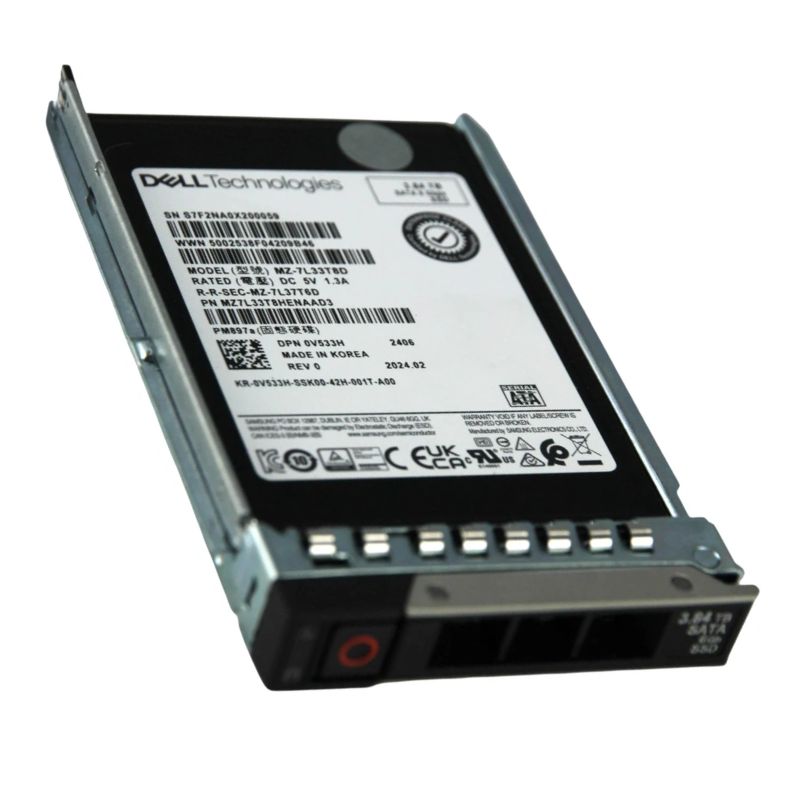
Dell 345-BJTV 3.84TB SATA 6GBPS 2.5Inch Read Intensive 1DWPD Hot Plug SSD. New Sealed in Box (NIB) with 1 year Replacement Warranty
Overview of the 3.84TB Storage Drive
The 2.5-inch form factor allows the SSD to integrate seamlessly into standard enterprise server bays and storage enclosures. Its hot-plug capability enhances operational flexibility by enabling drive replacement or upgrades without requiring system shutdowns, significantly reducing downtime in enterprise environments where uptime is critical. The drive’s internal controller architecture is optimized for latency reduction and consistent I/O performance, ensuring predictable response times even under mixed workload conditions.
The 345-BJTV Dell 3.84TB SATA 6Gbps 2.5-Inch Read Intensive 1DWPD Hot Plug Solid State Drive represents a high-capacity enterprise storage solution designed for modern data-driven infrastructures where consistent read performance, reliability, and scalable integration are essential. Built for data centers, virtualization platforms, cloud storage arrays, and mission-critical enterprise workloads, this SSD combines endurance optimization with SATA-based compatibility, ensuring seamless deployment in both legacy and modern server environments. Manufactured under strict enterprise-grade standards by Dell, this drive is engineered to deliver sustained read throughput while maintaining cost efficiency per gigabyte, making it ideal for organizations balancing performance with budget-conscious scaling strategies.
The architecture of the 345-BJTV SSD is centered around read-intensive optimization, specifically tuned for workloads that demand frequent data retrieval rather than heavy write cycles. With a 1 Drive Write Per Day (1DWPD) endurance rating, the drive is optimized for environments where read operations dominate, such as content delivery systems, archival storage access layers, virtualization boot images, and large-scale database query acceleration. The SATA 6Gbps interface ensures backward compatibility with widely deployed server infrastructure while still delivering stable and predictable throughput characteristics.
The SATA 6Gbps interface remains one of the most widely used connectivity standards in enterprise storage due to its balance between performance and compatibility. While not as fast as NVMe-based solutions, SATA SSDs like the 345-BJTV model provide stable throughput and low latency compared to traditional HDDs. This makes them especially valuable in environments where legacy compatibility is required or where workloads do not necessitate extreme parallel I/O performance.
Typical performance characteristics of read-intensive SATA SSDs include consistent sequential read speeds, moderate sequential write performance, and highly efficient random read operations. These attributes make the drive suitable for boot volumes, application hosting, and read-heavy databases. The internal firmware is optimized for garbage collection efficiency and wear leveling, ensuring consistent performance over extended operational lifecycles.
The 1DWPD rating indicates that the SSD is designed to withstand writing an amount of data equivalent to its full capacity once per day over its warranty period. While this may appear limited compared to mixed-use or write-intensive drives, it is ideally suited for environments where data is written once and read multiple times. This includes static content repositories, virtual machine templates, and analytical workloads that rely heavily on data retrieval.
Read-intensive SSDs reduce unnecessary over-provisioning for write endurance, allowing manufacturers to optimize cost efficiency while still maintaining enterprise reliability standards. The 345-BJTV model leverages advanced NAND management techniques to extend lifespan, reduce write amplification, and maintain steady performance even as the drive approaches higher utilization thresholds.
Hot plug support is a critical feature in enterprise storage environments. It allows administrators to replace or add drives without powering down the system, ensuring uninterrupted service availability. In large-scale deployments such as cloud data centers or high-availability clusters, this capability significantly reduces maintenance windows and eliminates the need for service interruptions during hardware upgrades or replacements.
The 345-BJTV SSD is engineered with robust connector durability and controlled power sequencing to ensure safe insertion and removal. This prevents data corruption and hardware damage during live system changes. Combined with RAID configurations and redundant storage architectures, hot plug functionality enhances overall system resilience and operational flexibility.
The 3.84TB capacity tier is strategically positioned in enterprise storage hierarchies to balance density and cost efficiency. It provides sufficient storage for large datasets, virtual machine fleets, and application workloads without requiring excessive physical rack space. This capacity is particularly beneficial in hyper-converged infrastructure environments where storage consolidation is essential for reducing hardware footprint and operational complexity.
High-capacity SSDs like this model also reduce the number of drives required in a storage array, which in turn reduces power consumption, cooling requirements, and maintenance overhead. In distributed systems, fewer drives can simplify RAID configurations while maintaining high aggregate throughput and redundancy.
The 345-BJTV SSD is designed for compatibility with a wide range of enterprise servers, storage arrays, and rack-mounted systems. Integration within Dell PowerEdge servers is particularly optimized, allowing seamless firmware recognition, management through integrated systems management tools, and compatibility with enterprise RAID controllers.
Beyond vendor-specific ecosystems, SATA-based enterprise SSDs are broadly compatible with standard storage controllers, making them suitable for mixed-vendor environments. This flexibility is critical for organizations operating heterogeneous infrastructure or transitioning between hardware generations.
Enterprise-grade SSDs are distinguished from consumer models by their advanced data integrity mechanisms. The 345-BJTV SSD incorporates end-to-end data protection, error correction code (ECC) algorithms, and power-loss protection mechanisms designed to safeguard data in volatile power conditions. These features ensure that in-flight data is preserved during unexpected power interruptions, reducing the risk of corruption.
Additionally, advanced wear-leveling algorithms distribute write and erase cycles evenly across NAND cells, extending overall drive lifespan. Bad block management ensures that degraded memory cells are isolated and replaced dynamically without affecting system performance.
This SSD is widely applicable in multiple enterprise scenarios, particularly those requiring high read throughput and stable latency. Common use cases include virtual machine boot drives, database read replicas, content delivery networks, logging systems, and analytics query acceleration layers.
In virtualization environments, the drive is frequently used to host operating system images for virtual machines, allowing rapid provisioning and consistent performance across large VM clusters. In cloud environments, it supports scalable storage backends where read-heavy workloads dominate user interactions.
Virtualized environments benefit significantly from SSD-based storage due to reduced I/O bottlenecks. The 345-BJTV drive enhances VM density by reducing storage latency and improving boot times. Cloud service providers often deploy read-intensive SSDs in storage tiers where frequently accessed data must remain readily available without incurring the cost of high-end NVMe infrastructure.
In hybrid cloud architectures, SATA SSDs play an important role in balancing performance and cost across distributed storage layers. They are often used as intermediate caching tiers between high-speed NVMe storage and large-capacity HDD archival systems.
The SSD integrates efficiently into RAID arrays, including RAID 0, RAID 1, RAID 5, and RAID 10 configurations. In enterprise environments, RAID 10 is often preferred for balancing performance and redundancy. The consistent read performance of the drive ensures stable array behavior under load, while hot plug functionality allows for rapid replacement in the event of failure.
RAID controllers optimize read distribution across multiple SSDs, enabling aggregated throughput that significantly exceeds single-drive performance. This makes the 345-BJTV SSD suitable for scalable storage systems requiring both redundancy and speed.
Compared to traditional hard disk drives, SATA SSDs consume significantly less power and generate minimal heat. This improves overall data center energy efficiency and reduces cooling requirements. The 345-BJTV SSD is optimized for low power states during idle periods, contributing to lower operational costs in large deployments.
Thermal throttling mechanisms ensure that the drive maintains performance stability under sustained workloads, preventing overheating and preserving hardware longevity.
Enterprise SSDs often include security features such as encryption support and secure erase capabilities. The 345-BJTV SSD can be integrated into systems requiring compliance with data protection standards, ensuring that sensitive information is safeguarded both at rest and during disposal.
Secure erase functionality allows administrators to completely wipe data before redeployment or decommissioning, ensuring compliance with data privacy regulations and organizational policies.
Compared to HDDs, the 345-BJTV SSD offers significantly improved read latency, higher input/output operations per second (IOPS), and greater reliability due to the absence of mechanical components. Compared to higher-end NVMe SSDs, it provides a more cost-effective solution for workloads that do not require extreme bandwidth but still demand consistent performance.
This balance makes it particularly attractive for organizations modernizing infrastructure without fully transitioning to NVMe-based architectures.
Scalability is a defining requirement of modern storage infrastructure. The 345-BJTV SSD supports horizontal scaling in storage arrays, allowing organizations to expand capacity incrementally. This modular approach reduces upfront capital expenditure while enabling gradual performance improvements as system demands grow.
In distributed storage systems, multiple SSDs can be pooled together to create high-availability clusters that provide both redundancy and performance scaling.
The SSD is engineered for consistent operation under continuous workloads, making it suitable for 24/7 data center environments. Stability under sustained read loads ensures that applications dependent on rapid data retrieval maintain predictable performance levels.
Advanced controller logic helps mitigate performance fluctuations caused by background maintenance tasks such as garbage collection, ensuring minimal impact on active workloads.


 Contact Us
 Information
 Catalog
 Solid State Drives (SSD)
 Network Switches
 Hard Disk Drives
 HBA & Controllers
 PC & Servers
 PC & Server Memory
 CPU & Processors
 Network Routers
 Power Supplies
 Tape Drives & Libraries
 Network Devices
 Computer & Network Cables