(7% discount is applied at checkout)
Cart is empty
Your go-to destination for cutting-edge server products


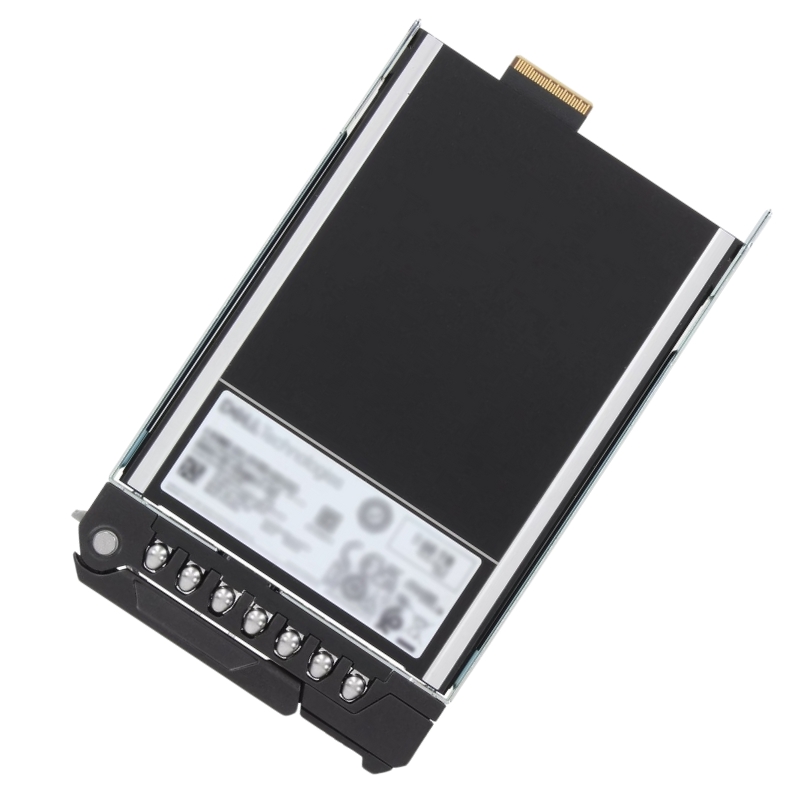
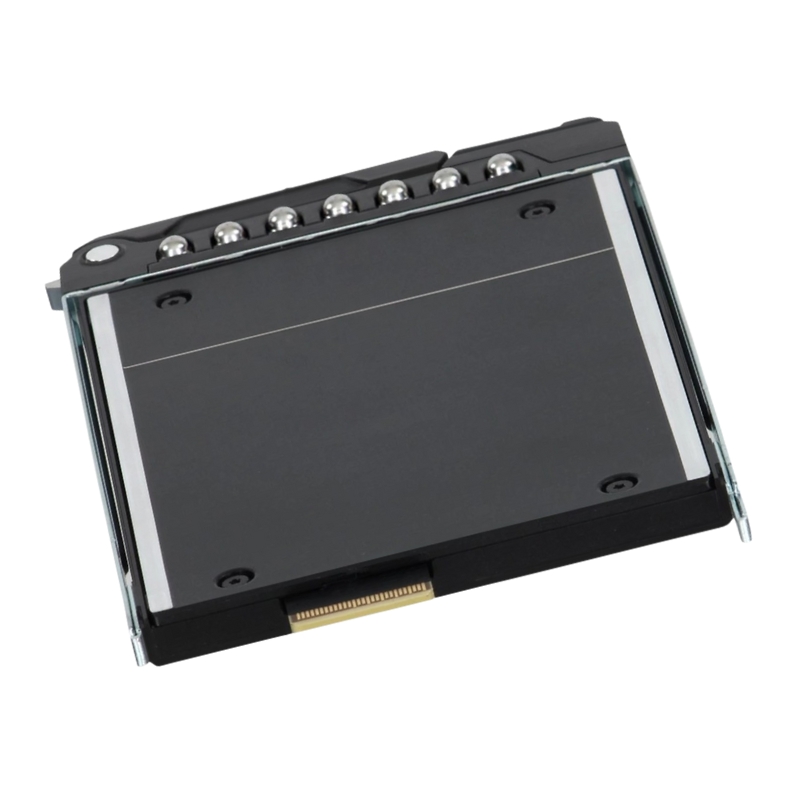
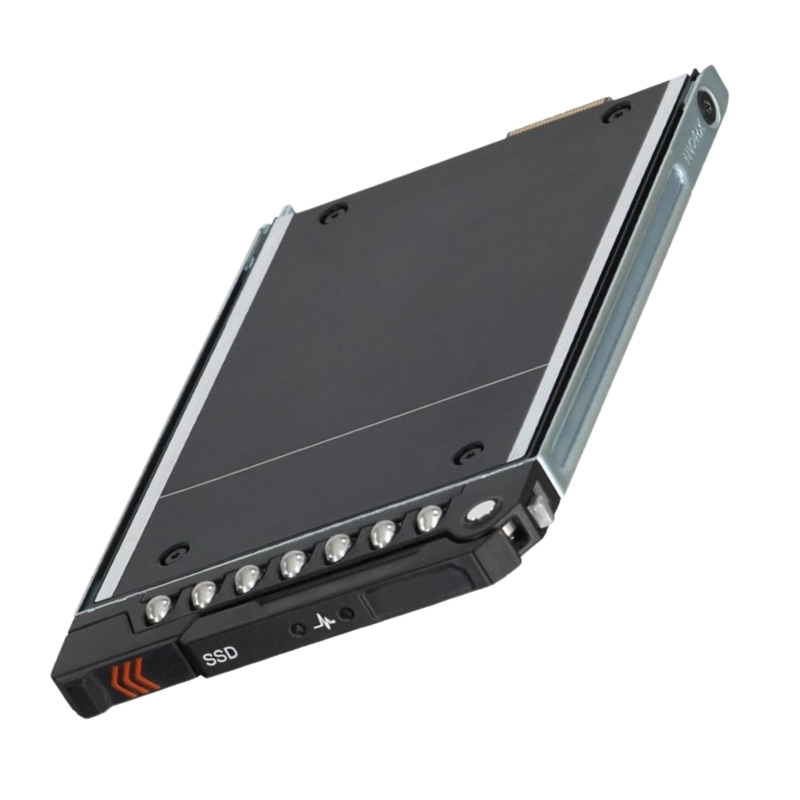
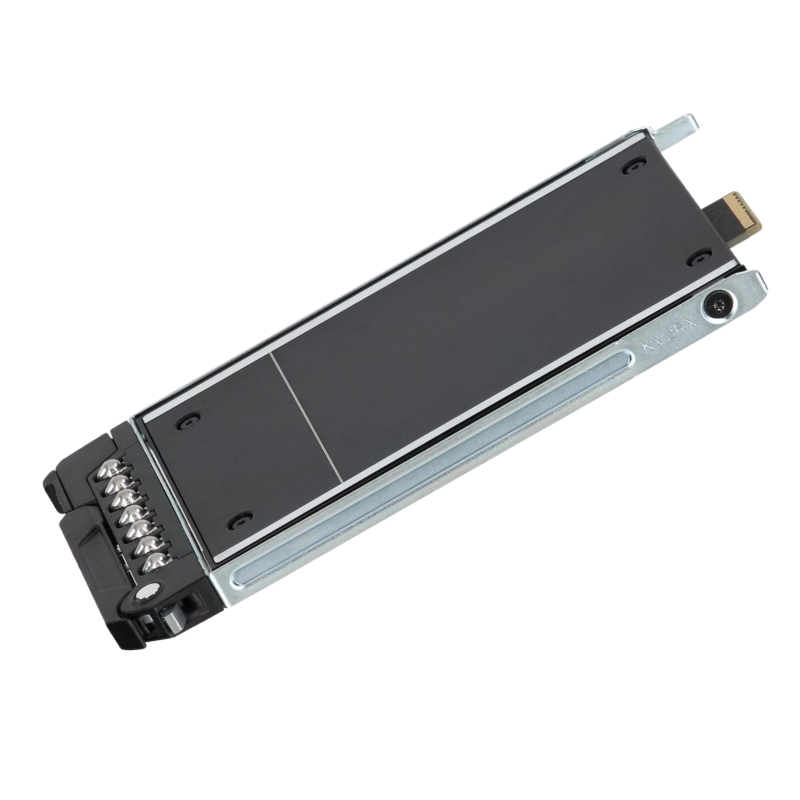
Dell 345-BKFR 1.92TB PCI-E Gen 5.0 X4 NVMe E3.S Read Intensive SFF TLC Enterprise Solid State Drive. New Sealed in Box (NIB) with 1 Year Warranty
The Dell 345-BKFR represents a significant leap forward in enterprise storage technology, specifically engineered to meet the demanding workloads of modern data centers. This 1.92TB PCIe Gen 5.0 NVMe SSD is a cornerstone component for Dell's 16th and 17th Generation PowerEdge servers, delivering unprecedented levels of bandwidth, IOPS, and latency reduction. Designed as a read-intensive solution, it is perfectly suited for applications where fast data retrieval is paramount, ensuring that your server infrastructure can handle the most challenging data-intensive tasks with ease and reliability. Its integration into the PowerEdge ecosystem guarantees optimized performance, seamless management, and enhanced data integrity, making it an indispensable asset for businesses seeking to future-proof their IT infrastructure.
The adoption of PCIe Gen 5.0 is the defining feature of the Dell 345-BKFR, setting a new benchmark for storage performance in the enterprise sector. This latest interface doubles the bandwidth per lane compared to the previous PCIe 4.0 generation, enabling this SSD to achieve staggering data transfer rates that were previously unattainable with standard SATA or SAS interfaces. The x4 lane configuration provides a massive pipeline for data to flow between the storage device and the server's CPU, drastically reducing bottlenecks and ensuring that storage is no longer the limiting factor in application performance. This is critical for high-performance computing (HPC), real-time analytics, and large-scale virtualization environments where every microsecond of latency counts.
The PCIe 5.0 x4 interface offers a theoretical bandwidth of up to 16 GT/s (GigaTransfers per second) per lane, resulting in a total bi-directional bandwidth that empowers the 345-BKFR to deliver exceptional sequential read and write speeds. This immense bandwidth ensures that data-intensive applications can access large datasets almost instantaneously, accelerating processing times and improving overall server responsiveness. The NVMe 2.0 protocol further enhances this by streamlining the command set and reducing protocol overhead, allowing for massively parallel data access that fully utilizes the parallel nature of modern NAND flash memory.
By significantly reducing the time the CPU spends waiting for data from storage, the Dell 345-BKFR directly contributes to higher overall server efficiency. This allows CPUs to process more transactions per second, effectively increasing the computational density of your PowerEdge server. For workloads such as database processing, scientific simulations, and financial modeling, this efficiency translates into faster results, improved user experiences, and a lower total cost of ownership by getting more work done with the same hardware investment.
In an enterprise environment, reliability is not just a feature; it is a requirement. The Dell 345-BKFR is built to the highest standards of durability and data integrity. Featuring TLC (Triple-Level Cell) NAND flash memory configured for read-intensive workloads, this SSD offers an optimal balance between cost, capacity, and endurance. It is engineered to handle constant data access cycles typical in server environments, ensuring consistent performance and a long operational lifespan. Advanced error correction codes (ECC), power-loss protection circuits, and end-to-end data path protection are integral to its design, safeguarding data from corruption during transmission and in the event of an unexpected power failure.
The "Read-Intensive" classification means the 345-BKFR is optimized for applications where the majority of operations are data reads, such as web serving, content delivery networks (CDN), data warehousing, and boot drives for virtual machines. While it possesses robust write capabilities, its NAND architecture and wear-leveling algorithms are tuned to provide maximum longevity under read-heavy conditions. This specialization allows it to offer a higher guaranteed endurance rating (often measured in Drive Writes Per Day or DWPD) for its specific use case than a consumer-grade SSD, ensuring it can withstand the rigors of 24/7 enterprise operation for its entire service life.
The Dell 345-BKFR utilizes the E3.S 2.5-inch form factor, a new standard designed specifically for next-generation enterprise servers and storage systems. This form factor is a key enabler for the high thermal and power demands of PCIe 5.0 devices. Its compact design allows for high-density storage configurations within the PowerEdge server chassis, maximizing storage capacity per rack unit. The inclusion of a dedicated tray ensures secure and proper mounting, which is critical for maintaining consistent electrical connections and effective heat dissipation. The tray is designed for tool-less or easy installation into the hot-swappable drive bays of Dell PowerEdge 16G and 17G servers, simplifying deployment and serviceability.
PCIe Gen 5.0 SSDs generate significant heat under load. The E3.S form factor is engineered with an increased surface area to improve heat dissipation. When combined with the sophisticated thermal management and cooling systems of Dell PowerEdge servers, the 345-BKFR can maintain its peak performance levels without resorting to performance-throttling that can plague lesser-designed drives. The server's iDRAC controller actively monitors drive temperatures and can adjust fan speeds accordingly to maintain an optimal operating environment, ensuring consistent speed and reliability even during extended periods of heavy use.
The 345-BKFR is not just a compatible component; it is a validated and certified part of the Dell PowerEdge 16th and 17th Generation ecosystem. This deep integration ensures that the SSD is recognized immediately by the server's BIOS and iDRAC controller. It is fully supported by Dell OpenManage systems management tools, allowing administrators to monitor drive health, performance metrics, and firmware status from a centralized console. This level of integration simplifies inventory management, proactive maintenance, and troubleshooting, reducing the operational overhead associated with managing server infrastructure.
Dell's 16th and 17th Generation PowerEdge servers feature advanced PCIe 5.0-capable slots and backplanes. The 345-BKFR is designed to leverage the full potential of this server architecture, including support for NVMe over Fabrics (NVMe-of) when used in conjunction with appropriate networking hardware. This enables the creation of high-performance, low-latency storage area networks. Furthermore, these servers often support BOSS (Boot Optimized Storage Solution) configurations, where a drive like the 345-BKFR can be deployed as a highly reliable and fast boot device, separating the host operating system and hypervisor from the data storage pool for increased security and performance.
The performance characteristics of the Dell 345-BKFR make it an ideal solution for a wide array of demanding enterprise applications. Its high sequential read speeds and low latency are transformative for specific workloads that form the backbone of modern business IT operations.
In big data environments, such as those powered by Hadoop or Spark, the ability to rapidly read and process massive datasets is critical. The 345-BKFR dramatically reduces the time required for data ingestion and query processing, enabling data scientists and analysts to derive insights faster. Its performance allows for more complex models and real-time analytics, giving businesses a competitive edge by accelerating decision-making processes.
For virtualized infrastructure and Virtual Desktop Infrastructure (VDI), storage I/O is often the primary bottleneck. Deploying the 345-BKFR in a hyper-converged or traditional SAN environment allows for a higher density of virtual machines or virtual desktops per host. The low latency ensures a snappy, responsive user experience for VDI users, even during boot storms or login events when I/O demands are at their peak. For server virtualization, it enables faster VM provisioning, migration, and snapshot operations.
Beyond raw performance, the Dell 345-BKFR incorporates a suite of advanced features designed to enhance data security, integrity, and longevity. These enterprise-centric features are what distinguish it from commercial-grade storage solutions.
This technology protects data from the moment it is sent to the drive until it is retrieved. It uses a system of cyclic redundancy check (CRC) codes to verify the integrity of the data as it moves through the host interface, the drive's internal cache (DRAM), and the NAND flash memory. If any corruption is detected, the drive can automatically correct the error or request the data be re-sent, preventing silent data corruption and ensuring data remains accurate.
Enterprise SSDs are vulnerable to data loss or corruption in the event of a sudden power failure, especially when data is in the volatile DRAM cache waiting to be written to NAND. The 345-BKFR is equipped with robust Power Loss Protection circuits that include onboard capacitors. In a power loss scenario, these capacitors provide enough backup energy to flush all data held in the cache to the non-volatile NAND flash, ensuring data persistence and transactional consistency.
For data security and regulatory compliance, the drive supports secure erase commands. This allows administrators to quickly and securely wipe all data from the drive, rendering it unrecoverable. This is essential when decommissioning servers, repurposing drives, or returning hardware at the end of a lease cycle, protecting sensitive business information from falling into the wrong hands.
The following detailed specifications outline the key technical attributes of the Dell 345-BKFR 1.92TB PCIe Gen 5.0 NVMe SSD, providing a comprehensive overview of its capabilities.
The drive offers a formatted capacity of 1.92 terabytes, providing ample space for operating systems, applications, and active datasets. Its performance profile is characterized by exceptionally high sequential read speeds, leveraging the PCIe 5.0 interface, and strong random read IOPS, making it a powerhouse for read-centric operations. While write speeds are substantial, they are typically specified to be lower than read speeds, in line with its read-intensive design philosophy. Specific benchmark figures are available in the official Dell product datasheet and can vary based on server configuration and workload.
The drive conforms to the E3.S 2.5-inch form factor with a specific height profile to fit within PowerEdge server drive bays. It operates within a standard enterprise temperature range and is designed to function reliably in the controlled environment of a data center. Power consumption is a key consideration, and the drive is engineered for efficiency, with active and idle power draw figures that align with the overall power and thermal design of Dell's server platforms.
At the heart of the 345-BKFR is enterprise-grade TLC (3-bit-per-cell) NAND flash memory, managed by a high-performance, multi-channel ASIC controller. This controller is responsible for all critical functions, including wear leveling, bad block management, garbage collection, and error correction. The sophistication of this controller is a major factor in the drive's consistent performance, high endurance, and data protection capabilities.


 Contact Us
 Information
 Catalog
 Solid State Drives (SSD)
 Network Switches
 Hard Disk Drives
 HBA & Controllers
 PC & Servers
 PC & Server Memory
 CPU & Processors
 Network Routers
 Power Supplies
 Tape Drives & Libraries
 Network Devices
 Computer & Network Cables