(7% discount is applied at checkout)
Cart is empty
Your go-to destination for cutting-edge server products
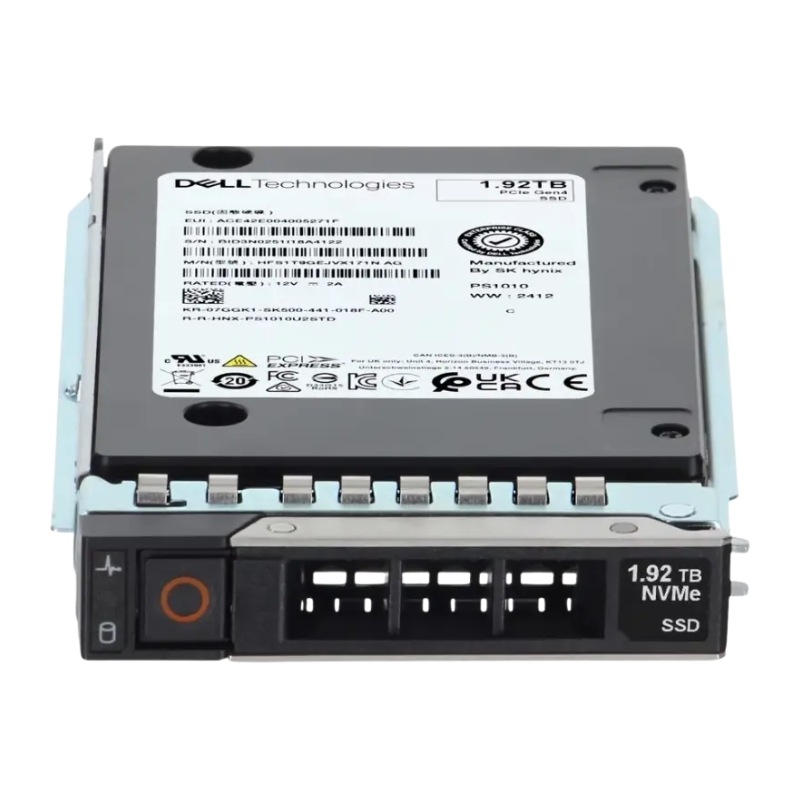


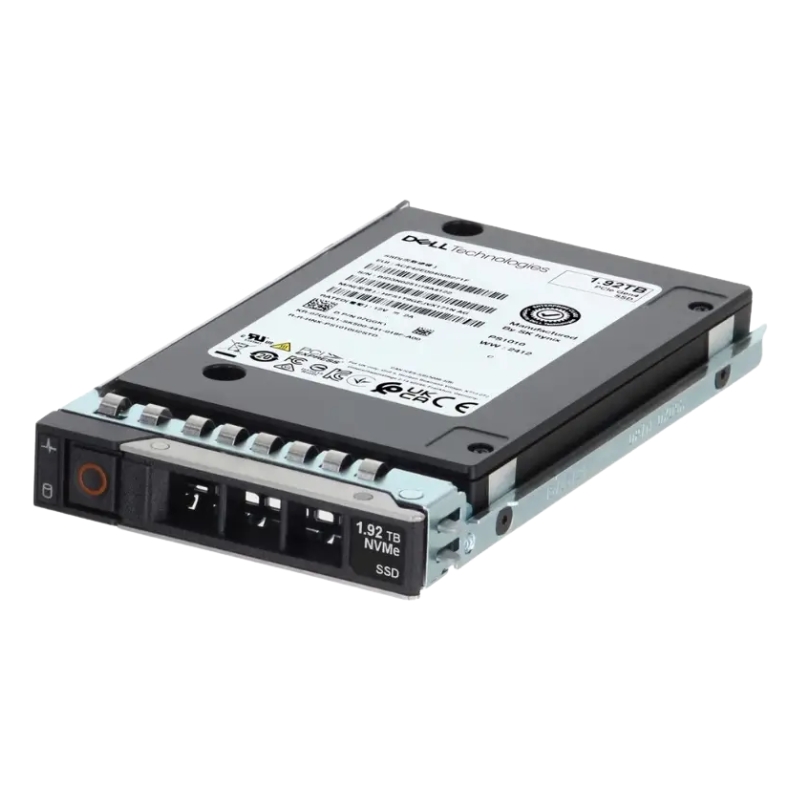
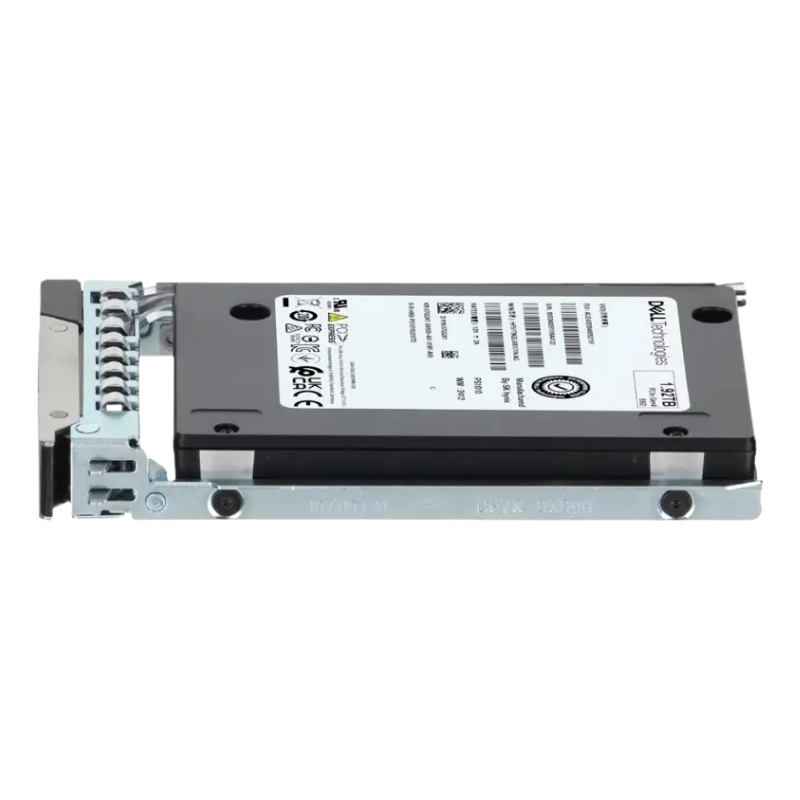
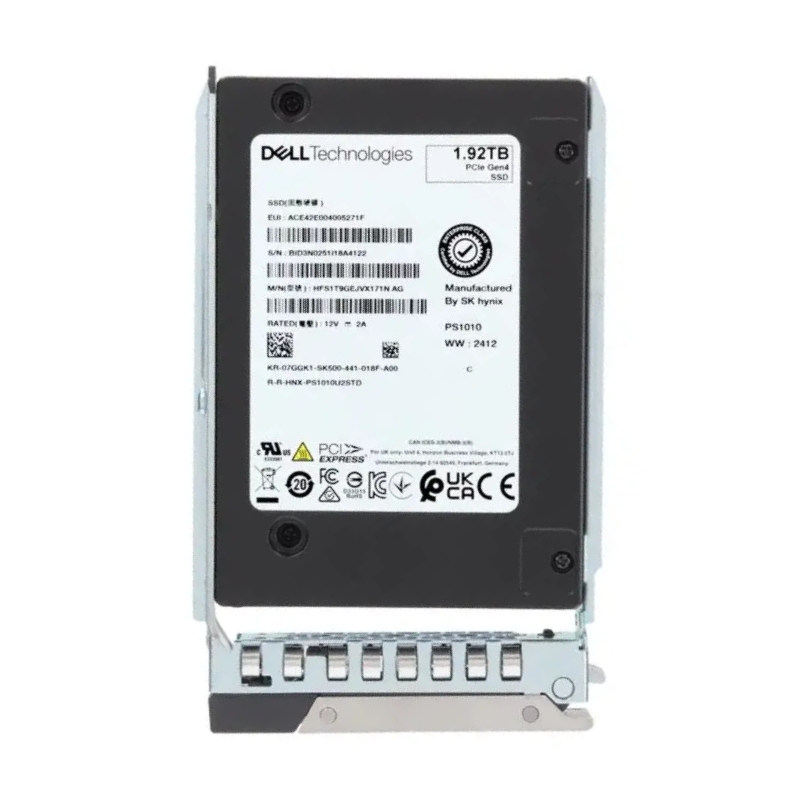
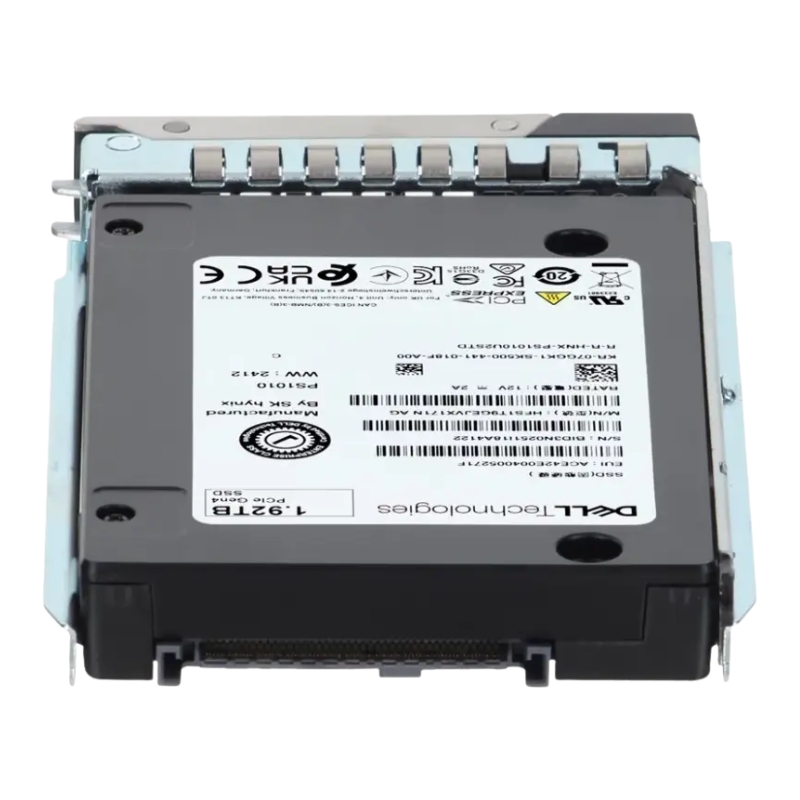
Dell 345-BKPK 1.92TB Gen4 NVMe U.2 2.5Inch PCI-E Read Intensive Solid State Drive for Server. New Sealed in Box (NIB) with 1 year Warranty
The Dell 345-BKPK is an enterprise-grade solid-state drive (SSD) engineered for high-read environments and compatible with Dell PowerEdge 14G–17G servers. This 1.92 TB NVMe drive uses a PCIe 4.0 x4 interface and a U.2 2.5-inch (15mm) small form factor, delivering exceptional throughput, low latency and robust data protection for mission-critical workloads.
Guaranteed to fit and function in a wide range of Dell PowerEdge systems (14G–17G generations). Below is a list of supported server models and compatible chassis variants.
The Dell 345-BKPK represents the pinnacle of enterprise storage technology, specifically engineered for demanding server environments where reliability, speed, and endurance are non-negotiable. This 1.92TB Gen4 NVMe U.2 solid state drive delivers exceptional performance characteristics that far surpass traditional SATA or SAS interfaces, making it ideal for read-intensive applications that require rapid data access and minimal latency.
Leveraging the cutting-edge PCI Express 4.0 interface, the Dell 345-BKPK achieves unprecedented data transfer rates that effectively double the bandwidth available with previous-generation PCIe 3.0 solutions. This technological advancement enables the drive to support the most demanding enterprise workloads while maintaining consistent performance under sustained operations.
With PCIe Gen4 x4 lanes, the drive provides maximum theoretical bandwidth of approximately 8 GB/s, significantly reducing data transfer bottlenecks in high-performance computing environments, data analytics applications, and virtualized infrastructure.
The 1.92TB capacity point represents an optimal balance between storage density and performance characteristics. This specific capacity is strategically designed to accommodate enterprise workloads while maintaining exceptional endurance ratings and cost-effectiveness for read-intensive applications.
The standardized 2.5-inch U.2 form factor ensures broad compatibility with existing server infrastructure, including Dell PowerEdge servers and other enterprise systems designed to support NVMe drives. This physical compatibility eliminates the need for specialized chassis or adapters, simplifying integration and deployment.
The drive utilizes the Non-Volatile Memory Express (NVMe) protocol, specifically designed for flash-based storage to reduce protocol overhead and maximize performance. Unlike legacy storage protocols that were adapted from mechanical storage technologies, NVMe was built from the ground up to leverage the inherent performance characteristics of NAND flash memory.
NVMe supports up to 64,000 command queues with 64,000 commands per queue, dramatically reducing I/O latency and CPU overhead compared to legacy protocols like AHCI, which supports only a single queue with 32 commands. This architecture is particularly beneficial in multi-core server environments where parallel processing is essential.
The Dell 345-BKPK is specifically classified as a Read-Intensive drive, indicating its optimized design for applications where read operations significantly outnumber write operations. This classification directly influences the drive's endurance rating, typically measured in Drive Writes Per Day (DWPD) or Total Bytes Written (TBW).
With a focus on read-intensive workloads, this drive offers balanced endurance characteristics that provide excellent value for applications such as web serving, content delivery, database query operations, and virtual desktop infrastructure where read operations typically comprise 70-80% of total I/O operations.
The drive delivers exceptional random read performance, typically measured in Input/Output Operations Per Second (IOPS), which is critical for applications requiring rapid access to large datasets. Sequential read performance reaches maximum interface speeds, enabling fast data streaming and bulk data processing operations.
Advanced controller algorithms and high-quality NAND flash ensure consistently low read latency, which is crucial for real-time applications, database transactions, and user-facing services where response time directly impacts user experience and application performance.
Enterprise-grade power loss protection circuits ensure data integrity during unexpected power interruptions. This feature includes both immediate power loss protection for data in transit and enhanced protection mechanisms that safeguard data already written to the NAND flash memory.
The drive incorporates strategically placed capacitors that provide sufficient temporary power to complete ongoing write operations and flush volatile cache contents to non-volatile storage during power failure events, preventing data corruption and maintaining transactional consistency.
Sophisticated Error Correction Code (ECC) algorithms correct bit errors that naturally occur during NAND flash operation. The drive employs multi-level ECC protection, including Low-Density Parity Check (LDPC) codes, to ensure data integrity throughout the drive's operational lifespan.
Comprehensive end-to-end data protection mechanisms verify data integrity from the host interface through the controller to the NAND flash memory and back, detecting and correcting errors that may occur during internal data transfers within the drive architecture.
Advanced wear-leveling algorithms distribute write operations evenly across all available NAND flash blocks, preventing premature wear on frequently written blocks and extending the drive's usable lifespan. Dynamic and static wear leveling work in concert to optimize endurance while maintaining performance consistency.
Sophisticated background operations, including garbage collection and read disturb management, operate transparently during drive idle periods to maintain optimal performance characteristics without impacting foreground I/O operations during active use.
For database management systems including SQL Server, Oracle Database, MySQL, and PostgreSQL, the Dell 345-BKPK provides the low-latency random read performance essential for efficient query processing, index operations, and transaction processing where read operations dominate the I/O profile.
Both Online Transaction Processing (OLTP) and Online Analytical Processing (OLAP) benefit from the drive's performance characteristics, with OLTP benefiting from low-latency random I/O and OLAP leveraging high-speed sequential reads for large-scale data analysis operations.
In virtualized environments including VMware vSphere, Microsoft Hyper-V, and Kubernetes clusters, the drive delivers the consistent I/O performance necessary to support multiple virtual machines concurrently while maintaining quality of service across the infrastructure.
For VDI deployments, particularly non-persistent desktop pools where read operations dominate during boot storms and application launches, the drive's read-optimized architecture ensures responsive user experiences even during peak utilization periods.
The high sequential read performance and exceptional random read capabilities make the Dell 345-BKPK ideal for content delivery applications, web serving, and media streaming where rapid access to static content, databases, and application files is critical to performance.
When deployed as a caching tier or performance tier in tiered storage architectures, the drive accelerates access to frequently accessed data while maintaining the endurance characteristics necessary for write operations involved in cache management.
The drive delivers exceptional sequential read performance that approaches the theoretical maximum of the PCIe Gen4 interface, enabling rapid data transfer for large file operations, backup restoration, data migration, and streaming media applications.
With sequential read speeds typically exceeding 6,000 MB/s and sequential write speeds optimized for the read-intensive workload profile, the drive balances performance with endurance to deliver optimal value for targeted applications.
Random read performance, measured in IOPS, demonstrates the drive's capability to handle numerous concurrent small I/O operations typical in database transactions, virtual machine operations, and file serving scenarios.
Performance scales effectively with increasing queue depths, demonstrating the efficiency of the NVMe protocol and controller architecture in managing multiple concurrent I/O requests, which is essential for enterprise workloads where multiple applications and users access storage simultaneously.
Consistent low latency, even under varying workload conditions, ensures predictable application performance. Advanced processing algorithms and quality NAND flash components maintain tight latency distributions across the drive's capacity range and throughout its operational lifespan.
The drive maintains exceptional QoS characteristics, with consistently low tail latencies that ensure the vast majority of I/O operations complete within predictable timeframes, which is critical for performance-sensitive applications and service level agreements.
Enterprise workloads can generate significant heat during sustained operations. The Dell 345-BKPK incorporates advanced thermal monitoring and throttling mechanisms that maintain optimal operating temperatures without compromising data integrity.
With specified operating temperatures appropriate for data center environments, the drive maintains consistent performance across expected environmental conditions while providing adequate margin for unusual operating scenarios.
Multiple power states, including active, idle, and sleep states, optimize power consumption based on workload demands. This power efficiency translates to reduced operating costs in large-scale deployments while maintaining immediate responsiveness when I/O requests occur.
Exceptional performance per watt characteristics make the drive suitable for environmentally conscious deployments where computational efficiency and power utilization are key considerations in total cost of ownership calculations.
Comprehensive sanitization options, including cryptographic erase and block erase functionality, ensure data security at drive end-of-life or during repurposing. These methods provide efficient, secure data destruction without physical destruction of the storage media.
When enabled, cryptographic erase instantly renders all stored data inaccessible by securely deleting the encryption key, providing immediate sanitization that meets regulatory requirements for data disposal.
Compliance with Trusted Computing Group (TCG) Enterprise Storage specifications provides standardized security management interfaces and capabilities, enabling integration with enterprise security frameworks and compliance initiatives.
The drive supports security protocols appropriate for enterprise environments, including authentication mechanisms that prevent unauthorized access to stored data, both in active operation and during transportation or storage outside the server chassis.
While M.2 form factor NVMe drives offer similar performance characteristics, the U.2 form factor provides enhanced thermal management capabilities, broader hot-swap compatibility, and more robust physical construction suitable for 24/7 enterprise operation.
Unlike consumer-grade NVMe solutions, the Dell 345-BKPK incorporates enterprise-specific features including power loss protection, enhanced endurance, comprehensive monitoring capabilities, and validated firmware specifically tuned for continuous operation.
The NVMe protocol provides significant performance advantages over SAS interfaces, particularly in random I/O performance and latency characteristics. The architectural efficiency of NVMe reduces protocol overhead and enables higher queue depths, translating to better performance in mixed workloads.
NVMe reduces command processing latency by eliminating the SCSI command translation layer required for SAS operation, resulting in more direct communication between the host system and NAND flash media, which is particularly beneficial for low-latency applications.


 Contact Us
 Information
 Catalog
 Solid State Drives (SSD)
 Network Switches
 Hard Disk Drives
 HBA & Controllers
 PC & Servers
 PC & Server Memory
 CPU & Processors
 Network Routers
 Power Supplies
 Tape Drives & Libraries
 Network Devices
 Computer & Network Cables