(7% discount is applied at checkout)
Cart is empty
Your go-to destination for cutting-edge server products
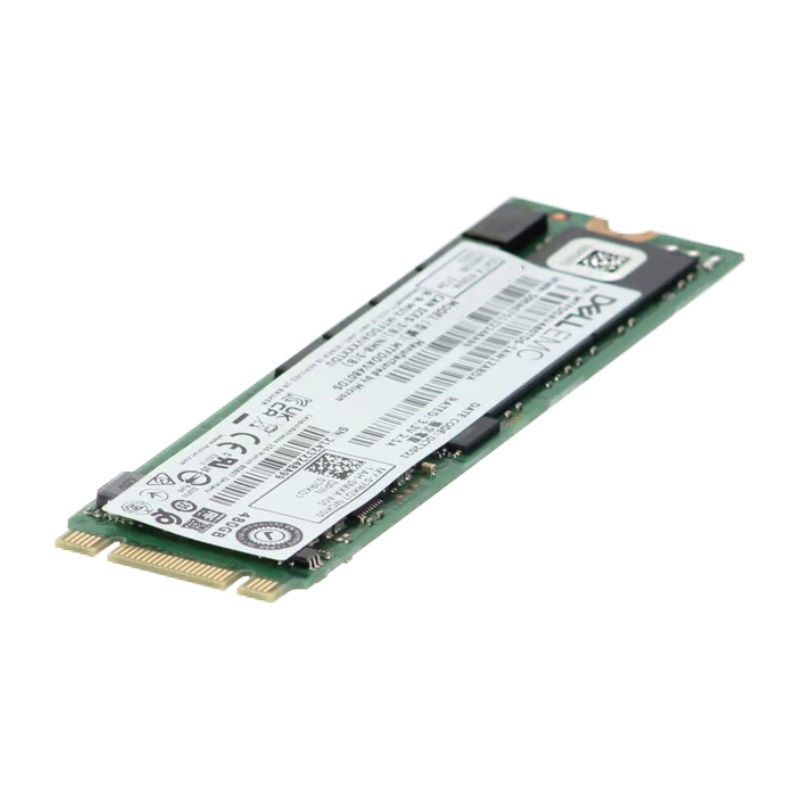


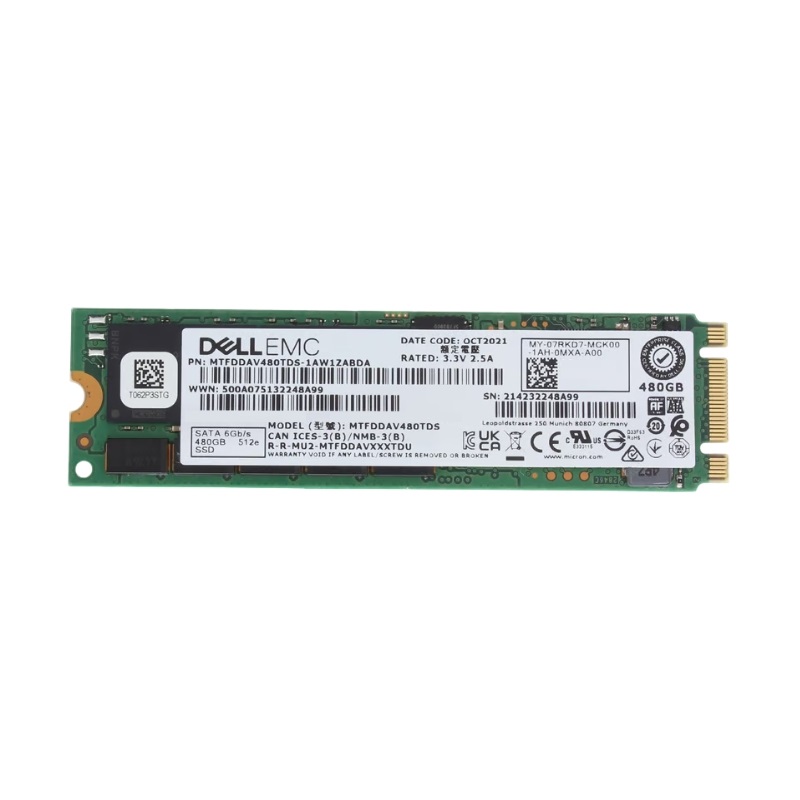
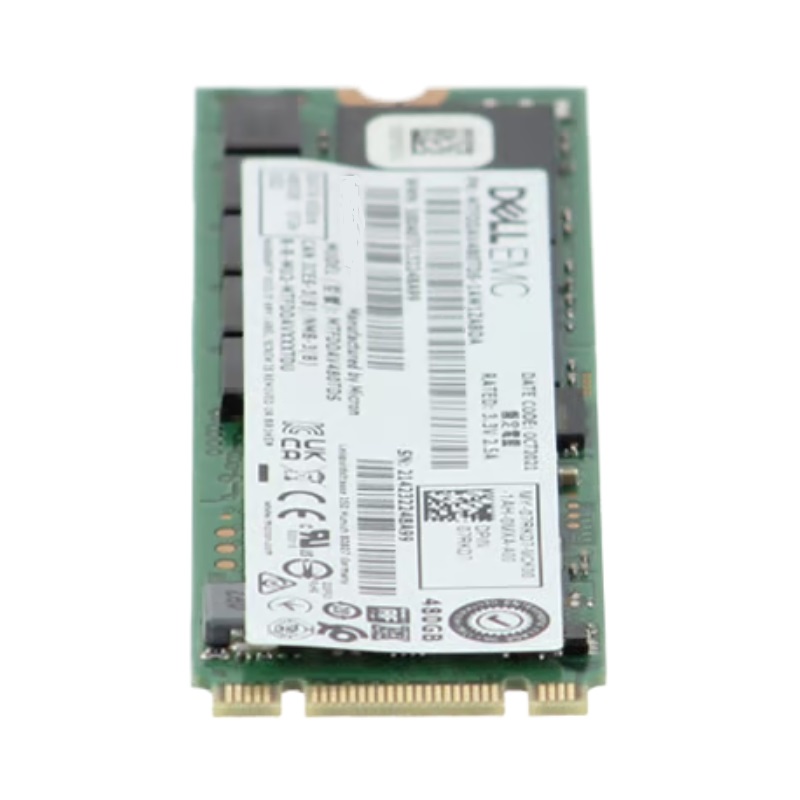
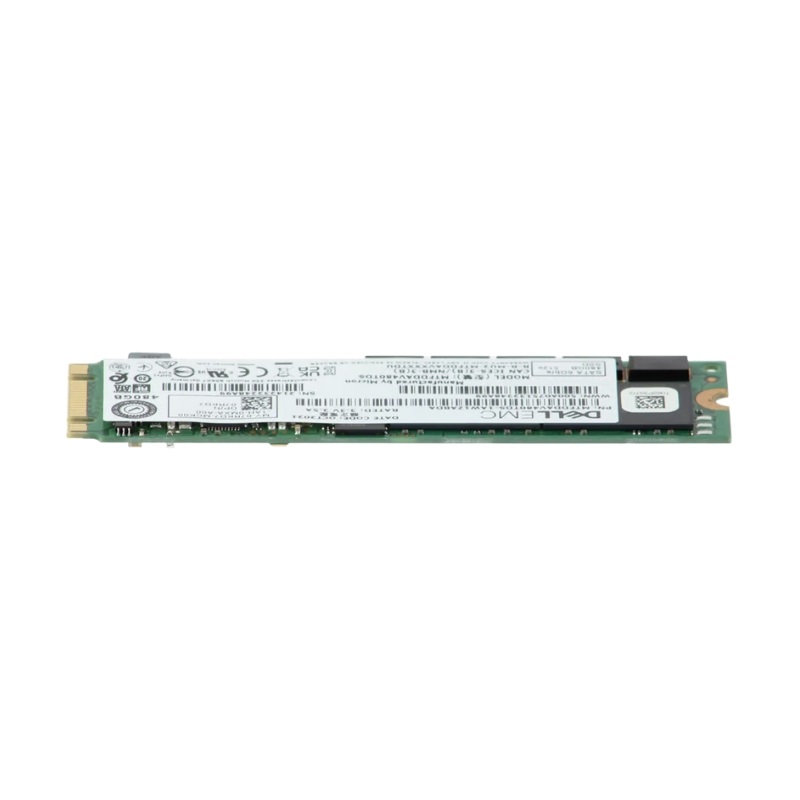
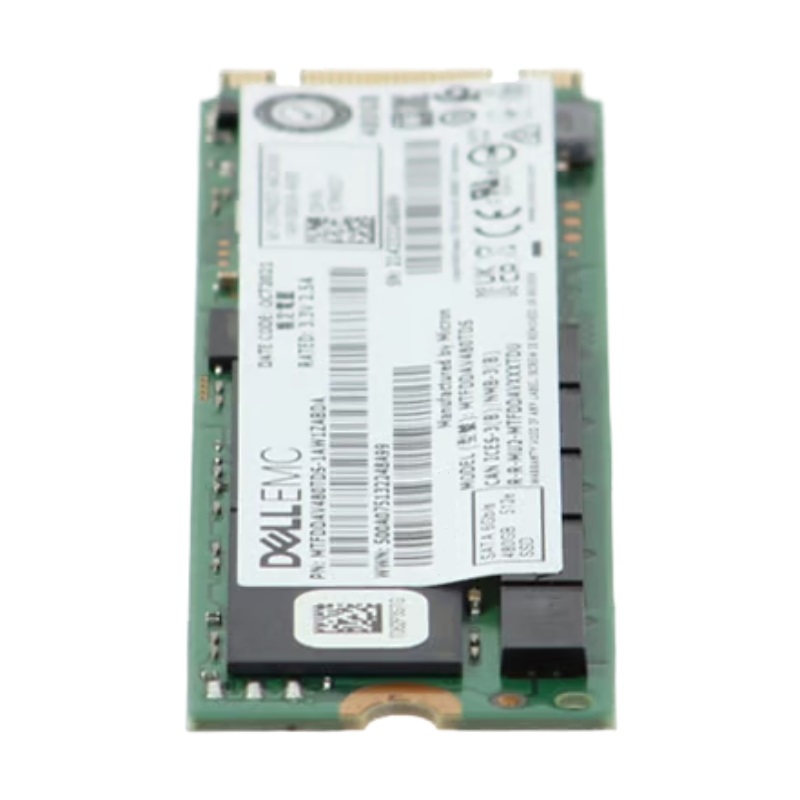
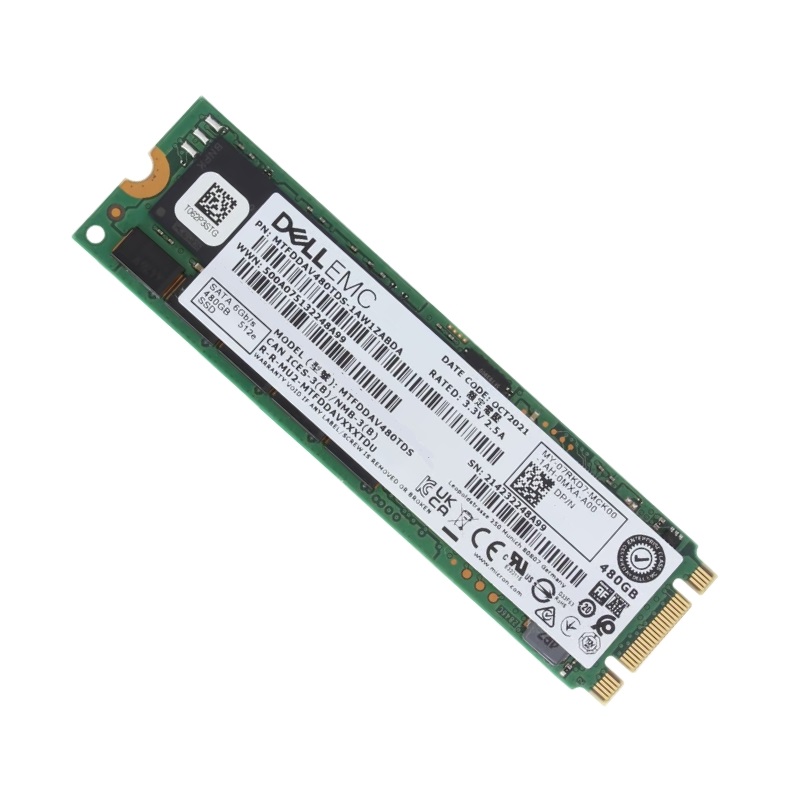
Dell 345-BKWQ 480GB SATA 6GBPS M.2 2280 TLC Read-intensive For Boss Card Enterprise Class Triple Level Cell 3d Nand Solid State Drive. Excellent Refurbished with 1 year Replacement Warranty
The Dell 345-BKWQ 480GB SATA 6Gbps M.2 2280 TLC read‑intensive solid state drive sits in a focused enterprise category designed for predictable performance, high data integrity, and reliable operation in mission‑critical servers that prioritize read workloads. It leverages the SATA III interface for universal compatibility across server backplanes while maintaining strong sequential throughput appropriate for boot, operating system, application catalogs, and frequently accessed datasets. Within Dell’s ecosystem of server storage upgrades, the 480GB capacity tier balances footprint and endurance for organizations standardizing on mid‑range storage modules, ensuring ample headroom for virtualization hosts, database services tuned for read‑heavy operations, and monitoring systems that demand quick retrieval rather than sustained write bursts. The model’s read‑intensive positioning aligns with enterprise procurement patterns where lifecycle stability, firmware qualification, and platform support are paramount, especially in environments adopting Dell PowerEdge systems and modular components such as BOSS (Boot Optimized Storage Solution) cards for clean separation of boot volumes from data arrays.
Classified as an enterprise class Triple Level Cell (TLC) drive built on 3D NAND, this SSD targets a category where flash efficiency and density meet stringent reliability expectations. TLC’s three‑bit‑per‑cell structure enables cost‑effective scaling while enterprise firmware and controller strategies mitigate program/erase stress through wear leveling, error correction, and workload‑appropriate provisioning. For read‑intensive usage, the firmware profile privileges consistent read latency, fast boot times, and sustained sequential read speeds that support service start‑up and cache priming, making it an optimal pairing for BOSS cards that hold operating systems or hypervisors apart from primary data stores. The M.2 2280 form factor provides a compact footprint for server architectures that integrate SSDs on dedicated mezzanine or controller cards, avoiding drive bay contention and simplifying maintenance windows. This category emphasizes predictable behavior under concurrent access, authenticated firmware paths, and certified compatibility with Dell server generations, creating a standardized upgrade path for IT teams consolidating on a known‑good storage baseline.
The SATA 6Gbps interface remains critical for enterprise SSDs in this category due to its broad support, mature drivers, and deterministic performance across a wide range of backplanes and controllers. Even as PCIe NVMe options proliferate for ultra‑high‑performance tiers, SATA read‑intensive M.2 modules offer a compelling balance of speed, thermal characteristics, and compatibility, making them suitable for boot workloads and read‑heavy service partitions. Organizations benefit from using a module like Dell 345‑BKWQ to reduce deploy complexity while maintaining uniformity across fleets, particularly when standardized images, orchestration tools, and disaster recovery processes rely on consistent storage behavior. The category’s emphasis on enterprise TLC and 3D NAND construction, validated firmware, and controlled supply chains strengthens resilience against unexpected performance regression, ensuring that boot and application read paths remain stable regardless of deployment scale.
The Dell 345‑BKWQ SSD is aligned with BOSS card usage in Dell PowerEdge platforms, giving administrators a clean, supported path to host boot volumes separately from data arrays. BOSS cards are designed to provide dedicated slots for M.2 modules and handle OS storage optimized for reliability and lifecycle management. This SSD’s M.2 2280 form factor and B+M key compatibility fit BOSS architectures and are supported across the 14G and 15G PowerEdge server generations, streamlining adoption for organizations that rotate hardware on predictable refresh cadences. Such support ensures that mixed fleets can standardize on the same boot media profile even as they migrate from one generation to the next, minimizing variance in performance and maintenance procedures.
Compatibility is not just physical fit; it also encompasses firmware validation and support mechanisms that ensure smooth deployments. Enterprise‑qualified SSDs in Dell’s catalog undergo testing for interoperability across controllers, backplanes, and thermal envelopes in typical data center conditions. Administrators benefit from documented behaviors and service processes, including predictable LED status patterns, lifecycle messaging, and known‑good firmware versions that align with server management utilities. When paired with BOSS cards, the separation of boot partitions onto this class of SSD simplifies fault isolation because OS issues can be addressed independently of application data arrays, often reducing time to resolution during incident response.
Beyond physical and firmware compatibility, this category’s consistency with enterprise design principles allows teams to prebuild images and provisioning workflows that expect a specific capacity, performance band, and interface profile. Whether employing bare‑metal servers for container orchestration, virtualized clusters, or specialized database gateways, standardizing on 480GB read‑intensive M.2 SATA modules for boot and OS ensures stable baselines. Automation pipelines can assume deterministic behavior around disk discovery, throughput, and boot time, reducing variability across nodes and simplifying compliance, auditing, and patch management processes. Over time, this simplifies inventory management and reduces the cognitive load on operations teams responsible for performance across large server populations.
Enterprise TLC SSDs in the read‑intensive category emphasize long‑term reliability under workloads dominated by reads and modest, controlled writes. They employ error correction algorithms, wear leveling, and over‑provisioning strategies to maintain health across the service life, ensuring that sectors remain readable and latencies stay consistent as the device ages. Read‑intensive labeling signals that while the hardware is robust, it is optimally suited for usage patterns where write cycles do not saturate the device’s endurance profile; this matches boot partitions, static application frameworks, and configuration repositories. Reliability in this category is reinforced by strict firmware validation, qualification with server cards like BOSS, and unified support paths within Dell’s ecosystem, making it dependable for production use.
The choice of 3D NAND TLC allows for higher density and cost efficiency relative to SLC or MLC without sacrificing the necessary integrity for enterprise boot roles. 3D stacking enhances cell isolation and mitigates interference, while enterprise controllers and firmware protect data through scrubbing routines and comprehensive error detection. Moreover, read‑centric workloads reduce write amplification and lower thermal stress, further stabilizing performance over time. For IT teams, these attributes translate into fewer interventions, predictable performance curves, and a straightforward maintenance posture for OS volumes and read‑heavy application components.
Data integrity is reinforced by enterprise qualification and controlled supply chain management, which reduce the risk of inconsistent components or firmware drifts. Drives like the Dell 345‑BKWQ benefit from provenance and lifecycle documentation that helps operations teams forecast replacements and maintain SLA commitments. BOSS integration underscores the intent to preserve boot reliability even during storage subsystem failures elsewhere in the server. Ultimately, this category is adopted to keep the platform’s control plane—operating systems, hypervisors, base agents—running reliably irrespective of fluctuations in the data plane, a principle that repeatedly improves resilience in real‑world incidents.
The SATA 6Gbps interface offers broad compatibility and mature driver support, making it an ideal choice for enterprise boot media. Its defined bandwidth aligns naturally with read‑intensive workloads that require steady, reliable throughput rather than peak performance spikes. In mixed hardware environments, SATA’s stability reduces surprises during firmware updates or OS changes, as drivers are well‑tested and behaviors are well‑understood. Dell’s enterprise accessory lines continue to feature SATA SSDs as core offerings, highlighting the interface’s enduring relevance in control plane storage design.
Another advantage lies in thermal and power considerations. SATA M.2 drives often operate within comfortable thermal envelopes, especially in dense chassis where airflow is orchestrated carefully and thermal headroom can be constrained. This characteristic supports deployment on BOSS cards, where consistent thermal behavior is vital for maintaining system readiness under repeated read cycles. The interface’s predictability also benefits tooling and health monitoring, as standard SMART attributes and counters are readily interpreted by existing systems across fleets.
Finally, the ubiquity of SATA 6Gbps simplifies procurement, staging, and replacement, as components slot into well‑defined categories without exotic requirements. This keeps operational processes straightforward and reduces the learning curve for technicians and administrators. The resulting simplicity and consistency align with enterprise goals for minimizing risk and maximizing uptime, which is precisely why the category embodied by the Dell 345‑BKWQ retains a strong foothold despite the rise of NVMe in performance‑critical data paths.


 Contact Us
 Information
 Catalog
 Solid State Drives (SSD)
 Network Switches
 Hard Disk Drives
 HBA & Controllers
 PC & Servers
 PC & Server Memory
 CPU & Processors
 Network Routers
 Power Supplies
 Tape Drives & Libraries
 Network Devices
 Computer & Network Cables