(7% discount is applied at checkout)
Cart is empty
Your go-to destination for cutting-edge server products
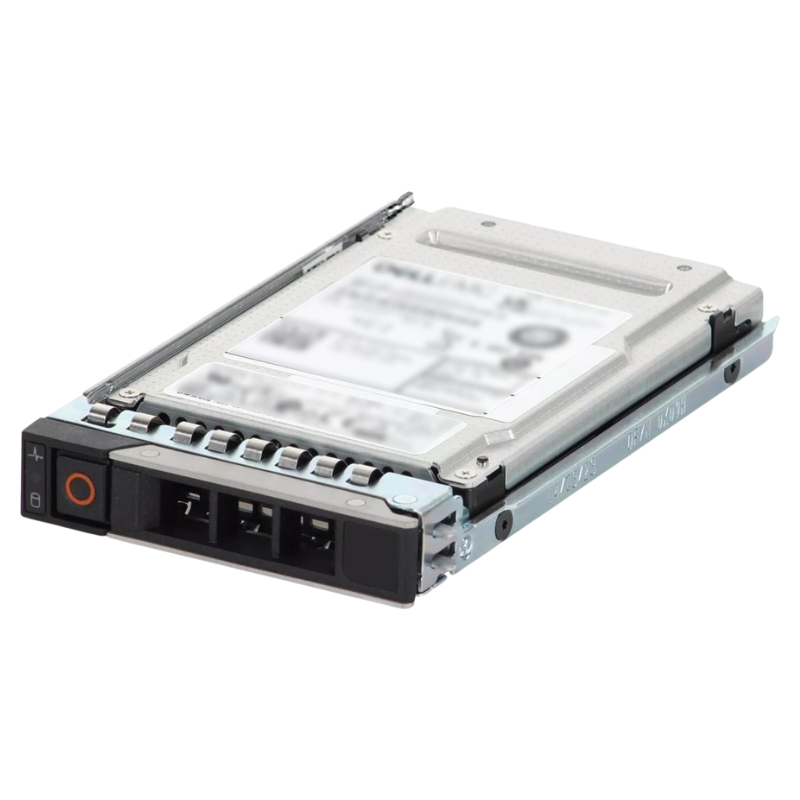


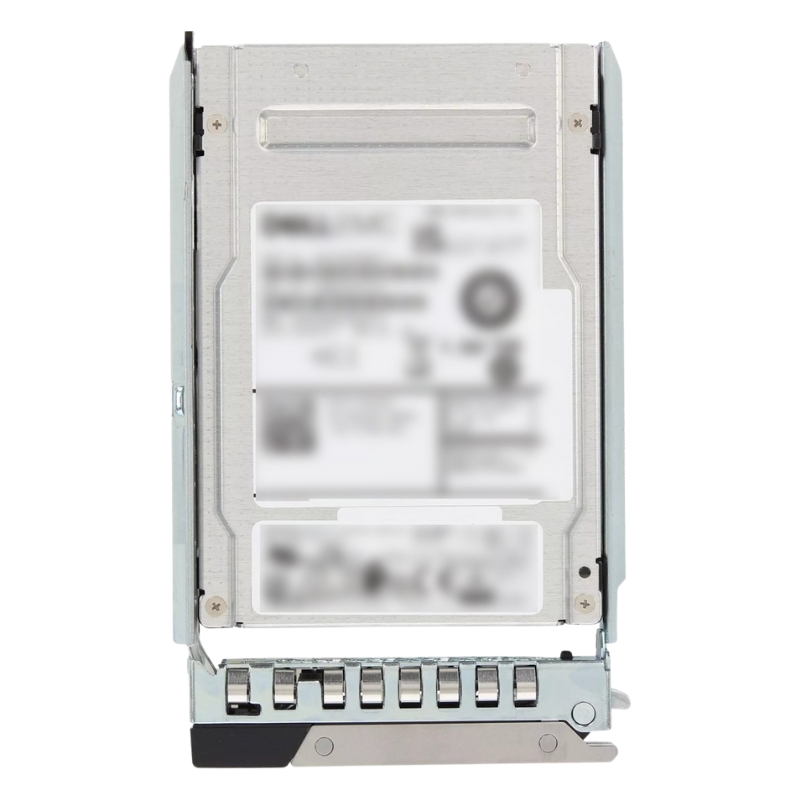
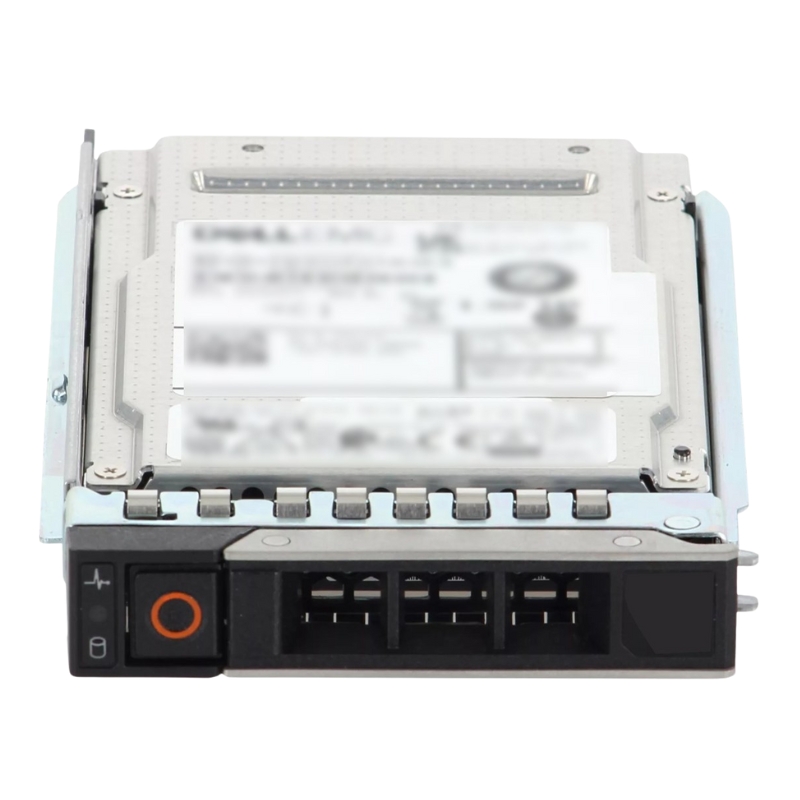
Dell 345-BKYQ 15.36TB SAS-24Gbps 1DWPD Read-Intensive 2.5Inch Hot-Plug Solid State Drive for Server. New Sealed in Box (NIB) with 1 year Warranty
The Dell 345-BKYQ 15.36TB SAS Solid State Drive is a high-capacity, enterprise-grade storage solution designed for modern servers that demand speed, reliability, and endurance. Built for read-intensive workloads, this hot-plug SSD delivers exceptional performance over a next-generation SAS 24Gbps interface, making it ideal for data centers, virtualization, databases, and cloud environments.
The alphanumeric designation "Dell 345-BKYQ" is more than a part number; it is a blueprint of capability. Each segment of its specification reveals a deliberate design choice for enterprise deployment.
Offering a massive 15.36 terabytes of formatted capacity, this drive addresses the exponential growth of data in enterprises. This high-density storage allows organizations to consolidate workloads, reduce the physical footprint of their server storage, and lower total cost of ownership (TCO) by minimizing the number of drives required per system. It is an ideal solution for replacing entire arrays of smaller-capacity drives, simplifying storage management and improving data locality for applications.
The achievement of this capacity in a standard 2.5-inch (15mm) form factor is made possible through advanced 3D TLC (Triple-Level Cell) NAND flash memory. Unlike planar NAND, 3D NAND stacks memory cells vertically, achieving greater density, improved performance, and enhanced endurance. This intelligent NAND management is crucial for sustaining the drive's read-intensive workload profile.
The SAS (Serial Attached SCSI) interface remains the gold standard for mission-critical server storage due to its robustness, full-duplex capability, and advanced error recovery. The "24Gbps" specification indicates this drive utilizes the latest SAS-4 standard (also known as 24G SAS), doubling the bandwidth of the previous 12Gbps generation.
This interface provides a full-duplex data path, meaning it can read and write data simultaneously at up to 24 gigabits per second per port. With dual-port functionality—a key feature of SAS—the drive ensures multipath I/O and failover capability, which is non-negotiable for high-availability server configurations. The increased bandwidth dramatically reduces latency for high queue-depth operations, saturating storage controllers and enabling faster data processing for I/O-intensive applications.
Endurance, measured in DWPD, defines how much data can be written to the drive over its warranty period per day. A 1DWPD rating means you can write the drive's full capacity (15.36TB) once every day for five years (or the stated warranty period) while maintaining data integrity.
The "Read-Intensive" classification is pivotal. It signifies the drive is optimized for workloads where read operations (data retrieval) constitute 70-80% or more of the total I/O. This allows Dell and its NAND partners to tune the drive's controller, over-provisioning, and wear-leveling algorithms for maximum read performance and cost-effectiveness, distinguishing it from Mixed-Use or Write-Intensive drives designed for more punishing write cycles.
The Dell 345-BKYQ is not a general-purpose drive; it is a specialized tool engineered for specific, demanding server environments. Its value is fully realized when deployed in alignment with its read-centric design strengths.
While the fastest data resides in RAM, the working datasets for in-memory databases often exceed available memory. This SSD acts as a colossal, high-speed spillover tier, ensuring that swapping data to and from storage does not become a performance bottleneck, thus maintaining the responsive nature of the in-memory system.
VDI environments present a unique challenge: during peak hours, hundreds or thousands of virtual desktops may boot simultaneously or launch similar applications—a phenomenon known as a "boot storm" or "login storm." These events generate an enormous, concurrent burst of read I/O as identical OS and application files are accessed.
The 15.36TB capacity allows for the storage of thousands of golden images, linked clones, and associated user data. The 24Gbps SAS interface ensures that the storage layer can deliver the required IOPS (Input/Output Operations Per Second) to keep login times swift and user experience seamless, even under maximum load.
For media companies and CDN providers, storage servers deliver video, audio, and software files to a global audience. This is an almost purely read-centric operation. The combination of high capacity and rapid data access ensures that popular content can be served to more concurrent users with lower buffering and faster download times.
When deployed in a NAS or file server appliance configured for read-heavy access—such as for engineering data, medical imaging archives, or financial records—these drives provide a responsive, high-capacity repository. They enable fast file retrieval across the network, improving productivity for users accessing large files.
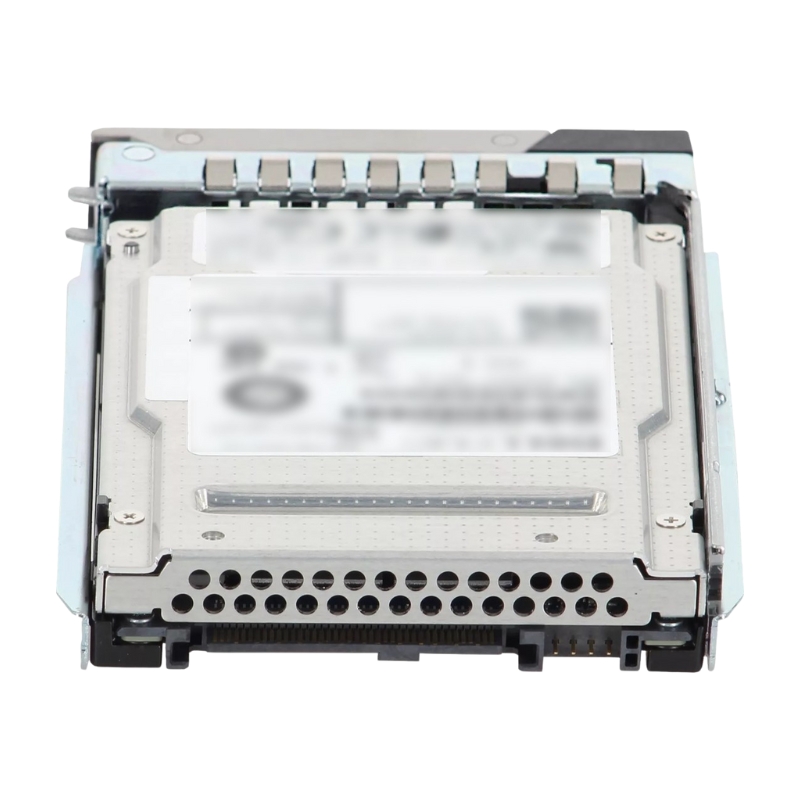
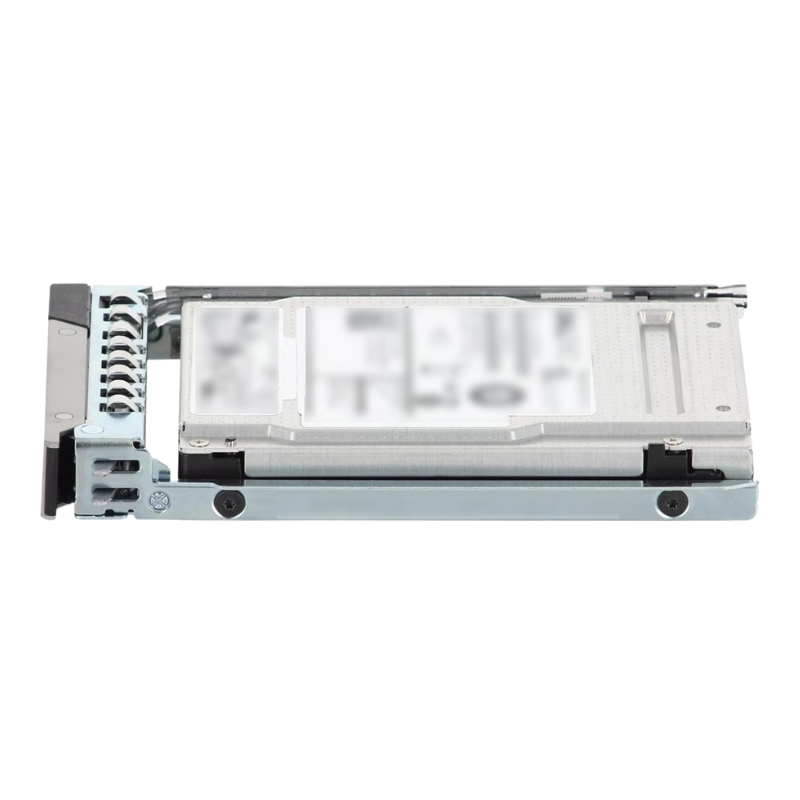
The drive utilizes the 2.5-inch (15mm height) form factor with a U.2 (SFF-8639) connector. This physical design is integral to its deployment in modern servers.
"Hot-plug" signifies that the drive can be inserted or removed from a powered-on server without shutting down the system. This is essential for maintenance, capacity expansion, and failed drive replacement in mission-critical environments that demand 24/7 availability. The SAS protocol natively supports this functionality with robust electrical and data connection design.
The U.2 interface is versatile, supporting SAS, SATA, and NVMe protocols over the same physical connector. This provides flexibility for data center managers to deploy different storage tiers within the same server chassis. The 2.5-inch size is the dominant standard for enterprise SSD bays, ensuring broad compatibility with Dell PowerEdge servers (and other vendor systems with appropriate backplanes) from recent generations.
Beyond raw specs, enterprise drives incorporate a suite of technologies to protect data, ensure longevity, and simplify integration.
Enterprise SSDs are equipped with sophisticated Power Loss Protection circuits. In the event of an unexpected power failure, reserved capacitor banks provide enough energy to flush all data residing in the volatile DRAM cache to the non-volatile NAND flash. This prevents data corruption and ensures write operations are completed, a critical feature for maintaining transactional integrity in databases.
Data integrity is safeguarded throughout its journey. From the host interface, through the drive's DRAM buffer, and into the NAND media, cyclical redundancy checks (CRC) and other algorithms continuously verify data. This protects against silent data corruption that can occur due to electrical noise or other transmission errors within the system.
A hallmark of SAS drives, T10 PI (or DIF) adds extra metadata to each sector of data. This allows the host system (HBA/RAID controller) and the drive to validate that data has not been corrupted as it moves between them, providing an additional layer of integrity crucial for RAID rebuilds and data scrubbing operations.
Rated for continuous operation in demanding data center environments with extended temperature ranges, these drives include thermal sensors for monitoring. They are also compliant with SCSI Enclosure Services (SES) and S.M.A.R.T. (Self-Monitoring, Analysis, and Reporting Technology), allowing system administrators to monitor drive health, predict failures, and manage storage assets through tools like Dell OpenManage.
Deploying the 345-BKYQ effectively requires understanding its role within a holistic server storage strategy.
This drive is ideally positioned as a high-performance capacity tier. In a multi-tier setup, ultra-fast NVMe drives might handle the most latency-sensitive "hot" data, the Dell 345-BKYQ SAS drives manage the vast majority of "warm" read-heavy data, and high-capacity NL-SAS HDDs archive "cold" data. This balance optimizes performance and cost.
When used in RAID arrays (like RAID 5, RAID 6, or RAID 10), the exceptional performance of these drives can shift bottlenecks to the RAID controller's processing power. Ensuring the server has a modern, high-performance RAID controller (or is configured in HBA mode for software RAID) is key to unleashing the full potential of an array of 24G SAS SSDs. The dual-port nature of SAS is also essential for redundant RAID controller configurations.
A significant advantage of using high-capacity SSDs in RAID is drastically reduced rebuild times compared to HDDs. Rebuilding a failed 15.36TB HDD could take days, stressing other drives and increasing risk. An SSD array can complete this rebuild in a fraction of the time, improving array resilience.


 Contact Us
 Information
 Catalog
 Solid State Drives (SSD)
 Network Switches
 Hard Disk Drives
 HBA & Controllers
 PC & Servers
 PC & Server Memory
 CPU & Processors
 Network Routers
 Power Supplies
 Tape Drives & Libraries
 Network Devices
 Computer & Network Cables