(7% discount is applied at checkout)
Cart is empty
Your go-to destination for cutting-edge server products
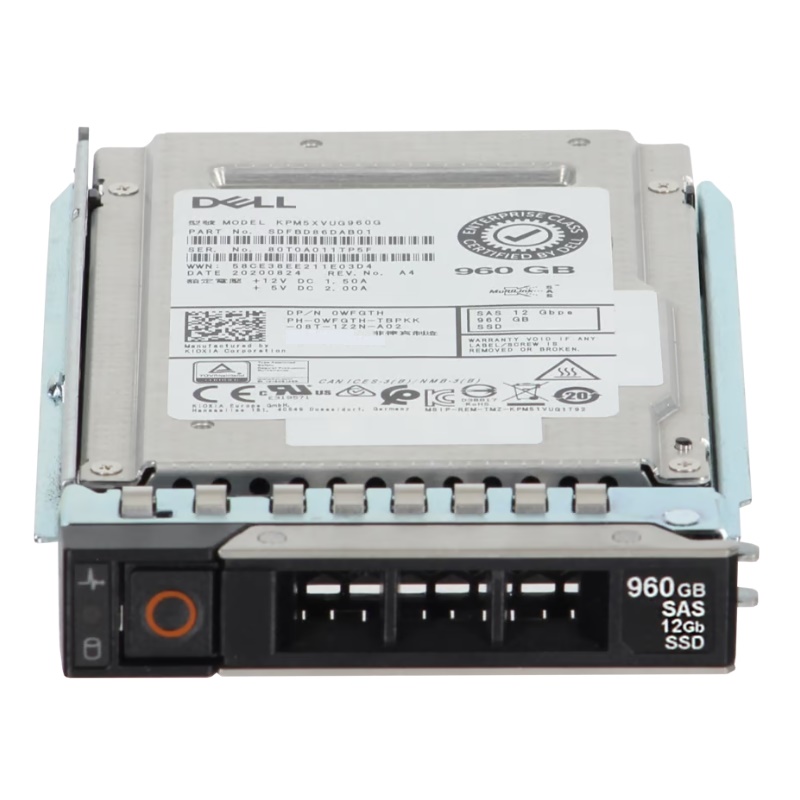


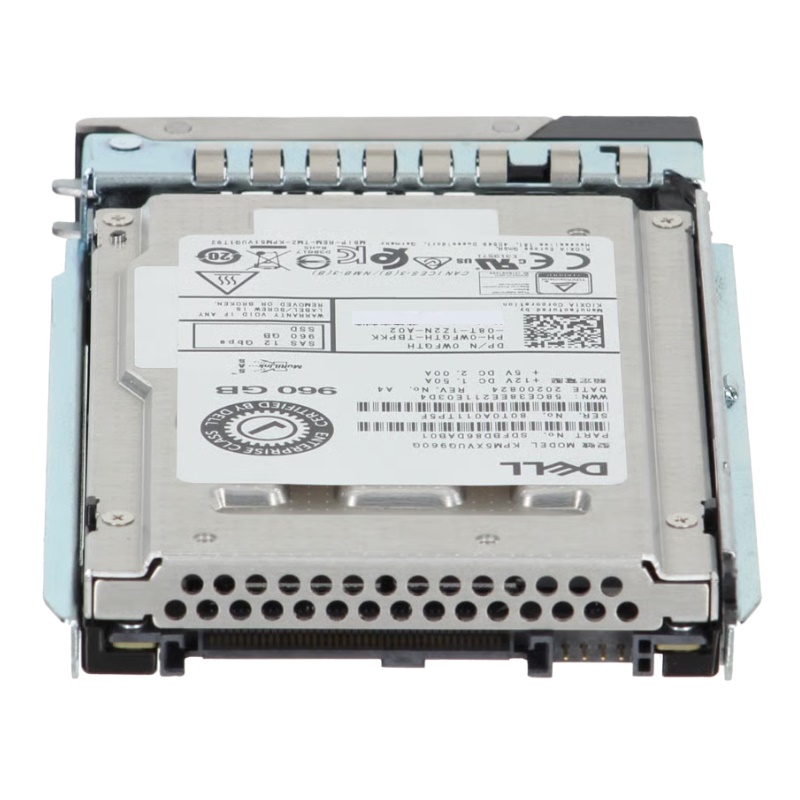
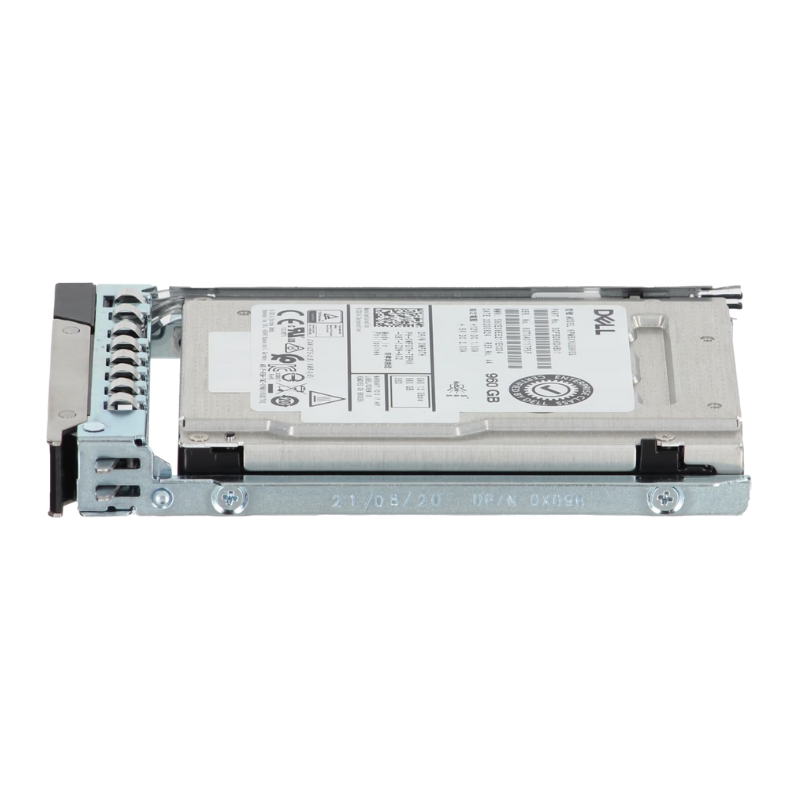
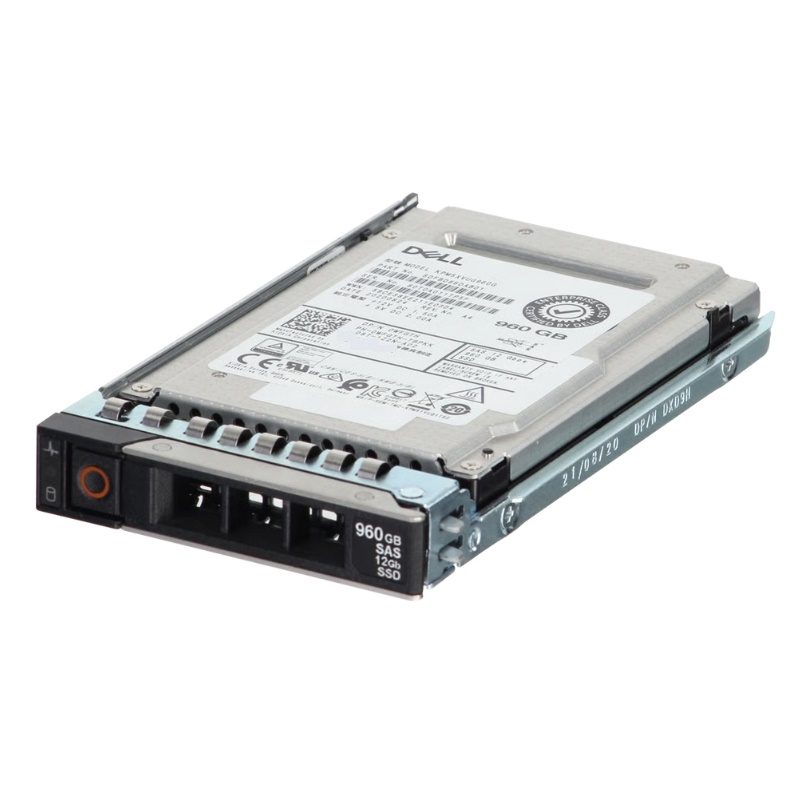
Dell 345-BLDF Hot Plug Read Intensive 960GB SAS-12GBPS 1DWPD SED 2.5-Inch SSD. New Sealed in Box (NIB) with 1 Year Warranty
The Dell 345-BLDF represents a significant advancement in enterprise storage technology, specifically engineered for read-intensive applications that demand consistent performance and exceptional reliability. This 960GB SAS SSD combines cutting-edge flash memory with Dell's enterprise hardware expertise to deliver a storage solution that meets the rigorous demands of modern data centers, server environments, and business-critical applications.
Designed with a focus on read-intensive workloads, this SSD delivers optimal performance for applications where read operations significantly outnumber write operations. The 12Gbps SAS interface ensures maximum bandwidth utilization, while advanced flash management algorithms maintain consistent input/output operations per second (IOPS) across various workload conditions.
The Dell 345-BLDF utilizes the SAS 12Gbps interface, providing double the bandwidth of previous 6Gbps SAS generations while maintaining full backward compatibility with existing SAS infrastructure. The 2.5-inch form factor ensures compatibility with most enterprise server and storage enclosures, offering a perfect balance between storage density and physical space requirements.
The Serial Attached SCSI interface at 12 gigabits per second enables full-duplex communication, meaning the drive can simultaneously send and receive data at maximum speeds. This dual-port capability provides redundant pathways for data access, crucial for high-availability environments where storage system uptime is non-negotiable.
Measuring 2.5 inches with a standard 7mm or 15mm height profile, this drive fits seamlessly into enterprise servers, storage arrays, and direct-attached storage configurations. The hot-plug capability allows for drive replacement or addition without system shutdown, maintaining continuous operation in 24/7 environments.
With 960GB of usable capacity, this SSD provides substantial storage space while maintaining performance consistency. The drive utilizes enterprise-grade multi-level cell (eMLC) or 3D NAND flash technology, optimized for the endurance requirements of read-intensive applications while providing excellent cost-effectiveness compared to single-level cell alternatives.
The drive incorporates intelligent over-provisioning, where additional flash memory capacity is reserved beyond the advertised 960GB. This extra space serves multiple purposes: it enables more efficient garbage collection, improves write amplification factors, extends the drive's operational lifespan, and maintains performance consistency as the drive fills with data.
While marketed as 960GB, the actual raw NAND capacity is higher due to over-provisioning. When formatted and deployed in various RAID configurations, the usable capacity may vary slightly based on file system overhead, but the drive consistently delivers the expected enterprise-grade performance across its entire addressable space.
In typical read-intensive scenarios, actual write patterns usually fall well below the 1DWPD threshold, meaning the drive will likely exceed its rated endurance in real-world deployments. The conservative rating ensures performance consistency and data integrity even under unexpectedly heavy write cycles.
The integrated Self-Encrypting Drive capability provides hardware-based, full-disk encryption without performance degradation. Utilizing industry-standard AES-256 encryption, all data written to the drive is automatically encrypted, and all read operations are automatically decrypted, providing seamless security transparent to applications and users.
Encryption keys are generated and managed within the drive's dedicated cryptographic processor, never exposed to the host system. The drive supports TCG Enterprise and TCG Opal 2.0 security standards, enabling integration with enterprise security frameworks and management consoles for comprehensive data protection.
When decommissioning or repurposing drives, the SED functionality enables instantaneous cryptographic erase by simply destroying or changing the encryption key. This renders all previously stored data permanently inaccessible within seconds, providing a secure and efficient alternative to time-consuming physical destruction or multiple overwrite passes.
The Dell 345-BLDF is specifically tuned for scenarios where read operations constitute 70-90% of total I/O activity. This optimization encompasses firmware algorithms, cache management strategies, and NAND access patterns that prioritize read latency reduction and consistent read throughput.
For sequential read operations, the drive delivers maximum interface bandwidth, while random read performance benefits from deep queue depths and optimized command processing. Write performance, while secondary to read optimization, maintains sufficient throughput for mixed workloads without creating bottlenecks.
Quality of Service (QoS) metrics demonstrate consistent low latency for read operations, even during background maintenance activities such as garbage collection or wear leveling. This predictable performance is essential for applications requiring consistent response times, such as database transactions or real-time analytics.
Unlike consumer-grade SSDs that may experience significant performance degradation under sustained workloads, the Dell 345-BLDF maintains consistent operation through intelligent write caching and sophisticated flash management. The drive incorporates power-loss protection to ensure data integrity even during unexpected power interruptions.
A dedicated DRAM cache buffers incoming writes and manages address translation tables, improving both performance and endurance. The cache size is optimized for the drive's capacity and intended workload profile, striking an ideal balance between cost and performance for read-intensive applications.
While optimized for reads, the drive employs several write acceleration technologies including sequential write optimization, command queuing, and intelligent caching to handle write bursts efficiently. These techniques ensure that occasional heavy write periods don't negatively impact the overall user experience.
Extensive compatibility testing ensures seamless operation across Dell's PowerEdge server portfolio, PowerVault storage systems, and third-party SAS-compatible enclosures. The drive maintains compliance with SAS-3 and earlier SAS standards, providing investment protection for existing infrastructure.
As a boot device in enterprise servers, the Dell 345-BLDF provides rapid system startup and responsive application loading. When deployed as application storage, it delivers the low latency required for database operations, email servers, and collaboration platforms.
In virtual desktop infrastructure (VDI) implementations, the drive efficiently handles boot storms and user login operations while providing responsive access to applications and data. For server virtualization, it offers an optimal balance of performance and cost for host operating systems and virtual machine storage.
Database applications with heavy query activity, such as data warehouses, business intelligence systems, and reporting databases, benefit significantly from the drive's read-optimized architecture. The consistent low latency improves query response times and supports more concurrent users.
Compared to traditional hard disk drives, the SSD consumes less power during active operation and significantly less during idle periods. This power efficiency translates to reduced operating costs and environmental impact, particularly in large-scale deployments.


 Contact Us
 Information
 Catalog
 Solid State Drives (SSD)
 Network Switches
 Hard Disk Drives
 HBA & Controllers
 PC & Servers
 PC & Server Memory
 CPU & Processors
 Network Routers
 Power Supplies
 Tape Drives & Libraries
 Network Devices
 Computer & Network Cables