(7% discount is applied at checkout)
Cart is empty
Your go-to destination for cutting-edge server products
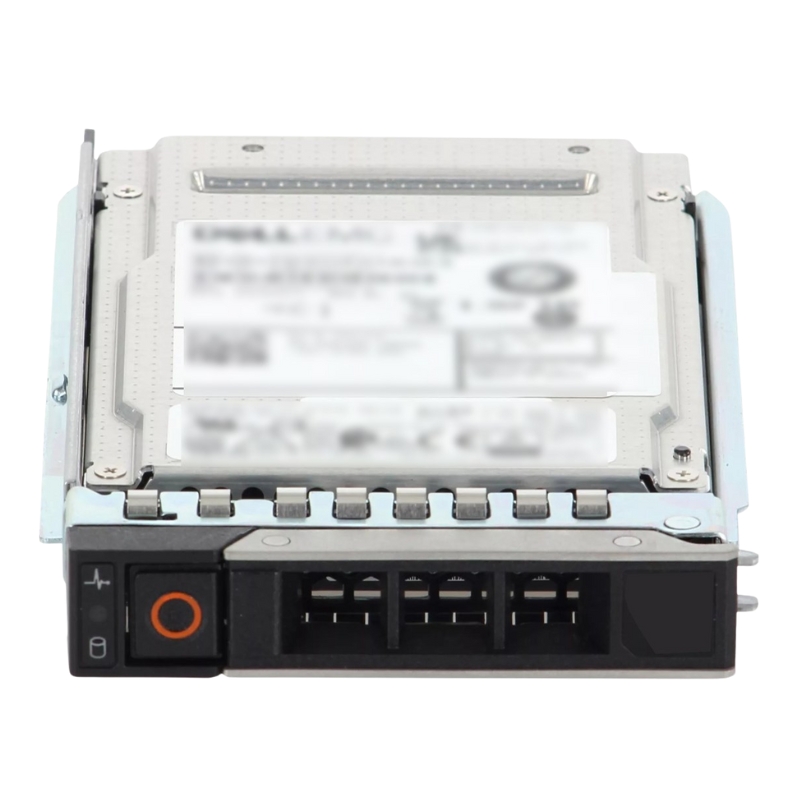


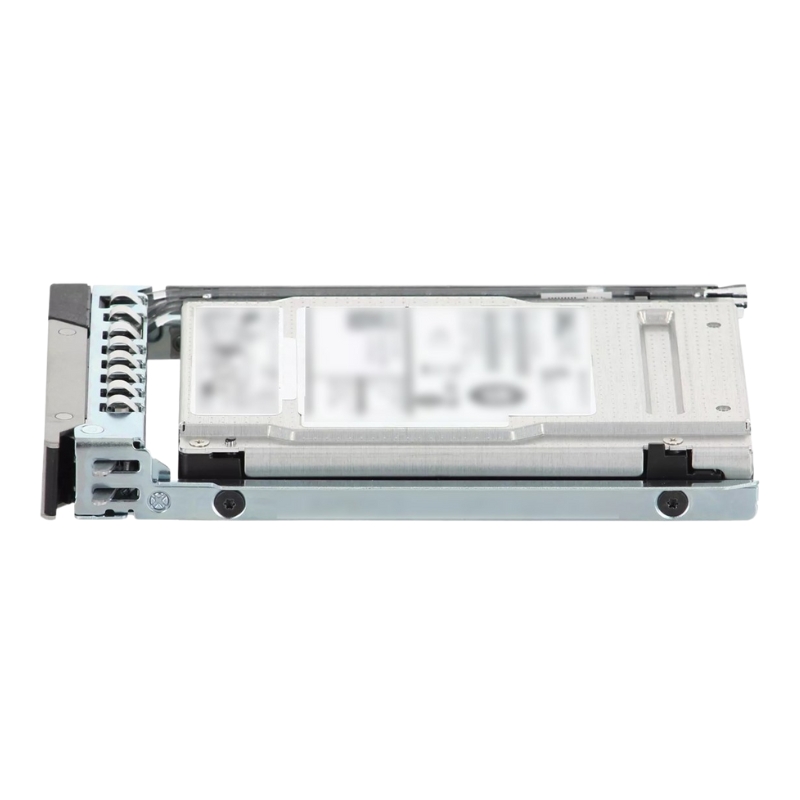
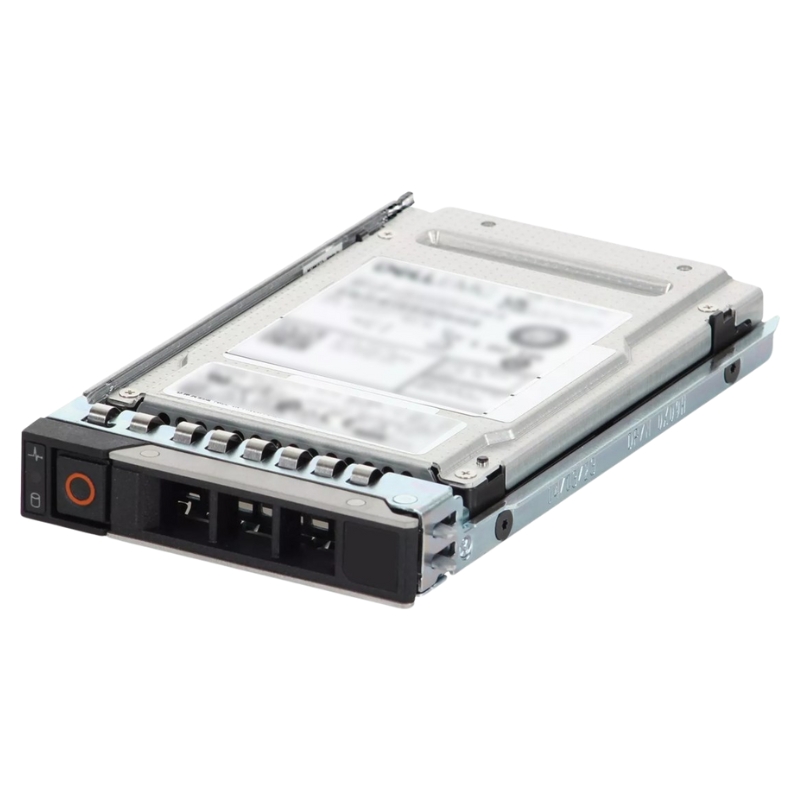
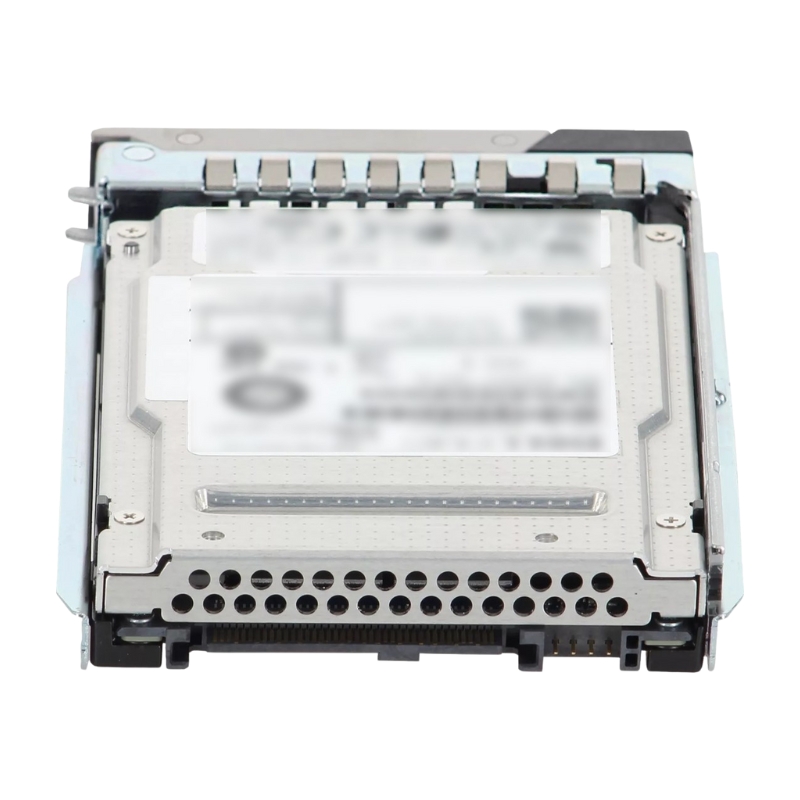
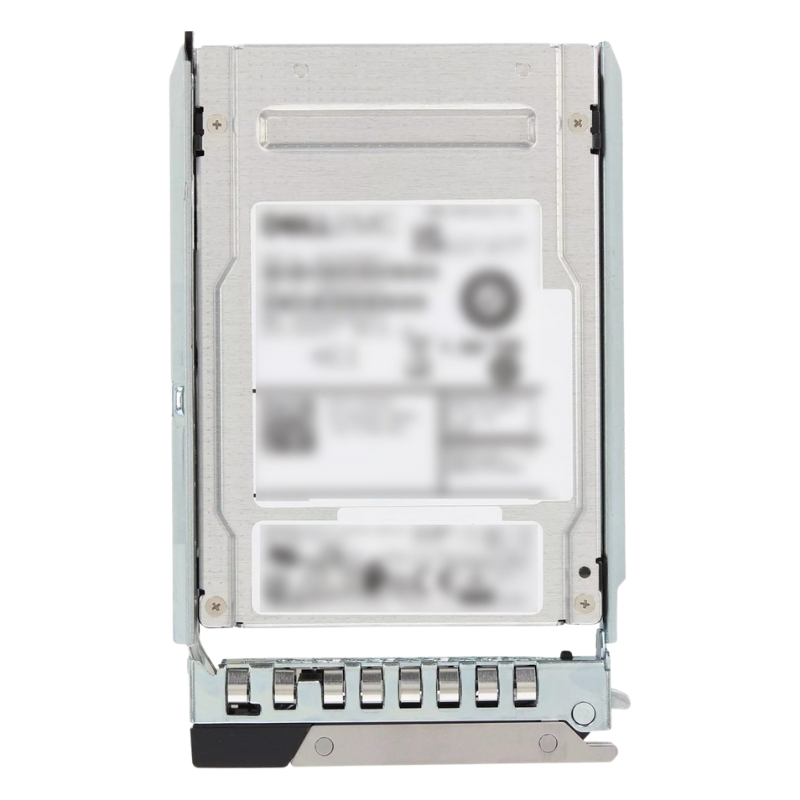
Dell 345-BLFM 15.36TB SAS-24Gbps Read-Intensive 1DWPD 2.5Inch Hot-Plug Solid State Drive for Server. New Sealed in Box (NIB) with 1 year Warranty
The Dell 345-BLFM 15.36TB Solid State Drive is engineered for modern data centers that demand exceptional read performance, reliability, and scalability. Designed for Dell PowerEdge servers, this hot-plug SSD delivers enterprise-grade speed using advanced SAS 24Gbps connectivity.
This Dell enterprise SSD is fully validated for a wide range of Dell PowerEdge rack, tower, and modular servers, ensuring seamless integration and optimal performance.
The transition to SAS-24Gbps (SAS-4) marks a fundamental shift in enterprise storage architecture. For years, 12Gbps SAS and SATA SSDs served as the workhorses, but with CPUs, memory, and networking advancing at a rapid pace, storage risked becoming the weakest link. The Dell 345-BLFM directly addresses this with its 24Gbps interface, effectively doubling the available bandwidth per drive compared to the previous generation.
This isn't just about theoretical peak speeds. In practice, the doubled bandwidth means a single drive can handle significantly more concurrent I/O operations, drastically reducing queue depths and latency for all connected devices on the same controller. For databases, this translates to faster query responses. For virtualized environments, it enables higher VM density with consistent performance. The 24Gbps interface is also backward compatible with 12Gbps and 6Gbps infrastructures, allowing for a phased upgrade path, though its full potential is realized in next-generation servers equipped with SAS-4 controllers.
From a system design perspective, the efficiency gains are profound. To achieve a target aggregate storage bandwidth, fewer 24Gbps drives may be needed compared to 12Gbps drives. This can lead to simplified configurations, reduced power consumption, and freed-up drive bays for future expansion. It future-proofs your investment, ensuring the storage subsystem is not the limiting factor for new applications for years to come.
Enterprise SSDs are categorized by their endurance, typically expressed in Drive Writes Per Day (DWPD) over the warranty period. The Dell 345-BLFM is specified as a 1 DWPD, read-intensive model. This is a crucial differentiator from write-intensive or mixed-use drives and defines its ideal application scope.
A 1 DWPD rating means that over its 5-year warranty, you can write the drive's full capacity (15.36TB) every single day. This equates to over 28 petabytes (PB) of lifetime writes. For context, this far exceeds the write patterns of most server workloads that are not purely transactional databases or high-frequency data logging. This endurance profile is meticulously balanced with NAND flash technology and advanced wear-leveling algorithms to deliver optimal cost-per-gigabyte for its target uses.
Matching the drive's endurance to the workload is key to cost-effective infrastructure. A write-intensive drive (often 3-10 DWPD) is overkill—and more expensive—for applications where reads dominate. The Dell 345-BLFM’s 1DWPD is perfectly suited for workloads with a read-to-write ratio of 70/30 or higher. This intelligent matching prevents you from paying for endurance you will never utilize, while still providing a substantial, enterprise-grade safety margin for unexpected write activity.
Beyond the interface and endurance, the intrinsic architecture of the Dell 345-BLFM is built for 24/7/365 operation in mission-critical servers. Every component is selected and validated for enterprise rigor.
At its heart, this drive utilizes high-quality 3D TLC (Tri-Level Cell) NAND flash. Dell's firmware and proprietary controller are tuned specifically for this flash, managing tasks like garbage collection, bad block management, and read refresh with minimal impact on host performance. The controller also enables the full suite of enterprise features, including power-loss protection, end-to-end data path protection, and advanced error correction code (ECC).
A cornerstone of data integrity, the PLI circuit ensures that in the event of a sudden power failure, the drive has enough stored energy in its onboard capacitors to complete any in-flight writes from the volatile cache to the non-volatile NAND. This prevents data corruption and is a non-negotiable feature for any enterprise storage device deployed in servers without guaranteed uninterrupted power supplies.
The specific characteristics of the Dell 345-BLFM make it a superior choice for a well-defined set of enterprise applications. Deploying it in these scenarios maximizes ROI and system performance.
Modern BI tools like Tableau, Power BI, and complex SQL queries demand rapid scanning of massive datasets. The high capacity (15.36TB) allows large fact tables and historical data to reside on incredibly fast storage, while the read-optimized performance and high bandwidth make aggregate calculations and joins execute swiftly, delivering insights faster to end-users.
In VDI deployments, the boot storm—when hundreds or thousands of virtual desktops start up simultaneously—is a notorious challenge. Storing the golden boot images and applications on the Dell 345-BLFM pool allows for near-instant provisioning and login times. The read-intensive nature is perfect, as the base images are largely static, with user writes being redirected to separate storage tiers.
For serving large media files, streaming video, or hosting a content repository, high sequential read speed and low latency are paramount. The SAS-24Gbps interface ensures that multiple high-bitrate streams can be served concurrently from a single drive without buffering. The 2.5-inch form factor allows for high-density storage servers capable of holding petabytes of content in a single rack.
In hyper-converged infrastructure or dense blade server environments, using these drives as high-performance, high-capacity boot drives for hypervisors (like VMware ESXi or Microsoft Hyper-V) allows for rapid host reboot times and the local storage of multiple hypervisor instances or critical management virtual machines.
A significant advantage of the Dell 345-BLFM is its seamless integration within broader Dell EMC server and storage platforms. This is not a generic SSD; it is a Dell-engineered solution with deep firmware compatibility.
When installed in a compatible Dell PowerEdge server, the drive is fully discoverable and monitorable through Integrated Dell Remote Access Controller (iDRAC) and Dell OpenManage Systems Management. Administrators can view drive health metrics, SMART attributes, temperature, predicted life remaining, and wear indicators directly from their management console. This provides proactive alerting and simplifies lifecycle management.
Dell's proprietary firmware includes enhanced telemetry. The drive can communicate subtle signs of wear or potential issues long before a failure occurs, enabling parts to be replaced proactively during a maintenance window. Furthermore, firmware updates for the SSD are delivered through standardized Dell update bundles (DUPs), ensuring compatibility and easy deployment alongside server BIOS and driver updates.
Understanding where the Dell 345-BLFM sits relative to other storage options clarifies its value proposition and selection criteria.
While SATA SSDs offer a cost advantage, they are limited by the 6Gbps SATA interface and typically lack the same level of power-loss protection and enterprise-optimized firmware. SATA is a half-duplex interface, whereas SAS is full-duplex, meaning data can be read and written simultaneously. For any performance-sensitive server workload, the SAS-24Gbps drive offers significantly higher IOPS, lower latency, and superior reliability.
NVMe drives offer even lower latency and higher throughput than SAS by utilizing the PCIe bus directly. However, they command a price premium and may require different server backplanes and infrastructure. The Dell 345-BLFM SAS drive provides an excellent balance of high performance, high capacity, and proven, mature ecosystem integration at a compelling TCO for workloads that may not require the absolute lowest latency that NVMe provides.
The 15.36TB capacity is a key differentiator. Using higher-capacity drives reduces the number of devices needed to achieve a total storage pool, which simplifies management, reduces power and cooling overhead per terabyte, and maximizes the storage potential of each server chassis bay. It is the ideal choice for capacity-optimized, high-performance storage tiers.


 Contact Us
 Information
 Catalog
 Solid State Drives (SSD)
 Network Switches
 Hard Disk Drives
 HBA & Controllers
 PC & Servers
 PC & Server Memory
 CPU & Processors
 Network Routers
 Power Supplies
 Tape Drives & Libraries
 Network Devices
 Computer & Network Cables