(7% discount is applied at checkout)
Cart is empty
Your go-to destination for cutting-edge server products
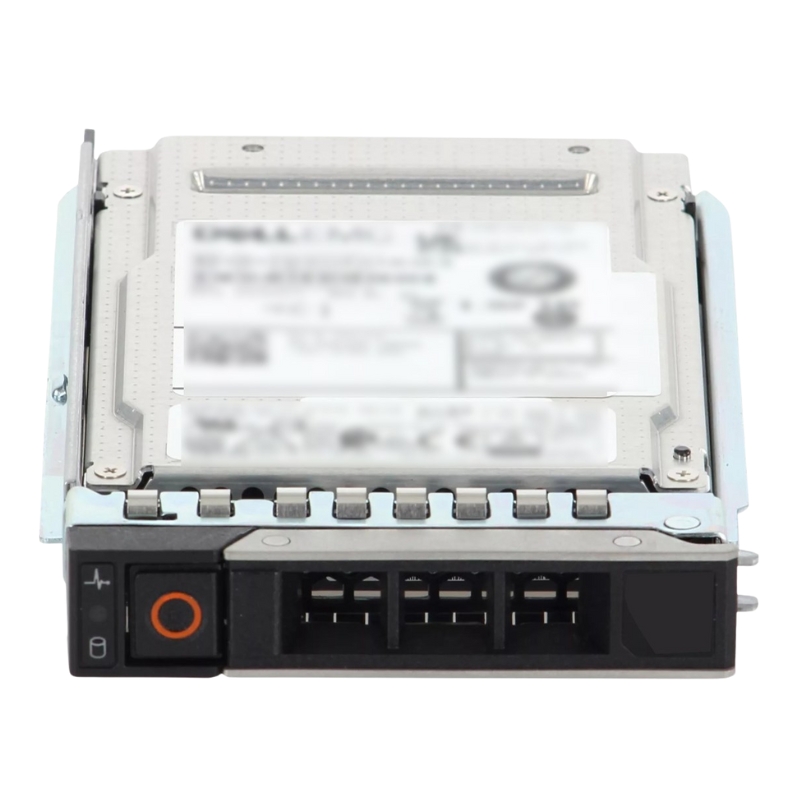


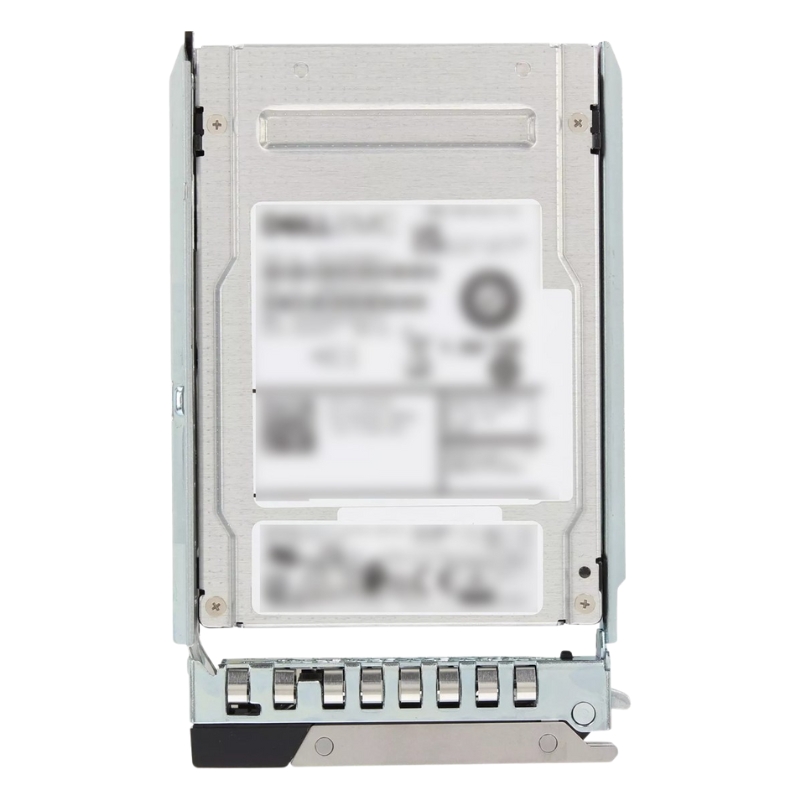
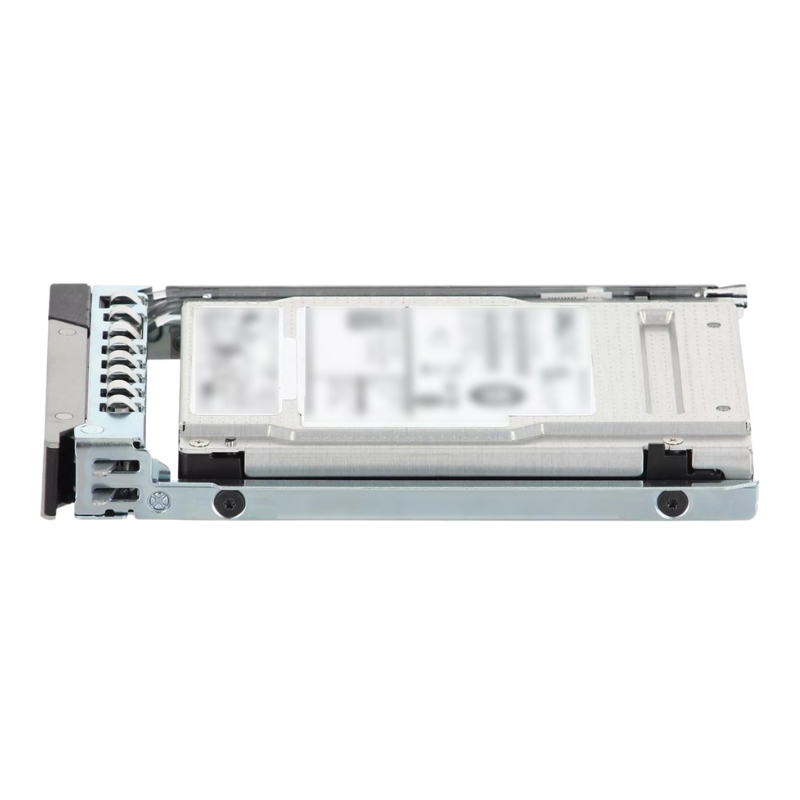
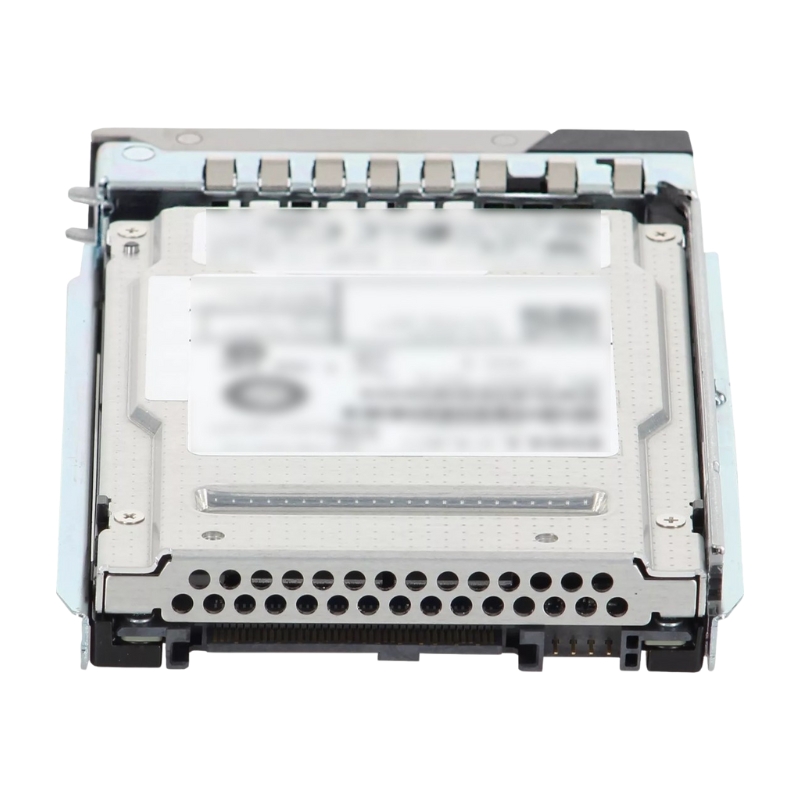
Dell 345-BLFV 15.36TB SAS 24Gbps Read-Intensive 1DWPD 2.5Inch Hot-Plug Solid State Drive for Server. New Sealed in Box (NIB) with 1 year Warranty
The Dell 345-BLFV 15.36TB SAS Solid State Drive is a powerful, enterprise-grade storage solution designed for modern data centers and mission-critical server environments. Built for read-intensive workloads, this hot-plug SSD delivers exceptional speed, reliability, and endurance for Dell PowerEdge servers.
This Dell enterprise SSD is fully compatible with a wide range of Dell servers and storage platforms, ensuring seamless integration and optimal performance.
In server and storage array configurations, not all workloads are created equal. Read-intensive drives like the Dell 345-BLFV are strategically deployed for applications where data retrieval operations vastly outnumber write operations. This specialization allows for cost optimization without sacrificing performance, providing a tier of storage that is both high-performing and economically sensible for large-scale data repositories.
These drives excel in scenarios such as data warehousing, where large datasets are queried frequently; web serving and content delivery networks (CDNs), which serve static assets; and virtualization hosts running multiple virtual machines that primarily read from disk. They are also ideal for boot volumes, logging databases, and analytical processing where low-latency read access is paramount for system responsiveness and user experience.
To fully appreciate the capability of this drive, a detailed examination of its core specifications is essential. Each component is selected and tuned for enterprise resilience.
The 15.36TB capacity point is a significant achievement, offering immense data density. This allows organizations to consolidate storage, reduce drive count per server, and simplify data management while achieving higher performance per rack unit.
The 2.5-inch U.2 form factor with a hot-plug backplane connector is the industry standard for modern server bays. Hot-plug capability enables drive replacement or addition without powering down the server—a critical feature for maintaining uptime in mission-critical environments. The U.2 interface physically supports both SAS and NVMe protocols, though this drive utilizes the SAS interface.
The SAS (Serial Attached SCSI) 24Gbps interface represents the third generation of this trusted enterprise protocol. It doubles the bandwidth of the previous 12Gbps standard, drastically reducing latency and increasing throughput for I/O-intensive operations.
SAS provides full-duplex communication (data can be sent and received simultaneously), unlike half-duplex SATA. It features a more robust error recovery system, higher queue depths, and supports expansive daisy-chaining through dual-port connectivity for redundant storage area network (SAN) configurations. This makes SAS the definitive choice for any application where data availability and path redundancy are crucial.
The 1 DWPD endurance rating is a classifier for read-intensive workloads. It means that over the drive's warranty period (typically 5 years), you can write the *entire* drive's capacity (15.36TB) once per day, every day. For a 15.36TB drive, this translates to a staggering total lifetime writes of over 28 petabytes. This specification is more than sufficient for its target read-heavy workloads, ensuring a long service life even under sustained operation.
To achieve this endurance, Dell utilizes high-quality 3D TLC (Triple-Level Cell) or similar enterprise-grade NAND, coupled with sophisticated wear-leveling algorithms in the drive controller. These algorithms dynamically distribute write operations evenly across all memory cells, preventing any single cell from wearing out prematurely and extending the drive's usable life.
Identifying the right application for this drive is key to maximizing ROI and system performance. It is a specialized tool for specific storage challenges.
In virtual server infrastructure (e.g., VMware vSphere, Microsoft Hyper-V), the drive can host dozens to hundreds of virtual machine disk files (VMDKs, VHDs). The fast read speeds drastically improve VM boot storms and application responsiveness within VMs, while the high capacity reduces storage sprawl.
HCI solutions like Dell VxRail or VMware vSAN often benefit from a tiered storage approach. The 345-BLFV can serve as a high-capacity performance tier for persistent data, handling the bulk of read operations that dominate many clustered workloads.
For streaming video/audio or software distribution, libraries of content are read continuously by thousands of concurrent users. The high throughput and IOPS of the SAS 24Gbps interface ensure smooth, buffer-free delivery even during peak demand periods.
While SATA SSDs offer a cost advantage, they lack the dual-port reliability, full-duplex performance, and advanced error correction of SAS. The 345-BLFV provides a higher guarantee of data integrity and system availability, which is vital for core business operations.
NVMe drives offer higher peak performance on a single lane. However, SAS 24Gbps provides exceptional and consistent performance in a well-understood, mature ecosystem with superior multi-path and RAID support. It is often the preferred choice for storage arrays and servers where PCIe lane availability is limited or where existing infrastructure is SAS-based.
The comparison is transformative. This SSD offers orders of magnitude higher IOPS and lower latency, uses less power, generates less heat, and is more physically robust due to no moving parts. For tiered storage, it elevates the performance tier to a new level, allowing HDDs to be relegated solely to archival or bulk cold storage.
The Dell 345-BLFV is engineered for seamless integration within the Dell PowerEdge server family and certified compatible storage enclosures.
This drive is validated for servers supporting SAS 24Gbps (or backward compatible 12Gbps/6Gbps), typically from the 14th generation (e.g., PowerEdge R640, R740xd) and newer. It is crucial to verify the specific server's PERC (PowerEdge RAID Controller) or HBA (Host Bus Adapter) compatibility and ensure the firmware is up to date for optimal performance and feature support.
The SAS interface maintains backward compatibility. A 24Gbps drive will automatically negotiate down to 12Gbps or 6Gbps when installed in an older generation server or connected to a slower controller. While this limits peak bandwidth, the drive's low latency and high IOPS advantages remain fully intact.
This drive is also a prime candidate for DAS (Direct-Attached Storage) enclosures like the Dell PowerVault ME4 series or SAN environments. Its dual-port capability is essential here, allowing for redundant controller connections that provide failover protection in array configurations.
Using Dell-provided firmware updates, accessible through the Dell Support site, is critical. These updates address performance optimizations, security vulnerabilities, and bug fixes. Management via Dell OpenManage Server Administrator (OMSA), iDRAC (Integrated Dell Remote Access Controller), or system-level tools ensures health monitoring, predictive failure analysis, and seamless integration into the IT management stack.
Beyond raw performance, enterprise drives are defined by their features that safeguard data and ensure continuous operation.
A fundamental enterprise feature. The drive is equipped with onboard capacitors (or similar energy reserve systems) that provide emergency power in the event of a sudden server power failure. This allows the drive controller to complete any in-progress writes and flush cached data from volatile memory to the non-volatile NAND, preventing data corruption.
Data integrity is maintained through advanced error-correcting code (ECC) and cyclic redundancy checks (CRC) at multiple stages—from the host interface through the DRAM cache and to the NAND media. This protects against data corruption caused by electrical noise or bit errors during transmission and storage.
The drive supports extensive S.M.A.R.T. (Self-Monitoring, Analysis, and Reporting Technology) attributes monitored by Dell management software. These metrics track parameters like media wear, error rates, and temperature, enabling predictive failure alerts so administrators can proactively replace a drive before it fails, preventing unplanned downtime.
Many drives in this category, including likely variants of the 345-BLFV, offer optional Self-Encrypting Drive (SED) functionality based on the TCG (Trusted Computing Group) Enterprise standard. This provides hardware-based, full-disk encryption with minimal performance overhead, ensuring data-at-rest security. Encryption keys can be managed by the system's BIOS or a dedicated security key manager.


 Contact Us
 Information
 Catalog
 Solid State Drives (SSD)
 Network Switches
 Hard Disk Drives
 HBA & Controllers
 PC & Servers
 PC & Server Memory
 CPU & Processors
 Network Routers
 Power Supplies
 Tape Drives & Libraries
 Network Devices
 Computer & Network Cables