(7% discount is applied at checkout)
Cart is empty
Your go-to destination for cutting-edge server products
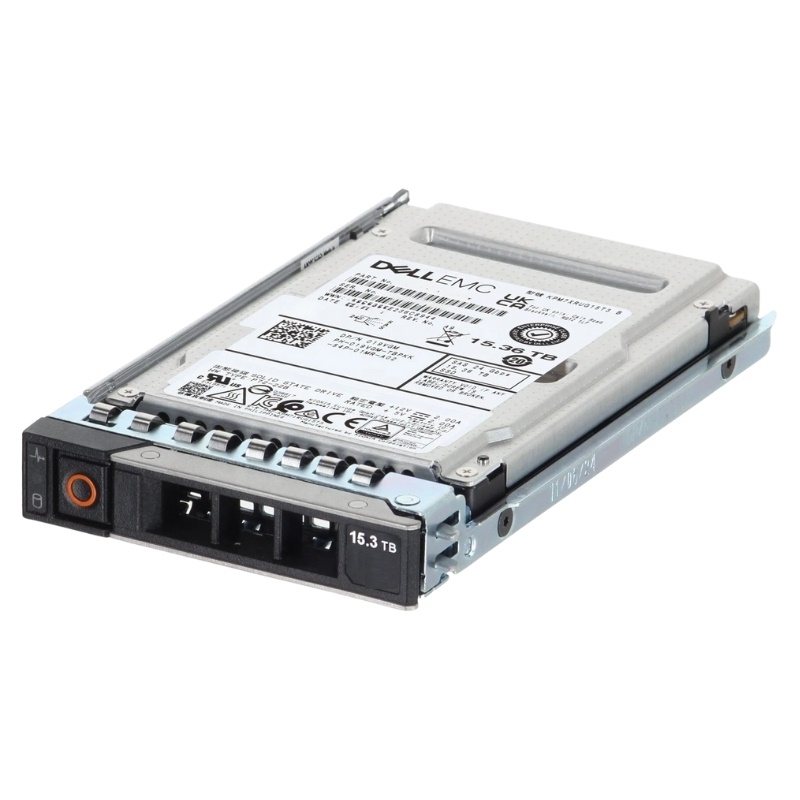


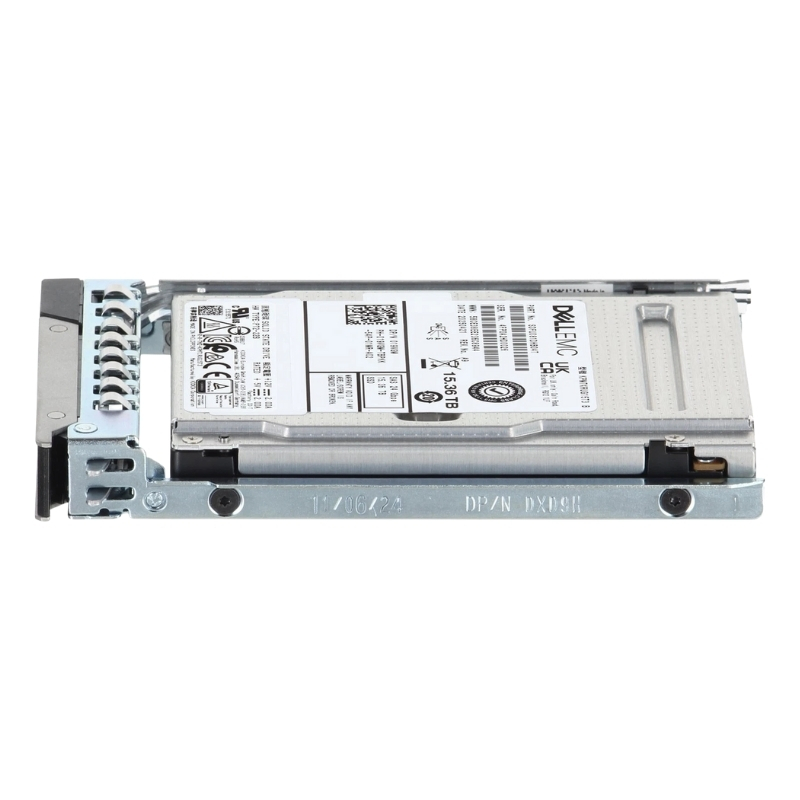
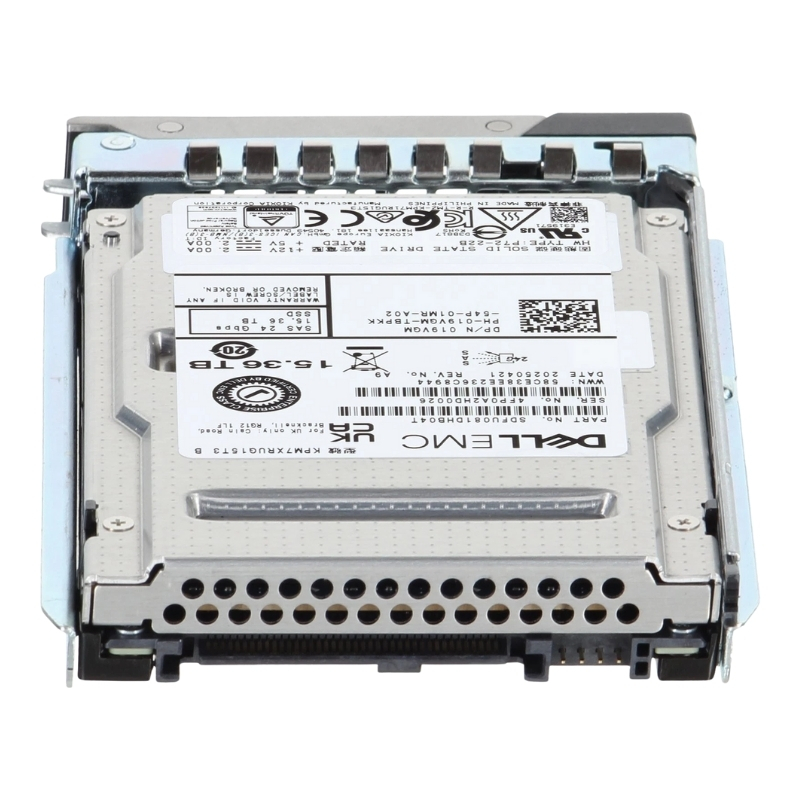
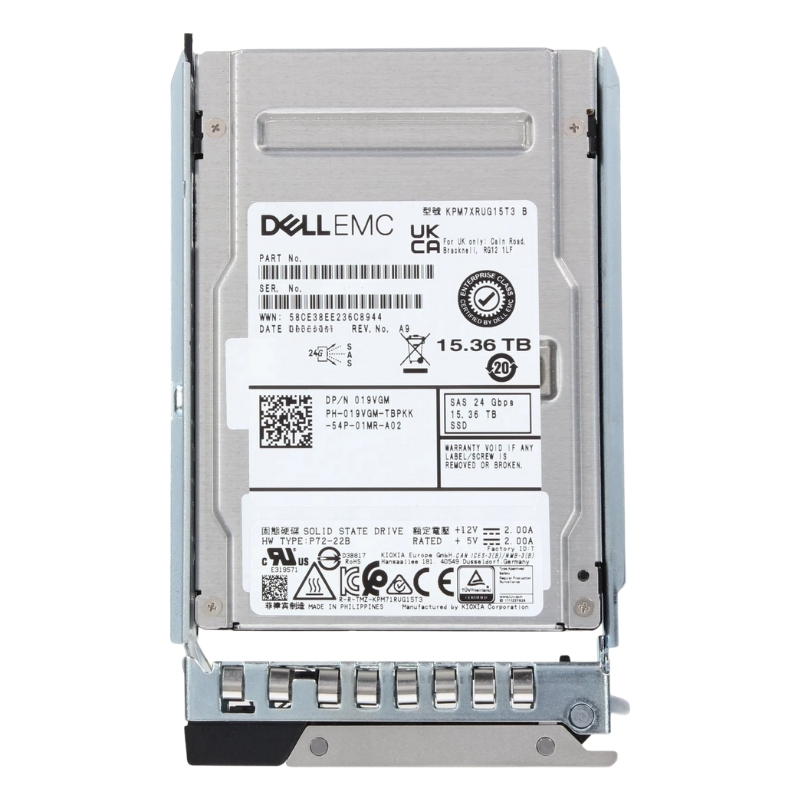
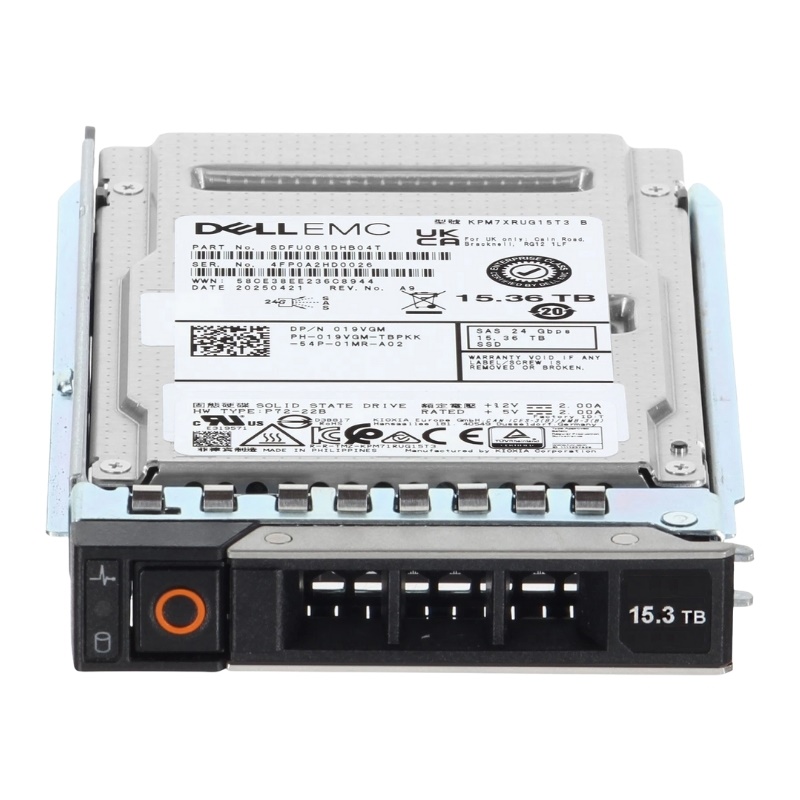
Dell 345-BLXD 15.36TB PCI Express Gen4 NVMe U.2 SFF Solid State Drive for Server. New Sealed in Box (NIB) with 1 year Warranty
The Dell 345-BLXD 15.36TB NVMe Solid State Drive is a high-capacity, enterprise-grade storage solution engineered for modern data centers and mission-critical server workloads. Designed with PCIe Gen4 technology, this hot-swappable SSD delivers exceptional throughput, low latency, and long-term reliability for read-focused applications.
Built to accelerate demanding applications such as virtualization, analytics, and cloud computing, this Dell NVMe SSD ensures consistent and reliable data access.
This Dell 15.36TB PCIe Gen4 NVMe SSD is validated and tested for seamless integration with a wide range of Dell PowerEdge servers.
To understand the significance of the Dell 345-BLXD, one must first grasp the technological pillars it is built upon. This category represents a convergence of several advanced standards.
The NVMe (Non-Volatile Memory Express) protocol is a revolutionary development from the legacy AHCI protocol used by SATA SSDs. Designed from the ground up for flash memory, NVMe supports massively parallel operations through deep command queues (up to 64K queues deep). This is a stark contrast to SATA's single queue with a depth of just 32 commands. For server applications with numerous simultaneous I/O requests—such as those from dozens of virtual machines, database transactions, or real-time analytics—this parallelism is critical. It drastically reduces I/O wait times and allows the flash memory's potential to be fully realized, leading to consistent, low-latency performance under heavy loads.
While NVMe can run on older PCIe generations, pairing it with PCI Express Gen4 unlocks its ultimate potential. PCIe Gen4 doubles the bandwidth per lane compared to the previous Gen3 standard. A drive like the 345-BLXD, typically using a x4 lane configuration, benefits from a theoretical bandwidth ceiling of nearly 8 GB/s (64 Gb/s) per direction. This raw bandwidth is essential for saturating the I/O capabilities of modern multi-core CPUs and is particularly beneficial for Gen4-enabled server platforms like Dell's 14th Generation PowerEdge and beyond. It future-proofs the storage investment, ensuring the drive does not become a bottleneck as CPU and network speeds continue to increase.
The U.2 form factor (formerly SFF-8639) is a 2.5-inch drive specification that supports both SATA, SAS, and most importantly, PCIe over a single connector. Its primary advantage in server environments is enabling hot-swap functionality for high-performance NVMe drives. This is a crucial operational feature for maintaining uptime. A failed or maintenance-required drive can be physically replaced without powering down the entire server or storage array. The U.2 drive bay is a common sight in modern server front-loading bays, making the 345-BLXD a direct, physical upgrade path for organizations moving from slower SATA or SAS SSDs or HDDs to NVMe performance without changing their server chassis infrastructure.
The Dell 345-BLXD is defined by a set of specifications that translate directly into real-world application performance and reliability.
The 15.36TB capacity point is not arbitrary. It represents a high-density storage tier achieved through 3D TLC (Triple-Level Cell) or similar enterprise-grade NAND flash memory, stacked in numerous layers. This capacity is ideal for:
Workload Consolidation: Hosting multiple large virtual machines or containers on a single drive.
Big Data and Analytics: Storing massive, frequently accessed datasets in-memory/SSD-tier for rapid query processing.
Media and Entertainment: Serving as high-performance nearline storage for video editing or rendering projects.
Database Hosting: Housing large transactional or operational databases with minimal latency.
The drive's firmware includes advanced error correction, wear leveling, and garbage collection algorithms optimized for sustained write performance, a key differentiator from consumer drives that may slow down under prolonged writes.
While exact figures vary, a drive in this class typically delivers:
Sequential Read/Write Speeds: Up to 7,000 MB/s read and 4,000+ MB/s write (peak, depending on model and conditions).
Random Read/Write IOPS: Often exceeding 1,000,000 read IOPS and 250,000 write IOPS at low queue depths.
Latency: Average read latency well under 100 microseconds, a fraction of a millisecond.
These metrics are measured under rigorous enterprise conditions, ensuring they are sustainable and not just peak bursts. The performance is enabled by a high-end NVMe controller paired with DRAM cache and the fast PCIe Gen4 interface.
For enterprise SSDs, endurance is as critical as speed. It is measured in DWPD (Drive Writes Per Day) and TBW (Terabytes Written).
DWPD indicates how many times the entire drive's capacity can be written to per day, over its warranty period (typically 5 years). For example, a 15.36TB drive with a 1 DWPD rating can withstand 15.36TB of writes every single day for 5 years.
TBW is the total aggregate writes over the warranty period. A 15.36TB drive with 1 DWPD has a TBW of: 15.36TB * 365 days * 5 years = ~28,032 TBW.
Drives like the 345-BLXD are built for mixed-use or write-intensive workloads, offering a high DWPD rating (often between 0.5 to 1+ DWPD) that far exceeds client SSDs, ensuring longevity in demanding server environments.
Enterprise drives incorporate robust Power Loss Protection (PLP) circuits, typically using capacitors. In the event of an unexpected power failure, this reserved energy allows the drive to complete any in-flight writes from its volatile cache (DRAM) to the non-volatile NAND flash. This prevents data corruption and ensures transactional consistency, a mandatory feature for financial, database, and critical infrastructure applications. Additionally, end-to-end data path protection uses checksums to verify data integrity from the host interface all the way to the NAND media, correcting errors and preventing silent data corruption.
The Dell 345-BLXD 15.36TB SSD is not a general-purpose drive; it is targeted at specific, high-value server applications where its attributes deliver maximum return on investment.
In virtualized environments (VMware vSphere, Microsoft Hyper-V, KVM) and Virtual Desktop Infrastructure (VDI), storage I/O is often the limiting factor to consolidation ratios and user experience. The high random IOPS and low latency of the 345-BLXD allow a single drive to support a significantly higher number of virtual machines or virtual desktops compared to SATA SSDs or HDDs. This reduces the number of drives needed, saving power, space, and complexity in the server. Boot storms and login storms in VDI deployments are smoothly handled by the drive's immense parallel I/O capability.
Online Transaction Processing (OLTP) databases (Microsoft SQL Server, Oracle Database, MySQL) are highly sensitive to storage latency. Every millisecond saved in writing transaction logs or fetching data can translate to higher transactions per second and better application responsiveness. The 345-BLXD's microsecond-level latency accelerates query processing, index rebuilds, and bulk data loads. Its high endurance also accommodates the constant write activity of database logs and tempdb operations.
In HPC clusters, applications in fields like computational fluid dynamics, genomic sequencing, and financial modeling generate and consume enormous amounts of data. The shared storage tier, often a parallel file system, requires extremely high bandwidth and low latency to keep all compute nodes fed. An array of U.2 NVMe drives like the 345-BLXD can form a powerful storage node, providing the necessary I/O density to match the computational power of modern clusters.
Positioning the Dell 345-BLXD within the broader storage landscape clarifies its optimal use case.
Consumer M.2 NVMe drives may offer similar peak sequential speeds but lack the endurance (low DWPD/TBW), power-loss protection, consistent performance under sustained writes, and hot-swap capability. They are not designed for 24/7 operation and often throttle aggressively under server-style workloads, making them unsuitable and risky for enterprise deployment.
SATA SSDs are limited by the 6 Gb/s SATA interface (max ~550 MB/s) and the AHCI protocol, resulting in much higher latency and lower IOPS. SAS SSDs offer better reliability features and dual-porting but are still limited by the SAS interface speed (12 Gb/s or 24 Gb/s). Both are significantly slower than PCIe Gen4 NVMe, making the 345-BLXD a superior choice for performance-tier storage.
Choosing a 15.36TB drive over multiple lower-capacity drives (e.g., 3.84TB) improves storage density, reducing the number of drive slots, cables, and controllers needed. This simplifies management, lowers power consumption, and can reduce software licensing costs that are per-physical-socket or per-core, as you achieve the same total capacity with fewer hardware resources.


 Contact Us
 Information
 Catalog
 Solid State Drives (SSD)
 Network Switches
 Hard Disk Drives
 HBA & Controllers
 PC & Servers
 PC & Server Memory
 CPU & Processors
 Network Routers
 Power Supplies
 Tape Drives & Libraries
 Network Devices
 Computer & Network Cables