(7% discount is applied at checkout)
Cart is empty
Your go-to destination for cutting-edge server products
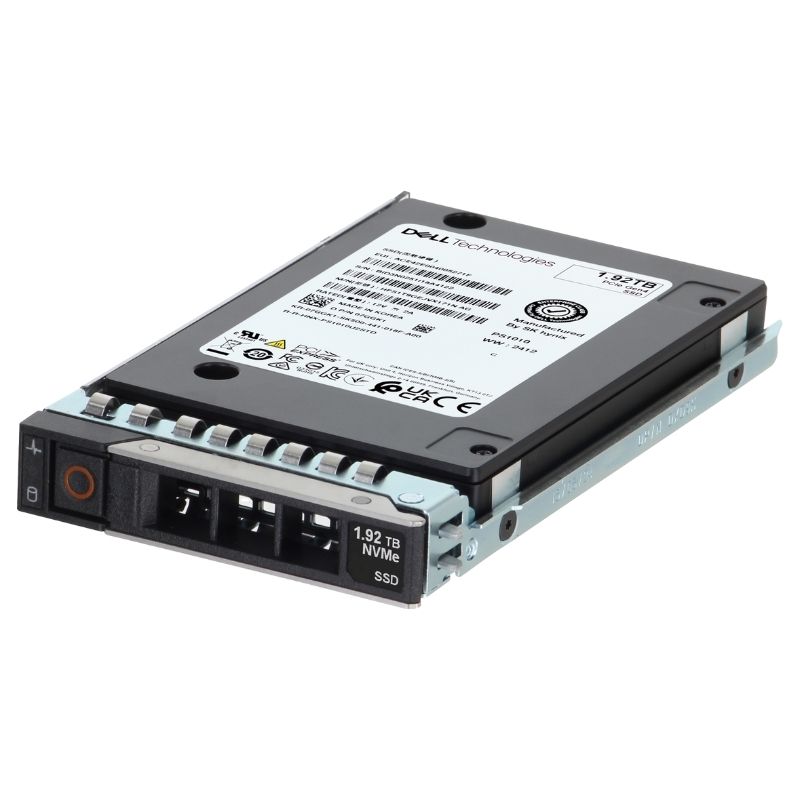


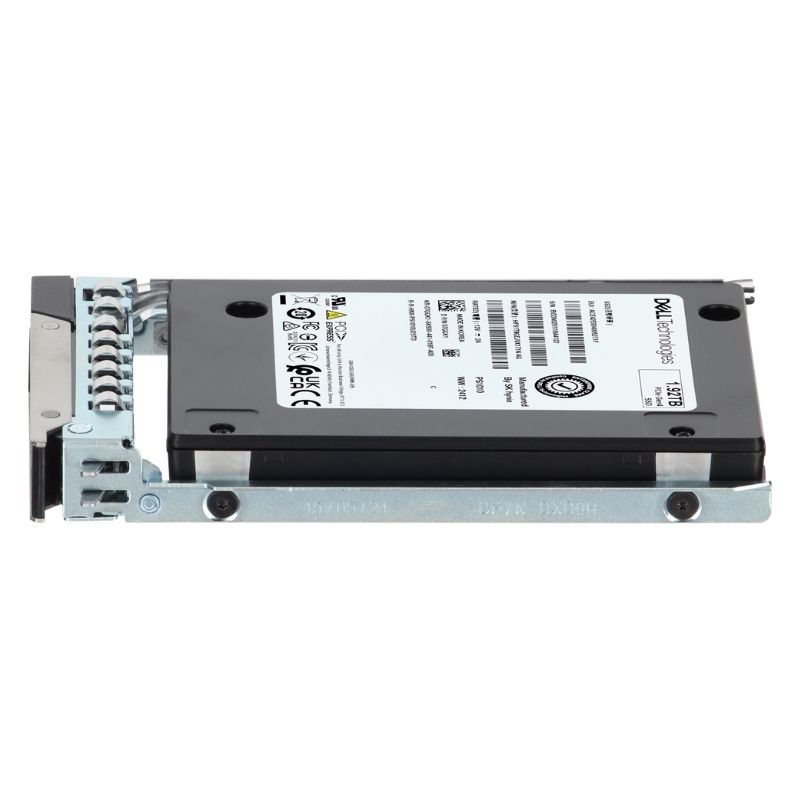
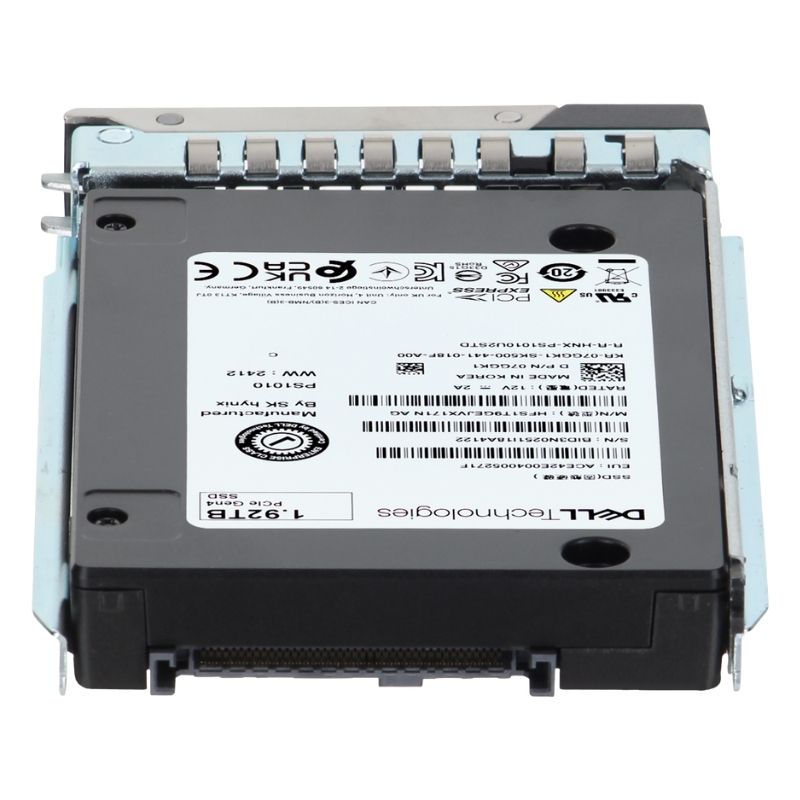
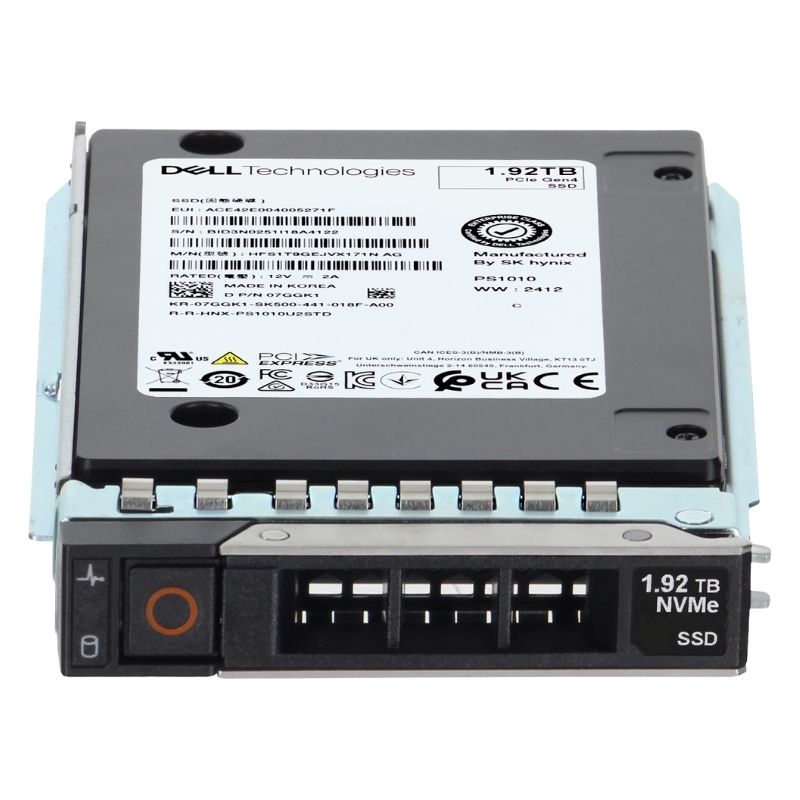
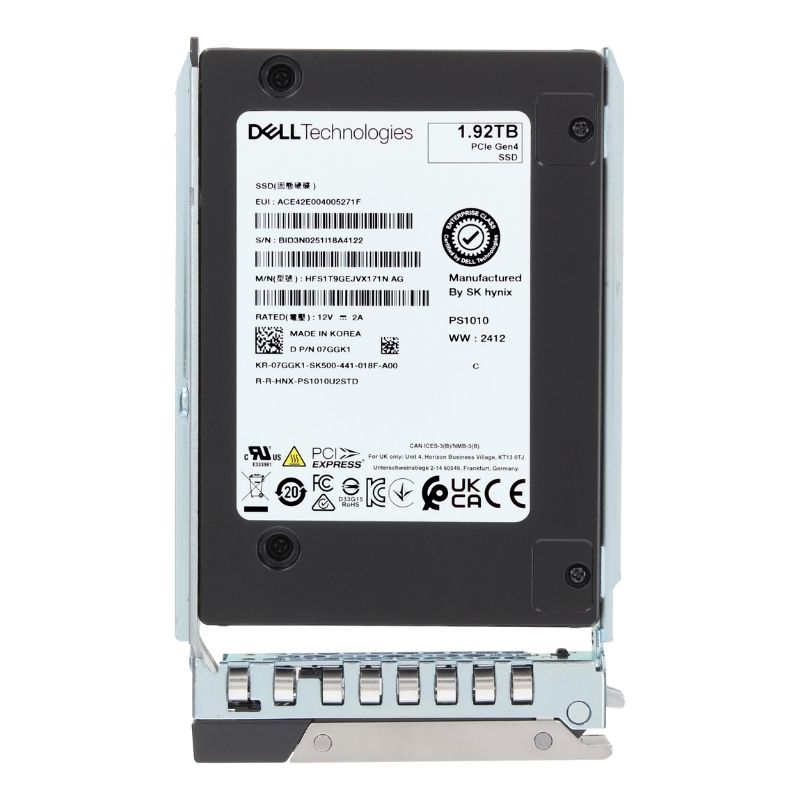
Dell 345-BMHM 1.92TB NVMe EDSSF E3.S PCIe Gen5.0 Read Intensive 2.5Inch Solid State Drive. New Sealed in Box (NIB) with 1-Year Replacement Warranty
The Dell 345-BMHM 1.92TB NVMe Read Intensive SSD is engineered for next-generation enterprise servers that demand ultra-low latency, massive throughput, and long-term reliability. Designed around PCIe Gen5.0 x4 and the NVMe 1.4 protocol, this internal solid-state drive delivers dramatically higher bandwidth than previous PCIe generations, making it an ideal fit for data-driven workloads, virtualization clusters, analytics engines, and AI-enabled applications running inside Dell PowerEdge servers.
PCIe Gen5 Matters for Modern Data Centers
This Dell 345-BMHM SSD uses advanced 3D TLC (Triple-Level Cell) NAND flash memory, which provides an excellent balance between performance, endurance, and affordability. By stacking memory cells vertically, 3D TLC delivers higher capacity and better durability than earlier planar flash designs.
NVMe 1.4 allows the Dell 345-BMHM SSD to communicate directly with the system CPU, bypassing legacy bottlenecks found in older SATA and SAS drives. This ensures faster command execution, greater IOPS, and smoother multitasking under heavy enterprise loads.
The E3.S form factor, part of the Enterprise and Datacenter SSD Form Factor (EDSSF) family, is specifically designed for modern rack-mounted servers. Compared to traditional 2.5-inch drives, E3.S SSDs provide better thermal performance, higher power efficiency, and increased storage density within the same physical footprint.
Leveraging the full bandwidth of PCI Express Gen5.0 x4, this enterprise SSD achieves a maximum interface speed of up to 128 GT/s, enabling servers to move data faster than ever before. The NVMe 1.4 protocol further enhances efficiency by reducing command overhead and improving parallel I/O processing across CPU cores.
The E3.S form factor, part of the broader EDSSF family, was developed by a consortium of industry leaders to address the limitations of the 2.5-inch drive bay. Its sleek, "ruler" style design is not merely aesthetic; it is a functional breakthrough. By elongating the drive and positioning components linearly, E3.S drives like the Dell 345-BMHM optimize airflow in server chassis, allowing cooler, more consistent operation even under the immense thermal load generated by PCIe Gen 5.0 interfaces. This design directly translates to sustained performance and higher reliability, as the drive can maintain peak speeds without aggressive, power-hungry thermal throttling.
At the heart of the Dell 345-BMHM's performance is its PCI Express 5.0 x4 interface. Doubling the bandwidth of the previous PCIe Gen 4.0 standard, Gen 5.0 delivers a raw data rate of 32 giga transfers per second (GT/s) per lane. For an x4 link, this translates to an available bandwidth of nearly 16 GB/s, removing a critical bottleneck for data-hungry applications. This category of Gen5 NVMe drives is essential for infrastructure aiming to keep pace with CPU and memory advancements, ensuring that storage is no longer the limiting factor in system performance.
Enterprise SSDs are typically classified into three endurance categories: Read-Intensive, Mixed-Use, and Write-Intensive. The Dell 345-BMHM 1.92TB falls squarely into the Read-Intensive tier. This classification is defined by its Drive Writes Per Day (DWPD) rating and the underlying NAND technology optimized for workloads where read operations can constitute 80-90% of total I/O.
This drive category leverages high-density 3D Triple-Level Cell (TLC) NAND flash. TLC stores three bits of data per memory cell, offering an excellent balance of cost, capacity, and endurance. For read-centric applications, TLC NAND provides performance nearly on par with more expensive Multi-Level Cell (MLC) alternatives while offering significantly higher storage densities. Advanced error correction, over-provisioning, and wear-leveling algorithms ensure that the drive meets its specified endurance and reliability targets.
These drives are perfect for serving as a primary tier in a multi-tiered storage architecture. Frequently accessed "hot" data—such as popular media files, scientific datasets, training corpora can reside on a pool of Gen5 E3.S 345-BMHM SSD, while "colder" data is relegated to higher-capacity, lower-performance storage. This creates an extremely responsive data lake or cache layer.
The Dell 345-BMHM is built for 24/7/365 operation in mission-critical environments. It includes end-to-end data path protection, advanced thermal throttling with reporting, and comprehensive power-loss protection circuits that ensure data in transit is committed to NAND in the event of an unexpected power failure.
The E3.S form factor is forward-looking, with a roadmap that supports the impending PCIe Gen 5.0 standard (64 GT/s) and the revolutionary Compute Express Link (CXL) protocol. CXL, built on the PCIe physical layer, will enable true memory-semantic access to storage, further blurring the line between memory and storage and enabling groundbreaking architectures for in-memory databases and advanced caching. An E3.S-based infrastructure is well-positioned to adopt these technologies as they mature.
The SSD controller in a read-intensive drive is tuned to prioritize read latency and queue depth management. Its architecture includes large, power-fail protected DRAM caches to store mapping tables, accelerating read operations. The firmware algorithms are designed to minimize "read disturb" and background garbage collection impact on foreground read performance, ensuring consistent low latency even during maintenance operations.


 Contact Us
 Information
 Catalog
 Solid State Drives (SSD)
 Network Switches
 Hard Disk Drives
 HBA & Controllers
 PC & Servers
 PC & Server Memory
 CPU & Processors
 Network Routers
 Power Supplies
 Tape Drives & Libraries
 Network Devices
 Computer & Network Cables