(7% discount is applied at checkout)
Cart is empty
Your go-to destination for cutting-edge server products
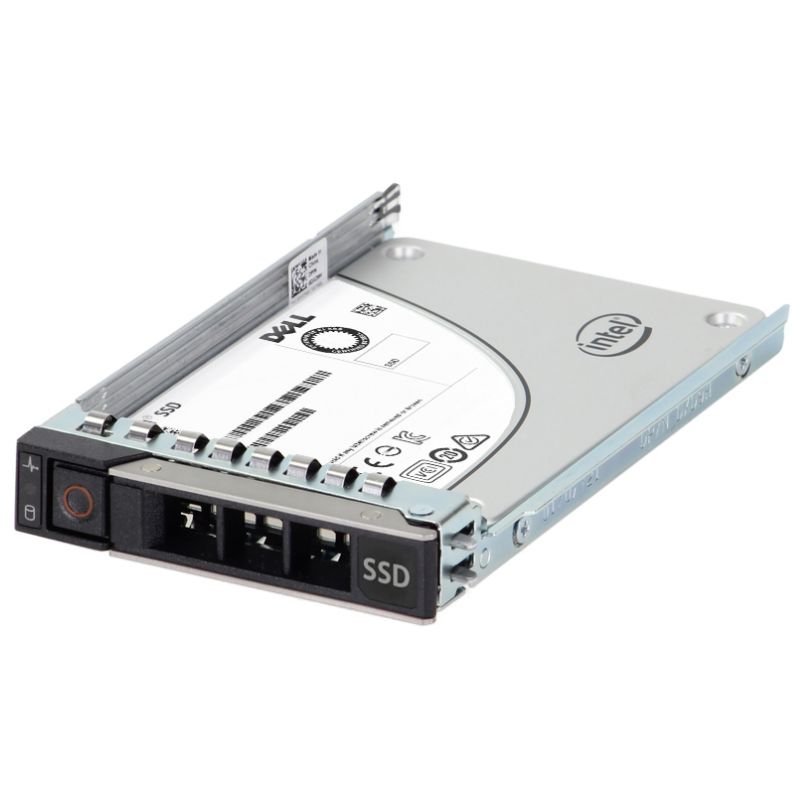


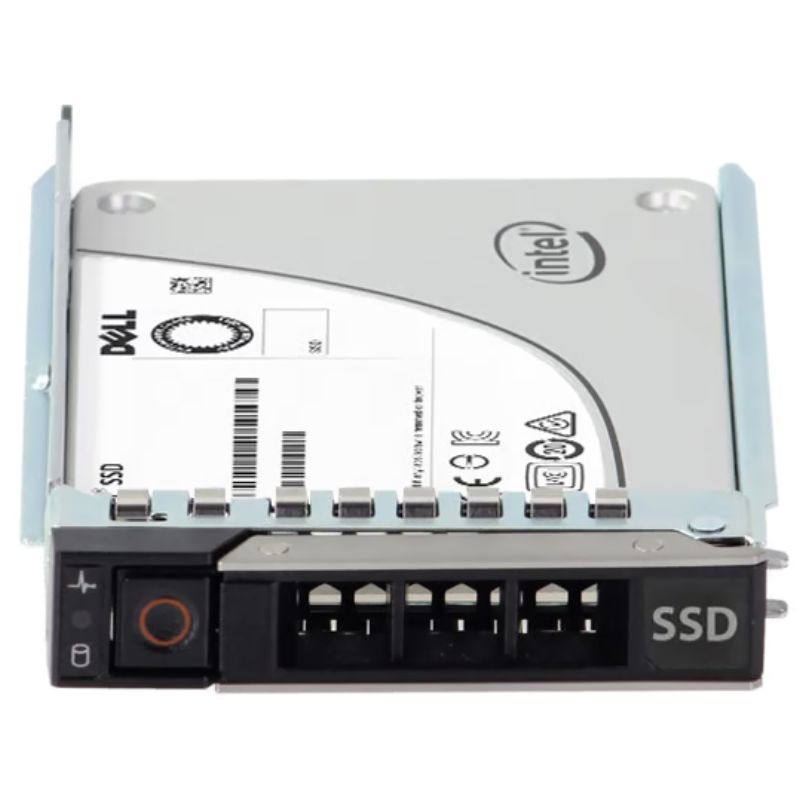
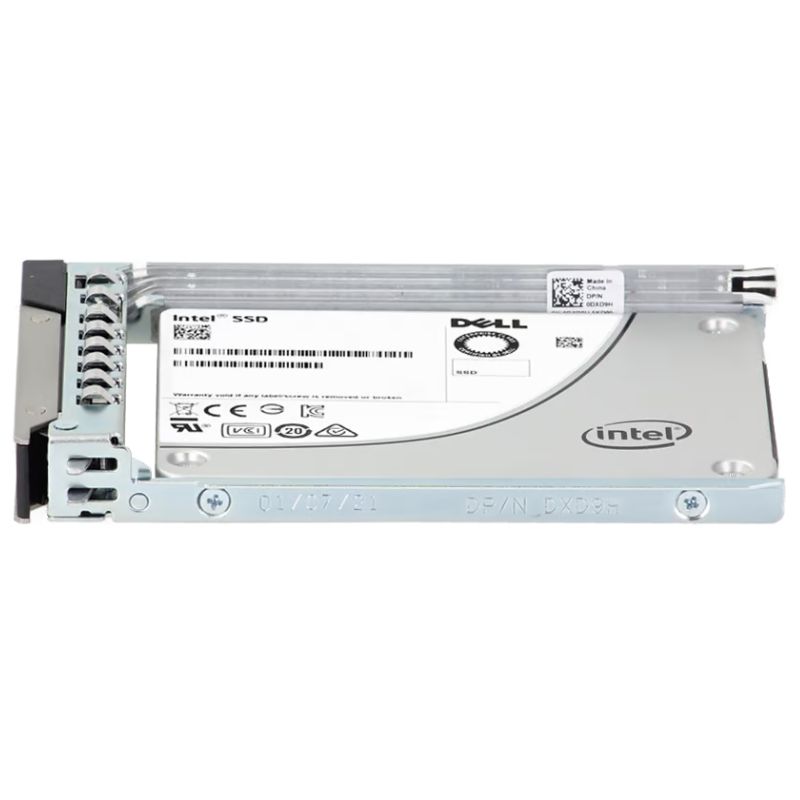
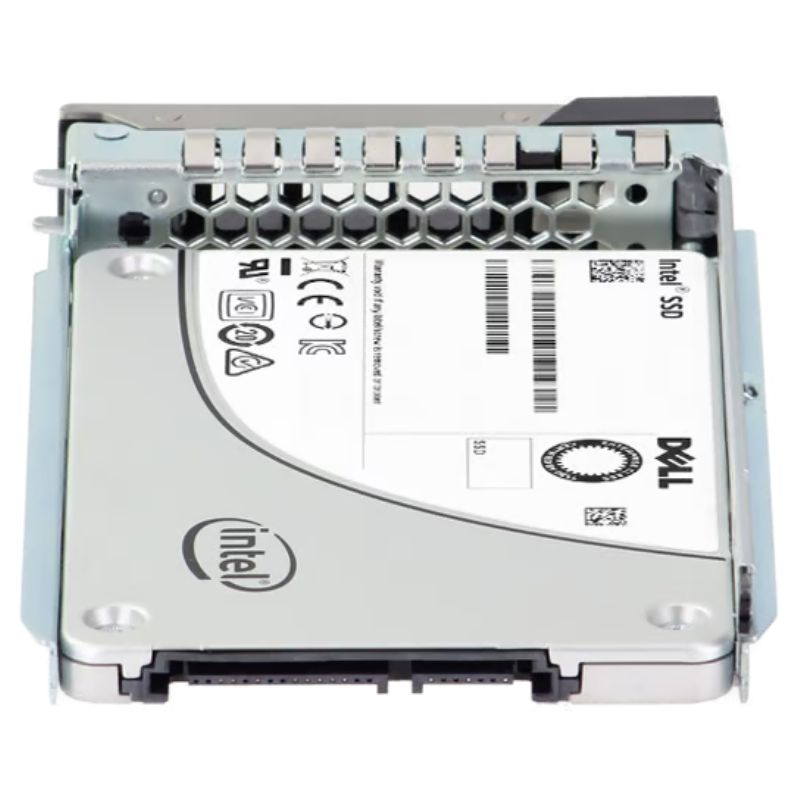
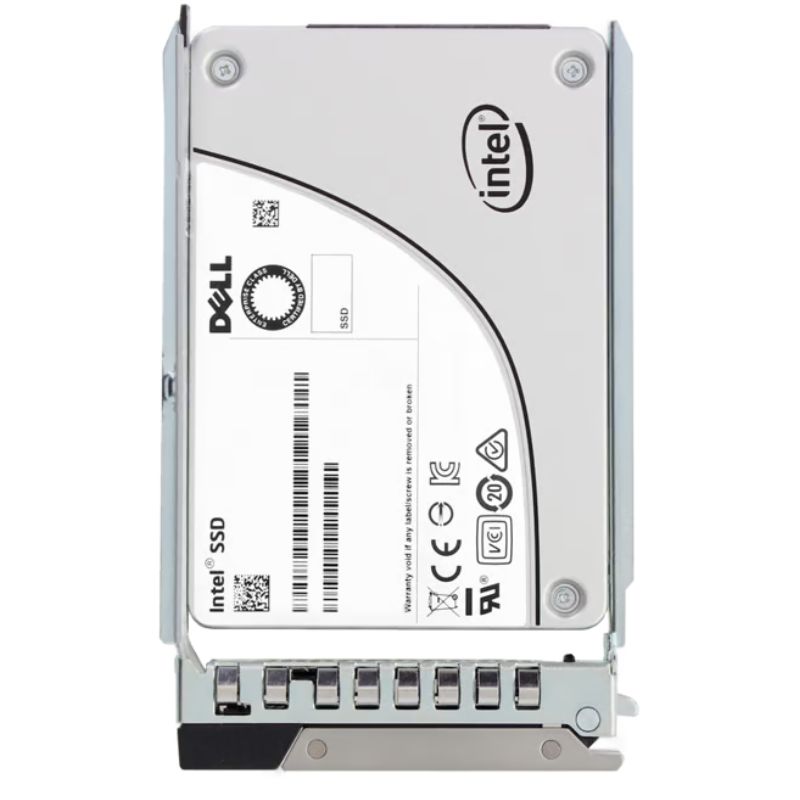
Dell 3481G 200GB Mixed-Use MLC SATA-6GBPS SFF Intel DC Enterprise Class for Poweredge Server Solid State Drive. Excellent Refurbished with 1-Year Replacement Warranty
The Dell 3481G 200GB Enterprise Solid State Drive is engineered for reliability, speed, and efficiency in demanding server environments. Designed with advanced MLC technology, this SSD ensures consistent performance for PowerEdge servers and Intel-based systems.
Detailed attention to reliability, predictable performance, and enterprise-grade compatibility defines the category of solid state drives represented by the Dell 3481G 200GB Mixed-Use MLC SATA-6GBPS SFF Intel DC Enterprise Class SSD for PowerEdge servers. This category occupies a critical place in data center and server storage architectures where balancing cost, capacity, and endurance is essential. The Dell 3481G family and similar mixed-use MLC SATA SSDs are engineered to meet sustained read/write workloads typical of virtualization, database caching, mail servers, and moderate I/O transaction environments while remaining fully compatible with mainstream server platforms such as Dell PowerEdge. The resulting category narrative is about purpose-built SSDs that offer a pragmatic mix of performance, endurance, and form factor advantages over legacy spinning disks and consumer-grade flash, making them a preferred choice for IT professionals upgrading or expanding server storage.
Performance in this category is deliberately tuned for enterprise patterns rather than bursty or purely sequential consumer workloads. The SATA-6GBPS interface provides a familiar, widely supported connection that simplifies integration across server generations and RAID controllers. For administrators who prioritize backward and forward compatibility when deploying SSDs into existing PowerEdge infrastructure, this interface reduces deployment friction. Mixed-use MLC flash balances write endurance and cost per gigabyte by combining multi-level cell density with firmware that optimizes wear leveling and error correction. The result is consistent throughput for typical server workloads, predictable IOPS under sustained load, and improved latency characteristics compared to HDDs. The category places emphasis on deep queue depth handling and stable performance under mixed random read/write patterns, a common requirement for virtualization hosts, small business databases, and medium-scale web services.
Small Form Factor (SFF) drives in this category deliver a compelling balance between capacity and physical density. Servers configured with SFF SSDs can achieve higher storage density per rack unit while benefiting from reduced power draw and lower heat generation relative to mechanical drives. For PowerEdge chassis where drive bay allocation and airflow management are critical, SFF SSDs integrate seamlessly with hot-swap trays and backplane connectors. Physical layout advantages support denser virtualization clusters and scale-out nodes where every millimeter of rack space contributes to total compute and storage density. This category highlights the advantages of small, robust, and thermally efficient storage devices that align with modern data center design philosophies prioritizing consolidation and energy efficiency.
Mixed-use MLC (Multi-Level Cell) flash is positioned as a middle ground between high-endurance single-level cell flash and high-density consumer TLC options. The category emphasizes predictable endurance metrics that suit moderated enterprise workloads without the premium cost of highest-endurance flash. Engineered firmware complements the MLC hardware to deliver robust wear-leveling algorithms, advanced error correction, and background housekeeping that preserve usable capacity and performance over time. For organizations seeking convertible total cost of ownership (TCO) benefits, mixed-use MLC drives offer an attractive proposition: better longevity than consumer-grade drives, lower per-gigabyte cost than the most durable enterprise flash, and a sensible balance for mixed read/write server roles.
Category content emphasizes native compatibility and validation with server platforms such as Dell PowerEdge. Validation against OEM firmware and hardware helps reduce unexpected behavior in enterprise environments, simplifying firmware management and support workflows. Drives in this category typically appear on vendor compatibility matrices and are often available through channel partners with support entitlements aligned to server warranties and service contracts. For IT teams managing large fleets, the ability to standardize on a validated SSD model reduces logistical complexity and improves mean time to recovery in case of drive replacement. In many deployments, the regained performance headroom and lower I/O latency translate directly to improved application responsiveness and more efficient use of CPU cycles on virtualized hosts.
Enterprise-class SSDs in this category are built with features that support active system administration and minimize operational surprises. SMART reporting capabilities provide proactive health metrics and thresholds that enable predictive maintenance. Some models include hardware-assisted power-loss protection to prevent in-flight data corruption during unexpected power events, reducing the need for lengthy and error-prone recovery procedures. Firmware management and update channels are handled with enterprise-grade tooling, ensuring administrators can apply controller enhancements and reliability fixes in a controlled way. The category content underscores these operational assurances as differentiators when selecting SSDs for production workloads where data integrity and predictable failure modes matter.
Server workloads—such as transactional databases, web application backends, and containerized microservices—benefit from the improved random IOPS characteristics and decreased seek times that flash memory provides. The net effect is faster boot times, reduced application response times, and better consolidation ratios on virtual machines per host, driving improved utilization of compute resources without sacrificing service-level objectives.
Latency is a core concern in the enterprise category; while absolute latency numbers vary by workload and system configuration, the category highlights how mixed-use MLC SATA SSDs reduce tail latency compared to traditional HDDs. Administrators can achieve more predictable service quality for latency-sensitive applications by leveraging SSDs to host hot datasets, caches, and I/O-intensive journal files. The consistent response profile offered by enterprise SSDs also simplifies performance capacity planning and allows architects to make finer-grained decisions about data tiering strategies—allocating higher-performance media to critical paths and relegating archival or less latency-sensitive workloads to higher-capacity or lower-cost tiers.
Reliability in this category is communicated through upward-looking metrics: mean time between failures (MTBF), drive writes per day (DWPD), and sustained write endurance estimates. Mixed-use MLC SSDs target enterprise acceptance by offering quantifiable durability that can be mapped to application-level expectations. The category description clarifies that careful workload characterization and proper provisioning are essential to achieving manufacturer endurance expectations in production. Administrators are encouraged to plan capacity with headroom for peak write cycles, to leverage RAID or erasure coding strategies to mitigate individual drive failure risks, and to integrate robust backup and snapshot practices as part of a comprehensive data protection strategy.
Capacity planning in this category is an exercise in balancing per-gigabyte cost against the performance and endurance needs of the workload. While SSDs remain more expensive per gigabyte than traditional hard drives, mixed-use MLC SATA SSDs offer a compelling middle ground for organizations seeking improved application performance without the premium of higher-end NVMe or enterprise-grade SLC solutions. The category content walks through how planners can quantify the performance gains in terms of virtual machine density, reduced I/O wait, and improved transaction rates, then compare those improvements against the incremental cost to determine return on investment. Cost sensitivity is addressed by highlighting scenarios where targeted deployment—using SSDs for hot data and tiering colder data to HDDs—yields optimal financial outcomes.
Finally, the category places solid state drives like the Dell 3481G within broader data tiering and hybrid storage architectures. It explains how SSDs serve as the performance tier for active datasets while traditional HDDs or capacity-optimized arrays serve archival and sequential workloads. The category explores hybrid approaches where software-defined storage or tiering engines automatically migrate frequently accessed blocks to SSDs and colder blocks to economical spinning disks.
Applications that commonly benefit from the category include virtualization hypervisors hosting mixed workloads, database servers with moderate transaction rates, caching layers in web application stacks, and file servers requiring fast metadata access. These use cases showcase where the balance of endurance, cost, and predictable performance delivers measurable improvements in application responsiveness and system efficiency. The category elaborates on how provisioning SSDs for the "hot" tiers of these applications reduces query response times, shortens backup windows, and eases storage bottlenecks that would otherwise constrain scaling plans.


 Contact Us
 Information
 Catalog
 Solid State Drives (SSD)
 Network Switches
 Hard Disk Drives
 HBA & Controllers
 PC & Servers
 PC & Server Memory
 CPU & Processors
 Network Routers
 Power Supplies
 Tape Drives & Libraries
 Network Devices
 Computer & Network Cables