
(7% discount is applied at checkout)
Cart is empty
Your go-to destination for cutting-edge server products
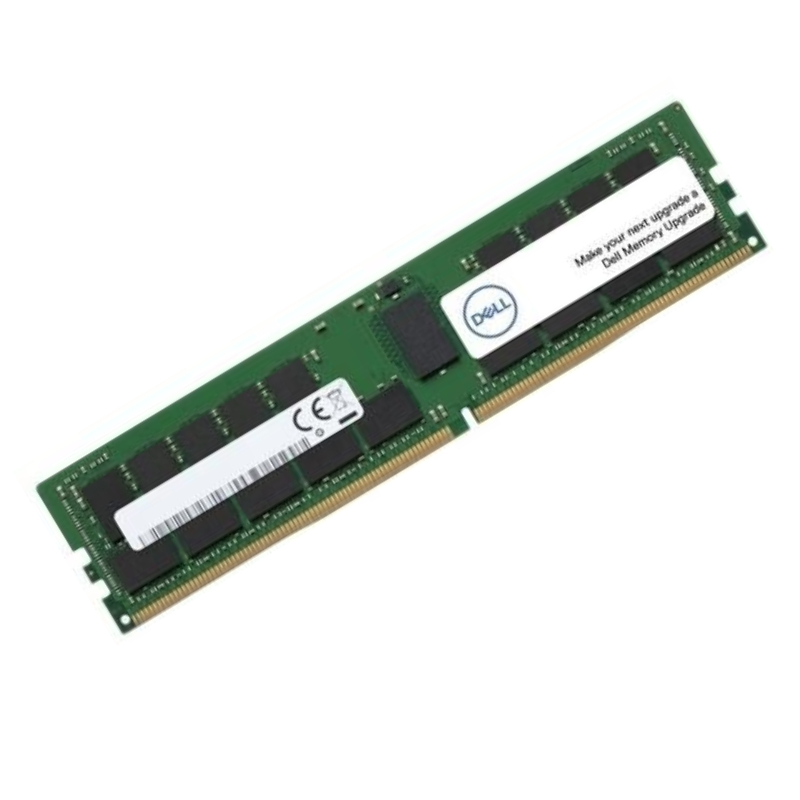
Dell 370-AHFX 64GB DDR4-2933MHz ECC Registered RDIMM Memory Module. New (System) Pull with 1 year replacement warranty - Samsung Version
| SKU/MPN | Warranty | Price | Condition | You save |
|---|---|---|---|---|
| 370-AHFX | 1 Year Warranty | $950.00 | New (System) Pull | You save: $332.50 (26%) |
| 370-AHFX | 1 Year Warranty | $1,099.00 | New Sealed in Box (NIB) | You save: $384.65 (26%) |
The Dell 370-AHFX is a high-performance 64GB DDR4 SDRAM memory module designed to meet the needs of demanding enterprise environments. Engineered to deliver speed, reliability, and scalability, it is a prime choice for server and workstation applications.
The Dell 370-AHFX 64GB 2933MT/s PC4-23400 CL21 ECC Registered Dual Rank X4 1.2v DDR4 SDRAM 288-Pin RDIMM memory module is engineered to meet the demanding reliability, capacity, and performance needs of enterprise-class PowerEdge servers. This RDIMM module combines high density with server-grade error correction and registered buffering, delivering predictable behavior under sustained multi-threaded workloads. Built to industry standards for DDR4 memory yet tuned to the needs of server platforms, the Dell 370-AHFX memory module is designed to support virtualization, database processing, memory-intensive analytics, and large in-memory caches. By offering 64GB of capacity per DIMM at the JEDEC standard 2933MT/s data rate and PC4-23400 throughput, it aligns with modern memory channel designs to provide both bandwidth and headroom for enterprise applications that demand consistent latency and error mitigation. ECC functionality ensures single-bit error detection and correction across the memory array, while registered operation stabilizes command and address signals for systems with multiple DIMMs per channel and high total memory capacities.
The internal organization of the Dell 370-AHFX centers on dual rank X4 architecture, a configuration that balances density and electrical loading. Dual rank modules present two independent sets of memory chips to the memory controller, effectively increasing available density without requiring single-chip capacities that might be more expensive or less readily available. The X4 designation indicates that each DRAM device on the module has a four-bit data width; this configuration is common on server DIMMs optimized for high capacity while retaining compatibility with existing memory controllers and ECC implementations. Operating at a nominal 1.2 volts, this DDR4 RDIMM reduces power draw relative to earlier DDR technologies while remaining within the thermal design envelope of modern server systems.
At 2933MT/s and PC4-23400 spec, the Dell 370-AHFX 64GB RDIMM delivers an attractive mix of raw bandwidth and acceptable CAS latency for server workloads. The CL21 timing indicates the column address strobe latency in clock cycles, an important metric when tuning memory performance for latency-sensitive tasks. While absolute latency in nanoseconds depends on clock rate and CAS combined, the 2933MT/s speed provides a clear throughput advantage over lower-speed alternatives, enabling higher sustained data transfer to and from the CPU and improving performance in memory-bound applications. Throughput gains are particularly noticeable under parallel access patterns common to virtualization hosts and clustered database instances. The registered buffer inside RDIMMs reduces electrical loading on the memory controller, which helps preserve signal integrity at high data rates and when multiple DIMMs populate each memory channel. This architectural feature supports stable operation under heavy load and enables servers to scale memory capacity without sacrificing reliability or introducing timing instability.
Error Correcting Code (ECC) and registered buffering are two pillars that make the Dell 370-AHFX module appropriate for enterprise environments. ECC automatically detects and corrects single-bit memory errors and flags multi-bit errors for system monitoring, which prevents data corruption from transient faults and ensures higher data integrity across critical workloads. Registered buffering adds a stage between the memory controller and the DRAM chips, handling address and command signals to reduce the direct electrical load on the memory controller. This buffering is particularly beneficial in configurations with a high DIMM count per channel, where signal integrity and timing become more challenging. Together, ECC and registered operation reduce the risk of system crashes, silent data corruption, and unplanned downtime, making the module a dependable choice for mission-critical servers running virtualization platforms, large-scale databases, or high-availability services.
When integrating the Dell 370-AHFX 64GB RDIMM into server configurations, several compatibility dimensions should be considered to ensure optimal operation. The physical 288-pin RDIMM form factor is the standardized connector for DDR4 server memory and fits into the DIMM slots of compatible PowerEdge servers and many enterprise-grade motherboards. System firmware and BIOS must support the DIMM capacity and speed; most recent PowerEdge generations include firmware-level compatibility for 64GB RDIMMs at 2933MT/s, but mixed-population memory configurations and population rules per memory channel can affect achievable speeds. It is important to follow the server vendor’s guidelines for symmetrical population of memory channels, matched ranks, and mixing RDIMMs with other module types. While the module adheres to JEDEC DDR4 specifications, actual operational parameters can be influenced by the CPU memory controller, BIOS settings, and the presence of memory mirroring or sparing features driven by the system management firmware.
Enterprise workloads that derive the most benefit from the Dell 370-AHFX 64GB RDIMM include virtualization consolidation, in-memory caching, analytic processing, large-scale database engines, and distributed application nodes. Virtualized hosts benefit from high per-DIMM capacity because more virtual machines and containers can be assigned substantial memory without consuming many DIMM slots, which optimizes slot utilization and reduces the need for additional servers. In-memory databases and caching layers, such as in-memory key-value stores or columnar analytics engines, show marked performance improvements with higher memory capacity and sustained bandwidth. For clustered compute tasks or high-performance computing nodes that require predictable memory behavior, the combination of ECC and registered buffering helps to preserve result integrity and minimize the chance of soft errors that could compromise long-running computations. In addition, system administrators who use memory capacity features such as large page support, memory overcommit strategies, or memory tiering will find the Dell 370-AHFX a practical building block for scalable, reliable server memory pools.
Deploying multiple 64GB Dell 370-AHFX modules in densely populated systems requires attention to thermal and power budgets. Although DDR4 at 1.2 volts is more power-efficient than earlier memory generations, densely populated servers with many high-capacity RDIMMs can still increase system power draw and internal airflow requirements. Ensuring adequate chassis ventilation, functional fan profiles, and correct server fan configurations is essential to maintain memory operating temperatures within manufacturer specifications. Data center design should account for the incremental power associated with memory upgrades at scale, including rack-level power distribution and cooling capacity. Monitoring temperature sensors available through the server management interface enables administrators to detect hotspots and adjust airflow or rack placement accordingly. When deploying at scale, planning for both electrical load and thermal dissipation ensures reliable long-term operation of servers populated with high-density RDIMMs.
Strategic capacity planning leverages the high per-module density of the Dell 370-AHFX to reduce the number of physical DIMMs needed for large memory pools. Servers with limited DIMM slots benefit from 64GB modules because they enable larger total system memory without requiring additional server nodes. When designing for future growth, using identical or matched memory ranks and speeds simplifies upgrades and preserves optimal channel balancing. Considerations for scalability include slot count, the number of memory channels supported by the CPU, and potential need for memory interleaving strategies determined by the platform. Enterprises building memory-intensive clusters must also factor in aggregate power, cooling, and workload distribution. Using high-capacity RDIMMs can reduce hardware footprint and simplify rack-level management while maintaining performance and redundancy goals.
Choosing between RDIMM, LRDIMM, and UDIMM types often hinges on density, compatibility, and performance trade-offs. RDIMMs like the Dell 370-AHFX use register-based buffering and are widely supported across server platforms. LRDIMMs (Load-Reduced DIMMs) introduce an advanced buffer architecture that reduces electrical loading even further, enabling higher maximum memory capacities per system but often at a higher cost and with a different set of compatibility considerations. UDIMMs (unbuffered DIMMs) are typically reserved for desktop or light server systems and lack the registered feature and comprehensive ECC found in enterprise RDIMMs. For many PowerEdge configurations where broad compatibility and reliable ECC operation are required, RDIMMs present an optimal balance between performance, capacity, and cost. System architects should review the vendor compatibility matrix and evaluate whether the density and electrical characteristics of RDIMM modules meet long-term scaling needs.


 Contact Us
 Information
 Catalog
 Solid State Drives (SSD)
 Network Switches
 Hard Disk Drives
 HBA & Controllers
 PC & Servers
 PC & Server Memory
 CPU & Processors
 Network Routers
 Power Supplies
 Tape Drives & Libraries
 Network Devices
 Computer & Network Cables