
(7% discount is applied at checkout)
Cart is empty
Your go-to destination for cutting-edge server products
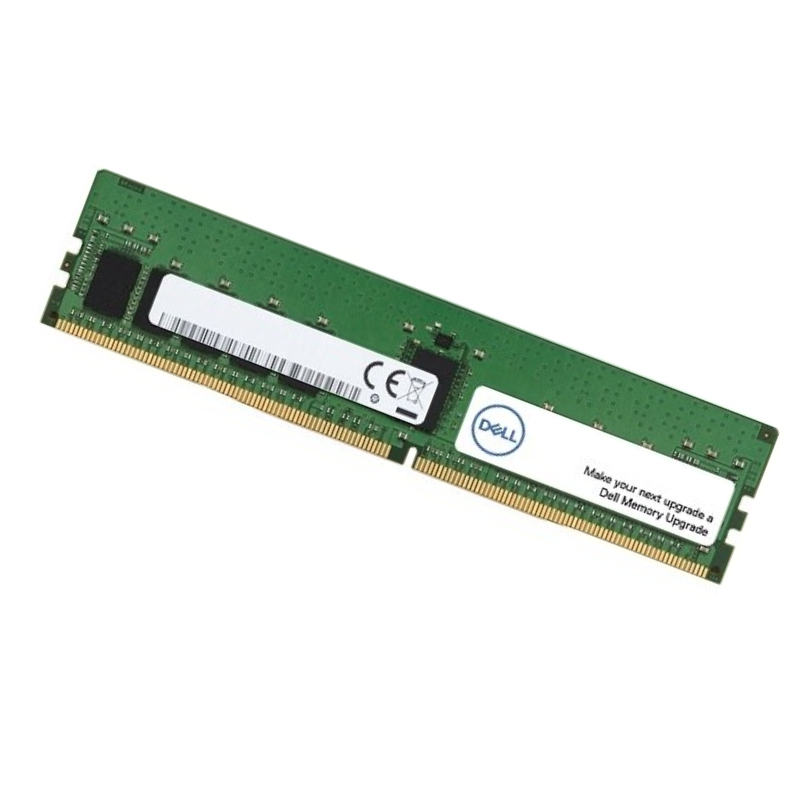
Dell 370-AHHH 128GB 4800mt/s Pc5-38400 Cl40 Ecc Registered 2rx8 1.1v DDR5 SDRAM 288-pin Rdimm Memory Module For Server. New Sealed in Box (NIB) - Samsung Version
| SKU/MPN | Warranty | Price | Condition | You save |
|---|---|---|---|---|
| 370-AHHH | 1 Year Warranty | $4,944.00 | New (System) Pull | You save: $1,730.40 (26%) |
| 370-AHHH | 1 Year Warranty | $6,796.00 | New Sealed in Box (NIB) | You save: $2,378.60 (26%) |
This High-Performance 128GB DDR5 SDRAM Memory Module from Dell offers exceptional reliability and speed for your systems, ensuring optimal performance for demanding server applications. With ECC Technology and a registered design, this module is perfect for mission-critical environments where data integrity is paramount.
The Dell 370-AHHH 128GB 4800MT/s PC5-38400 CL40 ECC Registered 2Rx8 1.1v DDR5 SDRAM 288-Pin RDIMM is engineered for modern datacenter workloads and enterprise-class servers, delivering increased capacity, higher memory bandwidth, and robust error-correction for mission-critical systems. This memory module is specified to support 4800 million transfers per second (MT/s) which aligns it with PC5-38400 class throughput, enabling large in-memory databases, virtualization hosts, analytics engines, and high-performance compute tasks to run with fewer memory-related bottlenecks. As an ECC Registered module in a 2Rx8 organization, it provides hardware-level error detection and correction combined with register buffering to stabilize signal integrity across multi-module configurations typical in PowerEdge server platforms. The 1.1 volt operating point reflects modern DDR5 power optimizations that lower energy consumption compared to legacy DDR4 designs and help reduce thermal load in densely populated server trays.
At the heart of this RDIMM is DDR5 SDRAM architecture that introduces improvements over previous generations in raw bandwidth, bank groups, and on-die ECC capabilities. The 288-pin RDIMM form factor provides a direct mechanical and electrical fit for compatible server memory sockets, adhering to industry standards for pinout and module thickness so rack-based servers can populate the memory channels without mechanical modification. This particular module is dual rank by eight (2Rx8), meaning it presents two ranks of x8 DRAM devices to the memory controller, a design choice that balances density and performance. CL40 CAS latency at 4800MT/s indicates the number of cycles between a read command and the availability of data; when combined with the higher transfer rate, the effective access latency remains competitive for large, latency-sensitive workloads.
Registered ECC memory distinguishes itself from unbuffered and non-ECC modules primarily by its ability to correct multi-bit or single-bit errors at the hardware level and to register address and command signals for improved electrical stability. In server environments where uptime and data integrity are paramount, the ECC function automatically detects and corrects single-bit errors while flagging double-bit errors for system management. This reduces the risk of silent data corruption and minimizes unplanned reboots.
This memory module is specified to be compatible with a wide range of Dell PowerEdge servers that support DDR5 RDIMM modules and the PC5-38400 profile. When selecting memory for a PowerEdge system, matching memory speed, rank, and voltage to the server’s validated memory list ensures optimal performance and avoids BIOS-level incompatibilities. Using Dell-qualified RDIMMs helps maintain supportability with Dell firmware updates, system diagnostics, and hardware monitoring tools. When purchased as an OEM or factory-configured part, the 370-AHHH module often integrates with Dell server firmware to present accurate DIMM population mappings to system management controllers, enabling administrators to quickly identify and service failed DIMMs without protracted troubleshooting.
The combination of 128 gigabyte capacity and 4800MT/s data rate creates a memory building block that is especially beneficial for large-scale virtualization and containerized deployments. Increasing per-socket capacity reduces the need for memory overcommit, improving performance for hypervisors and guest operating systems. Analytics workloads that rely on in-memory data structures, such as columnar databases, real-time analytics engines, and large-scale caching layers, benefit from the higher sustained bandwidth of PC5-38400. Scientific computing tasks that are memory-bound can realize throughput gains when memory channels are populated with higher-frequency RDIMMs, while enterprise applications that demand predictable latencies will find that the ECC Registered behavior reduces the frequency of corrective maintenance and error-induced slowdowns.
Operating at 1.1 volts, the Dell 370-AHHH module embodies the power efficiency improvements of DDR5 while maintaining electrical stability in multi-DIMM configurations. Lower supply voltage reduces per-DIMM power draw, which compounds across dense server chassis and contributes to lower datacenter operating costs when scaled across dozens or hundreds of servers. However, higher density RDIMMs also concentrate thermal energy in each slot, and system designers should ensure adequate airflow and server blade cooling to maintain JEDEC-compliant operating temperatures. Monitoring tools can report per-module thermal conditions in supported servers so administrators can react to changes before they impact reliability. In colder ambient environments, the decreased voltage can sometimes improve thermal headroom, but administrators should still follow OEM guidance for air pressure, fan speed profiles, and rack placement.
The 288-pin RDIMM uses the keyed notch and standard retention latches found in server-class DIMM sockets. When populating a server, populate memory channels per the server vendor’s channel population guidelines to preserve channel interleaving and maximize throughput. Because this module is registered, it can be mixed with identical rank/speed modules to scale capacity while preserving system stability. It is important to avoid mixing ECC Registered modules with unbuffered DIMMs or LRDIMMs within the same channel, as mixing memory buffer types can result in system boot issues or the BIOS downclocking all memory to a common denominator, reducing overall performance.
Enterprise virtualization hosts that run dozens of virtual machines benefit from the 128GB density by allowing larger memory reservations per VM and enabling memory-intensive workloads such as large in-memory caches or database buffer pools. High-performance database servers used for OLTP and OLAP workloads gain from the sustained bandwidth, which keeps query response times low under heavy concurrency. Machine learning training and inference workloads that utilize larger model weights or datasets can reduce disk I/O by storing more data in RAM, speeding access patterns for tensor processing units and CPUs. In addition, file and block storage controllers that perform deduplication and compression in-memory can scale their working sets with fewer memory constraints when equipped with high-capacity RDIMMs like the Dell 370-AHHH.
Deploying OEM-grade RDIMMs often unlocks integrated support features in server management frameworks. Dell PowerEdge servers expose DIMM health metrics through iDRAC and other management consoles, including information about ECC events, temperature, and part-level identification. These telemetry streams enable proactive maintenance by informing administrators of growing error counts or thermal anomalies before they cause systemic failures.
Compared to DDR4, DDR5 RDIMMs like the 370-AHHH offer higher per-module capacity ceilings, greater raw bandwidth, and lower operating voltage. The jump to PC5-38400 class speeds changes the balance between CAS latency and transfer rate, often yielding higher effective throughput despite nominally larger CAS cycle counts. For organizations considering an upgrade path, migrating from DDR4 to DDR5 requires platform-level compatibility checks, as CPU memory controllers and motherboard trace layouts must support DDR5 electrical characteristics and module registration. Alternative memory configurations such as LRDIMM provide different trade-offs, particularly in systems that require very high capacity but may sacrifice some latency or support a different register/cache architecture. ECC Registered RDIMMs remain the mainstream choice for many general-purpose servers because they provide a strong balance of capacity, reliability, and broad platform support.
To unlock optimal throughput, systems should follow channel population guidance from Dell and the server’s technical documentation. Populating channels symmetrically across CPU sockets and adhering to recommended slot orders preserves interleaving and reduces the chance that the memory controller will operate in a suboptimal configuration. In multi-socket systems, distributing identical-ranked modules across corresponding channels on each socket leverages NUMA-locality advantages for certain workloads, while systems that consolidate large memory footprints on a single socket should be aware of cross-socket bandwidth constraints. Carefully planned expansion strategies enable gradual scaling from modest configurations to high-density memory setups without compromising balanced performance.
Hardware ECC provides a baseline for data integrity, automatically correcting single-bit errors and flagging multi-bit conditions for system alerting. For organizations with regulatory or compliance needs, pairing ECC Registered memory with secure boot, encrypted storage, and secure enclaves can reduce the risk of data corruption and unauthorized access. Memory scrubbing features available in modern server firmware periodically scan memory to detect and correct latent errors, a process that complements ECC by reducing the accumulation of correctable errors over time. Administrators should ensure server firmware is maintained at recommended levels to support memory scrubbing, error logging, and reporting features that help satisfy audit and governance requirements.


 Contact Us
 Information
 Catalog
 Solid State Drives (SSD)
 Network Switches
 Hard Disk Drives
 HBA & Controllers
 PC & Servers
 PC & Server Memory
 CPU & Processors
 Network Routers
 Power Supplies
 Tape Drives & Libraries
 Network Devices
 Computer & Network Cables