
(7% discount is applied at checkout)
Cart is empty
Your go-to destination for cutting-edge server products
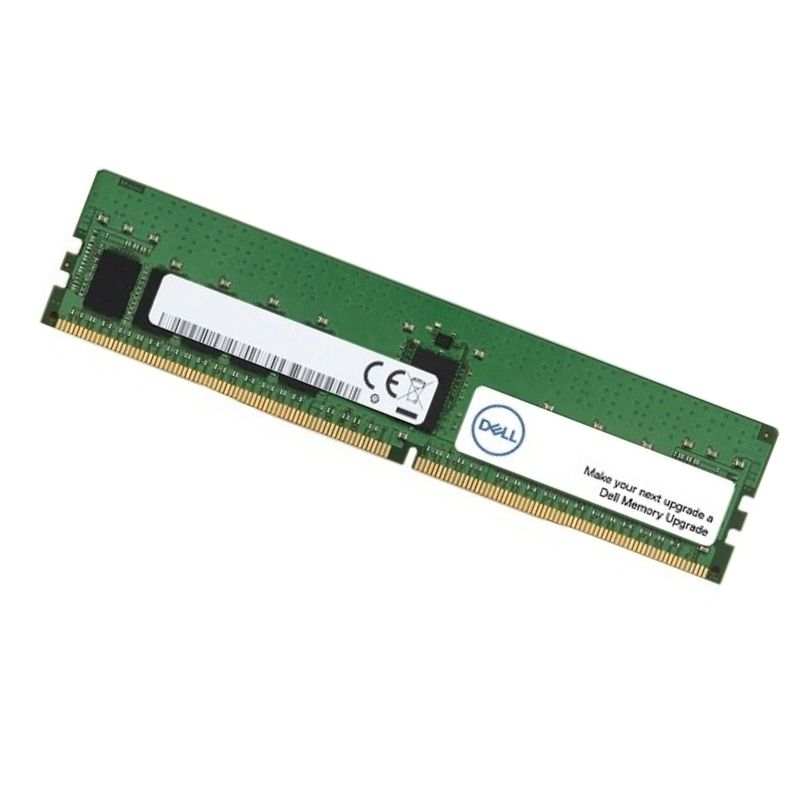
Dell 370-AHHM 128GB 4800mt/s Pc5-38400 Dual Rank X4 DDR5 SDRAM 288-pin Rdimm Memory Module For Server. New Sealed in Box (NIB) - Samsung Version
| SKU/MPN | Warranty | Price | Condition | You save |
|---|---|---|---|---|
| 370-AHHM | 1 Year Warranty | $5,145.00 | New (System) Pull | You save: $1,800.75 (26%) |
| 370-AHHM | 1 Year Warranty | $7,344.00 | New Sealed in Box (NIB) | You save: $2,570.40 (26%) |
Enhance your system's memory performance with the Dell 370-AHHM 128GB DDR5 SDRAM memory module. This high-performance component is engineered to meet the demands of modern data processing applications, ensuring maximum efficiency and reliability.
The Dell 370-AHHM 128GB 4800MT/s PC5-38400 Dual Rank X4 ECC Registered 1.1v CL40 DDR5 SDRAM 288-Pin RDIMM memory module is engineered for modern enterprise-class servers, offering a balance of high capacity, industry-leading bandwidth and error-correcting reliability. This high-density RDIMM brings 128 gigabytes of DDR5 technology into racks and blade systems that demand sustained throughput under heavy, multi-threaded workloads. With a rated data rate of 4800MT/s and the PC5-38400 designation, the module is targeted at virtualization hosts, in-memory analytics, large database instances and I/O-intensive applications where both capacity and signal integrity are essential. The Dual Rank X4 configuration and ECC Registered architecture are crucial differentiators that optimize memory channel utilization while ensuring the server retains data integrity through automatic detection and correction of single-bit memory errors. Operating at 1.1 volts with CAS latency CL40 timing, this RDIMM balances energy efficiency with dependable timing characteristics appropriate for tightly-coupled server environments.
The Dell 370-AHHM module uses DDR5 SDRAM die arranged into a dual-rank x4 topology, providing an internal organization that supports high density without sacrificing access patterns across the memory bus. Dual rank modules present two sets of memory arrays to the memory controller, improving overall throughput when the controller interleaves accesses, while the x4 device width enables greater data packing per DRAM chip. The PC5-38400 classification equates to a peak theoretical bandwidth of 38.4 GB/s per module when operating at the full 4800MT/s transfer rate per pin, making it well-suited to workloads that benefit from wide sequential transfers as well as broad simultaneous random access. The module’s ECC Registered design places buffer and register logic between the memory controller and the DRAM chips, which buffers command/address and data signals to stabilize signal timing and ensure predictable electrical characteristics in multi-module configurations. ECC functionality detects and corrects single-bit errors automatically and flags multi-bit errors to system firmware and management tools, increasing platform reliability in 24/7 production environments. The nominal supply voltage of 1.1V aligns with DDR5’s power-reduction advances over previous generations, delivering improved energy efficiency for large memory farms without compromising signal timing, with CL40 representing the CAS latency timing metric that system designers must consider alongside frequency and platform memory controller tuning.
Measured in both synthetic benchmarks and production workloads, a properly deployed 128GB 4800MT/s RDIMM can dramatically uplift memory-bound applications where capacity and per-module bandwidth are bottlenecks. In virtualization clusters running dozens of guest instances per host, the high density of 128GB per slot reduces the need to populate all slots with lower-capacity DIMMs, freeing up channels and simplifying maintenance. Memory-intensive analytics platforms and in-memory databases—particularly those that leverage columnar compression or keep active working sets in RAM—will see meaningful reductions in paging and swap activity when swapping smaller modules for high-capacity DDR5 RDIMMs. The increased prefetch capabilities, improved bank-group architecture inherent to DDR5 and the wider internal banks of dual rank x4 devices reduce latency tails under concurrency, improving tail latency for multi-threaded applications. In addition, 4800MT/s provides strong raw bandwidth for high-throughput tasks like real-time compression, software-defined storage caching and streaming telemetry aggregation, while the module’s ECC Registered nature preserves data correctness even under aggressive utilization.
Increased frequency compensates for the higher numeric CAS latency, so the tradeoff between cycles and transfer rate typically yields similar or better effective latency in many server use cases, especially where access patterns are heavy and full-cache-line transfers dominate. Designers and administrators should consider both CAS and clock rate: absolute nanosecond latency can be approximated by (CAS / frequency) and high transfer rates reduce the time spent on each data burst. For heavily parallel tasks that read and write many cache lines concurrently, the aggregate throughput advantage of PC5-38400 tends to outrun lower-frequency modules with lower CAS numbers. The module’s registered buffer and ECC logic also play a role in ensuring predictable timings within multi-socket servers where long memory traces and multiple populated DIMM slots can otherwise introduce signal degradation and timing variability.
This Dell 370-AHHM 128GB RDIMM is intended for server platforms that accept 288-pin DDR5 RDIMMs and support the DDR5 standard at 4800MT/s or higher. Typical target systems include enterprise-class Dell PowerEdge servers and other OEM systems that explicitly list DDR5 RDIMM support in their memory compatibility matrices. When choosing modules for a server, it is important to verify firmware and BIOS revisions as well as platform memory population guidelines; server firmware often contains SPD (Serial Presence Detect) and memory training optimizations that ensure stable operation across different DIMM ranks, densities, and topologies. Systems that accept RDIMMs also tend to support registered buffer characteristics, enabling administrators to build memory configurations with high-capacity modules while maintaining the robust signal integrity needed for dense memory populations. For multi-socket deployments, matching ranks and capacities across channels and sockets is recommended to maximize interleaving performance and reduce asymmetrical channel behavior that can cause unpredictable performance differences between workloads.
Because server memory operation depends heavily on platform memory training and firmware-level optimizations, administrators should consult platform compatibility lists and apply the latest BIOS/UEFI updates before installing high-capacity DDR5 RDIMMs. Vendors often release microcode and firmware updates that refine memory training sequences, tune VDD & VDDQ power rails, and adjust per-rank timing parameters to accommodate dual rank x4 topologies. Installing a 128GB 4800MT/s module into a chassis with older firmware may result in the module operating at a reduced speed until memory training completes with updated firmware that recognizes the DIMM’s full SPD profile. Additionally, system management tools such as iDRAC or iLO will report DIMM health and ECC events, providing the necessary telemetry to monitor module behavior in production. Administrators should enable ECC and configure logging to capture corrected/uncorrectable events and proactively plan for module replacements in the extremely unlikely event of recurring errors.
The Dell 370-AHHM 128GB RDIMM serves multiple server use cases where capacity and reliability are paramount. Virtualization hosts running dozens of virtual machines can consolidate more workload per host, reducing hardware footprint and per-VM licensing costs. Large in-memory databases and key-value stores benefit from expansive RAM to keep larger fractions of datasets resident in memory, dramatically reducing I/O latency and increasing query throughput. High Performance Computing (HPC) nodes that run large simulation jobs or data-parallel pipelines can exploit the module’s combination of capacity and bandwidth to keep working sets on-node rather than suffering distributed memory overhead. Cloud infrastructure providers can employ high-capacity modules to offer large-memory instance types without forcing customers into multi-node configurations, simplifying tenancy and network complexity. In storage appliance servers and software-defined storage implementations, increased DRAM for write buffers, metadata caches and read-ahead windows improves effective IOPS and reduces backend storage load. Across all these scenarios, the registered ECC aspect ensures that single-bit memory errors are corrected in-line and that multi-bit errors are discovered promptly, protecting application state and preventing data corruption in mission-critical systems.
Deploying 128GB RDIMMs requires careful planning to optimize memory channel utilization and performance. For dual-socket systems, balancing identical modules across sockets preserves NUMA symmetry and simplifies OS-level memory management. Populate all channels equally when possible to allow the platform to enable maximum interleaving, which reduces variance in latency across threads. When mixing DIMM densities, prioritize equal ranks per channel and consult vendor population rules because mixing ranks and densities can cause the system to revert to more conservative timing modes or disable certain performance features. Where the goal is highest possible memory throughput, administrators might prefer using matched pairs across channels and sockets, enabling the memory controller to apply symmetrical training and reduce the complexity of per-rank timing adjustments. In high-availability clusters, ensure spare modules are on-hand and that DIMMs are sourced from reliable suppliers to avoid supply-chain mismatches that lead to inconsistent SPD programming or binning differences between production modules.
ECC Registered RDIMMs like the Dell 370-AHHM are designed to deliver both run-time error correction and simplified serviceability for data center operations. ECC corrects single-bit errors automatically without interrupting workloads, while systems report these corrections for trend analysis, enabling predictive maintenance and proactive replacement policies. Registered buffering reduces load on the memory controller and makes it practical to populate many high-capacity DIMMs while preserving signal integrity; this contributes directly to service uptime, since poorly buffered memory configurations can generate uncorrectable errors or system instability under heavy load. Serviceability is further enhanced by standard DIMM retention mechanisms and form factor consistency—288-pin RDIMMs are industry standard for server platforms that support DDR5, which simplifies field-swapping and inventory management. The result is a memory module crafted for the operational demands of continuous production use in enterprise data centers, with monitoring and management tools that help administrators keep large memory infrastructures healthy over long service lifetimes.
Choosing the Dell 370-AHHM 128GB 4800MT/s PC5-38400 RDIMM centers on the need for durable, high-capacity memory that works predictably in enterprise servers. The combination of DDR5 speed, ECC Registered buffering, dual rank density and industry-standard 288-pin form factor creates a module that is both forward-looking and practical for present-day workloads. Organizations that prioritize consolidation, memory-bound application performance, and long-term reliability will find value in adopting high-capacity DDR5 RDIMMs where platform compatibility is verified. When planned into server purchase strategies and supported by firmware maintenance, monitoring and conservative population strategies, these modules enable data centers to scale compute density without sacrificing the stability and data integrity essential to mission-critical services.


 Contact Us
 Information
 Catalog
 Solid State Drives (SSD)
 Network Switches
 Hard Disk Drives
 HBA & Controllers
 PC & Servers
 PC & Server Memory
 CPU & Processors
 Network Routers
 Power Supplies
 Tape Drives & Libraries
 Network Devices
 Computer & Network Cables