
(7% discount is applied at checkout)
Cart is empty
Your go-to destination for cutting-edge server products
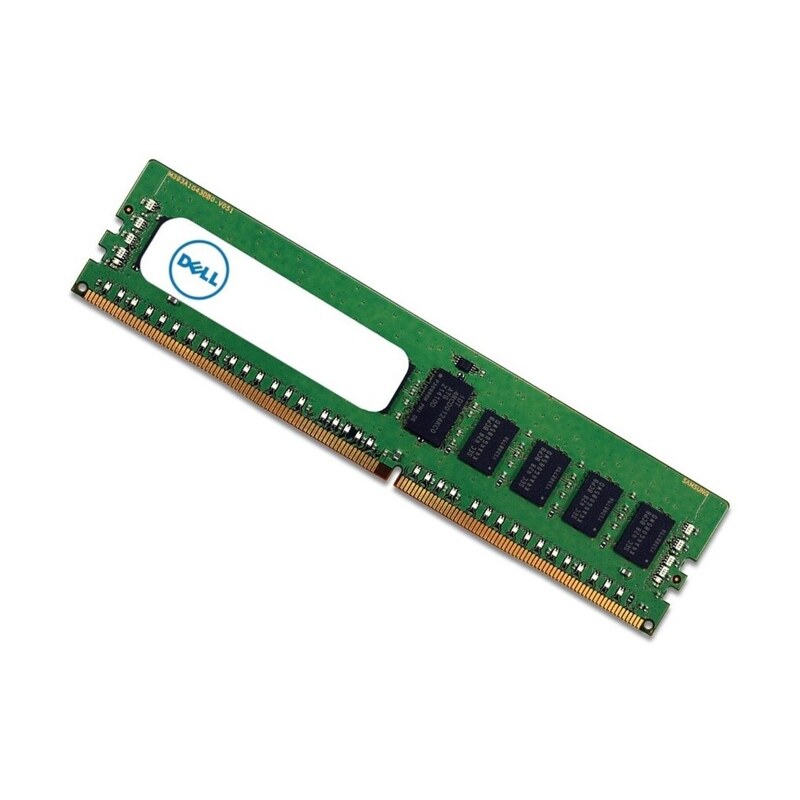
Dell 370-BBFB 128GB 3200MT/s PC4-25600 CL22 ECC Registered Quad Rank X4 1.2v DDR4 SDRAM 288-Pin LRdimm for Server Memory Module. New Sealed in Box (NIB) - Samsung Version
The Dell 370-BBFB 128GB 3200MT/s PC4-25600 CL22 ECC Registered Quad Rank X4 1.2v DDR4 SDRAM 288-Pin LRDIMM for Server Memory Module represents a high-density, high-performance class of server memory engineered for demanding enterprise environments. This category encompasses LR-DIMM (Load-Reduced DIMM) modules designed to deliver maximum capacity per channel while preserving signal integrity and enabling servers to operate with large memory footprints. Within this category the defining combination of 128GB per module, a 3200MT/s transfer rate (PC4-25600), CL22 latency characteristics, ECC registered operation, quad rank architecture, X4 chip organization, and a standard 288-pin DDR4 form factor together create a memory module optimized for virtualization, in-memory analytics, large databases, and heavy multi-VM workloads. It is tailored for server platforms that support LR-DIMM topologies and are validated with Dell systems or compatible enterprise motherboards.
Performance in this class of memory is anchored by the 3200MT/s nominal data rate, often described as PC4-25600 when converted to bandwidth; this specifies a theoretical peak transfer throughput per module that makes the Dell 370-BBFB 128GB module suitable for throughput-sensitive workloads. The CL22 CAS latency indicates the column access strobe delay measured in cycles, and when paired with the 3200MT/s clock it yields a balance between high bandwidth and acceptable access latency for server applications. ECC registered functionality is critical for error correction in environments where data integrity matters: the ECC circuitry corrects single-bit errors and reports multi-bit errors, minimizing the risk of data corruption in mission-critical systems. The registered (RDIMM-like) interface and load-reduced design reduce electrical loading on the memory controller, enabling deployment of more modules per channel and higher aggregate system memory capacity without sacrificing signal quality.
Quad rank modules internally present four ranks of memory to the memory controller; this increases available density on a single module and allows installers to place higher total memory capacity into server sockets. Quad rank configurations have implications for memory channel population rules and may affect maximum supported speed on certain CPUs or platforms depending on rank population and the chipset’s limitations. The X4 notation refers to the width of the DRAM chips used on the module: each chip has a 4-bit data width. X4 organization is common in higher-capacity server DIMMs because it facilitates packing more chips in parallel to reach the target 128GB capacity while supporting ECC bits and parity structures. The interaction of quad rank and X4 chip arrangement means platform compatibility checks are essential prior to large-scale deployment; however, the advantage is clear: fewer module slots are required to reach multi-terabyte capacities, significantly simplifying memory scaling for dense virtualization or in-memory data workloads.
LRDIMMs implement an onboard buffer that reduces the electrical load seen by the memory controller. This load reduction is what allows servers to accept greater numbers of modules per channel and to reach higher total capacity. For enterprises that run database clusters, memory-hungry simulation tasks, or large-scale virtualization, LR-DIMMs lower the cost and complexity of scaling memory by reducing the number of servers required to support the same memory footprint. The trade-off often involves slightly higher module latency compared to unbuffered or simple registered DIMMs, but for many server workloads the net performance is improved due to the higher available bandwidth and memory capacity. The Dell 370-BBFB module, as an LR-DIMM, is specifically targeted at workloads that prioritize total system memory over minimum latency, such as in-memory caching, data warehousing, and large-scale analytics.
Compatibility is a central consideration when selecting LR-DIMM modules for production servers. The Dell 370-BBFB 128GB LR-DIMM is commonly validated for use in Dell PowerEdge platforms and selected enterprise motherboards that explicitly support load-reduced memory. System firmware, BIOS updates, and vendor memory qualification lists (QVLs) should be checked prior to installation to ensure that the server recognizes the quad rank configuration and maximizes speed settings. Many modern server CPUs and chipsets automatically adjust memory frequency depending on the number of ranks populated per channel; therefore, administrators should consult platform documentation to determine trade-offs between population density and supported speeds. Vendor validation typically covers thermal profiles, voltage tolerances at 1.2v nominal, and ECC operation under heavy loads, which helps prevent intermittent errors and ensures predictable behavior at scale.
Deploying 128GB LR-DIMMs often requires firmware updates to address compatibility patches and stability improvements. BIOS settings may expose memory frequency selectors, rank interleaving options, and memory training routines that influence both performance and stability. Some systems provide options to toggle between optimized capacity and optimized speed, where the former prioritizes higher density at the potential cost of lowered clock rate. Enabling advanced memory features such as bank group interleaving or memory scrubbing can improve effective throughput and data integrity but may also slightly alter latency measurements. Administrators should follow vendor-prescribed firmware versions and documented configuration guides when integrating Dell 370-BBFB modules to avoid unsupported combinations that could reduce memory performance or prevent POST completion.
Operating at 1.2 volts, DDR4 modules tend to consume less power per bit transferred compared to previous generations, but higher-density LR-DIMMs like the 128GB Dell 370-BBFB will draw more power overall than smaller modules due to the number of chips and the presence of buffer chips. Thermal management is therefore an important consideration in rack-level deployments. Proper airflow, well-designed server chassis cooling, and targeted CPU/system fan profiles ensure DIMM temperatures remain within manufacturer-specified ranges. Overheating can cause thermal throttle events, ECC corrections, or intermittent errors that mimic hardware faults. Server enclosures often include blanking panels, directed ducting, and fan speed control to maintain predictable thermal performance when populated with many LR-DIMMs.
This category of memory is particularly appropriate for servers running large-scale virtualization platforms where many virtual machines require individual memory allocations, for in-memory database systems that keep large datasets resident in RAM for ultra-low-latency access, and for analytics engines and artificial intelligence training nodes that require extensive working memory. Because LR-DIMMs shift more capacity into fewer motherboard slots, they simplify memory expansion in blade or dense chassis systems where slot real estate is at a premium. High-availability clusters benefit from ECC protection and vendor-backed validation, ensuring that transient errors are corrected before they propagate through the stack.
Selecting the Dell 370-BBFB 128GB 3200MT/s PC4-25600 CL22 ECC Registered Quad Rank X4 1.2v DDR4 SDRAM 288-Pin LRDIMM should be guided by workload profiles, platform compatibility, and long-term capacity planning. If your workload requires large single-node memory pools, such as in-memory databases, virtualization hosts, or data analytics servers, the benefits of a high-capacity LR-DIMM are clear. Conversely, if your environment values the absolute lowest possible memory latency for certain HPC kernels, you may need to weigh the small latency differences against the benefits of increased capacity. In almost all enterprise scenarios where capacity, stability, and error correction are prioritized, a validated LR-DIMM such as the Dell 370-BBFB represents a robust choice for modern server infrastructures.


 Contact Us
 Information
 Catalog
 Solid State Drives (SSD)
 Network Switches
 Hard Disk Drives
 HBA & Controllers
 PC & Servers
 PC & Server Memory
 CPU & Processors
 Network Routers
 Power Supplies
 Tape Drives & Libraries
 Network Devices
 Computer & Network Cables