
(7% discount is applied at checkout)
Cart is empty
Your go-to destination for cutting-edge server products
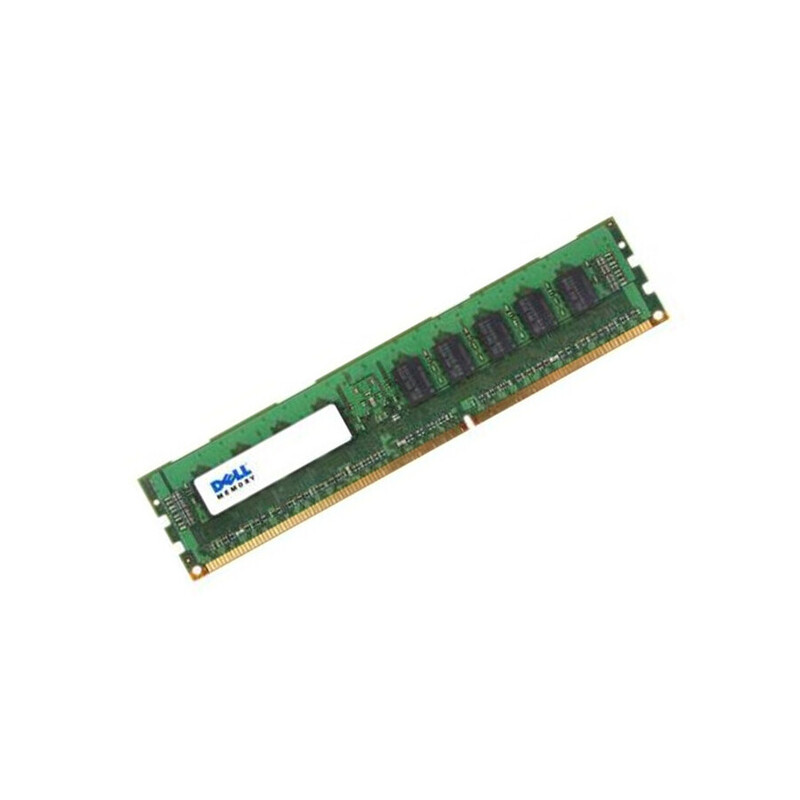
Dell 370-BBLG 128GB 4800MT/s PC5-38400 CL40 ECC Registered 4rx4 1.1v DDR5 SDRAM 288-Pin RDIMM Memory Module. New Sealed in Box (NIB) - Samsung Version
| SKU/MPN | Warranty | Price | Condition | You save |
|---|---|---|---|---|
| 370-BBLG | 1 Year Warranty | $5,520.00 | New (System) Pull | You save: $1,932.00 (26%) |
| 370-BBLG | 1 Year Warranty | $6,552.00 | New Sealed in Box (NIB) | You save: $2,293.20 (26%) |
When it comes to high-performance computing, having ample memory is crucial. The Dell 370-BBLG ECC DDR5 is equipped with an impressive 128GB memory capacity, making it an ideal choice for users who require superior multitasking capabilities and seamless execution of resource-intensive tasks.
The Dell 370-BBLG 128GB 4800MT/s PC5-38400 CL40 ECC Registered 4Rx4 1.1V DDR5 SDRAM 288-pin RDIMM memory module represents a high-capacity, high-performance family within enterprise DRAM solutions. This category captures server- and workstation-grade registered ECC DDR5 modules engineered for modern Xeon-class platforms and select high-end workstations that require the stability of registered memory and the error-correcting benefits of ECC. Readers exploring this category expect in-depth technical clarity, guidance for compatibility and deployment, and nuanced explanation of architectural terms like 4Rx4 (quad-rank x4 chip organization), CL40 latency, and the significance of PC5-38400 bandwidth at 4800 million transfers per second. The module is designed around the DDR5 standard and optimized to run at a low 1.1-volt operating point, delivering improved power-efficiency over previous generations while supporting higher densities and per-module throughput that scale to meet today’s virtualization, database, in-memory analytics, and HPC workloads.
Modules in this category are intended primarily for enterprise servers, dense virtualization hosts, and compute nodes in clustered environments where memory capacity and data integrity are mission-critical. The 128GB capacity per DIMM enables system architects to populate fewer DIMM slots to reach large memory footprints, simplifying memory population rules and reducing channel crowding. These RDIMM modules are ECC Registered, meaning they incorporate a register between the memory controller and DRAM chips to buffer command and address signals. This register reduces electrical load on the memory controller and allows higher capacities and reliable operation across many populated slots. The ECC functionality detects and corrects single-bit errors and detects multi-bit errors, providing a layer of protection essential in 24/7 production systems, cloud servers, and critical database appliances.
DDR5 SDRAM is a generational leap in memory technology that focuses on increased bandwidth and per-module capacity while adopting new power and architectural optimizations. A PC5-38400 module rated at 4800MT/s offers a raw theoretical bandwidth that translates into higher sustained throughput for memory-bound workloads. For applications with large working sets and frequent random access patterns, DDR5’s increased transfer rates reduce stalls and help the CPU keep pipelines fed.
CAS latency, expressed here as CL40, refers to the number of cycles between a READ command and when data becomes available. While CL40 is higher in absolute cycle count compared with legacy DDR4 timings, DDR5’s dramatically increased clock frequency and per-transfer bandwidth often offset cycle-count increases in overall latency in nanoseconds. When choosing memory for latency-sensitive workloads, consider measured latency in nanoseconds rather than cycle counts alone, and pair memory selection with CPU and platform guidance to balance latency versus throughput trade-offs.
The 4Rx4 designation indicates a four-rank module built from x4 DRAM device chips. Quad-rank modules enable high capacities in a single module but impose different electrical and thermal characteristics than single- or dual-rank modules. On many server platforms, quad-rank DIMMs present a higher load to the memory controller and may change supported memory frequency depending on slot population and rank mixing rules. Quad-rank modules are commonly used in scenarios where each socket must host very large memory pools without consuming many DIMM slots, such as in memory-heavy virtualization hosts or in-memory database servers.
Compatibility is a crucial concern in this category. Enterprise DDR5 RDIMMs require server and workstation platforms that explicitly support registered ECC DIMMs of the DDR5 standard. OEM compatibility lists and HCL (hardware compatibility lists) should be consulted to ensure the Dell 370-BBLG is supported on specific motherboard and CPU families. System firmware, including BIOS or UEFI, may include microcode updates and SPD (Serial Presence Detect) settings that define supported JEDEC speeds, XMP/overclock profiles, and thermal management behavior. Administrators should verify the platform's maximum supported module density per slot and any restrictions when mixing ranks and module capacities. Memory interleaving, channel balancing, and population order are often enforced by firmware; failing to adhere to recommended population rules can result in reduced bandwidth, lower supported frequencies, or failure to post.
Optimally configuring memory in servers involves observing the platform’s channel and slot architecture. Modern dual- and quad-channel server architectures achieve the best throughput when channels are populated symmetrically. Because the Dell 370-BBLG 128GB RDIMM is a quad-rank module, administrators should be aware that populating all slots with quad-rank DIMMs could limit achievable frequency compared with mixed or lower-rank populations. Many vendors publish explicit population rules—such as filling certain slots first and leaving specific slots empty with certain ranks—to maintain maximum speed. Channel optimization also affects NUMA node balancing in multi-socket servers; correct population ensures workloads see a consistent and predictable memory topology for latency-sensitive scheduling.
There is an important trade-off between capacity and bandwidth. Choosing 128GB quad-rank modules reduces the number of DIMMs needed to reach a target capacity, which can simplify slot management but may affect the highest sustainable frequency when all channels are populated with quad-rank parts. In situations where raw frequency is paramount, system designers may opt for lower-rank modules at higher per-channel speeds. For most enterprise workloads, however, the density and ECC reliability of 128GB RDIMMs outweigh marginal differences in peak frequency, especially when the workload benefits from larger addressable memory space and reduced page faults or reduced reliance on secondary storage.
ECC Registered RDIMMs provide in-hardware error detection and correction capabilities. Single-bit errors are corrected transparently, while multi-bit errors trigger alerts depending on platform support and system policy. Many server platforms integrate machine check architecture (MCA) logging and predictive failure analysis, reporting corrected and uncorrected ECC events so administrators can respond preemptively. In mission-critical deployments, monitoring corrected error counts helps identify aging DRAM cells or marginal signal integrity situations before they escalate into uncorrectable errors. For environments requiring the highest resilience, pairing ECC RDIMMs with redundant power supplies, hot-swap components, and fully supported firmware reduces the risk of silent data corruption.


 Contact Us
 Information
 Catalog
 Solid State Drives (SSD)
 Network Switches
 Hard Disk Drives
 HBA & Controllers
 PC & Servers
 PC & Server Memory
 CPU & Processors
 Network Routers
 Power Supplies
 Tape Drives & Libraries
 Network Devices
 Computer & Network Cables