
(7% discount is applied at checkout)
Cart is empty
Your go-to destination for cutting-edge server products
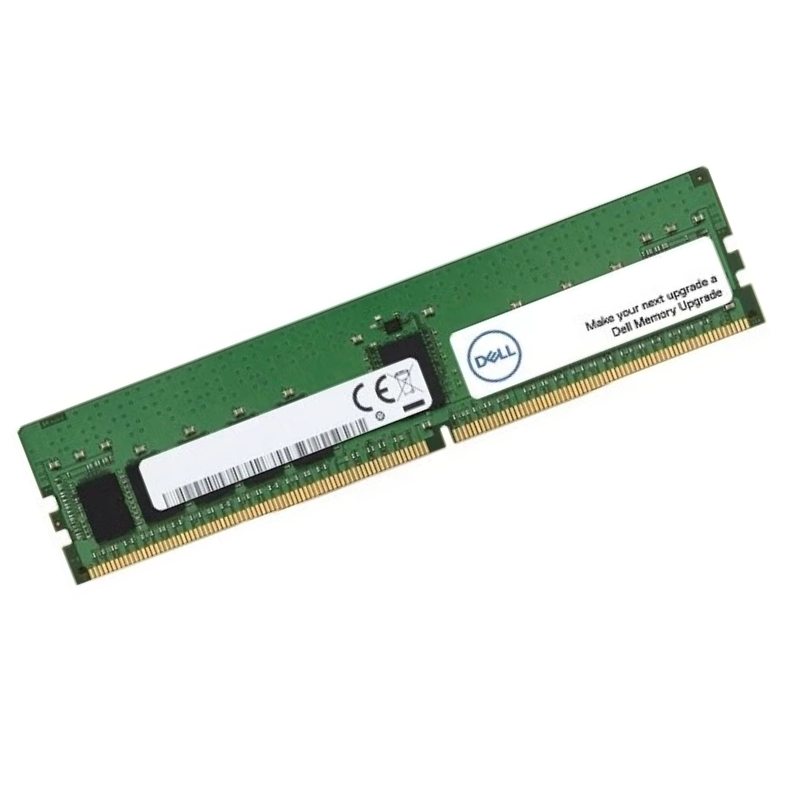
Dell 370-BBRM 128GB DDR5 5600mt/s PC5-44800 Ecc Registered 1.1v Cl46 SDRAM 288-pin Rdimm Memory Module. New Sealed in Box (NIB) - Hynix Version
| SKU/MPN | Warranty | Price | Condition | You save |
|---|---|---|---|---|
| 370-BBRM | 1 Year Warranty | $6,144.00 | New (System) Pull | You save: $2,150.40 (26%) |
| 370-BBRM | 1 Year Warranty | $8,160.00 | New Sealed in Box (NIB) | You save: $2,856.00 (26%) |
The Dell 370-BBRM represents a significant advancement in server memory technology, delivering exceptional performance, reliability, and capacity for modern data center demands. This specific configuration—a single 128GB module operating at 5600MT/s—is engineered to provide the high-bandwidth and large memory footprint required by memory-intensive applications, virtualization environments, and enterprise-level databases.
Before delving into the detailed benefits and applications, it is crucial to understand the core technical specifications that define the Dell 370-BBRM memory module. These specifications collectively determine its compatibility, performance characteristics, and ideal use cases.
The module features a substantial 128GB capacity in a single 1x128GB configuration. This high-density design is pivotal for servers where physical DIMM slots are limited but large total memory capacity is a requirement. It allows system administrators to maximize the total RAM in a system without consuming all available slots, leaving room for future expansion.
Operating at a data rate of 5600 Megatransfers per second (MT/s), this DDR5 module is classified under the PC5-44800 designation. The "5600MT/s" refers to the number of data transfer operations the module can perform per second on each data pin, while "PC5-44800" refers to the theoretical peak transfer rate in megabytes per second (MB/s). This high speed is essential for reducing data access latency and improving the overall throughput of the server.
As a DDR5 (Double Data Rate 5) SDRAM module, the 370-BBRM incorporates several architectural improvements over previous DDR4 generations. Key among these is the separation of the data buffer into two independent 40-bit data channels (32 data bits with 8 ECC bits each) per module. This effectively increases concurrency and improves efficiency for multi-threaded workloads.
This module integrates ECC (Error Correcting Code) and is a Registered DIMM (RDIMM). ECC is a critical feature for server environments, as it can detect and correct single-bit memory errors in real-time, preventing data corruption and potential system crashes. The "Registered" aspect means the module includes a register (or buffer) between the DRAM chips and the memory controller. This register reduces the electrical load on the controller, allowing for greater stability and the support of more memory modules per channel, which is essential for populating large-scale servers with high-density memory.
The Dell 370-BBRM utilizes the standard 288-pin DIMM layout specifically designed for DDR5 memory. It is physically incompatible with DDR4 slots due to a different keying notch position. Ensuring the correct physical installation is the first step in compatibility.
The primary and intended application for the 370-BBRM memory module is within Dell's PowerEdge server lineup. It is validated, tested, and certified by Dell to work seamlessly with specific generations of PowerEdge servers, ensuring optimal performance and reliability. Using genuine Dell memory like the 370-BBRM guarantees full compatibility and avoids potential system errors or boot failures that can occur with third-party modules.
This memory module is typically designed for newer generations of PowerEdge servers that support the DDR5 memory architecture. This includes platforms based on Intel Xeon Scalable Processors (4th Gen Sapphire Rapids and newer) and AMD EPYC processors (7004 "Genoa" series and newer). Specific models include, but are not limited to, the PowerEdge R760, R760xa, R760xd2, R660, and T560 rack and tower servers. It is critical to consult the official Dell PowerEdge Technical Guide or use the Dell Memory Configuration Tool to verify compatibility with a specific server model and chassis.
The combination of DDR5 technology, high capacity, and server-grade features makes the 370-BBRM a cornerstone for building powerful and resilient IT infrastructure.
The 5600MT/s speed, coupled with the architectural improvements of DDR5, provides a significant boost in memory bandwidth. This is directly beneficial for CPU-intensive tasks, allowing processors to access data more quickly and avoid bottlenecks. Applications such as in-memory databases (e.g., SAP HANA), large-scale virtualization (VMware vSphere, Microsoft Hyper-V), and high-performance computing (HPC) clusters will see tangible performance improvements with higher-bandwidth memory.
DDR5 introduces a more refined power management system. The Power Management IC (PMIC) is now located on the DIMM itself, rather than on the motherboard. This allows for more precise and efficient power delivery to the DRAM chips, which improves signal integrity and overall power efficiency. The lower 1.1V operating voltage further contributes to reducing the power envelope of the server, a critical factor for large-scale data centers concerned with operational costs and cooling.
The ECC functionality is a non-negotiable feature for any mission-critical server. Soft errors caused by cosmic rays or electrical interference can corrupt data and lead to application crashes or silent data corruption. The ECC capability in the 370-BBRM module actively corrects these errors as they occur, ensuring data integrity and maximizing system uptime. This is essential for financial transactions, scientific research, and enterprise database management where data accuracy is paramount.
The registered (buffered) design of this RDIMM enhances signal integrity by reducing the electrical load on the memory controller. This results in a more stable electrical environment, which is a prerequisite for supporting the high densities and speeds of modern server memory. This stability is a key reason why RDIMMs are the standard for multi-socket servers and large memory configurations, as opposed to Unbuffered DIMMs (UDIMMs) which are typically used in consumer desktops.
The specific attributes of the Dell 370-BBRM memory module make it ideally suited for a range of demanding enterprise and data center applications.
In virtualized environments, physical RAM is a shared resource among multiple virtual machines (VMs). A server equipped with multiple 128GB modules can host a significantly larger number of VMs or VMs with very large memory allocations. This leads to better server consolidation ratios, improved resource utilization, and a lower total cost of ownership (TCO) for the virtual infrastructure.
Databases like SAP HANA, Oracle Database In-Memory, and Microsoft SQL Server Hekaton reside primarily in system memory for blistering fast data access and transaction processing. These systems require massive, high-bandwidth memory pools. The 128GB capacity of the 370-BBRM allows for the creation of large in-memory datasets, while the 5600MT/s speed ensures that data can be processed with minimal latency.
Processing massive datasets in frameworks like Apache Spark or Hadoop often involves keeping large working sets in memory to avoid slow disk I/O. The high capacity of these modules enables servers to load more data into RAM for faster analysis, modeling, and reporting, accelerating time-to-insight for data scientists and analysts.
Scientific simulations, engineering modeling, and machine learning training workloads are often bound by memory bandwidth and capacity. Clusters built with servers utilizing high-speed, high-density DDR5 memory can process complex calculations more efficiently, reducing job completion times and increasing research and development throughput.
It is important to distinguish the 370-BBRM from other memory types to make an informed purchasing decision.
The jump from DDR4 to DDR5 is substantial. DDR5 offers higher base speeds (starting at 4800MT/s versus DDR4's common 2133-3200MT/s), greater density per module, improved power efficiency with on-DIMM PMIC, and a more robust architecture with two independent sub-channels. The Dell 370-BBRM leverages all these advantages, providing a clear performance and efficiency upgrade over previous-generation DDR4 RDIMMs.
Within the server memory ecosystem, RDIMMs are contrasted with Load Reduced DIMMs (LRDIMMs) and Unbuffered DIMMs (UDIMMs). LRDIMMs use a different buffer that reduces the load even further than RDIMMs, allowing for the highest possible capacities and population but often at a higher cost and latency. UDIMMs lack a register entirely, are lower cost, but are limited in capacity and are not suitable for densely populated multi-socket servers. The 370-BBRM RDIMM strikes an excellent balance between performance, capacity, cost, and compatibility for the majority of enterprise server applications.


 Contact Us
 Information
 Catalog
 Solid State Drives (SSD)
 Network Switches
 Hard Disk Drives
 HBA & Controllers
 PC & Servers
 PC & Server Memory
 CPU & Processors
 Network Routers
 Power Supplies
 Tape Drives & Libraries
 Network Devices
 Computer & Network Cables