
(7% discount is applied at checkout)
Cart is empty
Your go-to destination for cutting-edge server products
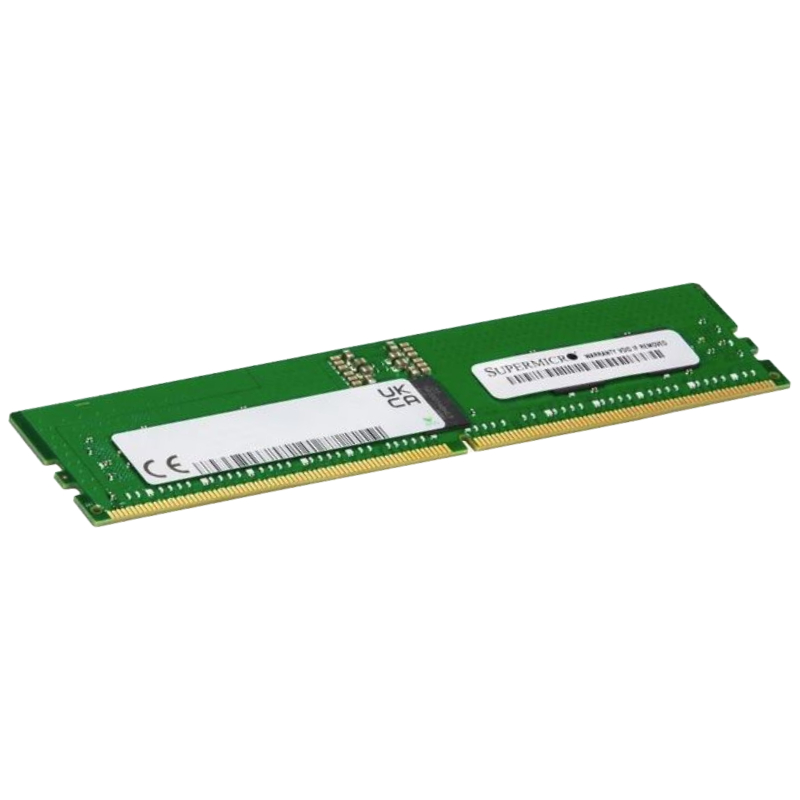
Dell 370-BBRY 32GB PC5-44800 DDR5-5600MT/S 2RX8 ECC Registered 1.1V CL46 SDRAM 288-Pin RDIMM for Poweredge Server Memory Module. New Sealed in Box (NIB) - Samsung Version
| SKU/MPN | Warranty | Price | Condition | You save |
|---|---|---|---|---|
| 370-BBRY | 1 Year Warranty | $1,440.00 | New (System) Pull | You save: $504.00 (26%) |
| 370-BBRY | 1 Year Warranty | $2,112.00 | New Sealed in Box (NIB) | You save: $739.20 (26%) |
Server memory represents a critical component in modern data center infrastructure, demanding higher levels of reliability, performance, and error correction compared to standard desktop memory. The Dell 370-BBRY exemplifies these requirements through its implementation of DDR5 technology with ECC and Registered features specifically engineered for PowerEdge servers. This memory module operates as a fundamental building block within server architectures, enabling efficient data processing, virtualization capabilities, and sustained operational stability under continuous workload demands.
The transition to DDR5 memory architecture represents a significant leap forward from previous DDR4 implementations. With increased bandwidth, improved power management, and enhanced reliability features, DDR5 memory modules like the Dell 370-BBRY deliver substantial performance improvements that directly impact server throughput and response times. The architectural enhancements within DDR5 technology allow servers to handle more concurrent virtual machines, process database queries more efficiently, and maintain system responsiveness during peak utilization periods.
DDR5 memory introduces several key technological improvements over previous generations, including doubled burst length, improved channel efficiency, and on-die ECC capabilities. These advancements contribute to the overall performance profile of the Dell 370-BBRY module, enabling it to deliver the 5600MT/s data rate while maintaining signal integrity and data accuracy. The implementation of Decision Feedback Equalization (DFE) in DDR5 allows for better signal quality at higher speeds, which is particularly important in server environments where multiple memory modules operate simultaneously.
The Dell 370-BBRY 32GB DDR5 memory module incorporates specific technical characteristics that define its compatibility and performance capabilities within supported PowerEdge server systems. Understanding these specifications is essential for proper system configuration, capacity planning, and performance optimization in enterprise environments.
This module provides 32GB of memory capacity utilizing a single 32GB memory integrated circuit configuration. The 1x32GB density allows for efficient memory population across server memory channels, enabling optimal performance while providing substantial capacity for memory-intensive applications. The single-module configuration offers flexibility in server memory scaling, allowing administrators to incrementally add capacity as workload demands increase.
The Dell 370-BBRY implements a 2Rx8 (2 Rank by 8) organization structure, which refers to the physical arrangement of memory chips on the module and how they are accessed by the memory controller. The dual-rank configuration provides improved memory controller efficiency compared to single-rank modules, as the controller can alternate access between the two ranks, effectively hiding precharge and activation delays. The x8 organization refers to the data width per memory chip, which offers an optimal balance between performance, capacity, and reliability characteristics.
In the 2Rx8 configuration, the memory module contains two independent sets of memory chips (ranks) that share the same data path but can be accessed separately. Each rank consists of multiple memory chips organized with an 8-bit data width. This organization affects the module's loading on the memory bus and influences signal integrity characteristics, which is particularly important in multi-module configurations where electrical loading can impact maximum achievable data rates.
The Dell 370-BBRY operates at a data rate of 5600 Megatransfers per second (MT/s), which represents the number of data transfer operations the module can perform each second. This transfer rate corresponds to a peak bandwidth of approximately 44.8 GB/s per module in a single memory channel configuration. The PC5-44800 classification denotes the module's theoretical peak transfer rate of 44800 MB/s, calculated as 5600 MT/s multiplied by 8 bytes (64-bit data width).
Memory timing parameters define the latency characteristics of memory operations, with CL46 (CAS Latency 46) representing the number of clock cycles between a read command and the availability of the first piece of data. At 5600 MT/s, the actual time delay for CL46 is calculated based on the clock period, resulting in specific nanosecond latency values that impact memory responsiveness. Additional timing parameters beyond CAS latency, including tRCD, tRP, and tRAS, collectively determine the overall memory access efficiency for various operation types.
Error Correcting Code (ECC) and Registered memory technologies represent critical differentiators between server-grade memory and consumer memory products. These features provide the enhanced reliability and stability required for enterprise server environments where data integrity and continuous operation are paramount.
The Dell 370-BBRY incorporates ECC technology capable of detecting and correcting single-bit memory errors in real-time without impacting system performance or requiring operating system intervention. This capability significantly reduces the likelihood of data corruption, system crashes, or silent data errors that could affect application integrity. The ECC implementation utilizes additional memory bits beyond the standard 64-bit data width to store error correction codes, enabling the memory controller to verify data integrity and automatically correct errors as they occur.
The ECC implementation in this memory module can automatically correct single-bit errors that may occur due to various factors including cosmic radiation, electrical interference, or component aging. Additionally, the technology can detect multi-bit errors within the same memory word, allowing the system to take appropriate action before data corruption spreads. This comprehensive error management provides a crucial layer of protection for critical business applications, databases, and virtualization environments.
The Dell 370-BBRY utilizes Registered DIMM (RDIMM) architecture, which incorporates register chips between the memory controller and the DRAM chips. These registers buffer command, address, and control signals, reducing the electrical load on the memory controller and enabling support for higher memory capacities per channel. This architecture is essential for maintaining signal integrity in servers with numerous memory modules, allowing for more robust memory subsystem scaling.
Registered memory provides several key advantages in server configurations, including improved signal integrity, support for higher memory densities, and increased reliability under heavy load conditions. By reducing the electrical load on the memory controller, registered modules allow servers to populate more memory slots while maintaining stable operation at rated speeds. This capability is particularly important in memory-intensive applications such as in-memory databases, virtualization hosts, and high-performance computing clusters.
Unlike unbuffered memory (UDIMMs) used in desktop systems, registered memory introduces an additional clock cycle of latency due to the signal buffering process. However, this minimal latency impact is typically offset by the ability to maintain higher data rates with more modules installed. Load Reduced DIMMs (LRDIMMs) represent a further evolution that provides even greater memory capacity scaling but with different cost and performance characteristics compared to RDIMMs.
This memory module is validated for use in specific Dell PowerEdge server generations that incorporate DDR5 memory architecture. Compatibility extends to server models with supported processors and memory controllers capable of operating at 5600MT/s with ECC Registered DDR5 memory. The module is designed to work within Dell's optimized memory configurations, which may include specific population guidelines for optimal performance.
The Dell 370-BBRY utilizes the standard 288-pin DIMM form factor specifically designed for DDR5 memory modules. The physical layout includes a single notch position that differs from previous DDR generations, preventing accidental insertion into incompatible memory sockets. The module is designed for installation into appropriate memory slots on PowerEdge server motherboards, with proper seating and retention mechanisms to ensure reliable operation in various orientations and environments.
The performance profile of the Dell 370-BBRY memory module makes it suitable for various server workloads with specific memory requirements. Understanding these performance characteristics helps in selecting appropriate memory configurations for different application scenarios.
With a data rate of 5600MT/s, the module delivers substantial memory bandwidth that can significantly impact application performance in memory-intensive workloads. The combination of high bandwidth and managed latency characteristics through the CL46 timing parameters provides a balanced performance profile suitable for various server applications. The actual experienced performance depends on factors including memory configuration, processor capabilities, and workload access patterns.
Different server workloads exhibit varying sensitivities to memory bandwidth and latency. Database applications often benefit from both high bandwidth and low latency for efficient query processing, while virtualization workloads typically prioritize capacity over ultimate bandwidth. High-performance computing applications may require optimized memory configurations to ensure efficient data movement between processors and memory. The Dell 370-BBRY provides a balanced approach that serves multiple workload types effectively.
Server virtualization represents a primary use case for high-capacity memory modules, as memory availability often limits virtual machine density per host. The 32GB capacity of the Dell 370-BBRY enables efficient memory scaling in virtualization environments, allowing administrators to allocate sufficient memory to multiple virtual machines while maintaining performance isolation between workloads. The ECC functionality provides additional protection against memory errors that could affect multiple virtual machines simultaneously.
Database management systems typically benefit from substantial memory resources for caching frequently accessed data, temporary workspace, and in-memory processing capabilities. The Dell 370-BBRY's combination of capacity, bandwidth, and ECC protection makes it well-suited for database servers where data integrity and performance are critical. The registered architecture ensures stable operation even in fully populated memory configurations common in high-end database servers.
Technical computing workloads, including scientific simulations, engineering analysis, and financial modeling, often require substantial memory bandwidth and capacity to process large datasets efficiently. The DDR5 architecture in the Dell 370-BBRY provides improved performance for these applications compared to previous memory generations, potentially reducing computation times and improving research productivity. The ECC capability is particularly valuable in these environments where computational accuracy is paramount.
The transition to DDR5 memory technology represents a significant evolution in server memory architecture, with implications for system performance, power efficiency, and scalability. Understanding this technological context helps in appreciating the capabilities of the Dell 370-BBRY module.
DDR5 introduces several architectural changes compared to DDR4, including a redesigned command/address bus, improved power management infrastructure, and enhanced signal integrity features. These improvements enable higher data rates, better power efficiency, and increased reliability. The implementation of Decision Feedback Equalization (DFE) helps maintain signal quality at higher frequencies, while the separation of the command/address bus from other signals reduces timing constraints and improves overall efficiency.
DDR5 memory incorporates on-die ECC capabilities that correct errors within the DRAM chips before data is transmitted to the memory controller. This additional layer of error correction works in conjunction with the traditional module-level ECC to provide comprehensive protection against various error types. The combination of on-die ECC and module-level ECC represents a significant advancement in memory reliability, particularly important as memory densities continue to increase.


 Contact Us
 Information
 Catalog
 Solid State Drives (SSD)
 Network Switches
 Hard Disk Drives
 HBA & Controllers
 PC & Servers
 PC & Server Memory
 CPU & Processors
 Network Routers
 Power Supplies
 Tape Drives & Libraries
 Network Devices
 Computer & Network Cables