
(7% discount is applied at checkout)
Cart is empty
Your go-to destination for cutting-edge server products
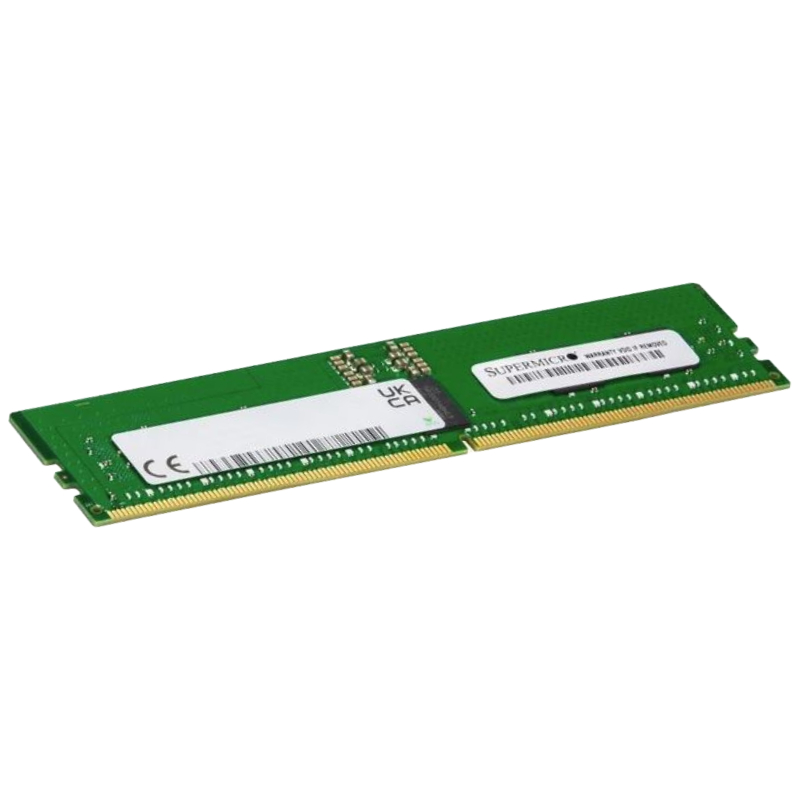
Dell 370-BBRY 32GB PC5-44800 DDR5-5600MT/S 2RX8 ECC Registered 1.1V CL46 SDRAM 288-Pin RDIMM RAM. New (System) Pull with 1 year replacement warranty - Samsung Version
| SKU/MPN | Warranty | Price | Condition | You save |
|---|---|---|---|---|
| 370-BBRY | 1 Year Warranty | $1,440.00 | New (System) Pull | You save: $504.00 (26%) |
| 370-BBRY | 1 Year Warranty | $2,112.00 | New Sealed in Box (NIB) | You save: $739.20 (26%) |
Server memory represents a critical component in modern data center infrastructure, demanding higher levels of reliability, performance, and error correction compared to standard desktop memory. The Dell 370-BBRY 32GB DDR5 module exemplifies these requirements through its advanced engineering and specialized features designed specifically for enterprise environments.
The Dell 370-BBRY represents a specific configuration within Dell's server memory portfolio, engineered to deliver optimal performance in compatible PowerEdge systems. Understanding its technical attributes is essential for proper deployment and compatibility assessment.
This module provides 32 gigabytes of memory capacity in a single-rank, single-module configuration. The 1x32GB designation indicates a single 32GB module, allowing for flexible memory expansion while maintaining balanced performance characteristics across memory channels.
Configured as a 2Rx8 (2 rank, x8 organization) module, the 370-BBRY utilizes sixteen 16-gigabit DDR5 SDRAM devices per rank, with two ranks populating the module. This architecture optimizes signal loading and provides efficient memory access patterns while maintaining compatibility with Dell PowerEdge memory controllers.
The module operates at a data rate of 5600 megatransfers per second (MT/s), representing the cutting edge of DDR5 performance for enterprise applications. This speed enables substantial bandwidth improvements over previous-generation DDR4 modules while maintaining strict power and thermal envelopes.
With CAS Latency (CL) rated at 46 cycles at the 5600 MT/s data rate, the module balances high-speed operation with responsive access times. The timing parameters are optimized for server workloads where sustained throughput often outweighs absolute latency considerations.
Operating at 1.1 volts, the Dell 370-BBRY implements DDR5's improved power efficiency compared to DDR4's 1.2-volt operation. The module includes enhanced power management features through the Power Management IC (PMIC), which provides more granular voltage regulation and improved power delivery efficiency.
The module utilizes the standard 288-pin RDIMM form factor, ensuring mechanical compatibility with Dell PowerEdge server memory slots. The physical design incorporates Dell's rigorous validation standards for signal integrity, thermal performance, and mechanical reliability.
Measuring 133.35mm (5.25 inches) in length and conforming to JEDEC standard height profiles, the module fits within Dell's server chassis constraints. Proper handling procedures, including electrostatic discharge (ESD) protection, are essential during installation to prevent damage to the sensitive electronic components.
The transition to DDR5 technology represents a significant architectural improvement over previous memory generations, delivering enhanced performance, efficiency, and reliability—critical factors for enterprise server environments where the Dell 370-BBRY operates.
DDR5 introduces several fundamental changes to memory architecture, including doubled burst length, two independent 40-bit subchannels per module, and decision feedback equalization (DFE) for improved signal integrity at higher data rates. These innovations collectively enable the 5600 MT/s performance of the Dell 370-BBRY.
Operating at 5600 MT/s, the Dell 370-BBRY provides approximately 75% higher theoretical bandwidth compared to 3200 MT/s DDR4 modules. This performance uplift directly benefits memory-intensive applications including databases, virtualization platforms, and high-performance computing workloads.
Beyond the module-level ECC, DDR5 incorporates on-die ECC within the DRAM devices themselves. This additional layer of error correction handles internal errors transparently, complementing the traditional ECC functionality and providing comprehensive data protection across the memory hierarchy.
The Dell 370-BBRY implements DDR5's improved signaling technology, including better DFE implementation and optimized equalization. These features maintain signal quality at the 5600 MT/s data rate, ensuring reliable operation even in signal-challenged environments with multiple DIMMs per channel.
Error-Correcting Code (ECC) and registered memory architecture represent foundational technologies for server-grade memory, providing the reliability and scalability required in enterprise environments. The Dell 370-BBRY implements both technologies to deliver robust performance in Dell PowerEdge systems.
ECC technology enables the detection and correction of single-bit memory errors in real-time, preventing data corruption and potential system crashes. The Dell 370-BBRY's ECC implementation can detect multi-bit errors while automatically correcting single-bit errors without performance degradation or system interruption.
Through the addition of extra bits (8 bits for every 64 bits of data in DDR5), the ECC circuitry can identify erroneous bits and reconstruct the original data mathematically. This process occurs transparently during memory read operations, providing continuous protection against soft errors caused by cosmic radiation or electrical noise.
The "Registered" designation in RDIMM indicates the presence of register chips between the memory controller and DRAM devices. These registers buffer command, address, and control signals, reducing electrical load on the memory controller and enabling support for higher module densities and greater numbers of modules per channel.
By reducing the electrical load on the memory controller, registered memory enables more stable operation at higher speeds with greater numbers of modules. This architecture is essential for servers requiring large memory capacities, as it maintains signal integrity across fully-populated memory configurations.
Unlike Unbuffered DIMMs (UDIMMs) used in desktop systems, RDIMMs provide better signal integrity for server configurations. Load-Reduced DIMMs (LRDIMMs) offer even greater capacity scaling but with slightly higher latency. The Dell 370-BBRY's RDIMM design balances performance, capacity, and cost for mainstream server deployments.
The 370-BBRY module undergoes extensive validation testing with specific Dell PowerEdge server models to ensure flawless operation. Compatibility spans multiple PowerEdge generations supporting DDR5 technology, though specific configuration guidelines must be followed for optimal performance.
This memory module is validated for use in Dell PowerEdge systems featuring Intel Xeon Scalable Processors (4th Generation Sapphire Rapids and later) or AMD EPYC 7004 Series processors (Genoa and later) with DDR5 memory support. Always consult the specific system's owner's manual for confirmed compatibility.
Server workloads typically achieve 60-80% of theoretical memory bandwidth due to protocol overhead, memory controller limitations, and application access patterns. Memory-intensive applications like in-memory databases and scientific computing benefit most from the increased bandwidth.
While the CL46 latency specification appears higher than consumer DDR5 modules, the actual access time in nanoseconds calculates to approximately 16.4ns for the initial access. Subsequent accesses benefit from DDR5's bank grouping and burst architecture, providing efficient data transfer for sequential operations.
The performance impact varies by application type. Bandwidth-sensitive applications show significant improvement over previous-generation memory, while latency-sensitive workloads may see more modest gains. Most server workloads benefit from the balanced performance profile.
The Dell 370-BBRY 32GB DDR5 module addresses the memory requirements of diverse server workloads across multiple industries. Understanding its application suitability helps in proper infrastructure planning and resource allocation.
Virtualized environments benefit from the high-density and reliability characteristics of the 370-BBRY, allowing consolidation of multiple virtual machines while maintaining service level agreements. The ECC functionality is particularly valuable in multi-tenant environments where memory errors could affect multiple customers.
With 32GB per module, systems can achieve substantial memory capacities suitable for hosting dozens of virtual machines. The balanced bandwidth and capacity support mixed workloads typical of virtualized infrastructure, from database services to application hosting.
In-memory databases and transaction processing systems demand both high bandwidth for data manipulation and ECC protection for data integrity. The 370-BBRY's specifications directly address these requirements, supporting high-performance database operations.
Database applications typically show strong scaling with memory bandwidth, particularly for large queries, indexing operations, and transaction processing. The 5600 MT/s data rate provides tangible performance improvements for these critical business applications.
Technical computing workloads, including scientific simulations, financial modeling, and big data analytics, benefit from the increased memory bandwidth provided by DDR5 technology. The large 32GB module capacity enables working with substantial datasets directly in memory.
Applications limited by memory bandwidth rather than computational power show the most significant performance improvements with DDR5 memory. The Dell 370-BBRY can reduce computation time for memory-bound algorithms by 20-40% compared to previous-generation DDR4 memory at similar capacities.


 Contact Us
 Information
 Catalog
 Solid State Drives (SSD)
 Network Switches
 Hard Disk Drives
 HBA & Controllers
 PC & Servers
 PC & Server Memory
 CPU & Processors
 Network Routers
 Power Supplies
 Tape Drives & Libraries
 Network Devices
 Computer & Network Cables