
(7% discount is applied at checkout)
Cart is empty
Your go-to destination for cutting-edge server products
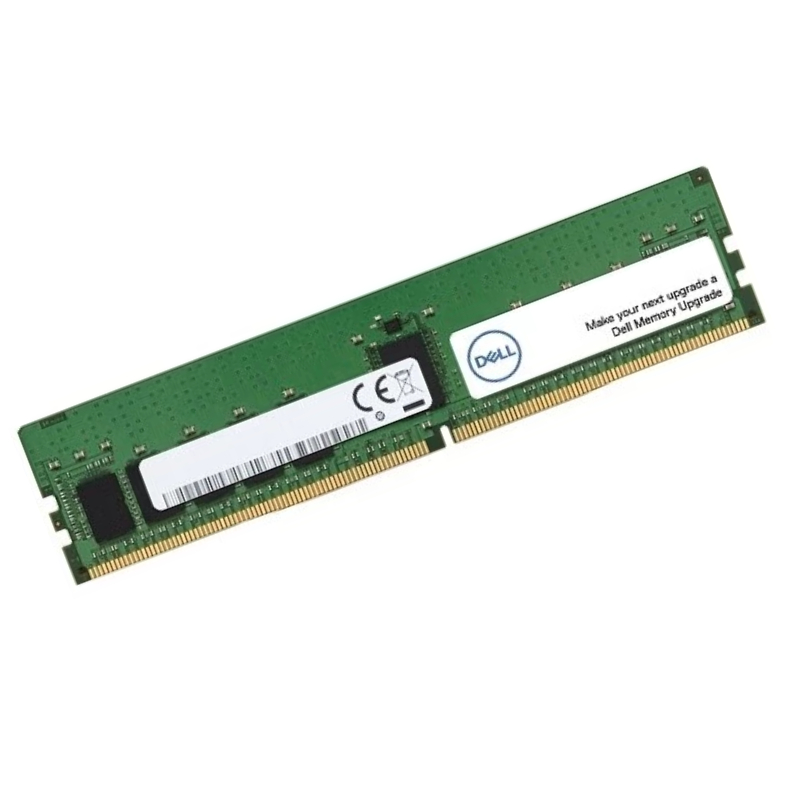
Dell 370-BCDB 96GB DDR5 5600mt/s Pc5-44800 2rx4 Ecc Registered 1.1v Cl46 SDRAM 288-pin Rdimm Memory Module For Server. New (System) Pull with 1 Year Replacement Warranty - Samsung Version
| SKU/MPN | Warranty | Price | Condition | You save |
|---|---|---|---|---|
| 370-BCDB | 1 Year Warranty | $4,214.00 | New Sealed in Box (NIB) | You save: $1,474.90 (26%) |
| 370-BCDB | 1 Year Warranty | $3,887.00 | New (System) Pull | You save: $1,360.45 (26%) |
Enterprise-grade server memory represents the cornerstone of modern data center performance and reliability. The Dell 370-BCDB 96GB DDR5 module exemplifies the cutting edge of server memory technology, engineered specifically for demanding computational workloads and mission-critical applications.
DDR5 memory architecture represents a significant evolutionary leap from previous generations, introducing fundamental changes to memory subsystem design. The 370-BCDB leverages these advancements to deliver unprecedented performance and efficiency for enterprise environments.
The transition to DDR5 brings several critical innovations that distinguish it from DDR4 technology. These include on-die ECC for improved reliability, independent sub-channels for enhanced efficiency, and improved power management through the PMIC (Power Management Integrated Circuit).
DDR5 modules incorporate on-die error correction capabilities that work in conjunction with traditional ECC functionality. This dual-layer approach provides superior data integrity by correcting errors at the earliest possible stage within the memory chips themselves.
The Dell 370-BCDB embodies the pinnacle of server memory engineering, with meticulously designed specifications that ensure optimal performance in enterprise environments.
With a substantial 96GB capacity per module, the 370-BCDB provides exceptional memory density that enables organizations to maximize their server memory footprint while minimizing physical slot utilization.
The 96GB capacity represents the optimal balance between memory density and performance characteristics. This capacity allows for significant memory consolidation while maintaining excellent signal integrity and thermal performance.
The 2RX4 configuration indicates a dual-rank module organization with x4 data width. This architecture provides superior performance characteristics compared to single-rank configurations, particularly in memory-intensive applications.
The performance profile of the 370-BCDB is defined by multiple interconnected specifications that collectively determine its operational capabilities within server environments.
Operating at 5600 million transfers per second, the module delivers substantial bandwidth improvements over previous generation memory. This increased transfer rate directly translates to improved application performance and reduced latency for memory-bound workloads.
The PC5-44800 designation specifies the module's peak bandwidth capability of 44800 MB/s. This classification ensures compatibility with systems designed for this specific performance tier and provides a clear benchmark for expected performance.
The CAS Latency of 46 cycles represents the optimal balance between speed and stability for server applications. While higher than consumer-grade memory latencies, this specification ensures reliable operation under continuous enterprise workloads.
The electrical and physical characteristics of the 370-BCDB are engineered specifically for server deployment, emphasizing reliability, compatibility, and thermal performance.
The reduced operating voltage of 1.1V represents a significant improvement in power efficiency compared to DDR4 memory. This lower voltage directly contributes to reduced power consumption and improved thermal characteristics in dense server configurations.
The 288-pin Registered DIMM form factor is specifically designed for server applications. The additional pins accommodate enhanced signaling and control functions necessary for reliable operation in multi-module configurations.
The combination of ECC (Error Correcting Code) and Registered technology provides the foundation for server-grade reliability. ECC detects and corrects single-bit errors while preventing multi-bit errors, while the Registered buffer reduces electrical load on the memory controller.
The 370-BCDB is engineered specifically for compatibility with Dell's enterprise server portfolio, ensuring optimal performance and reliability when deployed in supported systems.
This memory module is validated for use in specific Dell PowerEdge server models that support DDR5 technology. Compatibility extends to recent generations of PowerEdge servers designed for data center and enterprise deployment.
When deploying single modules, specific slot placement guidelines must be followed to ensure proper memory channel configuration and optimal performance characteristics.
For deployments requiring multiple modules, specific population sequences and channel balancing requirements must be observed to maintain signal integrity and performance across all installed memory.
Error Correcting Code technology represents a critical differentiator between server-grade and consumer memory modules, providing the foundation for data integrity in enterprise environments.
The ECC implementation in the 370-BCDB employs sophisticated algorithms capable of detecting and correcting various types of memory errors that can occur during normal operation.
The primary function of ECC technology involves automatic detection and correction of single-bit errors that occur due to various environmental factors including cosmic radiation, electrical interference, and component aging.
While single-bit errors are correctable, multi-bit errors are detected and reported to the system for appropriate handling through error logging and potential system responses depending on severity.
The Registered (buffered) aspect of the RDIMM designation indicates the presence of address and command buffers that improve signal integrity in multi-module configurations.
The register buffer chip receives, conditions, and re-transmits address and command signals to the memory chips, reducing electrical load on the memory controller and enabling support for higher module densities.
By buffering control signals, RDIMMs maintain superior signal integrity compared to unbuffered modules, particularly important in systems with high memory module counts or operating at high frequencies.
The performance profile of the Dell 370-BCDB makes it particularly suited for specific classes of enterprise workloads that benefit from its unique combination of capacity, speed, and reliability features.
Applications that demonstrate significant memory bandwidth requirements or operate on large datasets benefit substantially from the characteristics of the 370-BCDB module.
Relational and NoSQL database platforms benefit from the high capacity and ECC protection, ensuring data integrity while supporting large in-memory datasets and buffer pools.
Hypervisor platforms and virtualized environments leverage the high-density characteristics to support greater virtual machine density per physical host while maintaining performance isolation.
Workloads involving scientific computing, engineering simulation, and financial modeling derive significant benefits from the balanced performance characteristics of this memory module.
HPC applications benefit from the combination of bandwidth, capacity, and reliability characteristics, particularly in scale-out architectures where individual node performance contributes to overall cluster efficiency.
Real-time analytics platforms that operate primarily within system memory leverage both the capacity and performance characteristics to deliver rapid insights from large datasets.
The power consumption profile of DDR5 memory represents a significant improvement over previous generations, contributing to reduced operational costs in large-scale deployments.
During active operation, the module maintains power efficiency through advanced circuit design and the reduced operating voltage characteristic of DDR5 technology.
Support for various low-power states enables significant power reduction during periods of reduced memory activity, contributing to overall system power efficiency.


 Contact Us
 Information
 Catalog
 Solid State Drives (SSD)
 Network Switches
 Hard Disk Drives
 HBA & Controllers
 PC & Servers
 PC & Server Memory
 CPU & Processors
 Network Routers
 Power Supplies
 Tape Drives & Libraries
 Network Devices
 Computer & Network Cables