
(7% discount is applied at checkout)
Cart is empty
Your go-to destination for cutting-edge server products
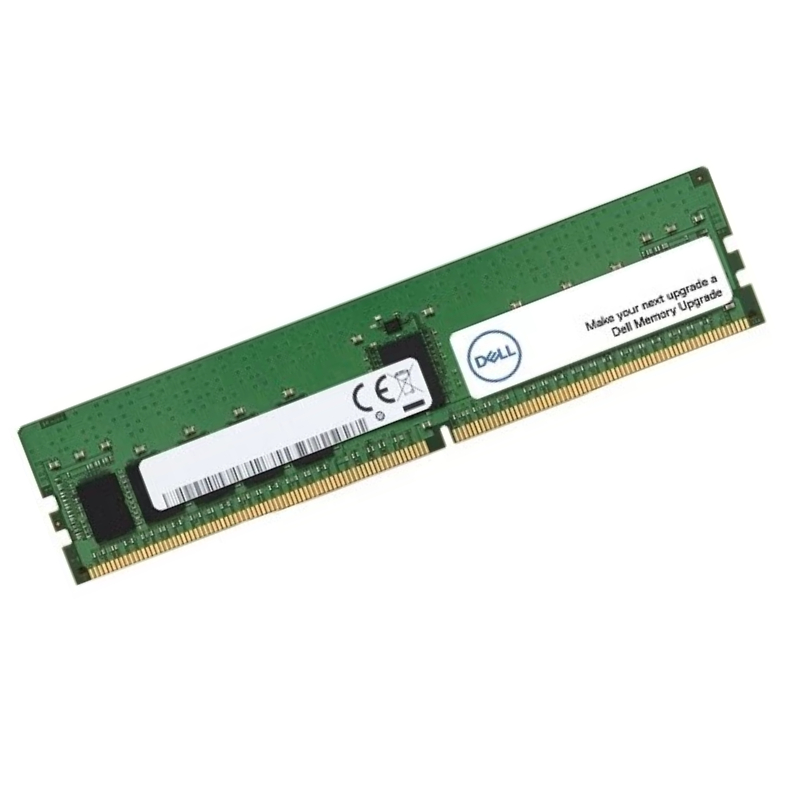
Dell 370-BCDB 96GB DDR5 5600mt/s Pc5-44800 2rx4 Ecc Registered 1.1v Cl46 SDRAM 288-pin Rdimm Memory Module For Server. New Sealed in Box (NIB) - Samsung Version
| SKU/MPN | Warranty | Price | Condition | You save |
|---|---|---|---|---|
| 370-BCDB | 1 Year Warranty | $4,008.00 | New Sealed in Box (NIB) | You save: $1,402.80 (26%) |
| 370-BCDB | 1 Year Warranty | $2,912.00 | New (System) Pull | You save: $1,019.20 (26%) |
Welcome to the definitive resource for the Dell 370-BCDB server memory module. This page is dedicated to providing a comprehensive, technical deep-dive into the specifications, features, and ideal use cases for this high-performance, high-capacity DDR5 RDIMM. Engineered for modern data centers and enterprise servers, this memory module is a critical component for demanding workloads that require exceptional bandwidth, massive capacity, and unwavering reliability.
This section details the fundamental identifying information and technical specifications that define the Dell 370-BCDB memory module. The part number 370-BCDB is the unique identifier assigned by Dell to this specific memory configuration. This part number ensures compatibility with designated Dell PowerEdge server systems. It is crucial to verify this part number against your server's compatibility list before purchase. As a genuine Dell part, it is engineered, tested, and validated to meet the rigorous quality and reliability standards expected in enterprise environments, ensuring optimal performance and system stability.
This module features a substantial 96 Gigabytes (GB) of memory capacity on a single stick. The configuration is specified as 1x96GB, indicating a single module. The physical memory layout is 2Rx4 (Dual Rank, x4 Organization). A dual-rank module effectively allows the memory controller to access two sets of DRAM chips on the same module, improving performance by interleaving access between the ranks. The x4 data width refers to the organization of the individual DRAM chips and is a key factor in enabling advanced error correction and maximizing memory density.
The "2R" denotes a dual-rank module. Think of a rank as an independently addressable block of memory. A dual-rank module presents two such blocks to the memory controller, which can lead to more efficient data access patterns compared to a single-rank (1R) module. The "x4" indicates that each individual DRAM chip on the module has a 4-bit wide data bus. This organization, when combined with ECC, allows for the implementation of SDDC (Single Device Data Correction), which can correct an error originating from an entire DRAM chip, a significant reliability enhancement over x8-based ECC.
The module is built on the DDR5 SDRAM (Double Data Rate 5 Synchronous Dynamic Random-Access Memory) standard. DDR5 represents a significant generational leap over its predecessor, DDR4, offering substantial improvements in speed, efficiency, and capacity. Key architectural changes in DDR5 include a dual 32/40-bit sub-channel architecture (per module) and the relocation of the power management IC (PMIC) from the motherboard to the memory module itself, allowing for more granular and efficient power delivery.
This section breaks down the performance-related attributes of the module, including its data transfer rate, latency, and underlying architecture.
The Dell 370-BCDB operates at a data rate of 5600 MegaTransfers per second (MT/s). This metric represents the number of data transfer operations the module can perform per second. Since DDR memory transfers data on both the rising and falling edges of the clock cycle (hence "Double Data Rate"), the actual I/O clock frequency is half of this value (2800 MHz). The high 5600MT/s speed enables a significant increase in available memory bandwidth, which is critical for CPU-bound applications, large databases, and virtualized environments.
The designation PC5-44800 is the module's classification under the JEDEC standard. The "PC5" refers to the DDR5 standard, and the number "44800" indicates the theoretical peak bandwidth of the module in megabytes per second (MB/s). To calculate this: (5600 MT/s * 64-bit data bus) / 8 bits per byte = 44,800 MB/s. This peak bandwidth figure is essential for understanding the potential data throughput a single module can deliver to the system.
The CAS Latency (CL) is a critical timing parameter, specifically CL46 for this module. It represents the number of clock cycles between the memory controller sending a column address to the memory and the moment the data from that column is available. While a higher CL number might seem like a disadvantage, it is a normal characteristic of higher-speed memory. The absolute latency in nanoseconds (ns) is a more meaningful metric, calculated as (CL / Clock Frequency). For this module: (46 / 2,800,000,000 Hz) * 2,000,000,000 = approximately 16.43 nanoseconds. This performance is balanced against the immense bandwidth provided by the 5600MT/s speed.
The module operates at a nominal voltage of 1.1 volts. This is a key efficiency improvement of DDR5 over DDR4, which typically operates at 1.2V. The lower voltage reduces the overall power consumption of the memory subsystem, which is a critical consideration in dense server deployments where power and cooling costs are significant operational expenses. The onboard PMIC is responsible for regulating this power delivery, converting the 12V supply from the server motherboard to the precise voltages required by the DRAM chips.
Enterprise and server memory is defined by its robustness. This section explains the features that make the Dell 370-BCDB suitable operations.
The module incorporates both ECC (Error Correcting Code) and is a Registered DIMM (RDIMM). ECC is a non-negotiable feature for server memory. It can detect and correct single-bit memory errors on-the-fly and can detect (but not correct) multi-bit errors. This prevents data corruption and system crashes caused by soft errors, dramatically increasing system reliability and data integrity. The "Registered" component refers to the presence of a register, or buffer, placed between the memory controller and the DRAM chips. This register buffers the command and address signals, reducing the electrical load on the memory controller and allowing for higher module capacities and more DIMMs per channel, which is essential for populating large memory systems.
The combination of ECC and Registered buffering creates the ECC Registered RDIMM. This is the most common memory type for mainstream servers, striking an optimal balance between performance, capacity, power consumption, and cost. It is distinctly different from Unbuffered (UDIMM) or Load-Reduced DIMMs (LRDIMMs), which serve different market segments and system architectures.
The Dell 370-BCDB utilizes a 288-pin edge connector. This is the standard physical interface for DDR5 modules and is not mechanically compatible with the 288-pin layout of DDR4 modules due to a different keying notch position. The physical form factor is typically a standard RDImm with a height suitable for most server chassis. Always ensure proper clearance within your specific server model, especially in dense configurations.
Understanding which systems can use this memory and what workloads it is designed for is crucial for making an informed purchase.
The Dell 370-BCDB is specifically designed for compatibility with select generations of Dell PowerEdge servers. It is imperative to consult the official Dell EMC PowerEdge memory configuration guide or use the online compatibility tool for your specific server model and BIOS version. This module is intended for servers powered by Intel Xeon Scalable processors (likely 4th Gen Sapphire Rapids or newer) or comparable AMD EPYC platforms that support DDR5 technology. Mixing memory modules of different speeds, capacities, or brands is not recommended and can lead to system instability.
The high capacity and bandwidth of the 370-BCDB make it exceptionally well-suited for memory-intensive enterprise applications. A single 96GB module allows for building systems with massive total memory footprints.
Platforms like SAP HANA, Oracle Database In-Memory, and other real-time analytics engines rely on holding vast datasets in RAM for ultra-low latency processing. The 96GB capacity per module directly enables larger, more complex in-memory datasets.
Server consolidation through virtualization and VDI (Virtual Desktop Infrastructure) is directly limited by available physical memory. Using high-density modules like the 370-BCDB allows a single physical host to support a greater number of virtual machines, improving consolidation ratios and maximizing infrastructure ROI.
While GPUs handle the core model training, large CPU memory pools are essential for data preprocessing, feature extraction, and running large-scale inference workloads. The high bandwidth of DDR5 5600MT/s accelerates these data movement tasks.
Applications in computational fluid dynamics, financial modeling, and genomic sequencing often work with enormous datasets that must be loaded into memory. The combination of high capacity and high bandwidth provided by this module is critical for reducing time-to-solution in these complex simulations.


 Contact Us
 Information
 Catalog
 Solid State Drives (SSD)
 Network Switches
 Hard Disk Drives
 HBA & Controllers
 PC & Servers
 PC & Server Memory
 CPU & Processors
 Network Routers
 Power Supplies
 Tape Drives & Libraries
 Network Devices
 Computer & Network Cables