
(7% discount is applied at checkout)
Cart is empty
Your go-to destination for cutting-edge server products
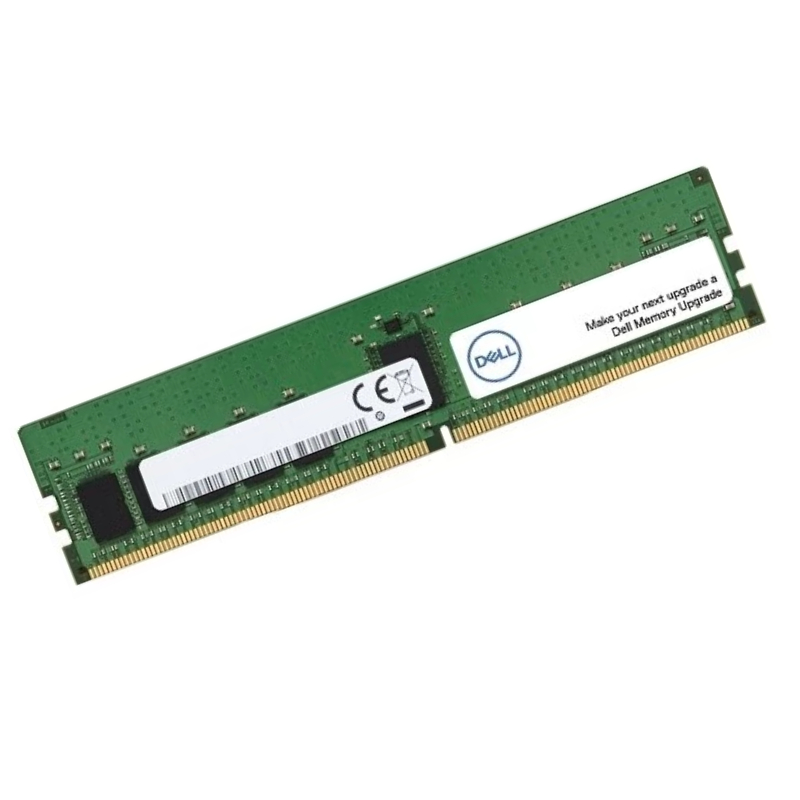
Dell 370-BCKW 256GB 3200MT/s Pc4-25600 Cl22 ECC Registered DDR4 SDRAM 288-pin Lrdimm Memory Module For Server. New (System) Pull with 1 year replacement warranty - Samsung Version
| SKU/MPN | Warranty | Price | Condition | You save |
|---|---|---|---|---|
| 370-BCKW | 1 Year Warranty | $3,499.00 | New (System) Pull | You save: $1,224.65 (26%) |
| 370-BCKW | 1 Year Warranty | $3,729.00 | New Sealed in Box (NIB) | You save: $1,305.15 (26%) |
The DELL 370-BCKW 256GB DDR4 SDRAM Memory Module offers advanced memory solutions for high-performance computing. Designed with cutting-edge technology, this module delivers reliable and efficient data handling for various server applications.
The Dell 370-BCKW represents a specific class of server memory engineered for demanding computational environments where data integrity and sustained performance are non-negotiable. This 256GB module is not a standard desktop DIMM but a sophisticated LRDIMM (Load Reduced Dual In-line Memory Module) built for multi-socket servers handling massive datasets, virtualization, and mission-critical applications.
Before delving into the architectural nuances, here are the fundamental specifications that define the Dell 370-BCKW memory module. This module is designed as a single, high-density unit, providing substantial memory capacity in a single slot.
The module features a total capacity of 256GB, achieved through a single 256GB module (1x256GB) configuration. This high-density design is crucial for servers that require large amounts of RAM without consuming all available memory channels, allowing for greater total system memory when all slots are populated. The part number 370-BCKW is a Dell-specific identifier. It is imperative to verify compatibility with your specific server model (such as Dell PowerEdge Rxa45, R750, R7525, or similar generations) through the official Dell support tools or documentation. Using incompatible memory can lead to system instability or failure to boot.
This module utilizes advanced DDR4 SDRAM technology, which offers significant improvements in speed, efficiency, and reliability over previous generations. The architecture is specifically tailored for the relentless demands of 24/7 server operation.
DDR4 SDRAM (Double Data Rate 4 Synchronous Dynamic Random-Access Memory) operates with a higher transfer rate and lower voltage than DDR3. The synchronous nature means it is tied to the system clock, allowing for precise data transfer timing, which is critical for server stability and performance.
The performance of server memory is dictated by several interlinked factors: speed, latency, and rank configuration. The Dell 370-BCKW is optimized to deliver a balance suited for data-intensive enterprise workloads.
The module operates at a data rate of 3200 Megatransfers per second (MT/s). This is often colloquially referred to as 3200MHz. The corresponding classification is PC4-25600. The "PC4" denotes DDR4, and the "25600" indicates the module's peak transfer bandwidth in megabytes per second (MB/s). Specifically, 3200 MT/s * 8 bytes = 25,600 MB/s. This high bandwidth is essential for feeding data-hungry processors in multi-core servers, reducing bottlenecks in applications like in-memory databases and high-performance computing (HPC).
The module's timings are specified as CL22. CAS Latency (CL) is the number of clock cycles between the memory controller sending a request for data and the moment the data is available. A CL22 rating at 3200MT/s is a standard and effective latency for server-grade ECC memory, prioritizing stability and capacity over the ultra-tight timings often sought in consumer-grade gaming memory. In a server environment, consistent, error-free operation is far more critical than shaving off a few nanoseconds of latency.
Operating at a standard DDR4 voltage of 1.2 volts, this module provides improved power efficiency compared to the 1.5V or 1.35V of older DDR3 technologies. In a data center with hundreds or thousands of servers, this reduced power consumption per module translates to significant savings on electricity and cooling costs, contributing to a lower Total Cost of Ownership (TCO).
What truly distinguishes the Dell 370-BCKW from consumer memory are its enterprise-oriented features: ECC, Registered design, and the specific LRDIMM form factor. These technologies work in concert to ensure maximum reliability and scalability.
ECC is a non-optional feature for any serious server or workstation. It detects and corrects the most common kinds of internal data corruption. Single-bit errors are corrected on-the-fly without any interruption to system operation, while multi-bit errors are detected and reported to the system, which can then halt operations to prevent data corruption. This is critical for ensuring data integrity in financial transactions, scientific simulations, and database management.
ECC memory includes extra memory bits (e.g., 8 bits for every 64 bits of data) to store an encrypted code. When data is written to memory, the code is calculated and stored. When the data is read, the code is recalculated and compared to the stored code. Any discrepancy triggers the correction logic, ensuring the CPU receives uncorrupted data.
The "Registered" designation (often abbreviated as RDIMM, though this is an LRDIMM) means the module incorporates a register, or buffer, between the memory controller and the DRAM chips. This register buffers the command and address signals, reducing the electrical load on the memory controller. This allows a server to support a much larger number of memory modules and higher total memory capacity than would be possible with unbuffered (UDIMM) memory. The trade-off is a slight increase in latency (typically one clock cycle), which is a worthwhile compromise for the massive scalability it enables.
Unbuffered memory (UDIMM) has a direct electrical connection from the memory controller to the DRAM chips. This is low-latency but places a heavy load on the controller, limiting the number of modules that can be reliably installed. Registered memory is the standard for multi-socket servers and high-memory workstations for this reason.
The Dell 370-BCKW is specifically an LRDIMM. This is an evolution of the Registered DIMM. While an RDIMM buffers only the command and address lines, an LRDIMM includes a full buffer, or Data Buffer, for the data lines as well. This further reduces the electrical load on the memory controller compared to an RDIMM.
LRDIMMs are essential for achieving the maximum possible memory capacity in a server. By buffering the data signals, the memory controller sees only the buffers, not the individual DRAM chips. This allows for the use of high-density, multi-ranked modules (like this octal-rank module) without overloading the controller. This enables servers to be populated with terabytes of RAM, which is indispensable for memory-intensive tasks like large-scale virtualization and in-memory analytics.
The "Octal Rank X4" description refers to the internal organization of the memory chips on the module. A "rank" is a set of DRAM chips that work together to form a 64-bit (or 72-bit with ECC) data block. An "Octal Rank" or 8-rank module is a very high-density configuration. The "X4" refers to the organization of the individual DRAM chips, meaning they have a 4-bit wide data bus. Chips organized as x4 are particularly beneficial for ECC functionality and are a common design in high-capacity server modules, as they allow for better reliability and more efficient use of the memory bus.
The module uses the standard 288-pin layout defined for all DDR4 modules. However, the key notch on an LRDIMM is in a slightly different position than on a UDIMM or RDIMM to prevent accidental insertion into an incompatible slot. The pins are arranged to provide the necessary connections for power, ground, data, address, and control signals, including the specialized signals for the registering and buffering components.
The Dell 370-BCKW 256GB LRDIMM is not a general-purpose component; it is targeted at specific, high-end server applications where its unique combination of capacity, reliability, and bandwidth provides tangible benefits.
Systems like SAP HANA, Oracle Database In-Memory, and other IMDBs store vast datasets directly in RAM to eliminate disk I/O bottlenecks. The 256GB capacity per module allows for massive in-memory datasets, while the ECC protection ensures the integrity of critical business data. The high 3200MT/s bandwidth ensures that queries and transactions are processed with minimal latency.
In scientific computing, engineering simulations, and financial modeling, applications often work with enormous matrices and datasets that must reside in memory. HPC clusters require dense, reliable memory modules like the 370-BCKW to solve complex problems in fields like computational fluid dynamics, genomic sequencing, and climate modeling.
Enterprise virtualization hypervisors (e.g., VMware vSphere, Microsoft Hyper-V) and cloud platforms require large, pooled memory resources to host dozens or hundreds of virtual machines. The high density of this module allows a single server to host more VMs, improving consolidation ratios and infrastructure efficiency. The ECC and registered features are vital for maintaining the stability of the entire virtualized environment.
Processing large datasets for business intelligence, machine learning model training, and data mining often requires keeping terabytes of data in RAM for rapid access. The bandwidth of 3200MT/s helps accelerate data feeding to CPUs, reducing the time-to-insight for analytical queries and the training time for complex AI models.


 Contact Us
 Information
 Catalog
 Solid State Drives (SSD)
 Network Switches
 Hard Disk Drives
 HBA & Controllers
 PC & Servers
 PC & Server Memory
 CPU & Processors
 Network Routers
 Power Supplies
 Tape Drives & Libraries
 Network Devices
 Computer & Network Cables