
(7% discount is applied at checkout)
Cart is empty
Your go-to destination for cutting-edge server products
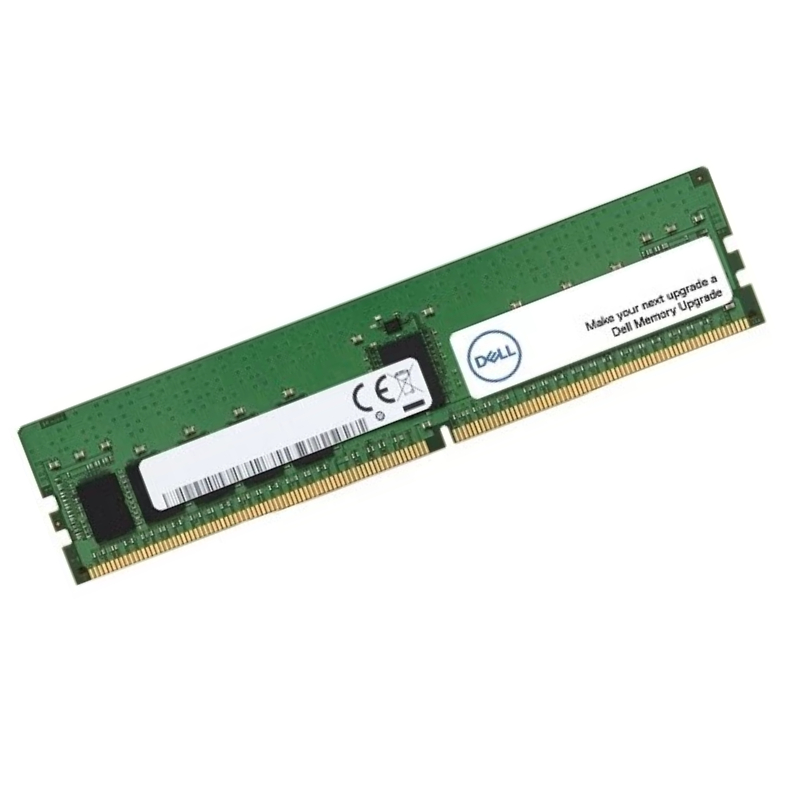
Dell 370-BCKW 256GB 3200mt/s Pc4-25600 Cl22 Ecc Registered DDR4 SDRAM 288-pin Lrdimm Memory Module For Server. New Sealed in Box (NIB) - Samsung Version
| SKU/MPN | Warranty | Price | Condition | You save |
|---|---|---|---|---|
| 370-BCKW | 1 Year Warranty | $3,499.00 | New (System) Pull | You save: $1,224.65 (26%) |
| 370-BCKW | 1 Year Warranty | $3,729.00 | New Sealed in Box (NIB) | You save: $1,305.15 (26%) |
The DELL 370-BCKW 256GB DDR4 SDRAM Memory Module is engineered for demanding server environments, offering robust data throughput and dependable performance. This premium-grade memory unit enhances system responsiveness and supports mission-critical operations with ease.
The Dell 370-BCKW represents a specialized category of server memory designed for demanding enterprise environments where reliability, error correction, and consistent performance are non-negotiable. This specific 256GB module is engineered for servers requiring substantial memory capacity and the enhanced data integrity provided by ECC (Error Correcting Code) and Registered technology. It is a critical component for data centers, high-performance computing (HPC), virtualization hosts, and large database servers, where uptime and data accuracy are paramount.
Before delving into the architectural details, a comprehensive overview of the module's key specifications provides a clear picture of its capabilities. This memory module is built to a precise set of standards that define its performance and compatibility.
The Dell 370-BCKW features a total memory capacity of 256 gigabytes (GB). This is achieved through a single module (1x256GB), providing exceptional density that allows systems to reach high total memory capacities with fewer DIMM slots occupied. This configuration is ideal for memory-intensive applications that benefit from large, contiguous memory pools.
This module operates at a speed of 3200 MegaTransfers per second (MT/s), which is often colloquially referred to as 3200MHz. The resulting peak data transfer rate is 25600 MB/s (Megabytes per second), classifying it under the PC4-25600 designation. This high bandwidth is crucial for accelerating data access in CPU-bound server applications.
The latency timings for this module are specified as CL22 (CAS Latency 22). CAS Latency is the number of clock cycles between a command being sent to the memory and the data being available. In the context of server memory, a slightly higher CAS latency like CL22 at 3200MT/s is a common trade-off for achieving greater stability, higher capacity, and robust error correction in a multi-DIMM configuration.
The module utilizes the standard 288-pin layout defined for DDR4 SDRAM. The physical design is that of an LRDIMM (Load Reduced Dual In-line Memory Module), which is distinct from the more common UDIMMs and RDIMMs. This form factor is essential for supporting the high-density, octal-rank architecture of the module.
Operating at a low 1.2 volts, this DDR4 module adheres to the JEDEC standard voltage for this memory generation. This reduced voltage, compared to previous DDR3 technology, contributes to lower power consumption and reduced heat output within the server chassis, a critical factor for energy-efficient data center operation.
Understanding the core technologies embedded in the Dell 370-BCKW is key to appreciating its role in an enterprise server. These features ECC, Registered, and the LRDIMM form factor work in concert to deliver unparalleled reliability and capacity scaling.
ECC is a non-optional feature for mission-critical servers. It provides advanced error detection and correction capabilities that go beyond standard parity checking. Transient memory errors, caused by cosmic rays, electrical noise, or other factors, can cause silent data corruption and system crashes. ECC memory identifies and corrects single-bit errors on the fly, without any intervention from the operating system. It can also detect (though not always correct) multi-bit errors, alerting the system administrator to a potentially failing DIMM before it leads to data loss or unplanned downtime. For databases, financial records, scientific computations, and virtualized infrastructure, this data integrity is foundational.
Registered memory, also known as Buffered memory, incorporates a register (or buffer) on the module itself. This register sits between the server's memory controller and the DRAM chips. Its primary function is to buffer the command and address signals, reducing the electrical load on the memory controller. By refreshing the signal, the register allows a server motherboard to support a much greater number of memory modules without overloading the controller. This is what enables high-capacity memory configurations in multi-socket servers. While the register adds a minimal one-clock-cycle latency to commands, the benefit of vastly increased memory capacity and system stability far outweighs this negligible performance penalty for server workloads.
LRDIMM is an evolution of Registered memory, designed specifically for the highest capacity and performance server configurations. While an RDIMM buffers the command and address lines, an LRDIMM goes a step further by also buffering the data lines using a component called a Memory Buffer (or Data Buffer). This nearly eliminates the electrical load on the memory controller from the DRAM chips. The result is the ability to populate every memory channel on a server motherboard with high-density, multi-ranked modules like the 256GB Dell 370-BCKW, without suffering from signal degradation. This allows the system to achieve its maximum possible memory capacity and maintain higher data transfer speeds across all installed modules, a scenario where systems using only RDIMMs might be forced to reduce speed.
The terms "Octal Rank" and "X4" describe the internal organization of the DRAM chips on the module. A "rank" is a set of DRAM chips that work together to form a 64-bit (or 72-bit with ECC) data block. An "Octal Rank" module has eight such sets, making it an 8-rank DIMM. This high rank count is a key enabler of the 256GB capacity. The "X4" refers to the organization of the individual DRAM chips, meaning each chip has a 4-bit wide data interface. Using x4 chips is particularly beneficial for ECC and reliability, as it allows for enhanced chipkill and SDDC (Single Device Data Correction) functionality, which can survive the complete failure of a single DRAM chip within a rank.
The Dell 370-BCKW is not a general-purpose memory module. Its specific design dictates a narrow range of compatible systems and ideal applications. Proper verification of compatibility is essential before integration into any server environment.
This memory module is designed for specific generations of Dell PowerEdge servers. It is crucial to consult the official Dell Technical Guide or use the Dell Memory Configuration Tool for the specific server model (e.g., PowerEdge R740xd, R840, R940xa, MX740c, etc.) to confirm compatibility. The server's BIOS must also be updated to a revision that supports this specific module's capacity, speed, and technology (LRDIMM). Using an incompatible module can lead to system failure to boot, performance degradation, or disabled features.
The high capacity and robust reliability features of the Dell 370-BCKW make it suited for the most demanding server workloads. Its performance characteristics are tailored for applications where large datasets reside in memory.
Platforms like SAP HANA, Oracle Database In-Memory, and other real-time analytics engines store entire databases in system RAM for ultra-low latency access. The 256GB capacity per module allows for massive in-memory data sets, while ECC ensures the integrity of the cached data.
Server consolidation through virtualization, especially large-scale Virtual Desktop Infrastructure (VDI) deployments, requires enormous amounts of RAM to host dozens or hundreds of virtual machines. The high density of this module allows a single server to host a greater number of VMs, improving consolidation ratios and reducing total cost of ownership.
Processing massive datasets in frameworks like Hadoop or Spark, or running complex scientific simulations, benefits tremendously from large, fast memory pools. The 3200MT/s speed accelerates computation, and the ECC feature ensures the accuracy of long-running calculations.


 Contact Us
 Information
 Catalog
 Solid State Drives (SSD)
 Network Switches
 Hard Disk Drives
 HBA & Controllers
 PC & Servers
 PC & Server Memory
 CPU & Processors
 Network Routers
 Power Supplies
 Tape Drives & Libraries
 Network Devices
 Computer & Network Cables