(7% discount is applied at checkout)
Cart is empty
Your go-to destination for cutting-edge server products
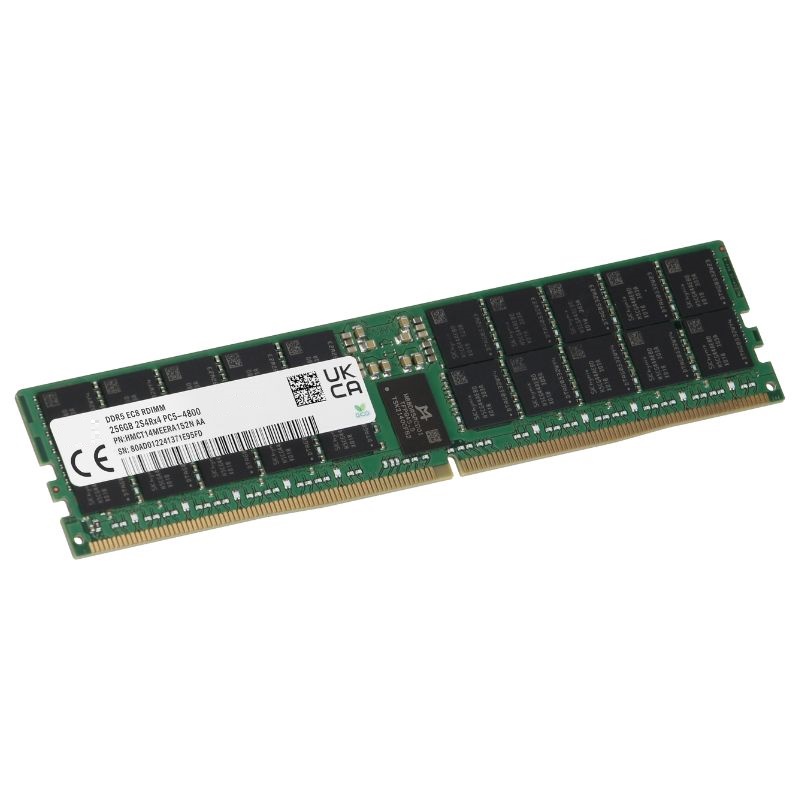


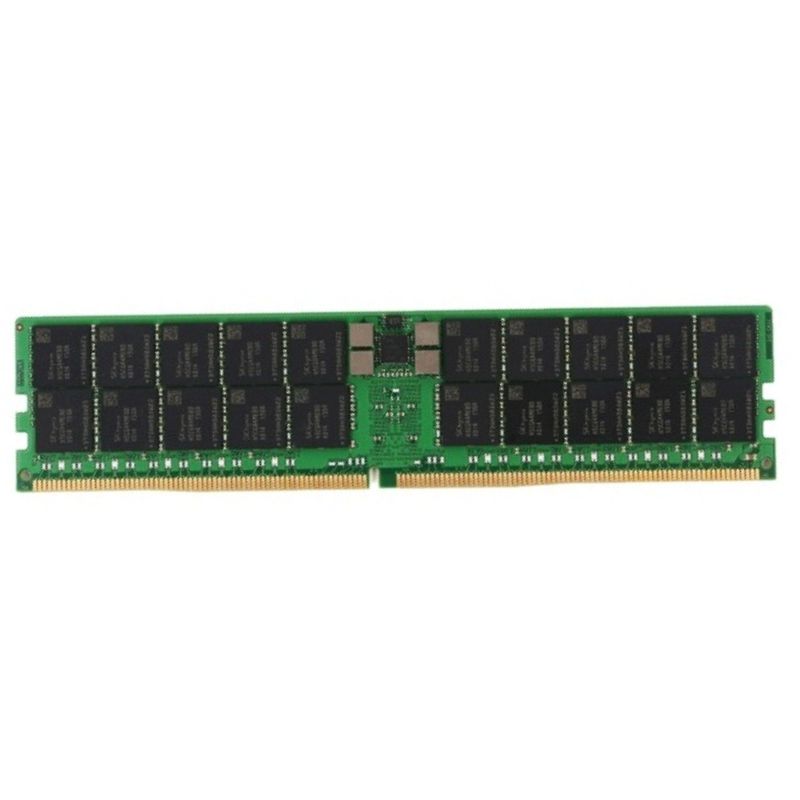
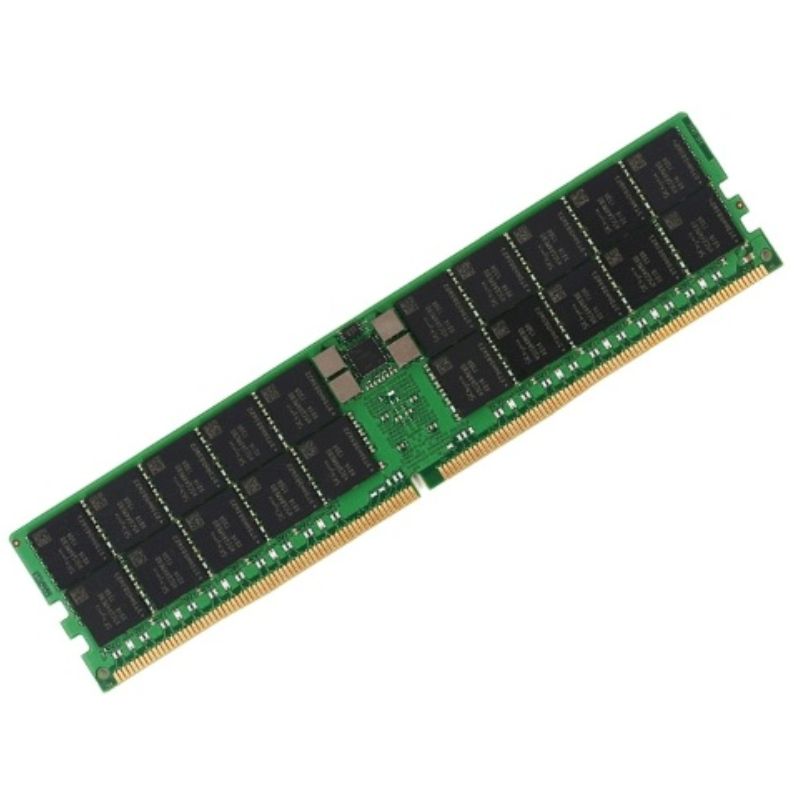
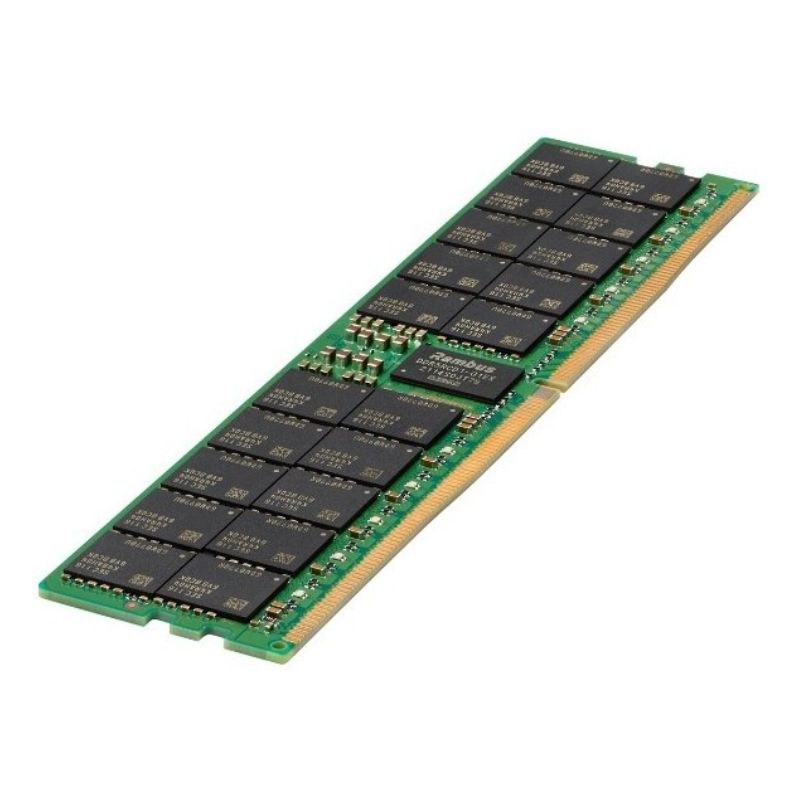
Dell 370-BCLD 256GB DDR5 5600MHz PC5-44800 ECC Registered 288-pin CL52 RDIMM Memory Module. New (System) Pull with 1-Year Replacement Warranty - Hynix Version
Dell 370-BCLD 256GB 5600MT/s PC5-44800 DDR5 ECC CL52 288-pin Rdimm Memory Module. High-capacity server memory modules built on next-generation DDR5 architecture are designed to meet the growing performance and reliability demands of modern data centers. This category focuses on registered ECC DDR5 RDIMM memory modules engineered for enterprise servers, virtualization platforms, and mission-critical workloads where stability, bandwidth, and scalability are essential.
Advanced DDR5 SDRAM Architecture
The Dell 2600-BCBQ is to understand the future of data throughput and system design. This category of memory is defined by its ability to handle exponentially increasing data loads from applications like in-memory databases (e.g., SAP HANA), virtualized environments, AI inference engines, and complex computational modeling.
DDR5 introduces several groundbreaking changes that differentiate it from previous generations and define the performance envelope of modules within this category. DDR5 doubles the burst length from 8 (BL8) to 16 (BL16), allowing for a larger chunk of data to be moved with each column address strobe. Coupled with a significant increase in bank groups (doubling from 4 in DDR4 to 8 in DDR5), this architecture dramatically improves parallelism. For a 256GB module, this means more efficient handling of concurrent requests from multiple CPU cores, reducing bottlenecks and wait states in memory-intensive operations.
A pivotal feature intrinsic to the DDR5 standard is On-Die ECC. This is a separate, additional layer of error correction that occurs within the memory chip itself, scrubbing for and correcting bit errors before they leave the DRAM die. This is crucial for maintaining signal integrity at very high data rates (5600MT/s and beyond) and contributes to overall module reliability. It works in tandem with the traditional sideband ECC found on ECC RDIMMs.
A single 256GB 370-BCLD module represents the high-capacity tier of current DDR5 offerings. This massive density is engineered for. Memory-Consolidation: Reducing the total number of DIMM slots required to achieve large memory pools (e.g., 1TB using only 4 modules per CPU), simplifying configuration and potentially freeing up slots for future expansion. Big Data and In-Memory Analytics: Enabling entire massive datasets to reside in RAM, slashing access times from milliseconds (for storage) to nanoseconds. High-Density Virtualization: Hosting a vast number of virtual machines or containers with guaranteed memory allocations, improving server consolidation ratios.
The speed rating is expressed in two related ways. 5600 Mega transfers per Second (MT/s): This is the actual data rate, indicating 5.6 billion data transfers per second on the bus. PC5-44800: This is the module's theoretical peak bandwidth in megabytes per second (MB/s). Calculated as (5600 MT/s * 8 bytes per transfer * 1 channel) 44,800 MB/s, or approximately 44.8 GB/s per module. In a dual-channel per-DIMM architecture, this bandwidth is fully leveraged by the memory controller.
RDIMMs incorporate a register (or buffer) between the memory controller and the DRAM chips on the module. This buffer handles electrical load, reducing the strain on the memory controller. This allows systems to support much higher memory capacities (more DIMMs per channel) and higher densities (like 256GB) with greater stability and signal integrity compared to Unbuffered DIMMs (UDIMMs). The trade-off is a slight increase in latency (reflected in the CL52 timing), which is vastly outweighed by the gains in capacity and system stability for server workloads.
CAS Latency is the number of clock cycles between the memory controller issuing a read command and the data being available. A CL52 at 5600MT/s may seem high compared to DDR4, but latency must be evaluated in absolute time (nanoseconds), not just clock cycles. Due to the much faster clock speed, the actual latency in nanoseconds is often comparable or even improved. The primary design goal of DDR5 is massive bandwidth, and the architecture delivers this, making it ideal for bandwidth-hungry applications rather than those solely sensitive to the lowest possible latency.
Dell 370-BCLD memory is validated with specific firmware (BIOS/UEFI) and Baseboard Management Controller (BMC) versions on corresponding Dell systems. This ensures that advanced features like memory health monitoring, Predictive Failure Analysis, and temperature tracking are fully functional and reported accurately through iDRAC (Integrated Dell Remote Access Controller).
Genuine Dell 370-BCLD memory undergoes a stringent validation process on Dell platforms. It is covered by Dell's standard warranty and support services. In the event of a rare failure, support is streamlined through a single vendor (Dell), eliminating finger-pointing between the server manufacturer and a third-party memory supplier. This simplifies troubleshooting and warranty replacement.
This module is designed for specific generations of Dell PowerEdge servers and Precision workstations that feature Intel Xeon Scalable Processors (4th Gen Sapphire Rapids and newer) or compatible AMD EPYC platforms that support DDR5 ECC RDIMMs 370-BCLD. It important to verify the specific system's Qualified Parts List (QPL) or memory configuration guide to ensure compatibility, as mixing speeds, capacities, or ranks can force all modules to run at the speed of the slowest DIMM.


 Contact Us
 Information
 Catalog
 Solid State Drives (SSD)
 Network Switches
 Hard Disk Drives
 HBA & Controllers
 PC & Servers
 PC & Server Memory
 CPU & Processors
 Network Routers
 Power Supplies
 Tape Drives & Libraries
 Network Devices
 Computer & Network Cables