
(7% discount is applied at checkout)
Cart is empty
Your go-to destination for cutting-edge server products
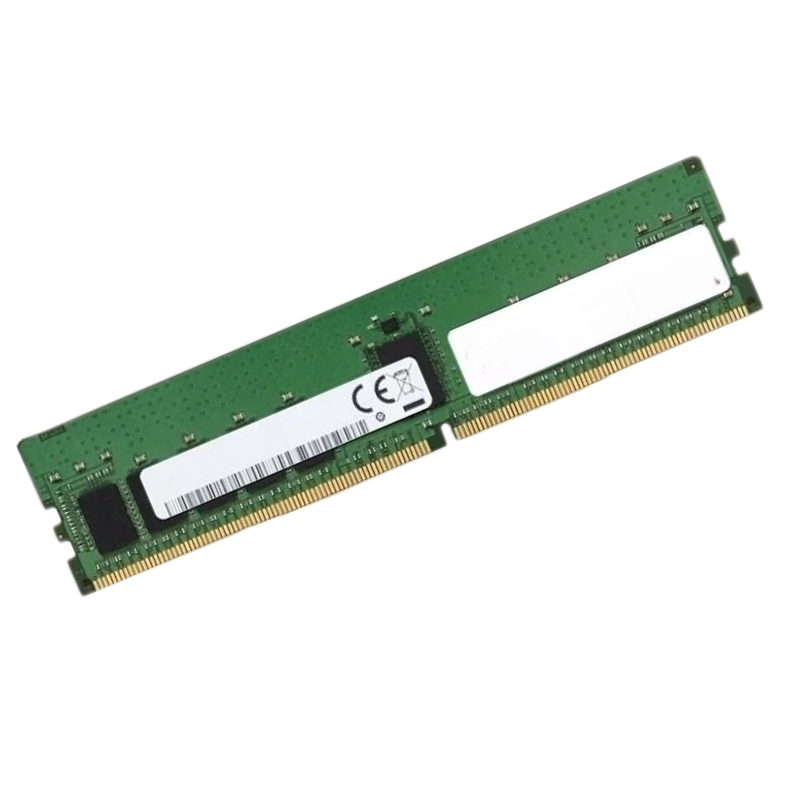
Dell 370-BCRR 32GB 4800MHz Pc5-38400 Ecc Registered 1.1v Cl40 DDR5 SDRAM 288-pin RDIMM Memory Module For Server. New (System) Pull with 1 Year Replacement Warranty - Samsung Version
| SKU/MPN | Warranty | Price | Condition | You save |
|---|---|---|---|---|
| 370-BCRR | 1 Year Warranty | $1,147.00 | New (System) Pull | You save: $401.45 (26%) |
| 370-BCRR | 1 Year Warranty | $1,425.00 | New Sealed in Box (NIB) | You save: $498.75 (26%) |
High-performance, server-grade RAM engineered for enterprise systems. This Dell 370-BCRR 32GB DDR5 SDRAM module delivers reliable, error-correcting memory for databases, virtualization and mission-critical servers.
Designed for enterprise servers and data center platforms that support DDR5 RDIMM modules. Common applications include:
The transition to DDR5 memory represents a quantum leap in server performance, efficiency, and reliability. Dell's 32GB DDR5-4800MHz modules, specifically the 370-BCRR model, are engineered to meet the escalating demands of modern data centers, cloud computing environments, and enterprise applications. Unlike previous generations, DDR5 introduces architectural improvements that fundamentally enhance how servers process, store, and transfer data.
DDR5 memory incorporates several groundbreaking technologies that distinguish it from DDR4. The most significant change is the implementation of dual 32-bit data channels per module (comprising two 40-bit channels with ECC), effectively doubling the burst length from 8 to 16. This architectural shift allows for significantly improved concurrent data access and transfer rates. Additionally, DDR5 operates at a lower voltage of 1.1V compared to DDR4's 1.2V, contributing to better power efficiency despite the substantial performance gains.
A critical innovation in DDR5 technology is the inclusion of On-Die Error Correction Code (ECC). This feature enables the memory chip to detect and correct bit errors internally before they can affect system performance or data integrity. While traditional ECC functionality remains essential for server-grade memory, the addition of On-Die ECC provides an extra layer of protection against internal errors within the DRAM chip itself.
The PC5-38400 designation indicates the module's theoretical peak transfer rate of 38,400 MB/s (Megabytes per second). This rating is calculated by multiplying the module's data rate (4800 MT/s) by the bus width (64 bits/8 bits per byte). This substantial bandwidth enables servers to handle memory-intensive workloads with significantly reduced bottlenecks compared to previous generation memory technologies.
CAS Latency (CL40) represents the number of clock cycles between when a memory controller requests data and when that data becomes available. While higher frequencies typically result in higher CAS latency numbers, the actual time delay in nanoseconds is often improved. For the Dell 370-BCRR operating at 4800MHz, the CL40 timing translates to approximately 16.67 nanoseconds, providing an optimal balance between speed and responsiveness for server applications.
ECC (Error Correcting Code) memory represents a critical requirement for server environments where data integrity is non-negotiable. The Dell 370-BCRR incorporates advanced ECC technology capable of detecting and correcting single-bit errors automatically, while also detecting (though not correcting) multi-bit errors. This capability prevents data corruption, system crashes, and silent data errors that could compromise business operations, financial transactions, or critical databases.
ECC memory includes additional bits beyond the standard data bits (typically 8 extra bits for every 64 bits of data) that store encrypted information about the data. When data is read from memory, the ECC algorithm recalculates the check bits and compares them to the stored values. If a single-bit error is detected, the memory controller automatically corrects it before the data is processed by the CPU. This real-time error correction occurs transparently without any performance penalty or system interruption.
The Dell 370-BCRR utilizes Registered (or Buffered) memory architecture, designated as RDIMM. This technology incorporates a register (or buffer) between the memory modules and the memory controller. The register temporarily holds data and command signals before they reach the DRAM chips, reducing the electrical load on the memory controller and enabling support for higher memory capacities per channel.
Registered memory provides several critical advantages for server configurations. By reducing the electrical load on the memory controller, RDIMMs enable systems to support more memory modules per channel while maintaining signal integrity and stability. This capability is essential for servers requiring large memory capacities, such as database servers, virtualization hosts, and in-memory computing applications. Additionally, RDIMMs typically offer better reliability and scalability compared to unbuffered modules in multi-DIMM configurations.
Server memory comes in three primary types: UDIMM (Unbuffered), RDIMM (Registered), and LRDIMM (Load Reduced). UDIMMs offer lower latency but limited capacity per channel. RDIMMs provide balanced performance with excellent capacity scaling. LRDIMMs use additional buffering to support even higher capacities but with slightly increased latency. The Dell 370-BCRR RDIMM strikes an optimal balance for most enterprise applications, delivering robust performance while supporting substantial memory configurations.
The Dell 370-BCRR DDR5-4800MHz module delivers approximately 50% higher bandwidth compared to DDR4-3200MHz, the previous generation's common server memory standard. This substantial performance increase directly translates to faster application response times, improved virtualization density, and enhanced throughput for data-intensive workloads. The higher data rate enables servers to process more transactions simultaneously, reducing bottlenecks in multi-user and multi-application environments.
In practical terms, the performance advantages of DDR5 memory manifest across various enterprise scenarios. Database servers experience reduced query times, virtualization hosts support more virtual machines with consistent performance, scientific computing applications complete computations faster, and in-memory analytics platforms process larger datasets more efficiently. The bandwidth improvements are particularly noticeable in memory-bound applications where processor performance is limited by memory speed.
Despite delivering significantly higher performance, DDR5 memory operates at a lower voltage (1.1V) compared to DDR4 (1.2V). This reduction, combined with improved power management features, results in better power efficiency per gigabyte transferred. The Dell 370-BCRR incorporates advanced power management integrated circuits (PMICs) that optimize voltage regulation directly on the memory module, reducing power loss and improving signal integrity.
The inclusion of Power Management Integrated Circuits (PMIC) on DDR5 modules represents a fundamental shift from previous generations. By distributing power management to each module rather than relying solely on the motherboard, the Dell 370-BCRR achieves more precise voltage regulation, reduced power noise, and improved thermal characteristics. This design enhancement contributes to better stability, especially in densely populated memory configurations common in 1U and 2U server form factors.
When calculating total cost of ownership for server infrastructure, power consumption represents a significant factor. The Dell 370-BCRR's combination of lower operating voltage and improved efficiency can result in measurable power savings, particularly in large-scale deployments with hundreds or thousands of servers. These efficiency gains contribute to both reduced operational expenses and environmental impact without compromising performance.
Proper memory configuration is essential for achieving optimal performance and reliability in server environments. For servers utilizing the Dell 370-BCRR modules, follow Dell's specific guidelines for memory population order, which typically involves installing modules in pairs across memory channels to enable dual-channel operation. Consult your server's technical guide for detailed configuration instructions based on your specific processor and memory quantity requirements.
Server memory configurations must adhere to specific population rules to ensure proper operation. These rules govern which memory slots should be populated first, how to balance memory across processors in multi-socket systems, and how to optimize for performance versus capacity. Incorrect memory population can result in reduced performance, system instability, or failure to boot. The Dell 370-BCRR should be installed in matched pairs or sets according to your server's documentation.
While possible to mix memory modules of different speeds or capacities in some systems, this practice is generally discouraged in server environments. When modules of different speeds are mixed, all memory typically operates at the speed of the slowest module. Similarly, mixing capacities can result in suboptimal memory interleaving and reduced performance. For best results, populate servers with identical Dell 370-BCRR modules throughout the system.
The Dell 370-BCRR 32GB DDR5 modules are ideally suited for virtualization hosts and cloud infrastructure, where memory capacity and bandwidth directly impact the number of virtual machines that can be supported and their performance characteristics. The high bandwidth of DDR5-4800MHz enables faster live migrations, improved memory overcommitment efficiency, and better performance consistency across virtualized workloads.
Server memory capacity is often the primary limiting factor for virtual machine density. With 32GB modules, IT administrators can configure servers with substantial memory using fewer DIMM slots, preserving expansion capability for future upgrades. A typical dual-processor server supporting 16 memory slots can accommodate 512GB of memory using 32GB modules, providing ample capacity for numerous virtual machines while maintaining performance.
Database servers, both relational (SQL) and non-relational (NoSQL), benefit significantly from the performance characteristics of the Dell 370-BCRR memory. The combination of high bandwidth and ECC protection ensures fast query processing while maintaining data integrity. In-memory databases particularly benefit from DDR5 technology, as reduced memory latency and increased bandwidth directly translate to faster transaction processing and analytics performance.
Modern database systems utilize substantial memory regions for buffer pools, query caches, and temporary storage. The Dell 370-BCRR's 32GB capacity per module enables larger in-memory working sets, reducing physical I/O requirements and improving overall database responsiveness. The ECC functionality provides critical protection against memory errors that could corrupt database structures or transaction logs.
Many HPC and AI workloads are memory-bound, meaning their performance is limited by memory speed rather than processor speed. For these applications, upgrading from DDR4 to DDR5 memory can provide performance improvements of 30-50% or more without requiring processor upgrades. The Dell 370-BCRR represents a cost-effective method to accelerate existing infrastructure for memory-intensive computational tasks.
The Dell 370-BCRR memory module incorporates multiple reliability enhancements beyond standard ECC protection. These include temperature sensors for thermal monitoring, advanced signal integrity features for stable operation in demanding environments, and rigorous component selection and testing processes. Each module undergoes extensive burn-in testing and validation to ensure consistent performance and longevity in 24/7 operation.
Server memory modules generate heat during operation, and excessive temperatures can lead to performance throttling or reliability issues. The Dell 370-BCRR includes thermal sensors that enable the system to monitor memory temperature and adjust cooling accordingly. This proactive thermal management ensures optimal operating conditions, preventing thermal-related degradation or failures while maintaining consistent performance.
Dell servers equipped with 370-BCRR memory modules can leverage integrated diagnostics through iDRAC (Integrated Dell Remote Access Controller). These diagnostics include memory testing, performance monitoring, and predictive failure analysis. The system can detect and alert administrators to potential memory issues before they cause system downtime, enabling proactive maintenance and replacement.
Dell's advanced diagnostics can identify patterns indicative of impending memory failure, such as increasing correctable error rates. When such patterns are detected, the system can generate alerts through iDRAC, allowing administrators to schedule replacement during maintenance windows rather than experiencing unplanned downtime. This capability is particularly valuable for business-critical systems where availability is paramount.


 Contact Us
 Information
 Catalog
 Solid State Drives (SSD)
 Network Switches
 Hard Disk Drives
 HBA & Controllers
 PC & Servers
 PC & Server Memory
 CPU & Processors
 Network Routers
 Power Supplies
 Tape Drives & Libraries
 Network Devices
 Computer & Network Cables