
(7% discount is applied at checkout)
Cart is empty
Your go-to destination for cutting-edge server products
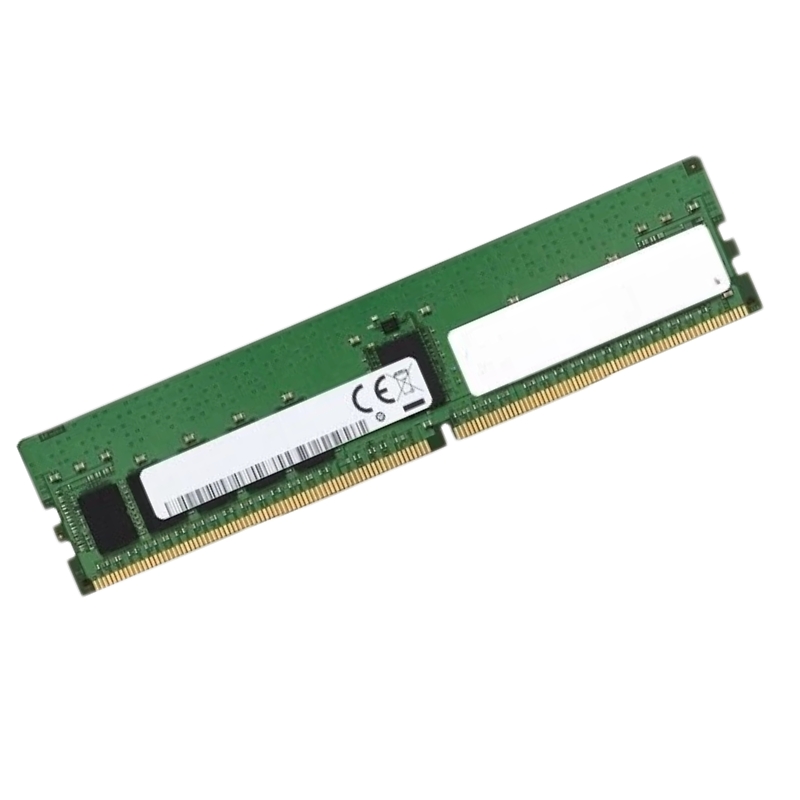
Dell 370-BCRS 64GB DDR5 4800MHz Pc5-38400 Dual Rank Ecc Registered Cl40 SDRAM 288-pin RDIMM Memory Module For Server. New Sealed in Box (NIB) - Samsung Version
| SKU/MPN | Warranty | Price | Condition | You save |
|---|---|---|---|---|
| 370-BCRS | 1 Year Warranty | $2,448.00 | New (System) Pull | You save: $856.80 (26%) |
| 370-BCRS | 1 Year Warranty | $3,360.00 | New Sealed in Box (NIB) | You save: $1,176.00 (26%) |
Upgrade your data center or enterprise server with the Dell 370-BCRS 64GB DDR5 SDRAM module. This server-grade, registered DIMM (RDIMM) delivers high-performance 4800MT/s (PC5-38400) memory with error-correcting code (ECC) and dual-rank architecture for reliable, latency-optimized operation.
The Dell 370-BCRS represents the cutting edge of server memory technology, delivering exceptional performance, reliability, and capacity for today's demanding enterprise environments. As a 64GB DDR5 module operating at 4800MHz, this memory module is engineered specifically for servers requiring maximum uptime, data integrity, and computational throughput.
DDR5 memory represents a significant architectural advancement over previous generations, offering substantial improvements in speed, power efficiency, and capacity. The Dell 370-BCRS leverages these innovations to provide server administrators with memory that can handle intensive workloads including virtualization, database management, high-performance computing, and large-scale analytics.
Unlike DDR4, DDR5 incorporates a dual sub-channel architecture that improves memory access efficiency. Each 64-bit data channel is divided into two independent 32-bit addressable sub-channels, allowing for more concurrent memory operations. This architectural enhancement, combined with higher burst lengths and improved bank groups, results in significantly better performance for multi-threaded server applications.
The 4800MHz data rate represents a substantial increase over DDR4's maximum JEDEC specification of 3200MHz. This 50% improvement in base clock speed translates directly to higher bandwidth for data-intensive applications. For servers processing large datasets or running multiple virtual machines, this increased bandwidth ensures that the CPU remains fed with data, reducing bottlenecks and improving overall system responsiveness.
The PC5-38400 designation indicates the module's peak transfer rate of 38,400 MB/s per module. This calculation derives from the data rate (4800 MT/s) multiplied by the bus width (64 bits) divided by 8 (bits to bytes conversion). In practical terms, this means each Dell 370-BCRS module can transfer approximately 38.4 gigabytes of data every second, making it ideal for memory-bandwidth-intensive workloads.
Enterprise servers cannot tolerate data corruption, which makes ECC (Error Correcting Code) memory essential for business-critical applications. The Dell 370-BCRS incorporates advanced ECC capabilities that can detect and correct single-bit errors automatically, while detecting multi-bit errors. This proactive error management prevents data corruption, system crashes, and silent data errors that could compromise business operations or analytical results.
ECC memory adds extra bits to each word stored in memory, creating a checksum that validates data integrity during read operations. When the memory controller writes data, it calculates and stores the ECC code. Upon reading, it recalculates the code and compares it to the stored value. If a single-bit error is detected, it is corrected transparently without impacting system performance or requiring administrator intervention.
The Dell 370-BCRS utilizes a Registered Dual In-Line Memory Module (RDIMM) design, which incorporates memory registers between the memory controller and DRAM chips. These registers buffer command and address signals, reducing electrical load on the memory controller and enabling support for higher memory capacities per channel and more DIMMs per system compared to unbuffered designs.
Registered memory provides several critical advantages for server environments: improved signal integrity, greater reliability at high capacities, and support for more memory modules per channel. This makes RDIMMs like the Dell 370-BCRS essential for servers requiring large memory configurations, such as database servers, virtualization hosts, and in-memory computing platforms that may utilize terabytes of RAM.
The Dell 370-BCRS is a 288-pin RDIMM adhering to JEDEC standard DDR5 specifications. With a capacity of 64GB and dual-rank architecture, it provides an optimal balance of capacity and performance. The module operates at 1.1V, significantly lower than DDR4's 1.2V, contributing to reduced power consumption and heat generation in densely populated server configurations.
As a dual-rank module, the 370-BCRS organizes its memory chips into two separate groups (ranks) that share the same memory channel but can be accessed independently. This architecture improves memory parallelism and allows for better utilization of available memory bandwidth compared to single-rank modules, particularly in multi-processor systems where memory contention can impact performance.
In virtualized environments, memory is often the limiting resource that determines how many virtual machines a host can support. The high density and reliability of the Dell 370-BCRS make it ideal for virtualization hosts, allowing more VMs to run concurrently while maintaining performance isolation between workloads. The ECC protection ensures the stability of the hypervisor and guest operating systems.
Advanced virtualization features like memory overcommitment place additional demands on server memory. The high bandwidth and capacity of DDR5 modules enable more efficient memory sharing, transparent page sharing, and balloon driver operations without compromising performance. The 64GB capacity per module allows substantial memory resources while minimizing DIMM slots consumed.
Database management systems benefit significantly from the performance characteristics of the Dell 370-BCRS. The high bandwidth accelerates query processing, while large memory capacities enable more extensive in-memory databases and caching. ECC protection is particularly critical for databases, where memory errors could corrupt critical business data or transaction records.
For in-memory databases like SAP HANA, Redis, or Oracle TimesTen, memory bandwidth and capacity directly impact application performance. The Dell 370-BCRS's 4800MHz speed and 64GB capacity provide the foundation for responsive in-memory applications, reducing query latency and supporting more concurrent users and transactions.
Scientific computing, financial modeling, and big data analytics workloads require both high memory bandwidth and large capacity. The Dell 370-BCRS delivers the performance needed for complex simulations, risk analysis, and machine learning algorithms that process massive datasets in memory to minimize computational delays.
When deployed in multi-socket servers with fully populated memory channels, systems utilizing the Dell 370-BCRS can achieve tremendous aggregate memory bandwidth. This enables faster completion of parallel computations and analysis, directly impacting time-to-results for research institutions, financial services firms, and data science teams.
The Dell 370-BCRS is engineered for 24/7 operation in demanding data center environments. Beyond ECC protection, the modules undergo rigorous testing and validation to ensure compatibility and reliability. Dell's quality control processes include system-level testing under various environmental conditions to verify performance and stability.
DDR5 modules incorporate onboard temperature sensors that enable the memory subsystem to monitor thermal conditions and adjust performance if necessary to prevent overheating. Proper server airflow is essential when deploying high-density memory configurations to maintain optimal operating temperatures and ensure long-term reliability.
The transition from DDR4 to DDR5 represents one of the most significant memory technology shifts in recent years. DDR5 offers higher data rates, improved power management, and greater densities per module. The Dell 370-BCRS demonstrates these advantages with its 4800MHz speed (compared to DDR4's typical 3200MHz), 1.1V operating voltage (versus 1.2V for DDR4), and 64GB capacity in a single module.
Despite higher absolute performance, DDR5 modules like the 370-BCRS offer improved performance per watt compared to DDR4. The reduced operating voltage combined with more efficient data transfer mechanisms means that servers can achieve higher computational throughput without proportionally increasing power consumption—a critical consideration for large-scale data center deployments.
Organizations considering migration to DDR5-based servers should evaluate their current and projected memory requirements. The Dell 370-BCRS represents an excellent choice for new server deployments, while existing DDR4 systems require platform upgrades to leverage DDR5 technology. Memory-intensive workloads typically benefit most from the transition to DDR5.


 Contact Us
 Information
 Catalog
 Solid State Drives (SSD)
 Network Switches
 Hard Disk Drives
 HBA & Controllers
 PC & Servers
 PC & Server Memory
 CPU & Processors
 Network Routers
 Power Supplies
 Tape Drives & Libraries
 Network Devices
 Computer & Network Cables